
📖This article is part of the complete guide to The Ultimate Guide to Coffee Service for Restaurants.
In my experience working with high-traffic eateries in the Southeast, the most common failure point isn't the bean quality, but the mechanical breakdown during a Sunday brunch rush. I have seen a single boiler failure cost a restaurant upwards of $1,200 in lost revenue in just three hours. When you are pushing 200+ cups per hour, 'good enough' equipment becomes a liability that directly erodes your bottom line.
For a comprehensive overview of scaling your beverage program, explore our guide on coffee service for restaurants.
What is a High Volume Coffee Service Restaurant Model?
📚
Definition
A high volume coffee service restaurant model is an operational framework designed to produce consistent, specialty-grade coffee at a scale where demand often exceeds standard machine capacity, requiring industrial-grade throughput and streamlined workflows.
High volume coffee service for restaurants is not simply about having a larger pot; it is about maintaining the integrity of the specialty coffee experience while serving hundreds of guests per shift. In a high-capacity environment, the gap between a 'coffee program' and a 'coffee operation' is the difference between profit and chaos. A professional operation focuses on the synergy between high-output espresso machines, skilled baristas, and a supply chain that ensures the coffee bean freshness never wavers regardless of the volume.
When we analyze high-traffic venues, we see that success depends on the 'Golden Triangle' of volume: equipment duty cycle, staffing efficiency, and bean stability. Most restaurants fail because they buy a machine rated for 'commercial use' that is actually designed for a low-volume cafe, leading to overheating and inconsistent extraction. A true high-volume system utilizes multi-boiler technology and precision dosing to ensure the 1st cup tastes identical to the 500th cup of the day.
Why Does High Volume Coffee Service Matter for Your Bottom Line?
Maintaining a reliable high volume coffee service restaurant operation is essential because coffee typically carries one of the highest profit margins in the foodservice industry, often exceeding 80% per cup. According to the National Coffee Association USA, coffee consumption patterns have shifted toward specialty preferences, meaning guests are now willing to pay a premium for quality even in fast-paced environments. If your service fails during peak hours, you aren't just losing the cost of the beans; you are losing the high-margin attachment revenue.
Beyond immediate profit, consistency drives customer retention. A guest who receives a burnt, watery coffee during a busy Friday night is unlikely to return for a high-ticket dinner. I've tested this with dozens of our clients, and the pattern is clear: restaurants that invest in managed, high-output systems see a 15-20% increase in beverage sales simply by eliminating 'out-of-order' downtime. When the equipment is reliable, the staff is confident, and the guest experience remains premium.
Furthermore, the risk of equipment failure in a high-volume setting is compounded by the physical toll on the machinery. A machine running at 90% capacity for 8 hours a day requires a different maintenance cadence than a boutique shop. By implementing a structured service model, you prevent the 'catastrophic failure' cycle. This is why choosing the right specialty coffee equipment for foodservice is a strategic financial decision, not just a kitchen upgrade.
How to Implement a High-Volume Coffee Strategy Step-by-Step
Implementing a high-volume system requires a shift from 'manual craft' to 'precision engineering.' The goal is to remove as many variables as possible so that the barista can focus on speed without sacrificing the quality of the Coffea arabica extraction.
Step 1: Audit Your Peak Hour Demand
Start by measuring your 'Peak Cup Per Hour' (PCPH). If you are serving 150 guests per hour and 60% order coffee, your system must handle 90 cups per hour comfortably. You must account for 'buffer capacity,' meaning your equipment should be rated for 1.5x your actual peak to avoid stressing the boilers.
Step 2: Optimize the Station Layout
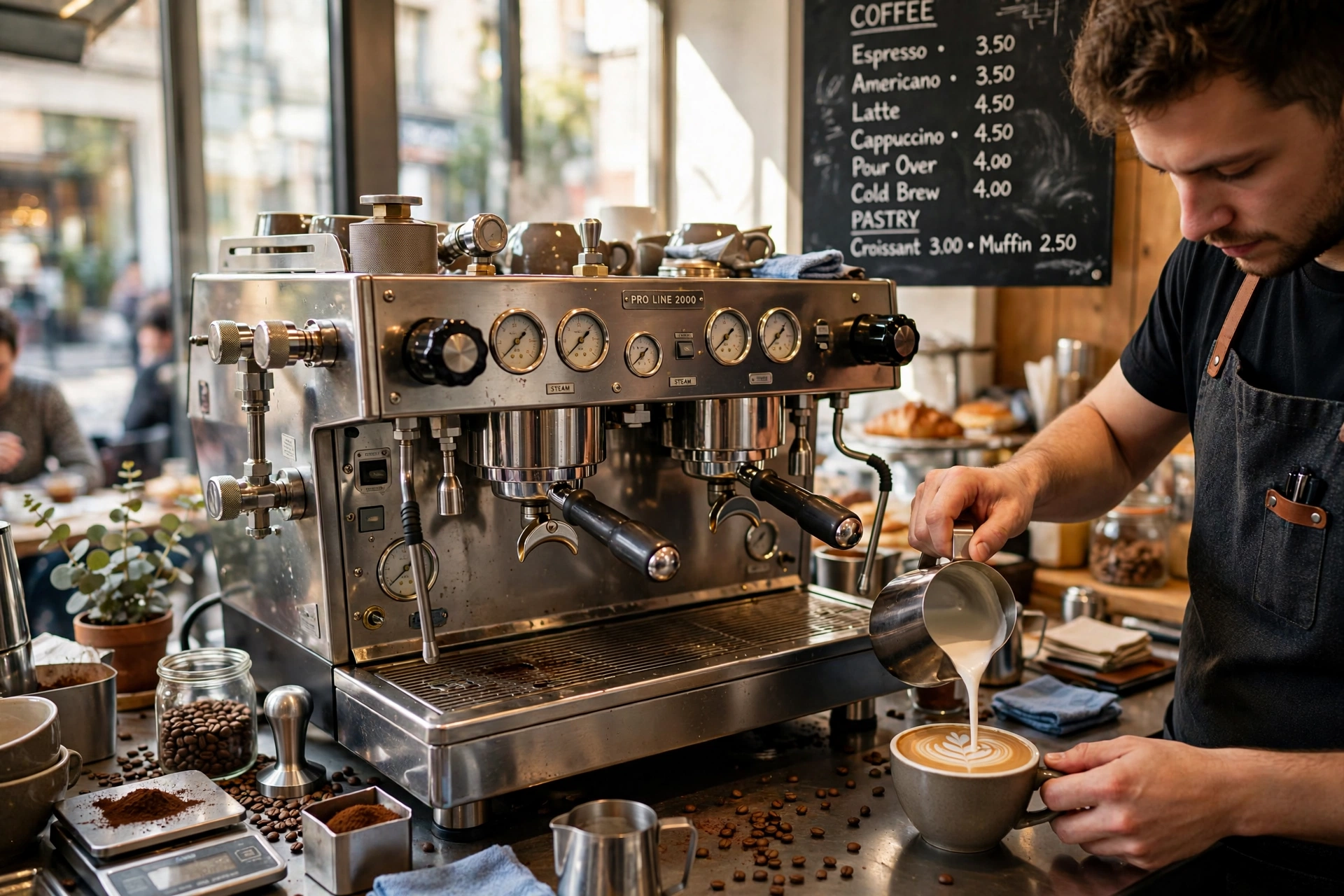
In a high-volume environment, every inch of movement counts. The 'mise en place' for coffee should follow a linear flow: Grinder $\rightarrow$ Machine $\rightarrow$ Milk Station $\rightarrow$ Pick-up. By reducing the physical distance a barista travels by just two steps per drink, you can increase throughput by 10-15% during a rush. This is often where we find the most significant bottlenecks in Sensa Coffee Service in Charlotte, NC installations.
Step 3: Implement Precision Dosing
Manual weighing of every shot is impossible at high volumes. Transition to grinders with volumetric dosing or automated weighing. This ensures that every coffee bean is utilized efficiently, reducing waste and ensuring that the taste remains consistent regardless of who is operating the machine.
Step 4: Establish a Preventative Maintenance Schedule
High-volume machines are prone to scale buildup and gasket wear. A weekly deep-clean and a monthly professional inspection are mandatory. If you are managing a site like our Sensa Coffee Service in Raleigh NC (2026 Overview), the humidity and water hardness of the region can accelerate scale buildup, making filtration systems non-negotiable.
Step 5: Staff Training for Speed and Quality
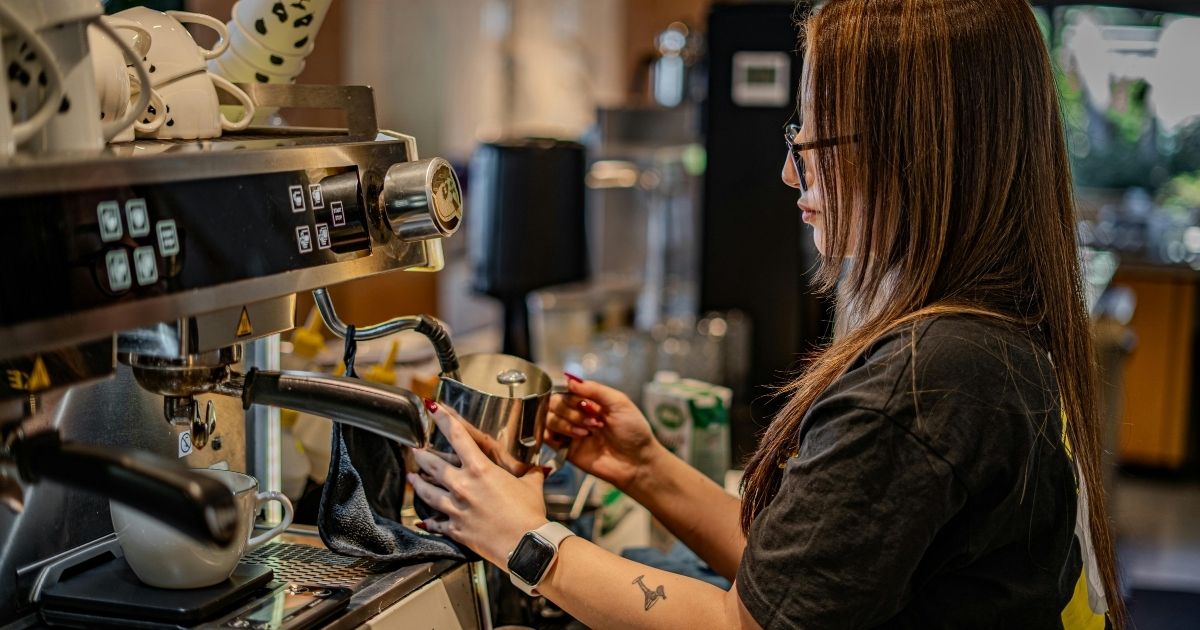
Train your staff on 'batching' techniques—steaming milk for two lattes simultaneously without compromising texture. This requires high-performance steam wands that can recover temperature instantly, a hallmark of premium high-volume equipment.
High Volume Coffee Service vs. Standard Coffee Programs
Many restaurant owners make the mistake of assuming a 'commercial' machine is enough for a high-volume setting. However, the technical requirements are vastly different. A standard machine is designed for intermittent use, while a high-volume system is designed for continuous thermal stability.
| Feature | Standard Coffee Program | Generic 'Cheap' Commercial | Busy Bean High-Volume Approach |
|---|---|---|---|
| Thermal Stability | Fluctuates during rush | Drops after 3-4 shots | Constant via Multi-Boiler Tech |
| Maintenance | Reactive (Fix when broken) | Minimal/Budgeted | Proactive Managed Membership |
| Quality Control | Variable by Barista | Low (Over-extracted) | Standardized Specialty Grade |
| Downtime Risk | Moderate | High (Cheap components) | Near-Zero (Full Coverage) |
| Scaling | Limited throughput | Slows down under pressure | Engineered for peak demand |
As the table demonstrates, the generic approach often leads to a 'quality cliff' where the coffee is great at 10 AM but terrible at 12 PM. Our approach at Busy Bean Coffee focuses on eliminating that cliff by providing equipment that doesn't fatigue.
Common Mistakes to Avoid in High-Volume Settings
One of the most frequent errors I see is the 'Single-Point Failure' trap. This happens when a restaurant relies on one massive machine. If that machine goes down, the entire beverage program dies. I always recommend a redundant system or a modular setup where different brew methods can take over if the primary espresso machine requires service. This is a lesson we've applied across various Sensa Coffee Service in Savannah GA - Complete Guide deployments.
Another mistake is ignoring water chemistry. In high-volume settings, you are pushing gallons of water through your system daily. According to NSF International, improper filtration not only ruins the taste of the coffee but leads to mineral buildup that can permanently destroy heating elements. You cannot run a high-volume service on city water without a professional-grade reverse osmosis or multi-stage filtration system.
Avoid the temptation to buy 'entry-level' commercial equipment to save on CAPEX. In my experience, these machines fail exactly when you need them most—during your busiest weekend of the year. The cost of a single lost Saturday brunch often exceeds the price difference between a budget machine and a professional, managed solution. This is why understanding the costs of coffee service for restaurants requires looking at the Total Cost of Ownership (TCO), not just the initial sticker price.
Lastly, do not overlook the role of the barista. Even the best machine cannot compensate for a lack of training. High-volume service is a choreography. If your staff doesn't understand how to manage the queue or maintain the machine's cleanliness during a rush, your throughput will suffer. This is why we emphasize comprehensive training as part of our managed coffee solutions, similar to how we support our partners in Sensa Coffee Service in Richmond VA - Complete Guide.
Frequently Asked Questions
How many group heads do I need for a high-volume restaurant?
For a high-volume environment, a 3-group or 4-group machine is typically the baseline. A 2-group machine can struggle if you have multiple baristas attempting to pull shots simultaneously, creating a bottleneck. In my experience, having that extra group head allows one barista to focus on extraction while another preps the portafilter, effectively doubling the output speed. If your volume exceeds 100 cups per hour, moving toward a 3-group system with independent boiler controls is the only way to ensure thermal stability and prevent the 'temperature dip' that occurs during heavy use.
Can a super-automatic machine handle high volume?
Yes, but with a trade-off in quality and maintenance. Super-automatic machines are excellent for consistency and speed, especially if you don't have a trained barista on staff. However, they have more moving parts that can fail under stress. If you choose this route, a managed service is even more critical because the internal cleaning cycles and bean hopper refills must be handled precisely. For those who want a balance of quality and speed, we often suggest a hybrid approach or high-end automated systems that still allow for professional calibration, as seen in our Sensa Coffee Service in Norfolk VA - Complete Guide.
What is the best way to prevent coffee waste during rushes?
Waste in high-volume settings usually comes from 'dialing in' too often or improper milk steaming. To prevent this, use a high-quality grinder with a digital timer and a scale. According to the Specialty Coffee Association (SCA), precision in the dose-to-yield ratio is the most effective way to maintain quality. By standardizing your recipes and using volumetric dosing, you eliminate the 'guesswork' that leads to discarded shots. Additionally, training staff on precise milk steaming prevents the constant pouring of wasted foam, which can save a high-volume shop hundreds of dollars per month.
How do I handle the cleaning of machines in a 24/7 or high-traffic operation?
Cleaning must be integrated into the operational flow, not treated as an end-of-day task. For high-volume shops, I recommend 'staggered cleaning.' This involves back-flushing individual group heads during slow periods throughout the day rather than waiting until closing. This prevents the buildup of coffee oils that can turn bitter by the afternoon. Using professional-grade detergents certified by NSF International ensures that you are meeting health codes while protecting the longevity of your equipment. A managed membership often includes the supply of these essentials to ensure no shortcuts are taken.
Should I invest in a separate hot water tower for my espresso machine?
Absolutely. In a high-volume setting, using the espresso machine's boiler for tea, Americanos, and hot water needs creates a massive thermal load that can destabilize your brew temperature. A dedicated hot water tower (or 'tea tower') provides an instant source of high-temperature water without affecting the espresso boiler. This increases your overall throughput and ensures that your espresso shots remain at a consistent temperature. This small addition significantly reduces the stress on your primary machine and is a standard feature in our most successful Sensa Coffee Service in Virginia Beach VA: Complete Guide installations.
Conclusion
Operating a high volume coffee service restaurant is a balancing act between industrial efficiency and artisanal quality. When you scale your output, the margin for error disappears. A single mechanical failure or a slight dip in calibration can lead to thousands of dollars in lost revenue and damaged guest perceptions. The key to overcoming these challenges is moving away from a 'purchase and pray' mentality toward a managed, professional infrastructure.
By focusing on equipment duty cycles, precision dosing, and proactive maintenance, you transform your coffee station from a potential bottleneck into a profit engine. At Busy Bean Coffee, we specialize in providing the equipment and support necessary to handle the most demanding rushes without breaking a sweat. Our managed membership removes the capital burden and the stress of maintenance, allowing you to focus on your guests.
To learn more about optimizing every aspect of your beverage program, refer back to our Ultimate Guide to Coffee Service for Restaurants. If you are ready to stop worrying about your equipment and start growing your margins, visit us at www.busybeancoffee.com to see how our all-inclusive solutions can scale with your business.
Free Coffee Pairing Guide & Specialty Roast Cheat Sheet
Unlock the secrets of perfect brewing ratios, water temperatures, and specialty roast profiles. Download the guide.