📖This article is part of the complete guide to The Ultimate Guide to Coffee Shop Equipment and Outfitting.
I once watched a cafe owner in Mount Pleasant spend $18,000 on a high-end multi-boiler machine only to realize three months later that their electrical panel couldn't handle the peak load, forcing a $5,000 emergency upgrade. This is the kind of avoidable friction that kills a startup's momentum. Choosing espresso machines for coffee shops isn't about finding the most expensive brand; it is about aligning your technical specifications with your projected cup-per-hour volume and your staff's skill level.
For a comprehensive overview of everything you need for your space, explore our guide on coffee shop equipment.
What Exactly Defines the Right Espresso Machines for Coffee Shops?
📚
Definition
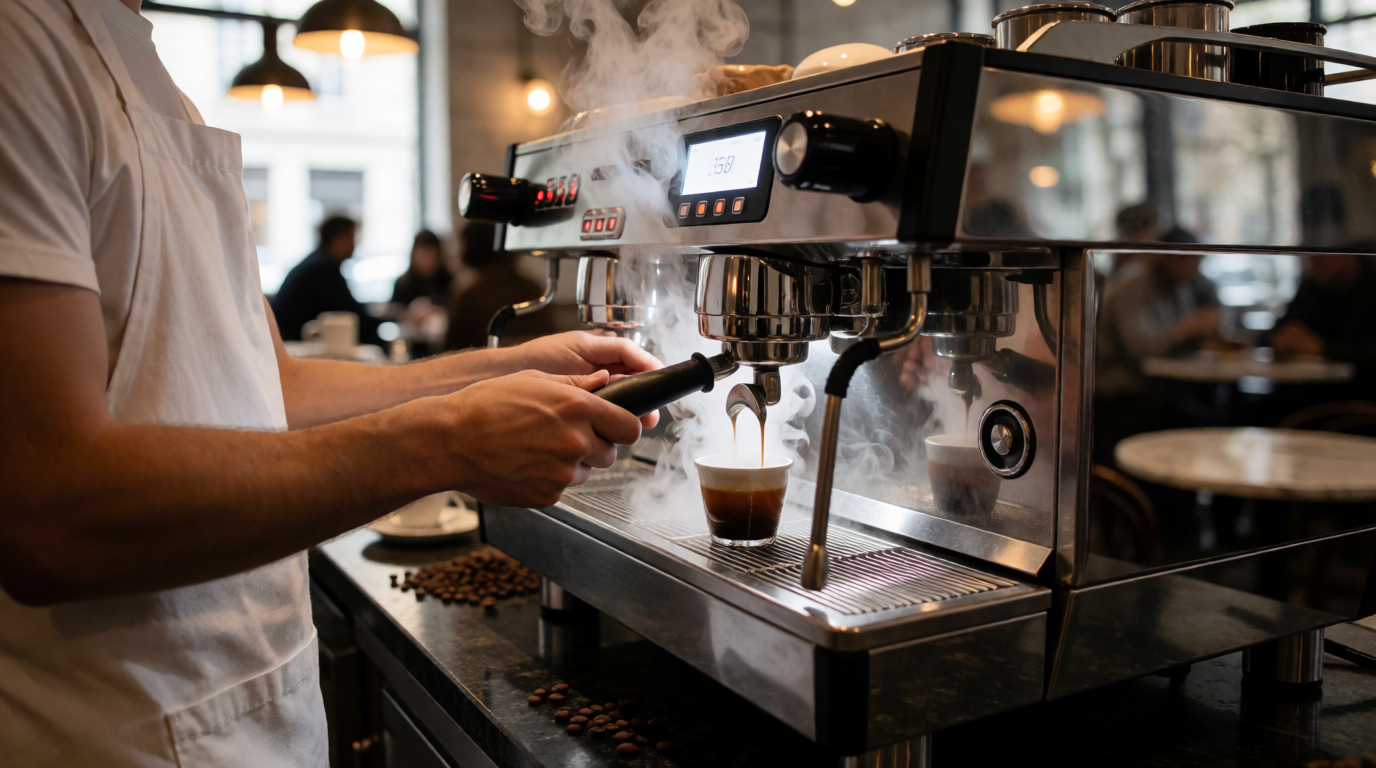
An espresso machine for a commercial setting is a high-pressure water delivery system designed to force hot water through finely-ground coffee beans, typically delivering 9 bars of pressure to extract a concentrated shot of coffee with a layer of crema.
When we talk about selecting espresso machines for coffee shops, we are discussing the heartbeat of your revenue stream. Unlike home machines, commercial units must withstand 8 to 12 hours of continuous operation without temperature drift. The core of a professional machine lies in its thermal stability. In my experience as a Q-Grader, I've seen that even the highest quality Coffea arabica beans will taste sour or burnt if the machine's boiler fluctuates by more than 2 degrees Celsius during a rush.
Most operators fail because they choose based on aesthetics rather than throughput. A single-group machine might look sleek, but if you are projecting 60 customers per hour during a morning peak in a busy area like Sensa Coffee Service in Mount Pleasant SC, you will create a bottleneck that drives customers to your competitors. You need to evaluate the boiler capacity, the pump type (rotary vs. vibratory), and the steam power to ensure your baristas can texture milk and pull shots simultaneously without a drop in pressure.
Why the Right Machine Selection Impacts Your Bottom Line
Selecting the wrong espresso machines for coffee shops directly correlates to higher waste and lower customer retention. According to the Specialty Coffee Association (SCA), precise temperature control and pressure profiling are fundamental to achieving a 'specialty' grade cup. When a machine lacks stability, baristas must 'dial in' the grind more frequently, leading to significant coffee bean waste—sometimes up to 15% of your daily inventory.
Beyond waste, there is the issue of uptime. A machine that isn't suited for your volume will suffer from premature pump failure or scale buildup. This leads to unplanned downtime, which is the most expensive cost in the foodservice industry. If your primary machine goes down on a Tuesday morning, you aren't just losing the cost of the repair; you are losing the lifetime value of every customer who walked away because you couldn't serve them.
Furthermore, the efficiency of your espresso machine dictates your labor costs. A machine with volumetric dosing allows a barista to start a shot and move to steam milk immediately, whereas a manual machine requires a person to stand and watch the shot for 25-30 seconds. Over a year, this difference in efficiency can save you hundreds of labor hours. If you're scaling your operations and looking at different regions, you might consider how Sensa Coffee Service in Charleston SC manages high-volume throughput with integrated equipment solutions.
How to Strategically Select Your Espresso Equipment
Choosing the right machine requires a data-driven approach rather than a gut feeling. I've tested dozens of configurations with our clients, and the pattern is clear: you must calculate your 'Peak Cup Demand' (PCD). To do this, estimate your highest hourly traffic and multiply by 1.2 to account for growth.
Step 1: Determine Group Head Requirements
- 1-Group: Best for low-volume boutiques or complementary coffee services where espresso is a secondary offering.
- 2-Group: The industry standard for most independent shops. It allows two baristas to work side-by-side or one barista to pull two shots simultaneously.
- 3-Group+: Necessary for high-traffic hubs. If you are operating in a dense urban center, a 3-group machine prevents the 'queue of death' during the 8 AM rush.
Step 2: Choose Your Boiler System
- Single Boiler: Water is shared between brewing and steaming. Avoid these for commercial use; the wait time between functions is too long.
- Heat Exchange (HX): Uses a boiler for steam and a heat exchanger for brew water. Faster than single boilers and more affordable, but can suffer from temperature instability if the machine sits idle.
- Dual Boiler: Separate boilers for brewing and steaming. This is the gold standard for specialty coffee, ensuring that the brew water is exactly 200°F while the steam wand is delivering maximum pressure.
Step 3: Evaluate the Interface
Do you want manual control for a high-end specialty experience, or volumetric buttons for consistency and speed? If you are hiring inexperienced staff, volumetric machines reduce the risk of 'dead shots' and wasted milk. For those focusing on the art of the brew, a manual paddle allows the barista to manipulate the flow rate, a technique often used to highlight the floral notes of high-altitude Arabica coffee.
Step 4: Verify Certification and Power
Ensure the machine is NSF International certified. This isn't just a badge; it ensures the machine meets strict sanitary and safety standards for commercial food environments. Additionally, check if the machine requires a 220V dedicated line or can run on 110V. Many owners overlook this and find themselves needing a licensed electrician mid-installation.
If you're unsure about the total cost of these technical requirements, our breakdown on coffee shop outfitting costs provides a realistic 2026 budget for these upgrades.
Comparing Espresso Machine Approaches
Not all paths to caffeine delivery are equal. Depending on your business model, you might choose a traditional purchase, a cheap automated system, or a managed service.
| Feature | Traditional Purchase | Generic/Cheap AI-Auto | Managed Coffee Service |
|---|---|---|---|
| Upfront Cost | Extremely High ($10k - $25k) | Moderate ($2k - $5k) | Zero to Low Monthly Fee |
| Consistency | Depends on Barista Skill | Variable/Often Bland | Professional Q-Grader Tuned |
| Maintenance | Owner's Responsibility | Varies (Often slow) | All-Inclusive/Preventative |
| ROI Timeline | 24-36 Months | Rapid but lower quality | Immediate Cash Flow Positive |
| Reliability | High (if maintained) | Low (consumer-grade parts) | Maximum (Enterprise grade) |
Common Mistakes to Avoid When Buying Espresso Machines
One of the most frequent mistakes I see is 'Over-Buying' equipment. I've seen shops buy a 3-group dual-boiler machine when their actual volume only justifies a 2-group. This doesn't just waste capital; it increases your electricity bill and requires more cleaning labor. Buy for where you are now, with a clear path to where you'll be in 24 months.
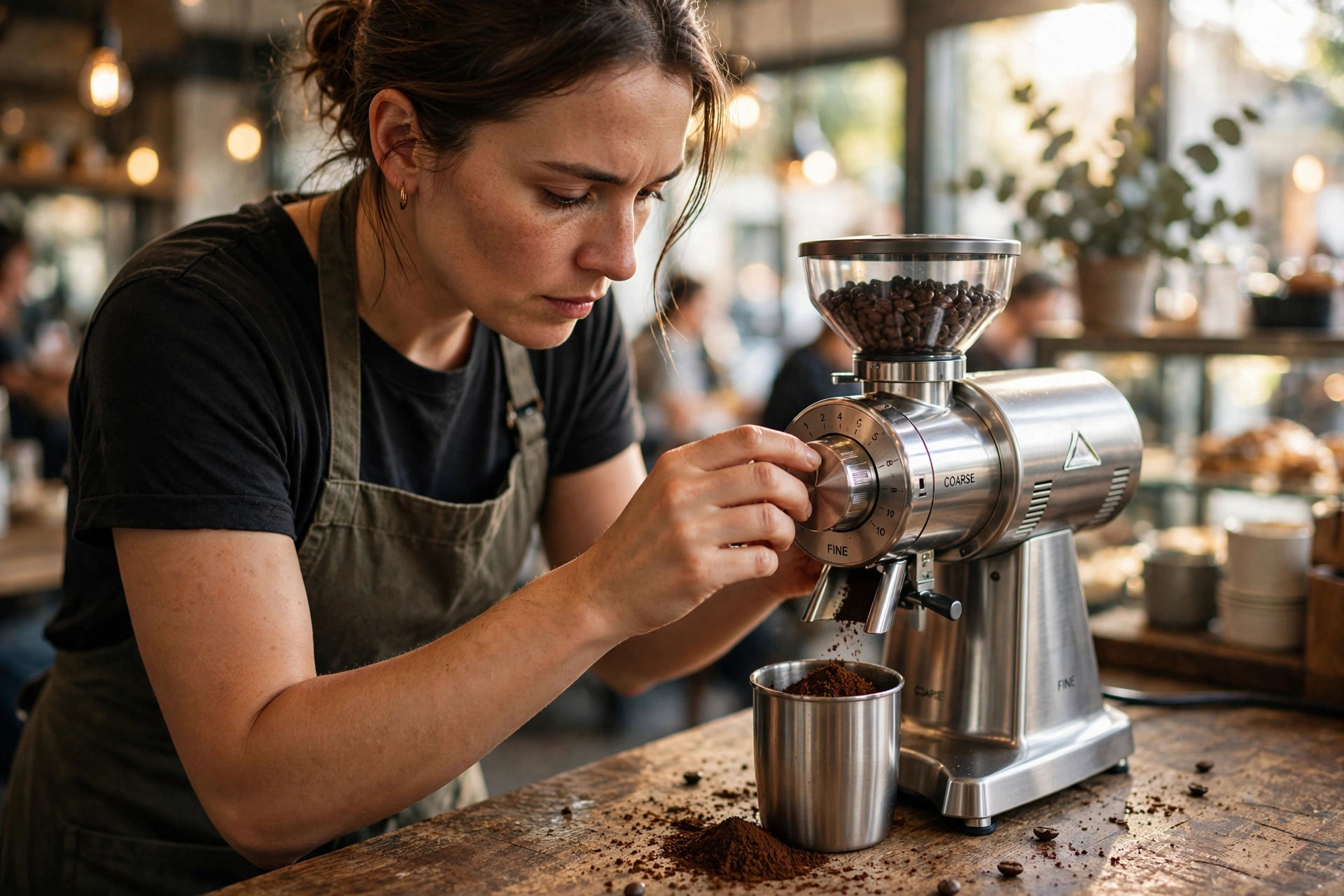
Another critical error is ignoring the grinder. An expensive espresso machine is useless if paired with a mediocre grinder. According to the National Coffee Association USA (NCA), the precision of the grind size is the single most important factor in extraction quality. If your grinder cannot produce consistent microns, your $20,000 machine will still produce bitter coffee. I always recommend spending at least 20% of your equipment budget on essential coffee grinders for professional baristas.
Avoid the temptation of 'all-in-one' bean-to-cup machines for a specialty shop. While they are convenient, they lack the tactile control required to truly excel in specialty coffee. They are great for a hotel lobby, but in a dedicated coffee shop, they signal to the customer that you are prioritizing convenience over quality.
Lastly, don't ignore the water chemistry. Using tap water in a high-end espresso machine is like putting low-grade fuel in a Ferrari. Without professional filtration, calcium and magnesium will build up in your boiler, leading to 'scale' that can permanently destroy a heating element. Always pair your machine with a commercial-grade reverse osmosis or carbon filtration system.
For those managing sites in specific regions, such as Sensa Coffee Service in Raleigh NC, the local water hardness often dictates which filtration system is mandatory to prevent machine failure.
Pro Tip: The 'Hidden' Cost of Steam Power
When reviewing specifications, look at the 'steam boiler volume' separately from the 'brew boiler'. A common issue in mid-tier machines is 'steam lag'. This happens when a barista steams three lattes in a row and the fourth latte has weak, watery foam because the boiler couldn't recover fast enough. In a high-volume shop, this leads to inconsistent drink quality and frustrated customers. Always look for machines with high-recovery boilers or dedicated steam boilers to maintain a constant 1.5 to 2.0 bars of steam pressure.
Deep Dive: The Role of Pressure Profiling in 2026
As we move further into 2026, pressure profiling has moved from 'luxury' to 'competitive advantage'. Pressure profiling allows the barista to change the pressure throughout the extraction—starting low to allow the coffee to bloom (pre-infusion), then peaking at 9 bars, and tapering off at the end to avoid over-extraction.
This is especially important for light-roast specialty coffee, which is denser and harder to extract. If you intend to target the 'coffee connoisseur' market, investing in a machine with a flow-meter or a variable pressure pump is essential. It allows you to extract the complex acidity and floral notes of a high-end Ethiopian Yirgacheffe that a standard pump machine would simply crush and make bitter.
If you're wondering how to fit these advanced machines into a tight floor plan, check out our ideas on coffee shop furniture and layout design.
Frequently Asked Questions
Should I buy a new or refurbished espresso machine for my shop?
Buying new provides a full manufacturer warranty and the latest energy-efficiency standards, which is safer for most startups. However, high-end refurbished machines from reputable brands can save you 40-60% on capital expenditure. The risk is that refurbished units may have hidden scale buildup. If you choose refurbished, ensure it comes with a certified technician's report and at least a 6-month parts-and-labor warranty. For most, the predictability of a managed service is a better middle-ground.
How many group heads do I actually need for 100 customers per hour?
For a volume of 100 customers per hour, a 2-group machine is the minimum, but a 3-group is highly recommended. A single barista can typically manage two groups efficiently, but a third group provides a 'safety valve' during peak surges or if one group needs a quick cleaning. If your menu is heavy on milk-based drinks, the bottleneck is usually the steam wand, not the group head, so prioritize steam boiler capacity over the number of groups.
What is the difference between a rotary pump and a vibratory pump?
Rotary pumps are the industry standard for commercial shops because they are quieter, more durable, and can be plumbed directly into a water line. Vibratory pumps are smaller and cheaper, common in home machines, but they wear out faster and cannot handle the continuous duty cycle of a cafe. If a machine is marketed as 'commercial' but has a vibratory pump, it is likely a 'prosumer' machine and not suitable for a high-volume environment.
How often do espresso machines need professional maintenance?
Basic maintenance, like backflushing and gasket replacement, should happen daily and monthly. However, a full professional calibration and internal inspection should occur every 6 months. This includes checking the group seals, descaling the boilers, and calibrating the pressure valves. Ignoring this schedule leads to 'catastrophic failure' where the cost of the repair is 5x the cost of the maintenance. This is why managed services are so popular in 2026.
Does the type of coffee bean affect the machine choice?
Yes, significantly. If you are using dark roasts, most commercial machines will perform well. However, if you are specializing in light-roast specialty coffee, you need a machine with precise temperature PID control and ideally, pre-infusion capabilities. Light roasts require higher temperatures and more controlled pressure to avoid under-extraction (sourness). A machine without a PID controller will likely struggle to maintain the tight temperature window needed for high-end specialty beans.
Conclusion
Choosing the right espresso machines for coffee shops is a balance between technical capacity, financial risk, and the quality of the end product. Whether you are eyeing a high-end dual-boiler setup or looking for the efficiency of a managed solution, the goal remains the same: minimize friction and maximize the quality of every shot.
Avoid the common trap of buying based on a brand name alone. Instead, focus on the recovery time, the boiler stability, and how the equipment integrates with your top commercial drip coffee makers to create a cohesive beverage program. If you are still mapping out your equipment list, we highly recommend revisiting The Ultimate Guide to Coffee Shop Equipment and Outfitting to ensure you haven't missed any critical components.
Ready to eliminate the stress of equipment ownership? Visit Busy Bean Coffee to discover our all-inclusive managed coffee memberships that provide premium equipment, installation, and maintenance for one predictable monthly fee.
Free Coffee Pairing Guide & Specialty Roast Cheat Sheet
Unlock the secrets of perfect brewing ratios, water temperatures, and specialty roast profiles. Download the guide.