📖This article is part of the complete guide to Ultimate Guide to Coffee Equipment Maintenance for Businesses.
A broken coffee machine isn't just an inconvenience—it's a direct hit to your revenue and customer satisfaction. In 2026, with equipment more complex than ever, a reactive approach to maintenance is a recipe for disaster. This definitive coffee machine maintenance schedule provides the proactive roadmap foodservice operators need to ensure reliability, quality, and cost control throughout the year.
For a complete framework on preserving your investment, see our pillar resource: Ultimate Guide to Coffee Equipment Maintenance for Businesses.
What is a Coffee Machine Maintenance Schedule?
📚
Definition
A coffee machine maintenance schedule is a proactive, time-based plan outlining all necessary cleaning, inspection, and part-replacement tasks required to keep commercial coffee equipment operating at peak performance, safety, and efficiency.
It transforms maintenance from a chaotic, breakdown-driven activity into a predictable, managed operational process. Think of it as the service manual for your car, but for your business's coffee program. A proper schedule isn't a single list; it's a tiered system accounting for daily, weekly, monthly, and annual needs, tailored to your specific machine's usage volume and model. In my experience consulting with dozens of restaurants and hotels, the operations that implement and adhere to a strict schedule reduce their emergency service calls by over 70% and extend their equipment's usable life by 3-5 years.
Why a Strict Maintenance Schedule Matters in 2026
Neglecting scheduled maintenance is the single biggest cost driver in commercial coffee operations. The consequences are both immediate and cumulative.
1. Guarantees Consistent Beverage Quality: Coffee oils (caffeol) and mineral scale are the arch-enemies of flavor. A study published in the Journal of Food Science and Technology found that accumulated coffee oils become rancid, imparting bitter, off-flavors to every brew. A schedule ensures regular backflushing and descaling, protecting the pure taste of your beans.
2. Prevents Catastrophic Downtime: A failed heating element or a clogged solenoid valve doesn't give warning during the Saturday morning rush. According to industry data from the Foodservice Equipment Reports (FER), the average cost of downtime for a high-volume espresso machine is approximately $450 per hour in lost sales and operational disruption. Scheduled inspections catch wear on gaskets, pumps, and boilers before they fail.
3. Controls Long-Term Costs: Reactive repairs are 3-4x more expensive than preventative maintenance. Replacing a $15 group head gasket on schedule is trivial; repairing water damage from a failed gasket that ruined the machine's electronics can cost thousands. A disciplined schedule is the most effective form of capital expenditure protection.
4. Ensures Food Safety & Compliance: Milk lines in superautomatic machines and coffee bean hoppers are prime zones for bacterial and mold growth if not cleaned regularly. A documented maintenance schedule is often a critical piece of evidence during health department inspections, demonstrating a commitment to food safety protocols.
5. Maximizes Equipment Lifespan and Resale Value: Just like a well-maintained vehicle, a commercial coffee machine with a verifiable service history retains significantly more value. It also reliably hits its expected 7-10 year lifespan, delaying a major capital reinvestment.
The 2026 Commercial Coffee Machine Maintenance Schedule
This schedule is designed for high-use commercial environments (serving 100+ drinks daily). Adjust frequency for lower volume. Always consult your machine's specific manual for model-defined tasks.
Daily Maintenance Tasks (Opening/Closing)
These are non-negotiable, taste-critical routines. Link these tasks to your existing Daily Coffee Machine Cleaning Routine for Foodservice.
- Purge Steam Wands: Blast steam for 3-5 seconds into a dedicated cloth to clear milk residue. Wipe clean with a damp cloth.
- Clean Group Heads: Run a blind filter (backflush) for 5 seconds without detergent to dislodge coffee grounds. Wipe the group head gasket and shower screen with a damp brush.
- Empty Drip Trays & Knock Boxes: Prevent overflow and sanitization issues.
- Wipe Down Exterior: Use a mild, non-abrasive cleaner on all surfaces.
- Check Water Reservoir: Ensure it's filled with filtered water and is clean.
Weekly Maintenance Tasks
- Backflush with Detergent: For espresso machines, perform a full chemical backflush using a blind filter and approved cleaner (e.g., Cafiza) for each group head. Follow manufacturer cycles.
- Deep Clean Steam Wand: Soak the wand tip in hot water or a designated cleaner to dissolve solidified milk proteins.
- Clean Drip Tray & Grind Chute: Remove, wash, and sanitize the entire drip tray assembly. Vacuum out the grinder's chute to prevent stale ground buildup.
- Inspect & Clean Portafilters: Soak baskets and portafilters in detergent solution. Inspect baskets for clogging.
Monthly Maintenance Tasks
- Descale the Machine: This is critical. Follow our detailed guide on How to Descale a Coffee Machine Step by Step. Frequency depends on water hardness; monthly is a safe baseline for most municipal water.
- Clean the Grinder Burrs: For peak flavor, coffee grinders need attention. Dismantle and brush out all loose grounds. Use grinder cleaning pellets or tablets as directed. For a full breakdown, see Coffee Grinder Cleaning and Maintenance Tips.
- Replace Water Filters: If your system has inline filters, swap them per manufacturer specs (often 4-8 weeks).
- Check Group Head Gaskets: Look for signs of cracking, flattening, or leaks. Plan for replacement.
- Lubricate Moving Parts: Apply food-safe lubricant to portafilter ears, group head levers, and other friction points as per manual.
Quarterly (Every 3-6 Months) Maintenance Tasks
- Replace Wear Parts: Proactively swap out group head gaskets, shower screens, and steam wand O-rings. These are cheap parts that cause big problems when they fail.
- Clean Solenoid Valves: For advanced users/technicians, cleaning the solenoid valves that control water flow can restore proper pressure.
- Calibration Check: Verify brew temperature, pressure (9 bar for espresso), and grind size. Drift here silently ruins coffee quality.
Annual Maintenance Task
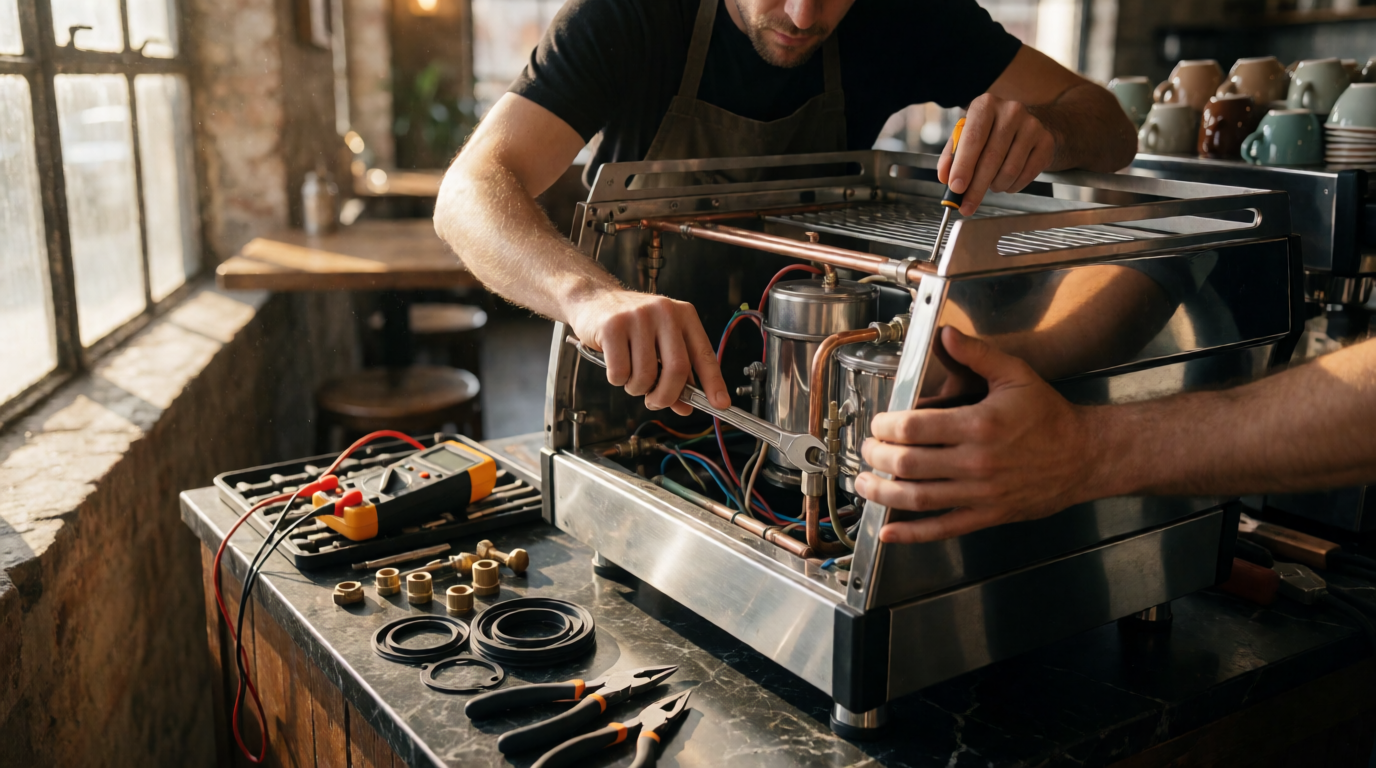
- Professional Service & Inspection: This is the most important item on the schedule. A certified technician should perform a comprehensive inspection: boiler inspection for scale, pump pressure test, electrical safety check, and calibration of all electronic controls. This is not a DIY job.
💡
Key Takeaway
The annual professional service is your insurance policy. It uncovers hidden wear that daily operators miss and ensures your machine meets all safety standards.
Implementing Your Schedule: A Step-by-Step Guide
- Audit Your Equipment: List every machine (espresso, batch brewer, grinder, etc.), make, model, and serial number. Note its installation date.
- Create the Master Calendar: Using the framework above, build a digital calendar (Google Calendar, maintenance software) with recurring events for each task. Color-code by frequency.
- Assign Ownership & Train: Designate a primary and backup person responsible for daily/weekly tasks. Train them thoroughly using manufacturer guides. For monthly/annual tasks, schedule your technician visits a year in advance.
- Develop a Log Sheet: Use a physical or digital log next to each machine. Require staff to initial and date when tasks are completed. This creates accountability and a service history.
- Integrate with Inventory: Link your schedule to a parts inventory. When you log "check gasket," you should know if you have a spare. Order wear parts (gaskets, screens) during your annual service.
- Review & Adapt: Quarterly, review the log sheets and any repair notes. Is a weekly task becoming a daily need due to increased volume? Adjust the schedule dynamically.
At Busy Bean Coffee, our managed membership clients never see this schedule. Our white-glove technicians, like Leslie Cook, manage the entire calendar proactively. You get the reliability without the administrative burden.
Common Mistakes in Maintenance Scheduling
- Treating Descale as a Cleaning Task: Descaling is a mechanical necessity to remove mineral deposits that insulate heating elements and clog valves. Using the wrong acid or frequency can damage machines. It's a chemical process, not just cleaning.
- Ignoring the Grinder: The grinder is half of the espresso equation. Worn or dirty burrs create inconsistent particle size, leading to channeling and sour or bitter shots. It needs its own dedicated schedule.
- Using Non-Food-Safe Chemicals: Household vinegar or harsh cleaners can damage seals and leave unsafe residues. Always use manufacturer-approved, food-safe cleaning and descaling products.
- Having No Spare Parts: When a $10 gasket fails on a Friday night and you don't have a spare, your machine is down until Monday. Your maintenance schedule should dictate a minimal "spare parts kit."
- Skipping the Professional Annual Service: This is the equivalent of never changing your car's oil. Technicians use specialized tools and gauges to diagnose issues invisible to the user, preventing costly mid-year breakdowns.
The Busy Bean Advantage: Maintenance Without the Management
Executing this comprehensive coffee machine maintenance schedule requires time, expertise, and disciplined management—resources most restaurateurs and hoteliers would rather devote to their guests.
This is the core problem our managed coffee membership solves. When you partner with Busy Bean Coffee:
- The Schedule is Our Responsibility: Our certified technicians own the entire maintenance calendar, from daily check-ins to the annual overhaul. We show up with the right parts, the right chemicals, and the right expertise.
- Predictable Costing: Your single monthly fee covers all scheduled maintenance, repairs, and parts. There are no surprise invoices for a new pump or a descaling service.
- Proactive, Not Reactive: Our connected SENSA equipment can provide usage data that informs an even more precise, predictive maintenance schedule, preventing issues before you ever notice them.
- Guaranteed Uptime: We stand behind our service. If a covered issue arises, we prioritize the fix to minimize your disruption.
Frequently Asked Questions
How often should I really descale my coffee machine?
The frequency depends entirely on your water hardness. You can test this with inexpensive strips. As a rule of thumb: with soft water, every 2-3 months may suffice; with hard water, monthly is essential. In areas with very hard water, a built-in water softener is a worthwhile investment. The key is consistency—refer to our dedicated guide on How to Descale a Coffee Machine Step by Step for the full process. Ignoring it leads to limescale buildup that reduces heating efficiency by up to 30% and can cause irreversible boiler damage.
Can I perform annual maintenance myself to save money?
While skilled technicians can handle many tasks, the annual service involves safety-critical checks (pressure vessel inspection, electrical grounding) and precise calibration that requires specialized tools like pressure gauges, thermocouples, and multimeters. An incorrect adjustment can lead to unsafe operating pressures or temperatures. The liability and risk of voiding your equipment warranty far outweigh the cost of a professional service. This is a core tenet of our Ultimate Guide to Coffee Equipment Maintenance for Businesses.
What are the first signs that my maintenance schedule is inadequate?
Early warning signs include inconsistent brew times (espresso pouring too fast or slow), fluctuating steam pressure, unusual noises from the pump or grinder, water leaking from the group head or fittings, and an off-taste in the coffee (sour, bitter, or salty) that persists after a cleaning. These are often precursors to larger failures and indicate needed adjustments to your schedule or immediate corrective action.
Does a maintenance schedule differ for superautomatic vs. traditional espresso machines?
Yes, significantly. Superautomatics have more complex internal pathways for milk and coffee, requiring more frequent and automated internal cleaning cycles (which must be initiated by staff). They also have more sensors and electronics. The schedule focuses less on manual portafilter cleaning and more on ensuring automated cycles are run and internal milk components are disassembled and cleaned daily. Traditional machines require more hands-on daily barista skills, as outlined in Espresso Machine Maintenance Best Practices.
How do I create a schedule for multiple machines of different types?
Create a unified master calendar but segment it by equipment type. Your batch brewer may need a weekly acid rinse, while your espresso machine needs daily backflushing. Use a spreadsheet or maintenance software with equipment tags. The principle remains: every machine has its own tailored plan based on manufacturer guidelines and usage volume, all visible on one centralized schedule.
Final Thoughts on Your 2026 Coffee Machine Maintenance Schedule
A proactive coffee machine maintenance schedule is the backbone of a profitable, reputable coffee service. It is the systematic defense against downtime, poor quality, and spiraling repair costs. In 2026, with customer expectations higher than ever, you cannot afford to be reactive.
Whether you implement this schedule with your own team or choose to eliminate the burden entirely, the imperative is clear: scheduled maintenance is not an optional cost—it is a fundamental operational requirement. For businesses that recognize that their time is better spent on guests than on gear, the managed solution provides not just coffee, but certainty.
Ready to transform maintenance from a headache into a guarantee? Explore the Busy Bean Coffee managed membership and let us handle the schedule, so you can focus on what you do best.
About the Author
Chris is the CEO & Founder of Busy Bean Coffee. With over a decade in specialty coffee equipment, he has designed maintenance protocols for hundreds of foodservice businesses, from boutique hotels to national franchises, and built the Busy Bean managed service to deliver reliability without the operational burden.
Free Coffee Pairing Guide & Specialty Roast Cheat Sheet
Unlock the secrets of perfect brewing ratios, water temperatures, and specialty roast profiles. Download the guide.