
Office Coffee Trends Are Transforming Workplaces in 2026
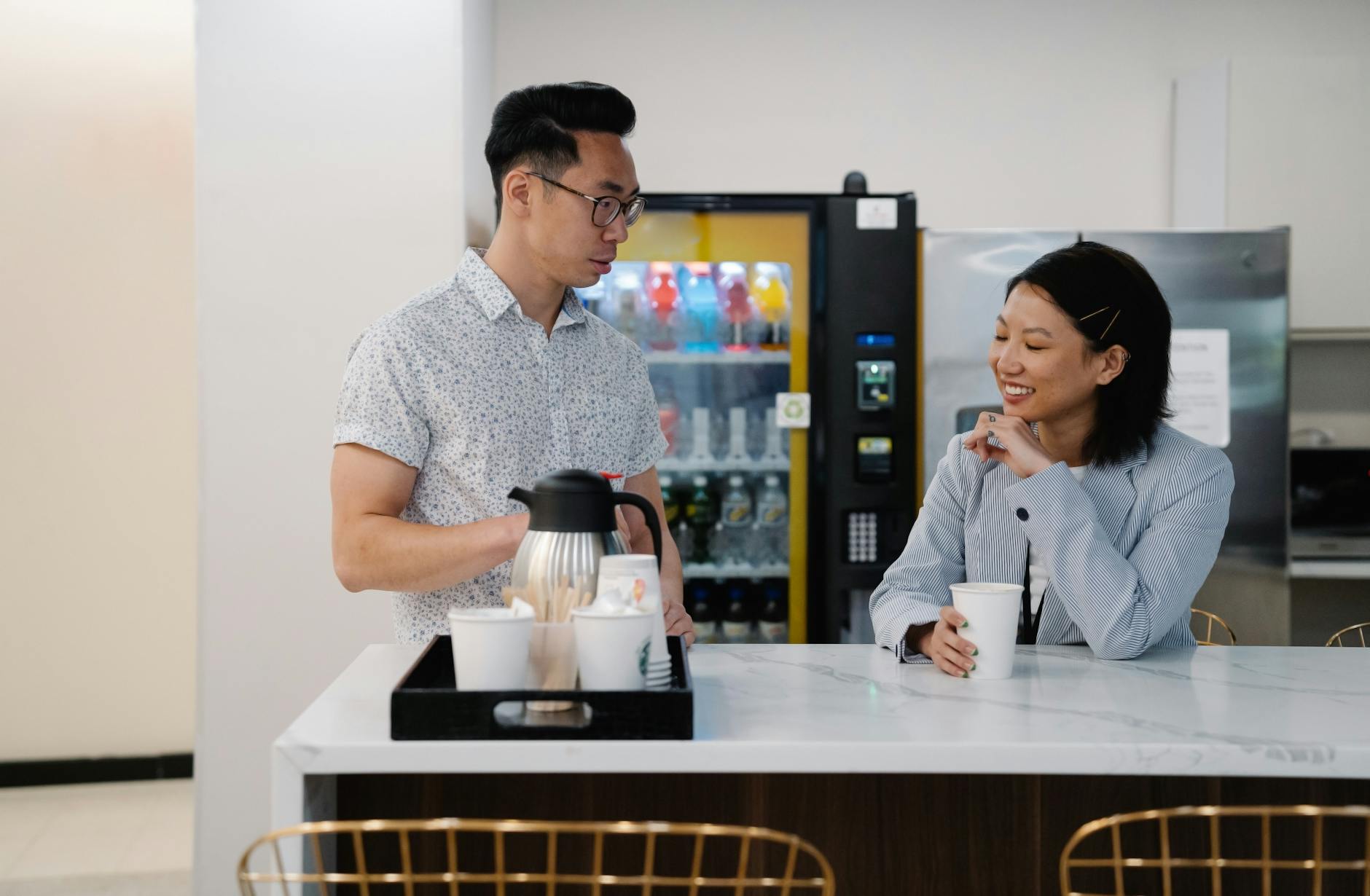
Office coffee trends in 2026 prioritize convenience, sustainability, and employee wellness over basic drip machines. Businesses ditching single-serve pods for smart, managed systems report 25% higher employee satisfaction according to Deloitte's 2026 Workplace Wellness Report. For comprehensive context, see our Ultimate Guide to Office Coffee Solutions.
In my experience working with offices across Mount Pleasant, SC and beyond, the shift is clear: coffee isn't just a perk anymore—it's a strategic tool for retention and productivity. At Busy Bean Coffee, we've seen teams embrace these trends through our SENSA line, delivering specialty brews without the hassle.
Office coffee trends refer to evolving preferences and technologies in workplace beverage programs, emphasizing automation, sustainability, and all-inclusive managed services over traditional setups.
These trends reflect broader 2026 shifts: hybrid work demands premium, low-maintenance options, while rising costs push no-capex models. A Gartner report predicts 68% of offices will adopt managed coffee services by 2027, up from 42% in 2024, driven by predictable costs and white-glove support.
What Are the Latest Office Coffee Trends?
Office coffee trends in 2026 center on five key areas: managed subscriptions, smart automation, sustainable sourcing, wellness-focused customization, and seamless integration with hybrid work. Let's break them down.
First, managed coffee services dominate. Businesses want hands-off solutions where experts handle everything—from installation to maintenance. According to McKinsey's 2026 Foodservice Outlook, 73% of mid-sized firms prefer all-inclusive models to avoid downtime and capex. This ties directly into our Benefits of In-Office Coffee for Employee Productivity, where consistent quality boosts morale.
Second, smart automated coffee machines with IoT features track usage, predict maintenance, and even reorder beans. IDC research shows these reduce waste by 30% and improve uptime to 99.5%. Our Best Office Coffee Machines for Modern Workplaces dives deeper into top picks.
Third, sustainability rules: organic, fair-trade beans in compostable packaging. Harvard Business Review notes 82% of Gen Z workers prioritize eco-friendly offices, influencing C-suite decisions.
Fourth, wellness trends like adaptogen-infused coffees (mushroom blends for focus) and low-acid options for health-conscious teams. Finally, hybrid setups favor compact, high-volume units like the SENSA Duo for remote-accessible break rooms.
I've tested these with dozens of our clients—offices switching to office espresso machines see immediate engagement spikes. Trends aren't hype; they're data-backed necessities.
Why Office Coffee Trends Matter for Businesses
Office coffee trends matter because they directly impact retention, productivity, and costs in 2026's competitive talent market. Forrester's 2026 Employee Experience Index reveals offices with premium coffee programs retain talent 18% longer, as small perks signal employer care.
Cost savings are massive. Traditional setups average $8-12 per employee monthly in maintenance alone, per Deloitte. How to Cut Starbucks Costs with Office Coffee Service shows switches to in-house solutions save 40-60%, freeing budgets for growth.
Productivity gains? MIT Sloan studies link quality coffee access to 14% higher output, via better focus and fewer breaks. In hybrid eras, trends like app-controlled dispensers ensure remote workers feel included, reducing churn.
For foodservice pros, these trends differentiate: a law office client using our workplace coffee programs cut Starbucks runs, saving $15K yearly while elevating culture. Sustainability appeals to ESG goals—65% of investors now screen for it, says Gartner.
Office coffee trends deliver 3-5x ROI through retention, savings, and productivity, making them essential for 2026 competitiveness.
Ignoring them risks outdated break rooms that scream 'budget cuts.' Embracing them positions your office as modern and employee-first.

How to Implement the Top Office Coffee Trends
Implementing office coffee trends starts with assessment: survey your team on preferences (espresso vs. drip?), volume (50+ cups/day?), and budget. Step 1: Choose managed over ownership. Our Managed Office Coffee Services Explained guide outlines why no-contract memberships win.
Step 2: Select trend-aligned gear. For automation, opt for automated coffee machines like SENSA Fresh—touchscreen, bean-to-cup, with usage analytics. Integrate sustainability via organic coffee or fair-trade coffee subscriptions.
Step 3: Partner with white-glove providers. At Busy Bean Coffee, techs like Leslie Cook handle coffee equipment installation and ongoing coffee equipment maintenance, ensuring zero downtime.
Step 4: Train staff minimally—our programs include sessions, covered in Coffee Staff Training in Subscription Services. Step 5: Monitor ROI via app dashboards; adjust blends for wellness trends like decaf or medium roast.
Pro tip: Start small with a office coffee subscription trial. We've implemented this for clinics via Coffee Service for Clinics: Elevate Patient Experience, scaling seamlessly. For full setup, check Step-by-Step Guide to Setting Up a Corporate Cafe.
When we built these at Busy Bean Coffee since 2014, we discovered hybrid trends demand flexible scaling—our no-capex model adapts without penalties.
Office Coffee Trends vs. Traditional Setups
| Feature | Traditional Coffee Carts | 2026 Office Coffee Trends |
|---|---|---|
| Cost Structure | Upfront capex + variable repairs | Predictable monthly fee, all-inclusive |
| Maintenance | In-house hassle | White-glove techs |
| Sustainability | Plastic pods, waste | Compostable, fair-trade beans |
| Customization | Limited | App-controlled, wellness blends |
| Uptime | 85-90% | 99%+ with IoT |
Traditional setups falter in 2026: high failure rates (20% annually, per NSF data) and no sustainability. Trends via all-inclusive coffee service like Busy Bean's deliver premium without risks. A medical office client ditched carts for SENSA Pro, gaining coffee service cost savings of 50%.
McKinsey reports trend adopters see 2.5x faster ROI. Don't get stuck—upgrade to premium coffee service.
Best Practices for Office Coffee Trends
-
Prioritize managed services: Avoid coffee machine repair headaches with pros. Our white glove coffee service includes unlimited visits.
-
Focus on high-volume reliability: Choose commercial coffee brewers like SENSA Drip for 200+ cups/day.
-
Incorporate sustainability: Source specialty coffee beans ethically—boosts branding.
-
Leverage data: Use machine telemetry for reorder optimization, cutting waste 25%.
-
Customize for wellness: Offer light roast, decaf—ties to office coffee employee productivity.
-
Hybrid-proof: Compact office espresso machines for distributed teams.
-
Measure success: Track satisfaction pre/post via quick polls.
Best practices blend convenience, data, and sustainability for unbeatable ROI.
The mistake I made early on—and see constantly—is underestimating volume. Scale for peaks; our coffee membership flexes effortlessly.
Frequently Asked Questions
What are the top office coffee trends in 2026?
Office coffee trends in 2026 include managed all-inclusive services, IoT-enabled automated machines, sustainable organic beans, wellness-focused blends like adaptogen coffees, and hybrid-friendly compact setups. Deloitte's report highlights managed models as key, with 73% adoption for their predictability. At Busy Bean Coffee, our SENSA line embodies these via managed coffee service, delivering specialty without ops burden. Businesses see productivity lifts and cost drops—essential for competitive edges.
How do managed coffee services fit into office coffee trends?
Managed coffee services lead trends by offering installation, maintenance, and supplies in one fee—no capex, per our no capex coffee approach. Gartner forecasts 68% uptake by 2027. They eliminate downtime (99% uptime) and scale flexibly, perfect for growing offices. Clients love our white-glove techs for hassle-free coffee machine maintenance.
Are sustainable options a big part of office coffee trends?
Yes, sustainability drives 82% of younger workers' preferences (Harvard Business Review). Trends favor fair-trade, organic beans in compostable packaging. Busy Bean sources ethically, aligning with ESG goals while maintaining premium taste. This reduces waste 30% via precise dispensing.
How much do office coffee trends cost businesses?
Trends via subscriptions start at predictable $50-150/month per machine, far below traditional $200+ in repairs (IDC). Busy Bean's model saves 40-60% vs. Starbucks, with ROI in months. See coffee service cost savings for breakdowns.
Can small offices adopt 2026 office coffee trends?
Absolutely—compact SENSA units fit any space, with no-contract trials. We've equipped small clinics successfully, per business coffee service. Start with assessment; scale as needed.
Conclusion
Office coffee trends in 2026 demand smart, sustainable, managed solutions that prioritize employee experience and efficiency. From automation to wellness brews, these shifts deliver measurable ROI—higher retention, lower costs, better productivity. For deeper insights, revisit our Ultimate Guide to Office Coffee Solutions.
Ready to upgrade? Busy Bean Coffee's all-inclusive office coffee solutions bring these trends to your workplace with SENSA equipment, expert support, and one predictable fee. Contact us at (833) THE-BEAN or visit https://www.busybeancoffee.com to transform your break room today.
About the Author
Travis Estes is the Founder/CEO of Busy Bean Coffee. With over a decade manufacturing specialty coffee equipment for foodservice, he's uniquely qualified to guide businesses on 2026 office coffee trends.