
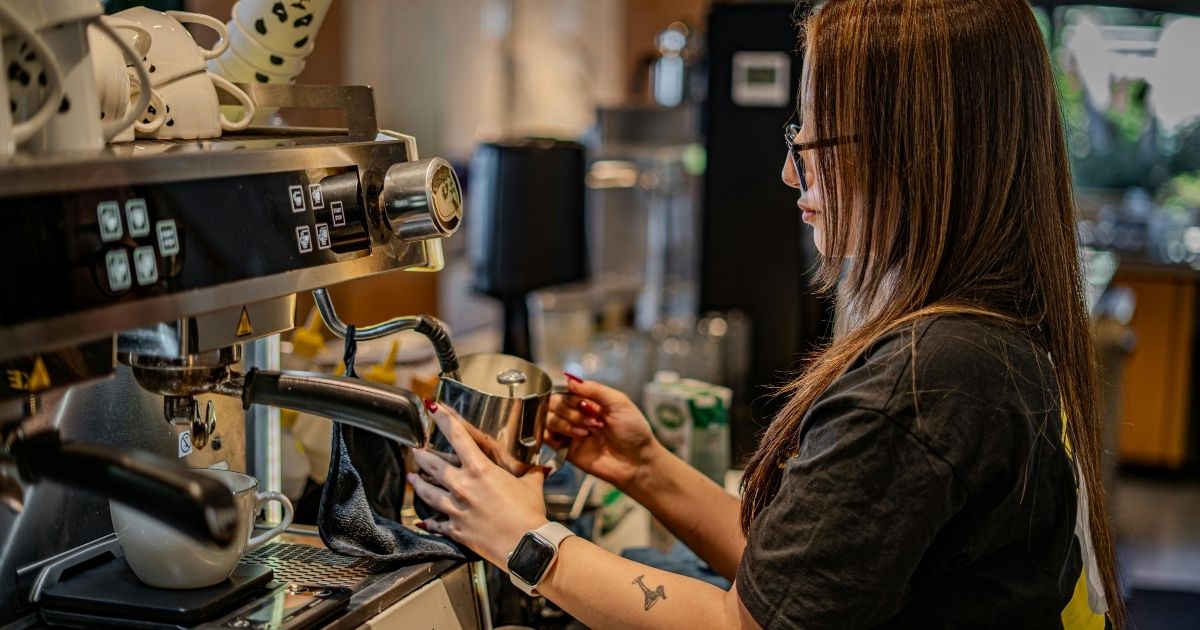
Choosing the right commercial coffee machine isn't just about brewing coffee; it's about building a profitable, efficient, and elevated beverage program that keeps customers and employees coming back. In 2026, the gap between a basic drip brewer and a true premium machine has never been wider, impacting everything from your bottom line to your brand reputation. For a complete framework on building a superior beverage program, see our Ultimate Guide to Premium Coffee Service for Businesses.
What Are Premium Commercial Coffee Machines?
📚
Definition
A premium commercial coffee machine is a high-capacity, durable, and technologically advanced appliance designed for business environments. It goes beyond basic brewing to offer programmable settings, superior extraction, integrated grinding, milk texturing capabilities, and often, connectivity for maintenance and usage tracking.
Unlike residential or basic commercial models, these machines are engineered for hundreds of servings daily with minimal performance degradation. They represent a significant investment in quality, consistency, and operational efficiency. In my experience working with dozens of restaurants and hotels, the decision to invest in premium equipment is often the single biggest factor in transforming a coffee program from a cost center to a profit center.
Why Premium Commercial Coffee Machines Matter in 2026
The business case for premium equipment has solidified. According to the National Coffee Association's 2025 Databook, 67% of coffee consumed in the United States is prepared outside the home, with a growing consumer preference for specialty-grade beverages even in non-cafe settings.
- Direct Revenue Impact: Premium machines enable you to sell higher-margin drinks like lattes, cappuccinos, and specialty single-origin brews. A basic drip coffee might net $2, but a handcrafted latte can command $5 or more with similar base costs.
- Operational Efficiency: Automated grinders, programmable batch sizes, and fast heat-up times reduce labor time per cup. This is critical in high-volume settings like hotel breakfast buffets or busy corporate cafeterias.
- Brand Elevation & Customer Retention: The quality of your coffee directly influences guest and employee perception. A study published in the International Journal of Hospitality Management found that food and beverage quality, including coffee, is a top-three factor in hotel guest satisfaction and intent to return.
- Reduced Waste & Consistency: Precise water temperature control, accurate dosing, and programmable strength settings ensure every cup meets your standard, reducing the waste from poorly made drinks that get thrown out.
- Durability & Total Cost of Ownership: While the upfront cost is higher, premium machines from reputable manufacturers are built to last 5-10 years with proper care, unlike cheaper models that may fail in 1-2 years under heavy use.
Key Features to Look for in 2026
When evaluating commercial coffee machines, consider these non-negotiable features for a true premium experience:
- Programmable Brewing Parameters: Control over water temperature (195°F–205°F is ideal), brew time, and coffee-to-water ratio is essential for extracting the best flavor from different beans.
- Integrated or Paired Grinder: Pre-ground coffee loses freshness rapidly. An on-demand grinder ensures peak flavor and aroma. Look for commercial-grade burr grinders with adjustable settings.
- High-Volume Capacity: Assess your peak service needs. A machine should handle your busiest hour without running dry or requiring constant refills. Look for large water reservoirs (often plumbed) and bean hoppers.
- Dual Boiler or Heat Exchange System: This allows for simultaneous brewing and steam generation, crucial for making espresso-based drinks without wait time.
- Automated Milk Frothing (for espresso machines): Advanced models offer hands-free, consistent milk texturing at the perfect temperature, a huge labor saver and quality control feature.
- Ease of Maintenance & Cleaning: Automated cleaning cycles, accessible brew groups, and clear descaling alerts are vital for machine longevity and hygiene.
- Connectivity & Data: Modern premium machines may offer Wi-Fi connectivity to track usage, schedule maintenance, and even reorder supplies automatically.
Types of Premium Commercial Coffee Machines
Your business model dictates the best machine type. Here’s a comparison:
| Machine Type | Best For | Key Capabilities | Considerations |
|---|---|---|---|
| Super-Automatic Espresso Machines | Offices, Hotel Lobbies, Quick-Serve Cafes | One-touch drink selection, integrated grinder, automated milk frothing, bean-to-cup. | Highest ease of use, minimal training required. Can be higher maintenance. |
| Traditional/Semi-Automatic Espresso Machines | Specialty Coffee Shops, High-End Restaurants | Full manual control over extraction and milk steaming, highest quality potential. | Requires a skilled barista, slower output, higher labor cost. |
| Pour-Over/Drip Brewers (Premium) | Specialty Cafes, Batch Brewing for Events | Exceptional clarity and flavor for filter coffee, programmable batches. | Focuses on black coffee, not for milk-based drinks. Often used alongside espresso machines. |
| Single-Serve Pod Systems (Commercial Grade) | Offices, Waiting Rooms, Low-Volume Settings | Extreme consistency, no waste, vast variety with minimal mess. | Highest cost per cup, environmental concerns with pods, less "craft" perception. |
| Batch Brewers (Thermal Carafe) | Diners, Corporate Cafeterias, Churches | Brews large volumes (1-4 liters) into insulated servers, keeping coffee hot for hours. | Limited to batch black coffee, not customizable per cup. |
For businesses looking to offer a full spectrum of drinks without barista labor, exploring automated coffee machines is a strategic move. Similarly, the foundation of any great cup starts with proper grinding, making a commercial grinder supply a critical parallel investment.
Top Commercial Coffee Machine Considerations for Different Settings
For Restaurants & Cafes
Your machine is on display and integral to service. Reliability during the lunch rush is paramount. A super-automatic or a high-quality semi-automatic with a dedicated barista are the main choices. Durability and service support are key. Learn more about tailoring this choice in our guide to Premium Coffee Service for Restaurants and Cafes.
For Hotels & Hospitality
Volume and consistency across dayparts (breakfast, lobby, in-room) are critical. A combination of a high-capacity batch brewer for breakfast buffets and super-automatics for the lobby bar is common. The machine must be guest-friendly and durable. Discover how to integrate this into the guest journey with our resource on Premium Coffee Service for Hotels.
For Offices & Corporate Kitchens
Ease of use, low maintenance, and the ability to serve many people quickly are top priorities. Super-automatic bean-to-cup machines or commercial pod systems often win here. The focus is on employee satisfaction and reducing time away from desks. We delve into the specific needs of this environment in our article on Office Coffee Service: Premium Options to Boost Morale.
💡
Key Takeaway
The "best" machine is the one that aligns with your specific service volume, drink menu, labor model, and operational workflow. A machine perfect for a high-volume hotel breakfast would be overkill and inefficient in a small law firm.
Implementation & Integration Guide
- Audit Your Needs: Track your current coffee consumption for two weeks. Note peak times, popular drink types, and pain points.
- Define Your Budget: Consider Total Cost of Ownership (TCO): purchase/lease price, installation, expected maintenance, and cost per cup (coffee, milk, filters).
- Space & Utility Planning: Ensure you have adequate counter space, electrical outlets (often 220V for premium machines), and access to water lines and drainage for plumbed models.
- Source Beans & Supplies: Your machine is only as good as your coffee. Partner with a reputable supplier for fresh, high-quality beans that match your machine's capabilities. This is where a specialty bean supply partner becomes invaluable.
- Staff Training: Even with super-automatics, staff need training on basic operation, daily cleaning routines, and how to alert managers to service needs.
- Schedule Preventative Maintenance: This is the most common mistake. Adhering to a strict cleaning and descaling schedule prevents costly breakdowns. A managed coffee service typically includes this, removing the burden from your team.
The Managed Service Alternative: Beyond the Machine Purchase
For many businesses, the complexity and hidden costs of owning premium equipment lead them to a managed service model, like the one we offer at Busy Bean Coffee. This approach transforms a capital expenditure (CapEx) into a predictable operational expense (OpEx).
Instead of sourcing a machine, a grinder, beans, and a maintenance contract separately, a managed service provides:
- State-of-the-Art Equipment: Access to premium machines like our SENSA line without the large upfront purchase.
- White-Glove Installation & Training: Professional setup and staff training by experts like our lead technician, Leslie Cook.
- All-Inclusive Maintenance & Repairs: Full coverage for cleaning, descaling, parts, and repairs. No surprise service bills.
- Consistent Supply of Premium Coffee: Regularly delivered fresh, high-quality beans and supplies.
- One Predictable Monthly Fee: Simplifies budgeting and includes everything.
This model is particularly effective for businesses that want a top-tier coffee program without the operational hassle. You focus on your customers; we handle the coffee. It’s the core of our all-inclusive coffee service philosophy.
Frequently Asked Questions
What is the typical lifespan of a premium commercial coffee machine?
With proper daily cleaning, regular descaling, and annual professional maintenance, a high-quality commercial machine should last 5 to 10 years. Super-automatic machines with more moving parts may require more frequent servicing than a robust semi-automatic or batch brewer. Neglecting maintenance can cut this lifespan in half. This is a primary reason many opt for a service plan that guarantees performance.
How much should I budget for a commercial coffee machine?
Entry-level commercial machines start around $1,500, but true premium models for high-volume environments typically range from $5,000 to $15,000 or more for top-end espresso systems. Remember to budget for installation (which may require plumbing/electrical work), initial stock of beans and supplies, and a dedicated maintenance fund or service contract, which can be 10-20% of the machine's cost annually.
Can I lease a commercial coffee machine instead of buying it?
Yes, leasing is a very common option. It preserves capital, often includes a maintenance package, and allows for technology upgrades at the end of the lease term. Many providers, including Busy Bean Coffee, structure their managed service as a lease-like membership, bundling the machine, maintenance, and coffee into one monthly payment with no long-term contract, offering maximum flexibility.
What's the difference between a 220V and a 110V machine?
Voltage relates to power. 220V machines heat water much faster and can maintain temperature more consistently under heavy use, which is critical for high-volume service and proper espresso extraction. Most serious premium machines require 220V. A 110V machine may suffice for a very low-volume office but will struggle with back-to-back drinks.
How do I clean and maintain a commercial espresso machine?
Daily maintenance includes flushing the brew group, wiping down steam wands, and emptying drip trays and grounds drawers. Backflushing with a cleaning detergent should be done daily or weekly depending on volume. Descaling—removing mineral buildup from water—is critical and should be performed on a schedule dictated by your water hardness and usage, typically every 1-3 months. Always follow the manufacturer's specific guidelines. Most businesses benefit profoundly from a professional service plan to handle this complex routine.
Conclusion: Investing in Your Coffee Program's Future
Selecting the best commercial coffee machines for your kitchen in 2026 is a strategic decision with tangible impacts on revenue, efficiency, and brand perception. The landscape offers powerful solutions, from fully automated bean-to-cup systems to traditional espresso machines, each suited to different operational needs.
The journey doesn't end at purchase; it extends into daily care, consistent quality control, and reliable supply chain management. For businesses that prefer to focus on their core operations while still offering a world-class coffee experience, a managed service model presents a compelling, hassle-free alternative.
Ready to explore what a premium, managed coffee program could look like for your business? At Busy Bean Coffee, we provide the equipment, the coffee, the maintenance, and the peace of mind in one simple package. You run the business. We handle the coffee.
Visit Busy Bean Coffee to learn more about our SENSA equipment line and all-inclusive managed membership, or speak with our team to design a solution tailored for your kitchen's specific needs.