📖This article is part of the complete guide to Ultimate Guide to Coffee Equipment Maintenance for Businesses.
What is Bean-to-Cup Machine Maintenance?
📚
Definition
Bean-to-cup machine maintenance is a systematic regimen of cleaning, descaling, lubrication, and parts inspection for automated coffee machines that grind whole beans and brew espresso-based drinks. It encompasses daily user tasks, weekly deep cleans, and periodic professional servicing to ensure hygiene, performance, and longevity.
Unlike traditional espresso machines, bean-to-cup units combine multiple subsystems—grinder, brew group, milk frother, and often a water filtration unit—into one automated appliance. This complexity means maintenance isn't a single task but a layered approach. De acordo com relatórios recentes do setor de the Specialty Coffee Association's 2025 Equipment Longevity Report, a disciplined maintenance schedule can extend the operational life of a commercial bean-to-cup machine by 40-60%, directly impacting your total cost of ownership.
Key Takeaway: Effective maintenance is not just about cleaning; it's a preventative operational strategy that safeguards coffee quality, machine uptime, and your bottom line.
Why Proactive Bean-to-Cup Maintenance is Non-Negotiable in 2026
Neglecting maintenance is the fastest way to turn a premium coffee asset into a costly liability. The consequences are both immediate and cumulative.
- Protects Coffee Quality & Brand Reputation: Coffee oils (caffeol) become rancid and taint future brews. Mineral scale buildup from hard water insulates heating elements and brew units, leading to incorrect brewing temperatures. A study by the National Coffee Association found that 73% of consumers can detect off-flavors caused by poor machine hygiene, directly associating it with the establishment's overall standards.
- Prevents Costly Downtime & Repairs: The integrated nature of these machines means a failure in the grinder can halt the entire brewing process. A clogged milk system can necessitate a full line replacement. Proactive maintenance identifies wear on components like gaskets, seals, and grinders before they fail during service.
- Ensures Food Safety & Compliance: Milk residue is a perfect breeding ground for harmful bacteria like E. coli and Listeria. Automated milk systems require rigorous daily cleaning to meet health department codes. Regular maintenance logs are often required during inspections.
- Maximizes Equipment Lifespan & ROI: Calcium scale is abrasive and can wear out pumps and valves. Old coffee grounds can damage the precision burrs of the grinder. Consistent care is the single biggest factor in achieving the 5-7 year lifespan expected from a commercial-grade machine.
Link to related satellite: This is why establishing a clear Commercial Coffee Machine Maintenance Schedule is foundational for any operation.
The 2026 Bean-to-Cup Maintenance Framework: Daily, Weekly, Monthly
This framework is based on industry best practices and my decade of experience supporting foodservice clients. Adherence is critical.
Daily Maintenance (Barista/Staff Level)
These tasks should be completed at closing or during slow periods.
- Empty and Clean the Drip Tray & Grounds Container: This prevents overflow, odors, and mold growth. Wash with warm, soapy water.
- Wipe Down the Machine Exterior & Brew Group Area: Use a damp, non-abrasive cloth. Remove any coffee splatter or milk residue from the dispensing area.
- Clean the Milk System (CRITICAL): For machines with automatic milk frothers, run the designated cleaning cycle as per the manual. This typically involves a flushing solution to remove milk proteins and fats. If your machine has a detachable milk carafe, wash it thoroughly.
- Purge the Steam Wand (if applicable): After texturing milk, purge the wand with steam to clear the internal tube, then wipe it clean with a damp cloth.
Weekly Maintenance (Manager/Supervisor Level)
- Deep Clean the Brew Group: Most machines allow you to remove the brew group (the mechanism that holds the coffee puck). Soak it in a designated coffee machine cleaner (not dishwasher soap), rinse thoroughly, and lubricate any moving parts with food-safe grease as specified by the manufacturer.
- Clean the Grinder Burrs: Using a grinder brush, remove all retained coffee grounds. Some models allow for deeper burr cleaning—consult your manual. Stale oils on burrs are a primary source of bitter flavors.
- Inspect and Clean the Water Tank: Empty, scrub, and refill the tank with fresh, filtered water. Check the water filter status indicator and replace if needed.
- Run a Full System Cleaning Cycle: Use the machine's integrated cleaning program with a specialized cleaning tablet or solution for bean-to-cup machines to clean internal coffee pathways.
Monthly/Quarterly Maintenance (Professional Service)
This is where a managed service like Busy Bean Coffee provides immense value, handling complex tasks that require expertise and specific tools.
- Descaling: This removes limescale from internal heating elements and pipes. The frequency depends on your water hardness. Incorrect descaling can damage machines.
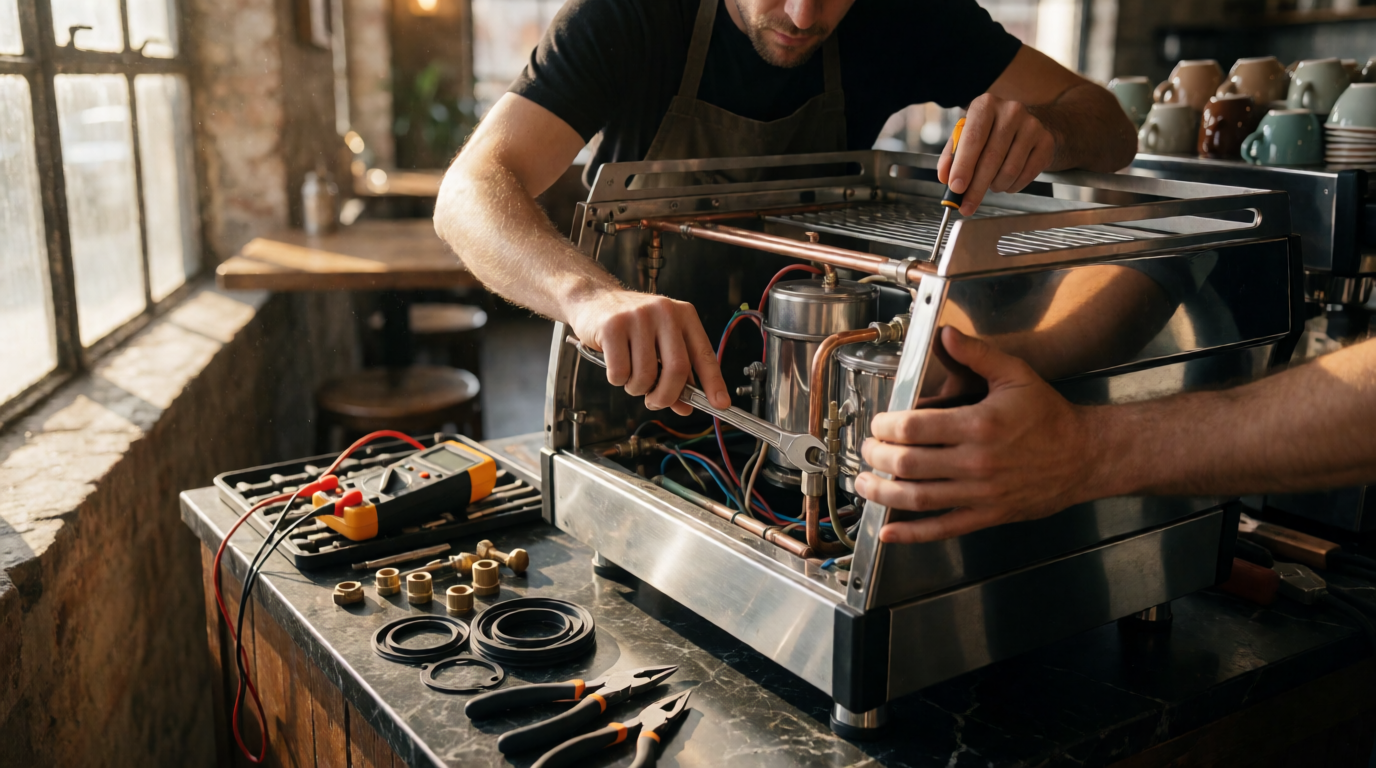
- Full System Inspection: A technician will check water pressure, brew temperature calibration, grinder adjustment, and the condition of all seals, gaskets, and tubing.
- Milk System Deep Sanitization: Disassembly and cleaning of internal milk lines that daily cycles can't reach.
- Software Updates & Performance Calibration: Modern machines often receive firmware updates to improve functionality.
Link to related satellite: For the detailed chemical process, see our step-by-step guide on How to Descale a Coffee Machine.
Essential Maintenance Tools & Supplies for 2026
Using the correct products is as important as the routine itself. Avoid household cleaners at all costs.
| Tool/Supply | Purpose | Why It's Specific |
|---|---|---|
| Food-Safe Machine Cleaner Tablets | Cleaning brew group & internal circuits | Formulated to dissolve coffee oils without damaging seals or leaving residue. |
| Commercial Descaling Solution | Removing limescale | Acid-based formula designed for coffee machine metals; vinegar is too weak and can damage components. |
| Grinder Brush | Cleaning burrs | Stiff-bristled brush designed to reach into burrs without damaging the cutting edges. |
| Food-Safe Lubricant | Lubricating brew group | Specific viscosity and food-safe rating for moving parts in high-heat, wet environments. |
| Milk System Cleaner | Flushing auto-frothers | Enzymatic or acidic cleaner designed to break down milk proteins and fats that water cannot. |
| Sanitizing Wipes/Spray | Exterior surfaces | Kills surface bacteria without harming machine finishes or contaminating coffee. |
| Water Filter Cartridges | Pre-filtration | Soften water and reduce scale-forming minerals before they enter the machine. |
| Backflush Disc (if applicable) | Cleaning group head | Used in machines with a traditional portafilter-style group for backflushing. |
The Hidden Cost of DIY vs. Managed Maintenance
Many businesses attempt a purely DIY approach to save money, but the hidden costs often surpass a managed service fee.
- Staff Time & Training: Who is responsible? Is training consistent? Turnover can break your maintenance chain.
- Inventory & Product Management: You must source, store, and manage an inventory of specialized chemicals.
- Risk of Error: Using the wrong cleaner, incorrect descaling procedure, or missing a critical step can cause hundreds or thousands in repairs.
- Unplanned Downtime: A breakdown means no coffee service, emergency technician calls (at premium rates), and potential lost revenue.
This is the core problem Busy Bean Coffee's managed membership solves. Our white-glove service includes all maintenance—daily checks, weekly deep cleans, and professional descaling—performed by our certified technicians like Leslie Cook. You get one predictable monthly fee covering equipment, premium coffee, and all maintenance, with zero capital outlay. You run your business; we handle the coffee, ensuring it's always perfect and your machine is always running.
Link to related pillar: This is part of the larger value of a Managed Coffee Service.
Troubleshooting Common Bean-to-Cup Machine Issues
| Symptom | Likely Cause | Immediate Action | Preventative Maintenance Fix |
|---|---|---|---|
| Weak, watery espresso | Clogged or dirty brew group, worn grinder burrs | Run a cleaning cycle. Check grind size. | Weekly brew group clean. Monthly grinder inspection. |
| Machine won't brew/makes error sound | Empty water tank, clogged water line, scale blockage | Check tank, ensure water flow to machine. | Regular descaling. Daily water tank check. |
| Milk not frothing or tastes sour | Clogged milk line, dirty frother | Run milk system cleaning cycle. | Daily milk system clean. Deep sanitization every 4-6 weeks. |
| Grinder making loud noise | Foreign object (e.g., rock) in beans, worn burrs | Stop machine immediately. Inspect bean hopper and burrs. | Use high-quality beans. Regular burr cleaning and inspection. |
| Coffee tastes bitter or burnt | Dirty brew circuit, rancid coffee oils in grinder | Run full system clean with tablets. Clean grinder burrs. | Adhere to weekly cleaning schedule. Use fresh beans. |
Frequently Asked Questions
How often should I descale my bean-to-cup machine?
The frequency depends entirely on your water hardness. In areas with very hard water, it could be as often as every month. With a proper water softener or filter, it may be every 3-6 months. The machine's internal counter or indicator light is your best guide. Never ignore a descale alert. According to a 2025 water quality impact study, scale buildup is the leading cause of heating element failure in commercial machines, a repair that often costs more than a year of preventative descaling service.
Can I use vinegar to descale my commercial bean-to-cup machine?
Absolutely not. While a common DIY hack for home appliances, vinegar is not strong enough for the scale buildup in a high-volume commercial machine. More critically, its acetic acid can damage rubber seals and gaskets over time, and its odor is incredibly difficult to fully purge from the system, leading to vinegar-tainted coffee for weeks. Always use a commercial descaling solution formulated for coffee equipment.
What's the most commonly missed maintenance step?
Hands down, it's the daily cleaning of the automatic milk frothing system. Staff often assume the automatic flush is sufficient, but milk proteins and fats adhere to internal tubing. Only a dedicated, heated cleaning cycle with the proper solution can break them down. In my experience visiting client sites, this is the number one source of off-flavors in lattes and cappuccinos and a major food safety risk.
How long should a commercial bean-to-cup machine last?
With a rigorous and professional maintenance regimen, a high-quality commercial bean-to-cup machine should deliver reliable service for 5 to 7 years. Without proper care, critical components like the brew unit, pump, and grinder may fail in 2-3 years, necessitating a very costly repair or premature replacement. The difference in lifespan is almost entirely attributable to maintenance discipline.
Is it worth paying for a managed maintenance service?
For any business where coffee is integral to operations—be it a restaurant, hotel, or office—a managed service like Busy Bean Coffee's membership is almost always more cost-effective and less stressful than the DIY approach. You eliminate the hidden costs of staff time, training, chemical inventory, and the high risk of unplanned downtime. You gain the expertise of certified technicians and the peace of mind that your coffee program is consistently excellent and compliant. The predictable monthly fee transforms a variable, headache-inducing cost center into a simple, high-quality operational asset.
Final Thoughts on Bean-to-Cup Machine Maintenance
Bean-to-cup machine maintenance in 2026 is not a matter of choice but a fundamental component of professional foodservice operations. It is the bridge between purchasing a capable machine and actually realizing its full potential in delivering perfect coffee, day after day, year after year. The protocols outlined here—from daily milk system flushes to quarterly professional descaling—are the blueprint for quality, safety, and profitability.
The complexity, however, often leads to inconsistent execution. This is the exact problem our managed membership at Busy Bean Coffee is designed to solve. We provide the premium SENSA bean-to-cup equipment, the exclusive coffee, and—most importantly—the white-glove maintenance and support, all for one predictable monthly fee. Let us handle the technical details so you can focus on serving your guests and running your business.
Ready to eliminate the hassle and risk of coffee equipment maintenance? Contact Busy Bean Coffee today for a consultation and discover the all-inclusive, managed coffee service built for busy businesses like yours.
Recommended Readings
To deepen your understanding of these topics, we recommend reading the following articles:
- Daily Cleaning Routine for Coffee Machines
- Espresso Machine Maintenance Best Practices
- Coffee Grinder Cleaning and Maintenance Tips
- Troubleshooting Common Coffee Machine Problems
About the Author
Chris is the CEO & Founder of Busy Bean Coffee. With over a decade of experience in the specialty coffee equipment industry, he has overseen the installation and maintenance of thousands of commercial coffee systems, giving him unique insight into the operational challenges and best practices for maximizing equipment performance and longevity.
Free Coffee Pairing Guide & Specialty Roast Cheat Sheet
Unlock the secrets of perfect brewing ratios, water temperatures, and specialty roast profiles. Download the guide.