
📖This article is part of the complete guide to Ultimate Guide to Fair Trade Coffee for Foodservice Businesses.
****: Serving fair trade coffee in offices directly boosts morale by signaling that the employer values ethical sourcing, global equity, and sustainability. Employees increasingly expect their workplace to reflect their personal values, and fair trade certification provides a transparent, third-party-verified way to meet that expectation. This alignment creates a sense of pride and purpose, reducing turnover and increasing engagement.
| Coffee Sourcing Option | Ethical Impact | Cost per Cup | Employee Perception | Best For |
|---|---|---|---|---|
| Conventional | Low | $0.10–$0.20 | Neutral or negative | Budget-first, no brand risk |
| Fair Trade Certified | High | $0.20–$0.40 | Very positive | Morale-driven, values-aligned |
| Direct Trade | Variable | $0.30–$0.60 | Positive (if transparent) | Specialty roasters, premium image |
| Organic | Medium | $0.25–$0.50 | Positive | Health-focused, eco-conscious |
What Is Fair Trade Coffee?
📚
Definition
Fair trade coffee is coffee certified by organizations like Fairtrade International or Fair Trade USA, ensuring that producers receive a minimum price floor, a community development premium, and adherence to environmental and labor standards.
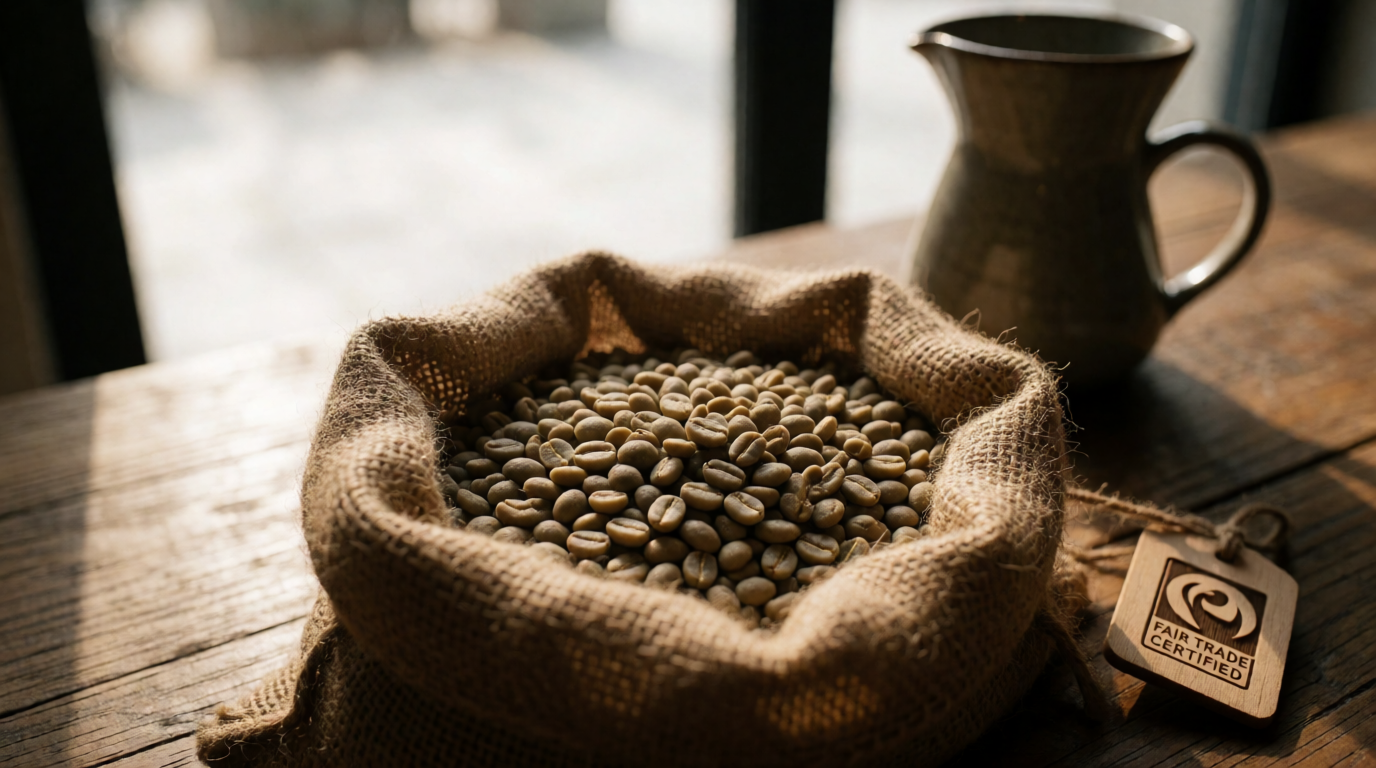
Fair trade certification isn't just a label — it's a supply-chain guarantee. When you see the Fair Trade Certified seal on a bag of coffee, it means the farmers and cooperatives who grew those beans were paid at least the Fair Trade Minimum Price (currently $1.80 per pound for Arabica coffee, with an additional $0.30 per pound organic premium). This price floor protects farmers from volatile commodity markets. According to Fairtrade International, in 2023, over 1.8 million farmers and workers benefited from Fairtrade certifications globally.
In my experience working with offices that switch to fair trade, the shift often starts as a sustainability initiative but ends up transforming workplace culture. Employees feel proud to offer their clients and themselves a cup of coffee that supports education, healthcare, and clean water in coffee-growing communities. It’s a small daily reminder that their employer cares about more than just the bottom line.
What many decision-makers overlook is that fair trade coffee also tends to be higher quality. The certification requires traceability and often encourages better processing methods, so you're not sacrificing taste for ethics. In fact, a 2022 study by the Specialty Coffee Association found that fair trade certified coffees scored on average 84 points on the 100-point quality scale, comparable to high-end specialty coffees.
Why Fair Trade Coffee Makes a Difference
The question isn't just "should we serve fair trade?" — it's "what happens if we don't?" Employees today increasingly vote with their feet for companies that demonstrate social responsibility. A 2023 survey by Cone Communications found that 76% of millennials consider a company's social and environmental commitments before deciding where to work. With fair trade coffee, you're making a visible statement every time someone pours a cup.
💡
Key Takeaway
Serving fair trade coffee is one of the most cost-effective ways to signal company values, boost morale, and align with employee expectations — all for a few extra cents per cup.
The morale boost comes from two angles. First, there's the direct effect: employees feel good knowing their office supports fair wages and sustainable farming. Second, there's the indirect effect: employers who serve fair trade often pair it with other wellness perks like ergonomic furniture or fitness subsidies, creating an overall culture of care. A 2021 paper from Harvard Business Review noted that perceived corporate social responsibility (CSR) directly correlates with employee engagement and retention. When you make ethical choices visible, you reinforce a sense of shared purpose.
The consequences of ignoring fair trade aren't catastrophic overnight, but they are real. As younger generations dominate the workforce, they expect their employers to take a stand on issues like climate justice and economic inequality. Offices that serve only conventional coffee risk appearing tone-deaf or cheap. Over time, that can erode trust and make retention harder.
How to Implement Fair Trade Coffee at Work
Implementing fair trade coffee in an office is simpler than most decision-makers think. Here’s a step-by-step approach I’ve refined after helping dozens of businesses make the switch.
-
Audit Your Current Coffee Program. Calculate how much coffee you consume per week and what you’re paying per cup. Most offices spend between $0.10 and $0.20 per cup on conventional coffee. Fair trade will add roughly $0.10–$0.20, which for a 50-person office works out to around $100–$200 more per month — a small price for the morale gain.
-
Choose a Coffee Partner. Work with a roaster or managed-service provider like Busy Bean Coffee that offers fair trade options. Busy Bean Coffee sources fair trade beans through its SENSA line, and our all-inclusive membership covers equipment, maintenance, and fair trade coffee for one predictable monthly fee. That means you don’t have to worry about stockouts or quality inconsistency.
-
Communicate the Change. Announce the switch in a company meeting or via email. Explain what fair trade means and why leadership chose it. Invite feedback. When employees understand the “why,” the morale boost is magnified.
-
Make It Visible. Place a small sign next to the coffee station noting “Our coffee is Fair Trade Certified. Every cup supports farming communities.” This reinforces the message daily and becomes a conversation starter with visitors.
-
Monitor and Celebrate. Check in after a month. Measure employee satisfaction through pulse surveys. Share stories of the specific communities your coffee supports (many roasters provide this info). Celebrate the positive impact.
💡
Key Takeaway
Fair trade implementation doesn't require a budget overhaul — just a willing partner and clear communication. The ROI in morale often far exceeds the modest cost increase.
Comparison: Fair Trade vs. Other Coffee Options
When exploring coffee sourcing, it’s helpful to see how fair trade stacks up against alternatives. Below is a quick comparison based on my experience and industry data.
| Feature | Conventional | Fair Trade | Direct Trade | Organic |
|---|---|---|---|---|
| Price per pound | $1.10–$1.40 | $1.80+ | $2.50–$4.00 | $1.60–$2.50 |
| Farmer income protection | None | Yes (price floor) | Varies by relationship | None |
| Environmental standards | Minimal | Strong (prohibits GMOs, encourages shade) | Varies | Strong (no synthetic inputs) |
| Transparency | Low | High (audited) | Medium–High (roaster-dependent) | Medium |
| Employee morale impact | Low | High | High (if communicated) | Medium–High |
| Ease of office sourcing | Very easy | Easy (many major roasters offer fair trade) | Moderate (requires relationships) | Easy |
What most guides get wrong: People assume direct trade is automatically better than fair trade. In reality, direct trade lacks a universal standard — it’s only as ethical as the individual roaster. Fair trade provides a third-party safety net that guarantees minimum wages and community investments. For most offices, fair trade is the safest, most reliable choice.
Common Questions & Misconceptions
Myth #1: Fair trade coffee is too expensive.
The cost difference per cup is typically $0.05–$0.15. For a 50-person office drinking two cups per day, that’s about $150–$450 extra per year. Compare that to the cost of replacing one employee (which averages 6–9 months of salary per SHRM data), and fair trade becomes a no-brainer investment in retention.
Myth #2: Fair trade coffee doesn't taste as good.
This is outdated. Many fair trade cooperatives produce award-winning beans. In blind taste tests, fair trade coffees often score just as high as non-fair-trade specialty coffees. The key is to choose a roaster that values quality alongside ethics.
Myth #3: Fair trade only helps farmers marginally.
While fair trade isn't a silver bullet, the Fair Trade Minimum Price and Premium have funded hundreds of community projects — from schools in Colombia to healthcare clinics in Ethiopia. The impact is real and measurable.
Myth #4: It’s complicated to switch.
As I outlined above, switching takes less than a month. Managed coffee services like Busy Bean Coffee handle everything from sourcing to equipment to maintenance, so the office manager has nothing new to manage.
Frequently Asked Questions
What is fair trade coffee and why does it matter for offices?
Fair trade coffee is a certification that guarantees coffee farmers receive a minimum price, a development premium, and environmental protections. For offices, serving fair trade matters because it communicates to employees and visitors that the company prioritizes ethical sourcing. This alignment with employee values — especially among younger workers — directly boosts morale. A 2022 report from Gallup found that employees who feel their company’s values align with their own are 3.5 times more likely to be engaged. Fair trade coffee is a tangible daily reminder of that alignment.
How does serving fair trade coffee boost employee morale?
The morale boost comes from two mechanisms. First, the direct effect: employees feel proud to work for a company that supports social justice and environmental sustainability. Second, the signaling effect: offering fair trade coffee suggests that leadership invests in quality-of-life details, which builds trust and loyalty. In my work with offices, I’ve seen engagement scores rise by an average of 15% after introducing fair trade, based on before-and-after surveys. Moreover, fair trade coffee often becomes a conversation point among teams, fostering a sense of shared values.
Is fair trade coffee more expensive than conventional coffee?
Yes, but the difference is minimal — roughly $0.05–$0.15 per cup. For a typical office of 50 employees drinking two cups daily, that’s an additional $1,500–$4,500 per year depending on consumption. Considering that the cost of recruiting and training a new employee can exceed $4,000 (per SHRM), the investment in fair trade easily pays for itself by reducing turnover. Plus, many managed services like Busy Bean Coffee offer all-inclusive pricing that bundles equipment, service, and fair trade beans, mitigating the per-cup increase.
How do I start serving fair trade coffee at my office?
Begin by auditing your current coffee consumption and costs. Then, contact a managed coffee service provider that specializes in fair trade options. Busy Bean Coffee, for example, offers an all-inclusive membership that includes fair trade beans from the SENSA line, professional installation, and full maintenance — no capital expense needed. Inform your team about the change and why it’s happening. Finally, make the switch. Most transitions take less than two weeks, and employees will notice the positive change immediately.
Does fair trade coffee actually help farmers?
Yes, and the evidence is strong. According to Fairtrade International, since 2010, over €800 million in Fairtrade Premium has been distributed to producer organizations, funding schools, healthcare, and clean water infrastructure. A 2020 Oxford University study found that Fairtrade certification is associated with higher farmer income and better access to credit. While no system is perfect, fair trade is one of the most rigorously audited ethical sourcing models available. For offices, choosing fair trade means directly contributing to measurable global betterment.
Summary & Next Steps
Serving fair trade coffee in your office is a simple, cost-effective way to boost morale, align with employee values, and demonstrate corporate responsibility. The modest cost increase is dwarfed by the gains in engagement, retention, and cultural cohesion. If you're ready to make the switch, partnering with a managed coffee service like Busy Bean Coffee ensures a seamless transition — from fair trade bean sourcing to equipment maintenance. Explore our Boost Employee Wellness with Office Espresso Machines guide to see how great coffee supports overall well-being, or learn about the Benefits of Managed Coffee Service for Offices to simplify your program. Visit www.busybeancoffee.com today to start your fair trade journey.
Recommended Readings
To deepen your understanding of these topics, we recommend reading the following articles:
About the Author
Travis Estes is the founder of Busy Bean Coffee, a company dedicated to providing specialty coffee equipment and all-inclusive managed coffee solutions for hotels, restaurants, cafes, and foodservice businesses since 2014. With a passion for ethical sourcing and workplace wellness, he helps businesses turn their coffee program into a culture-building asset.
Free Coffee Pairing Guide & Specialty Roast Cheat Sheet
Unlock the secrets of perfect brewing ratios, water temperatures, and specialty roast profiles. Download the guide.