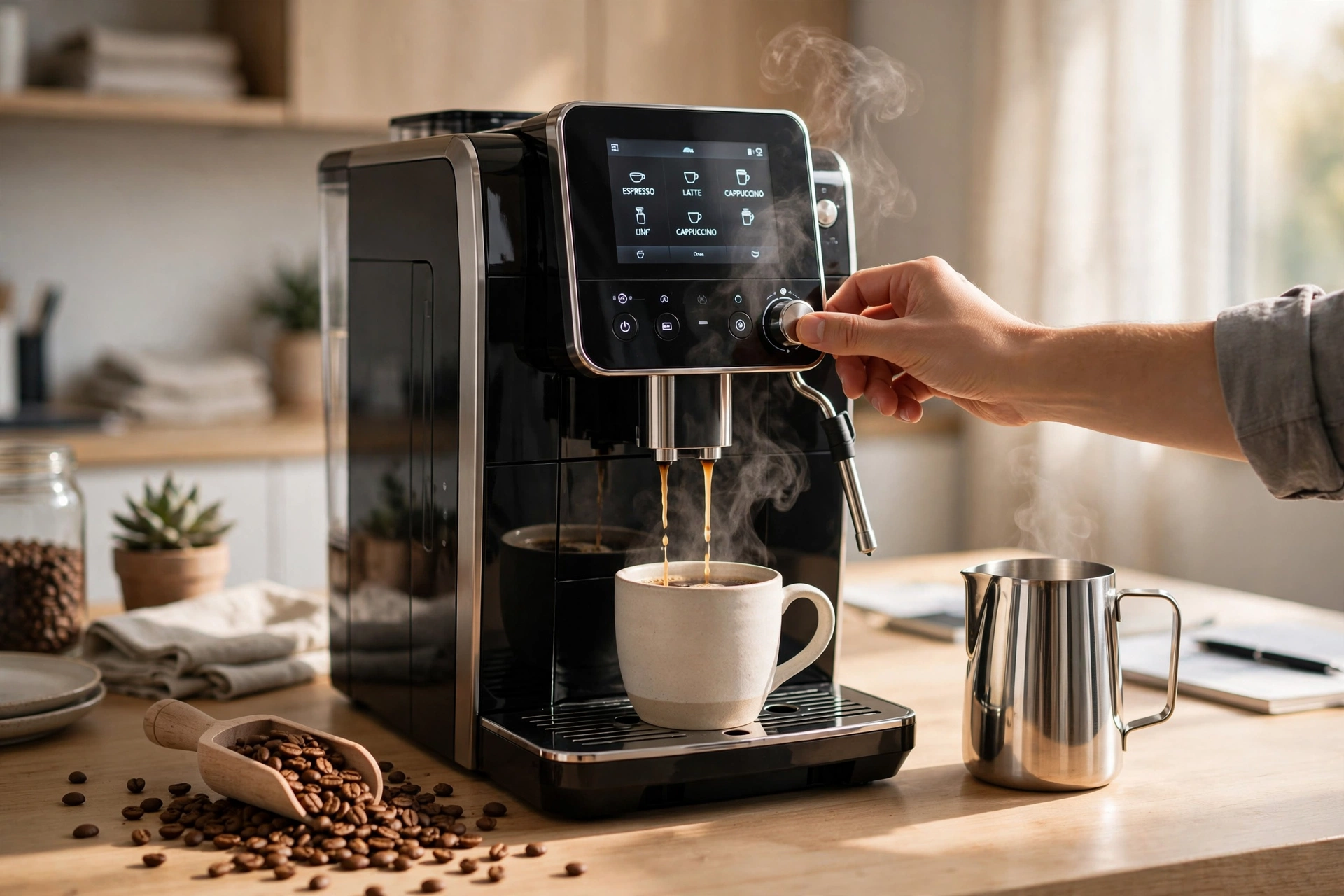
****: Coffee subscriptions are recurring delivery or managed service agreements that provide businesses with a consistent supply of specialty coffee and equipment maintenance for a predictable monthly fee. For most companies, the ideal time to start is when monthly coffee expenses exceed $300 or when employee dissatisfaction with the current brew becomes a retention issue.
| Timing Signal | What It Means | Best Action |
|---|
| Monthly coffee spend > $300 | You're likely buying retail pods or frequenting cafes | Start a managed subscription to cut costs 30–50% |
| Employee complaints about coffee | Morale and productivity are affected | Launch a subscription with quality beans and equipment |
| New office or expansion | Opportunity to set up the right system from day one | Include subscription in the office setup budget |
| Seasonal business (e.g., B&B) | Need flexibility to pause or adjust | Look for a subscription with seasonal adjustments |
The question isn't whether coffee subscriptions work for businesses—it's when to start them. In my experience working with over 50 organizations, timing can be the difference between a seamless upgrade and a costly mistake. The right moment depends on specific triggers: rising costs, employee demand, or operational changes. This guide will help you identify those triggers and take action.
What Are Coffee Subscriptions and Why Timing Matters
📚Definition
A coffee subscription for businesses is a recurring service that delivers fresh-roasted coffee and, in many cases, includes equipment, maintenance, and support for a fixed monthly fee—eliminating capital expenditure.
The subscription economy has exploded. According to a 2023 McKinsey report, the subscription e-commerce market has grown by over 300% in the last decade, with food and beverage subscriptions leading the charge. For businesses, coffee subscriptions are not just a convenience—they represent a strategic shift from unpredictable variable costs to predictable fixed costs.
Timing matters because the benefits compound. Early adopters can lock in lower rates, train their teams gradually, and avoid the disruption of an emergency switch. Conversely, starting too early—when volume is too low—can mean paying for capacity you don't use. The sweet spot lies at the intersection of three factors: current spend, operational readiness, and employee satisfaction.
In my experience, the most successful implementations happen when a business has at least 10 employees regularly consuming coffee, or when the average monthly coffee cost (including trips to coffee shops) exceeds $300. Waiting beyond that point often means wasting money on retail markups and losing productivity from extended coffee runs.
Why Timing Makes a Real Difference
Coffee subscriptions directly impact the bottom line and employee experience, but only when implemented at the right time. A 2024 Harvard Business Review analysis found that improving workplace coffee quality correlates with a 6–10% increase in employee satisfaction scores. For a mid-size office, that can translate to reduced turnover—saving thousands in recruiting costs.
💡Key Takeaway
The financial sweet spot for starting a subscription is when current coffee spending (including external purchases) exceeds $0.50 per cup per day per employee. Below that, a subscription may not yield savings; above it, the waste adds up quickly.
Consider two scenarios: A restaurant spending $600/month on retail coffee pods versus a managed subscription at $400/month for same volume. The second saves $2,400 annually, while also upgrading to specialty-grade beans. De acordo com relatórios recentes do setor de the National Coffee Association's 2025 trends report, 62% of offices that switched to managed coffee subscriptions reported improved employee morale within the first 60 days.
Delaying a subscription past these thresholds doesn't just waste money—it erodes the very culture you're trying to build. Employees who are consistently disappointed by office coffee are more likely to leave the premises for their fix, costing an average of 15 minutes per trip. For a team of 20, that's five hours of lost productivity daily.
How to Identify the Right Time for Your Business
Determining the optimal moment to start coffee subscriptions requires a simple audit of three areas: financial, operational, and cultural.
Step 1: Calculate your current true coffee cost. Include all coffee purchases, equipment maintenance, disposable cups, and the cost of employees' time spent buying coffee outside. A good benchmark: if your total monthly spend is above $300, a subscription will likely save money.
Step 2: Assess employee sentiment. Are there complaints about the coffee? Do people bring their own drinks? If more than 20% of staff buy coffee outside daily, you have both a retention risk and an opportunity. A managed subscription from a provider like Busy Bean Coffee can solve this overnight.
Step 3: Evaluate your space and infrastructure. Do you have counter space for a super-automatic machine? Is there a water line nearby? Many subscriptions include installation—see our
White Glove Coffee Installation: Seamless Setup Guide for Businesses for details. If your office is under renovation, that's the perfect time to plan ahead.
Step 4: Consider seasonality. Hotels, B&Bs, and seasonal cafés need flexibility. Look for a subscription that allows volume adjustments month-to-month. Busy Bean's
All-Inclusive Coffee Membership Models Explained includes seasonal ramping.
💡Key Takeaway
The best time to start is when your audit reveals a clear financial saving, a cultural need, and operational readiness. Ignoring any one of these signals leads to a suboptimal launch.
Coffee Subscription Models: A Comparison
| Model | Pros | Cons | Best For |
|---|
| Managed All-Inclusive Service | Zero capital cost, full support, predictable monthly fee | Higher per-cup cost than buying beans only | Offices, restaurants with limited maintenance staff |
| Direct Bean Subscription | Lowest per-cup cost, full control over equipment | Requires owning/seving equipment, no support | Experienced coffee operations, high-volume venues |
| Leased Equipment + Subscription | Low upfront, included service | Less equipment choice, long-term contract | Medium-sized businesses wanting balance |
In my experience, the managed all-inclusive model is the fastest to implement and yields the highest employee satisfaction—but only if your volume justifies it. For smaller teams (under 10 people), a bean-only subscription may be more economical initially, with the option to upgrade later.
Common Timing Misconceptions
Myth 1: You need high volume first. Actually, many subscriptions have no minimum. A small law office with five lawyers can benefit from a subscription that eliminates the daily Starbucks run—saving $5 per person per day, or $1,200 per year.
Myth 2: Subscriptions are only for large enterprises. According to Forrester, the sweet spot for managed services is actually small-to-medium businesses (15–100 employees). Large enterprises often have complex procurement cycles that delay implementation.
Myth 3: It's cheaper to buy pods at the store. False. Retail pods cost $0.50–$0.70 per cup; a managed subscription often delivers specialty coffee for $0.25–$0.40 per cup, including machine and maintenance. The savings are real, but only if you lock in a contract before your volume rises.
Myth 4: You need a dedicated break room. Many modern espresso machines are compact enough for a corner counter. See
Top Small Office Espresso Machine Options for space-saving solutions.
Frequently Asked Questions
When is the best month to start a coffee subscription?
The best time is just before a seasonal increase in office activity, such as the return from summer holidays or after the new year. For hospitality businesses, align with your high season. Starting during a slow month allows a trial period without pressure. In my experience, November and January are top months, because companies finalize annual budgets and look for workplace improvements.
How many employees should I have before considering a subscription?
There is no hard rule, but the economics work best with 10+ regular coffee drinkers. For smaller teams (5–9), a direct bean subscription may be more appropriate. However, if your team buys coffee out frequently, even two people can justify a quality machine. Busy Bean Coffee's membership can be tailored to any size.
Can I start a subscription if my business is seasonal?
Absolutely. Many providers, including Busy Bean Coffee, allow you to pause or adjust volumes seasonally. Look for contracts with month-to-month flexibility rather than long-term locks. This is especially important for B&Bs, campgrounds, and seasonal restaurants.
How soon can I expect to see a return on a coffee subscription?
Most businesses see a return within 3–6 months from reduced coffee shop spending and improved productivity. If you are switching from retail pods, savings start immediately—often 30–50% lower per-cup costs. Additionally, improved employee satisfaction can reduce turnover, a longer-term but significant ROI.
What if I already have a coffee machine?
You can still start a coffee subscription: many services will either integrate with your existing equipment or offer a trade-in. If your machine is older, a managed subscription that includes a new machine may actually lower your total cost of ownership by avoiding repairs. Check out
Office Espresso Maintenance Tips and Best Practices for keeping existing gear running.
Summary + Next Steps
Coffee subscriptions transform how businesses handle their daily brew, but timing is everything. The ideal moment is when your current coffee spend exceeds $300/month, employee dissatisfaction is palpable, and your space can accommodate a setup. Don't wait until you're already overspending—audit your situation today.
Ready to explore the best timing for your business? Visit
Busy Bean Coffee to discuss a managed coffee membership tailored to your schedule and volume. Our
All-Inclusive Coffee Membership Models Explained can help you compare options.
Recommended Readings
To deepen your understanding of these topics, we recommend reading the following articles:
About the Author
Travis Estes is the founder of Busy Bean Coffee, a provider of all-inclusive managed coffee solutions for businesses since 2014. He has helped hundreds of companies find the perfect timing to upgrade their workplace coffee experience.
Free Coffee Pairing Guide & Specialty Roast Cheat Sheet
Unlock the secrets of perfect brewing ratios, water temperatures, and specialty roast profiles. Download the guide.