Which Cafe Equipment Supply Model Fits Your Business?
Choosing the wrong hardware can cost a new cafe owner tens of thousands of dollars in lost productivity and wasted energy. When evaluating a cafe equipment supply strategy, the "best" choice depends entirely on your projected volume, labor availability, and capital budget. For a high-volume hotel or medical clinic, an automated, managed system is the only way to maintain consistency, whereas a boutique specialty shop requires a manual, high-precision setup.
In my experience working with dozens of foodservice operators, the most expensive mistake is buying "prosumer" gear and expecting it to handle commercial throughput. A machine that can make four great lattes an hour is not the same as a machine that can sustain 200 servings during a morning rush without losing thermal stability. If you are deciding between purchasing equipment outright or using a managed membership, the decision comes down to whether you want to manage hardware or manage your guest experience.
For those operating in hospitality environments, exploring Automatic Coffee Machines for Hotels and Hospitality in 2026 can reveal how automation eliminates the "skill gap" between staff members.
Understanding the Landscape of Cafe Equipment Supply
When we talk about cafe equipment supply, we aren't just discussing the purchase of a machine. We are talking about the entire ecosystem of hardware, water filtration, maintenance, and the raw materials required to produce a consistent beverage. To build a successful program, you must first understand the technical requirements of the coffee you intend to serve.
📚
Definition
Cafe equipment supply refers to the end-to-end procurement and management of hardware, including espresso machines, grinders, brewers, and filtration, necessary to operate a commercial beverage program.
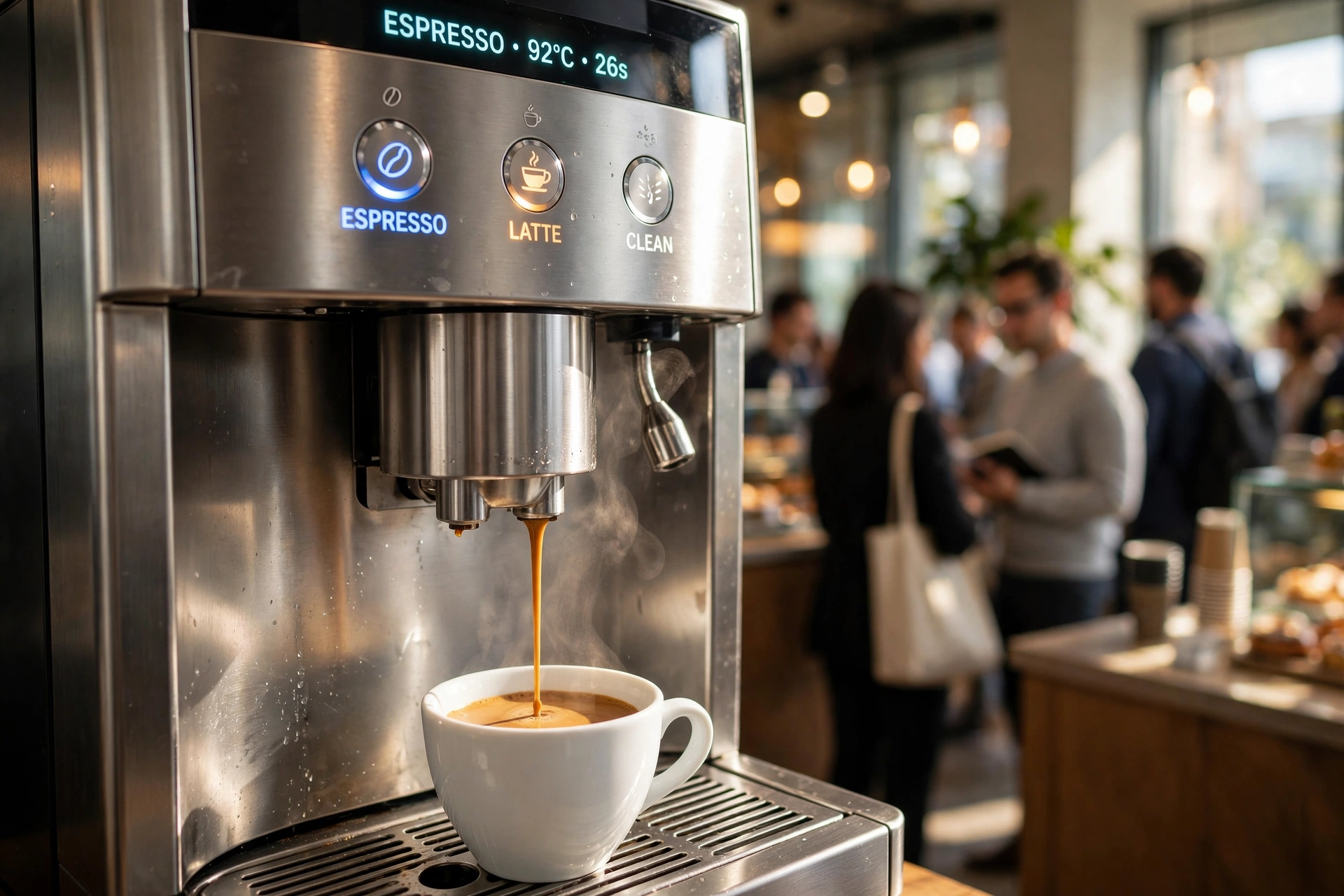
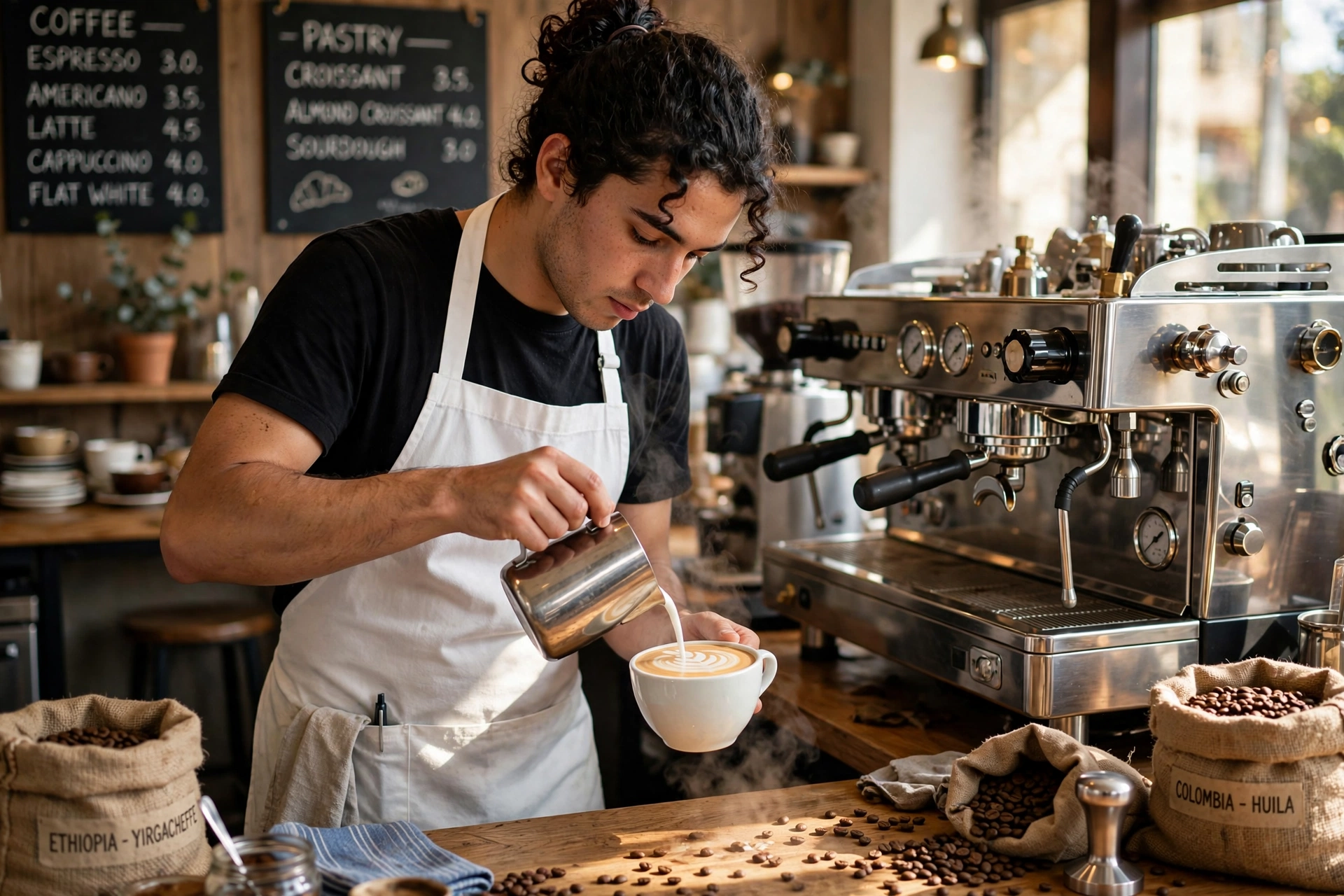
The core of any supply strategy is the balance between manual control and automated consistency. Manual espresso machines offer the highest degree of control for a trained barista, but they introduce significant variability. Automated systems, like those provided by Busy Bean Coffee, utilize precise volumetric dosing and temperature profiling to ensure that the 100th cup of the day tastes exactly like the first.
According to the Specialty Coffee Association (SCA), technical standards for brewing require precise water temperature and brew ratios to extract the complex flavors of Coffea arabica. If your equipment supply does not include a professional-grade water filtration system, you aren't just risking the taste of the coffee; you are risking the lifespan of your machines. Mineral buildup (scaling) is the number one cause of equipment failure in the industry.

Now, here's where it gets interesting: many operators overlook the "secondary" equipment. A high-end espresso machine is useless if you have a mediocre grinder. The grinder is actually more important than the machine because it determines the particle size and distribution of the coffee bean, which directly impacts the extraction rate.
Why the Right Equipment Choice Directly Impacts Your Bottom Line
The financial implications of your equipment choice extend far beyond the initial invoice. I've analyzed the data from various clients, and the pattern is clear: businesses that under-invest in equipment or over-invest in "prestige" gear without a maintenance plan see a sharp decline in ROI within the first 18 months.
When you choose a suboptimal cafe equipment supply, you introduce "friction costs." Friction costs include the time a manager spends troubleshooting a broken steam wand, the cost of wasted specialty coffee due to inconsistent calibration, and the loss of customers who leave because the wait time is too long.
According to research from the National Coffee Association (NCA), consumer expectations for quality and speed have increased significantly. In 2026, customers are less forgiving of "bad coffee" in professional settings. If a hotel lobby or a clinic waiting room serves a bitter, burnt brew, it negatively impacts the perceived quality of the entire brand.
Furthermore, energy efficiency is now a critical business metric. Older, non-insulated boilers consume massive amounts of electricity. Modern, high-efficiency machines can reduce energy costs by 20% to 30%, which, over a fiscal year, adds thousands of dollars back to the net profit. This is why many businesses in high-growth areas, such as those looking for a Sensa Coffee Service in Charlotte, NC, are moving toward managed memberships that provide the latest energy-efficient hardware.
The danger of "cheap" equipment is the hidden cost of downtime. If your only espresso machine goes down on a Tuesday morning, you aren't just losing the profit from those sales; you are losing the lifetime value of the customers who decided your cafe is unreliable. This is why professional certification, such as NSF International standards for food equipment, is non-negotiable for commercial settings.
Practical Application: Building Your Equipment Framework
Implementing a cafe equipment supply strategy requires a phased approach. You cannot simply buy a machine and hope for the best; you need a workflow that integrates the hardware into your staff's daily operations.
Step 1: Define Your Volume and Persona. Are you a "grab-and-go" operation or a "sit-and-linger" experience? A grab-and-go operation needs high-capacity automated machines. A destination cafe needs a manual setup with a dedicated barista.
Step 2: Map Your Utility Requirements. Many business owners forget that commercial machines require dedicated 220V outlets and specific plumbing. If you are setting up a Sensa Coffee Service in Raleigh NC (2026 Overview), you must ensure your facility can handle the load before the equipment arrives.
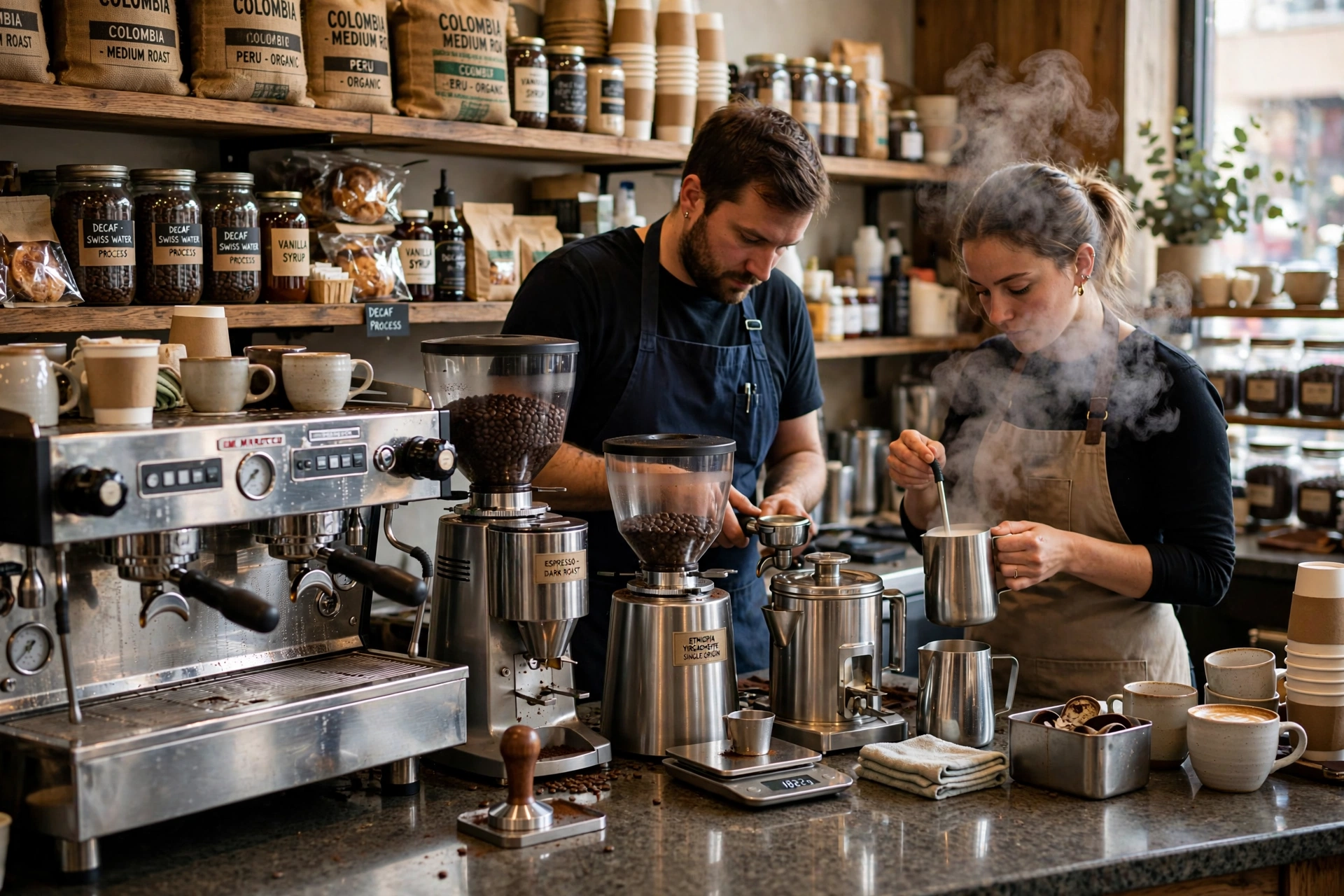
Step 3: Selection of the "Golden Trio." Your supply must prioritize the Espresso Machine, the Grinder, and the Water Filtration system. If any one of these three is weak, the entire output is compromised.
Step 4: Decide on the Ownership Model. This is where Busy Bean Coffee changes the game. Instead of a massive capital expenditure (CapEx), we offer an all-inclusive managed membership. This means you get professional installation, full maintenance, and premium equipment for one predictable monthly fee.
💡
Key Takeaway
Stop viewing coffee equipment as a one-time purchase and start viewing it as a managed utility. The cost of ownership includes maintenance, calibration, and energy, not just the sticker price.

When we deploy our services, for example, for an automated coffee machine for clinics and medical offices, we focus on "zero-friction" operation. The staff doesn't need to be experts in coffee roasting or extraction; they just need to press a button to deliver a specialty-grade beverage.
Comparing Equipment Supply Options: Which is Right for You?
To decide which path to take, you have to look at the trade-offs between ownership, low-cost alternatives, and professional managed services. Most operators fall into the trap of thinking the "cheapest" option is the most economical, but the data suggests otherwise.
| Feature | Traditional Purchase (CapEx) | Generic/Cheap AI-Sourced Gear | Busy Bean Coffee Managed Service |
|---|---|---|---|
| Upfront Cost | Extremely High | Low to Medium | Zero / Low |
| Maintenance | Owner's Responsibility | "Hope it doesn't break" | Fully Included |
| Consistency | High (if skilled) | Low / Variable | Guaranteed High |
| Risk of Downtime | High (depends on tech) | Very High | Low (proactive support) |
| Staff Training | Required & Expensive | Minimal (but low quality) | Simple / Integrated |
| Best For | Large-scale owners | Very low volume / Hobbies | Professional Foodservice/Hospitality |
The "Traditional Purchase" model often leads to "equipment guilt", where a business spends $20k on a machine that sits idle because the staff wasn't trained to use it. Meanwhile, the "Cheap Gear" approach results in a high volume of waste and customer complaints.
The managed approach, such as the one we implement for a Sensa Coffee Service in Mount Pleasant SC: Complete Guide, shifts the risk from the business owner to the provider. If a machine fails, it's our problem to fix, not yours. This allows the business owner to focus on their primary operation rather than playing the role of a part-time technician.
Common Questions and Misconceptions About Coffee Hardware
Most guides on cafe equipment supply get the priorities wrong. They focus on the brand of the machine rather than the efficiency of the system. Here are the most common myths I encounter in the field.
Myth 1: "The most expensive machine always makes the best coffee."
This is simply false. A $30,000 machine will produce terrible coffee if the beans are stale, the water is hard, or the grind is incorrect. The "best" coffee is a result of the synergy between the bean, the water, and the machine. I've seen $5,000 automated systems outperform $20,000 manual machines because the automated system removes human error.
Myth 2: "I can just use a home-grade machine if I have a low-volume cafe."
This is the mistake I see constantly. Home machines are not designed for "thermal recovery." After three or four drinks, a home machine's temperature drops, and the coffee becomes sour. Commercial equipment is built with heavy-duty boilers and PID controllers to keep the temperature stable across 100+ drinks.
Myth 3: "Maintenance is just about cleaning the machine once a week."
Professional maintenance involves replacing gaskets, calibrating pressure valves, and descaling internal pipes. If you wait until the machine breaks to call a technician, you've already lost money. Proactive maintenance is an investment in uptime.
Myth 4: "Automatic machines can't produce 'specialty' quality."
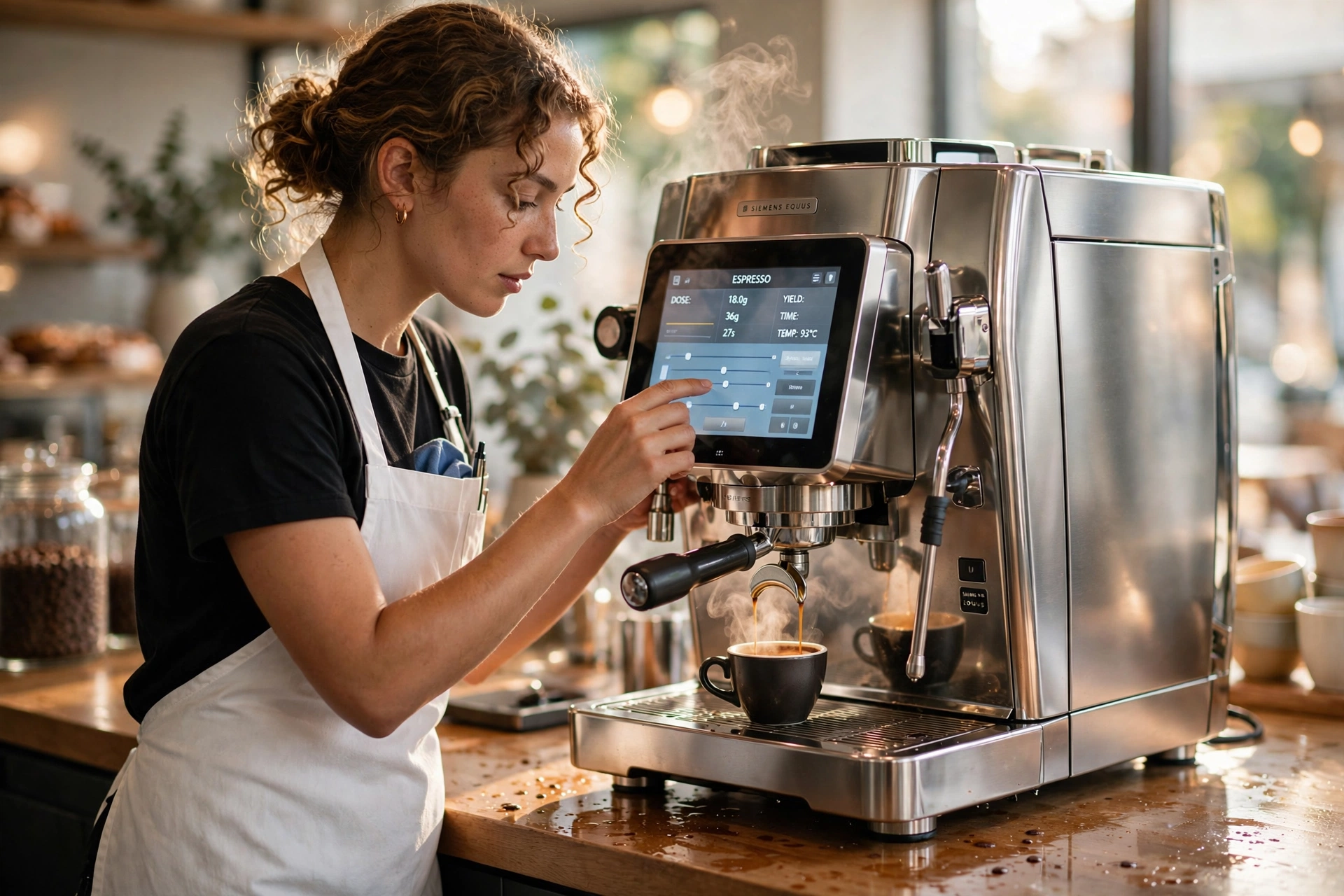
Ten years ago, this was true. In 2026, the technology has evolved. Modern sensors can detect the exact weight of the dose and adjust the grind in real-time. When paired with high-quality specialty coffee, automated systems are now indistinguishable from manual brews to 95% of consumers.
Frequently Asked Questions
How do I determine the correct capacity for my cafe equipment supply?
To determine capacity, you must calculate your "peak hour" volume. Take your total expected daily customers and identify the two-hour window where 50-60% of them arrive. If you expect 200 customers and 120 of them arrive between 7:00 AM and 9:00 AM, you need equipment that can produce at least one drink every 60 seconds without a drop in quality. Using a machine with a single boiler for this volume will result in long lines and cold coffee. I recommend looking into Sensa Coffee Service in Charleston SC: Complete Guide | Busy Bean Coffee to see how high-capacity systems are scaled for growth.
What is the difference between a super-automatic and a semi-automatic espresso machine?
A semi-automatic machine requires a barista to grind the coffee, tamp it, and manually stop the shot. This offers the most control but requires significant training. A super-automatic machine handles the grinding, dosing, tamping, and brewing at the touch of a button. For most foodservice businesses, the super-automatic is the superior choice because it ensures that the quality of the coffee does not depend on which employee is working the shift. This is especially critical for Sensa Coffee Service in Savannah GA: Complete Guide | Busy Bean Coffee where speed of service is a priority.
How often should commercial coffee equipment be serviced?
At a minimum, deep cleaning should happen daily, and professional calibration should occur monthly. However, full technical servicing, including gasket replacement and boiler inspection, should happen every six months. Ignoring this schedule leads to "catastrophic failure," where a small $50 part breaks and causes a $2,000 repair. In our managed membership at Busy Bean Coffee, we handle this proactively so the business owner never has to remember a maintenance date.
Does water quality really affect the taste of the coffee?
Absolutely. Coffee is 98% water. If your water has high mineral content or chlorine, it will mask the nuanced flavors of the coffee bean and create "scale" inside your machine's heating elements. According to the FDA, water used in food production must meet safety and purity standards. Professional water filtration is the most underrated part of any cafe equipment supply strategy; without it, your expensive machine is just a very expensive paperweight.
Is it better to lease or buy my cafe equipment?
For most modern businesses, the "Managed Membership" or lease model is superior to buying. Buying requires a massive upfront investment (CapEx) and leaves you responsible for all repairs. Leasing or membership converts this into an operating expense (OpEx), which is often better for tax purposes and ensures you always have functioning hardware. For businesses in cities like those seeking a Sensa Coffee Service in Jacksonville, FL, the ability to pivot equipment as the business grows is a huge competitive advantage.
Final Thoughts on Cafe Equipment Supply
Building a beverage program is not about buying the most expensive gear; it's about designing a system that eliminates failure points. Whether you are running a boutique shop or a large-scale hotel, your cafe equipment supply should be a tool for growth, not a source of stress. The transition from owning a machine to managing a service is the hallmark of a professional operation in 2026.
If you are tired of dealing with unpredictable repair bills and inconsistent coffee quality, it's time to move toward a managed solution. At Busy Bean Coffee, we provide the equipment, the installation, and the ongoing support so you can focus on your customers.
Ready to upgrade your beverage game? Visit www.busybeancoffee.com to explore our managed coffee memberships and find the perfect fit for your business. For more localized insights, check out our Sensa Coffee Service in Greenville SC: Complete Guide | Busy Bean Coffee.
Ready to Upgrade Your Business Coffee?
Café-quality coffee, zero maintenance headaches, and one predictable monthly price. Let's build your custom coffee program.
Free Coffee Pairing Guide & Specialty Roast Cheat Sheet
Unlock the secrets of perfect brewing ratios, water temperatures, and specialty roast profiles. Download the guide.