📖This article is part of the complete guide to Complete Guide to Coffee Equipment Rental for Foodservice.
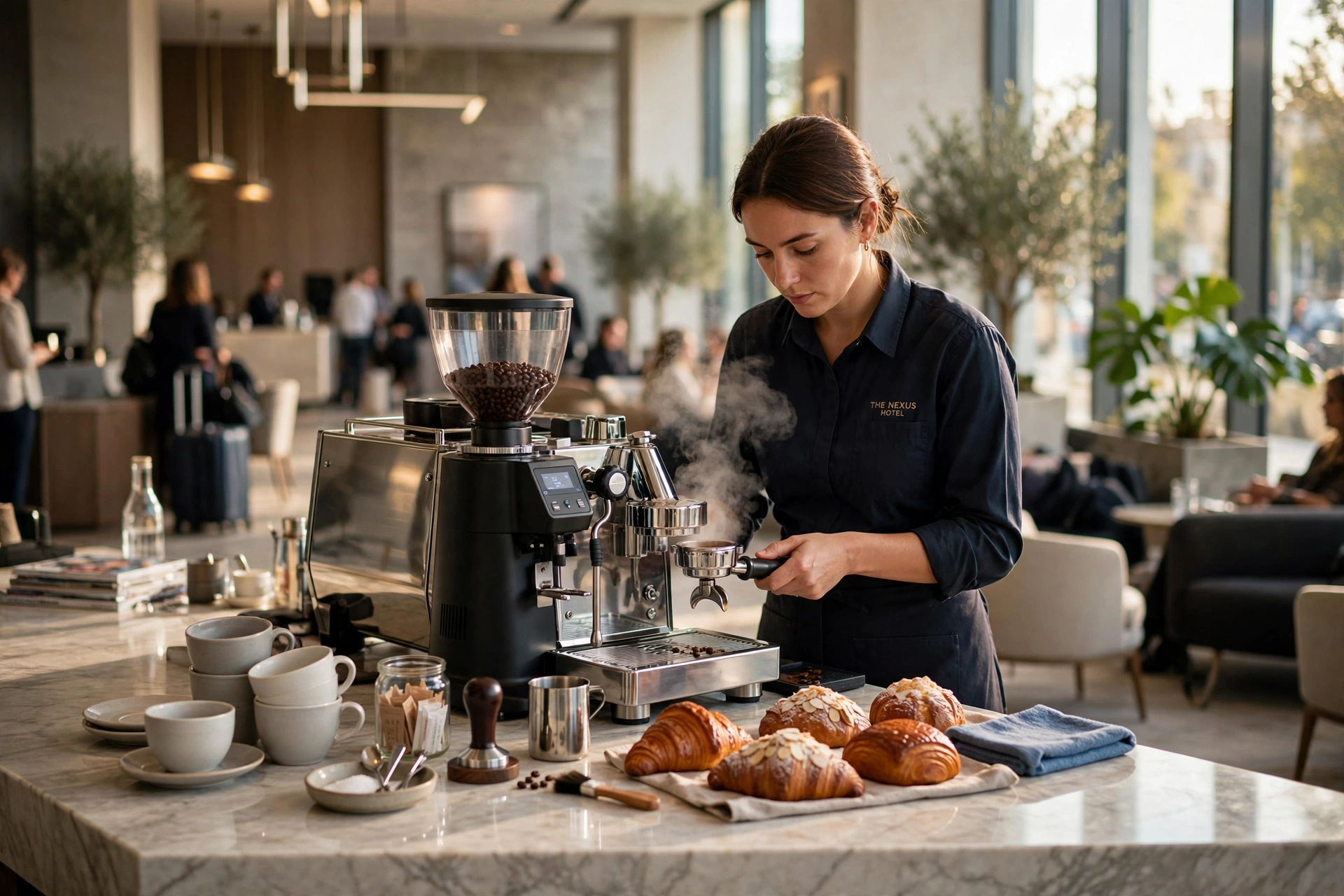
Most commercial kitchens treat coffee as an afterthought, installing a generic brewer that produces burnt, bitter water. In my experience working with high-volume food service operations, the difference between a 'standard' cup and specialty coffee is often the difference between a guest who leaves after their meal and one who stays for a high-margin dessert and espresso. When we scaled our services at Busy Bean Coffee, we found that commercial kitchens shifting to professional-grade equipment saw an immediate uptick in average check sizes because customers are willing to pay a premium for true specialty coffee.
For a comprehensive overview of how to structure your beverage program, explore our Complete Guide to Coffee Equipment Rental for Foodservice.
What is Specialty Coffee Machine Rental?
📚
Definition
Specialty coffee machine rental is a B2B service model where a foodservice business acquires high-end, professional brewing equipment—specifically designed for specialty-grade beans—via a monthly membership or lease rather than a direct capital purchase.
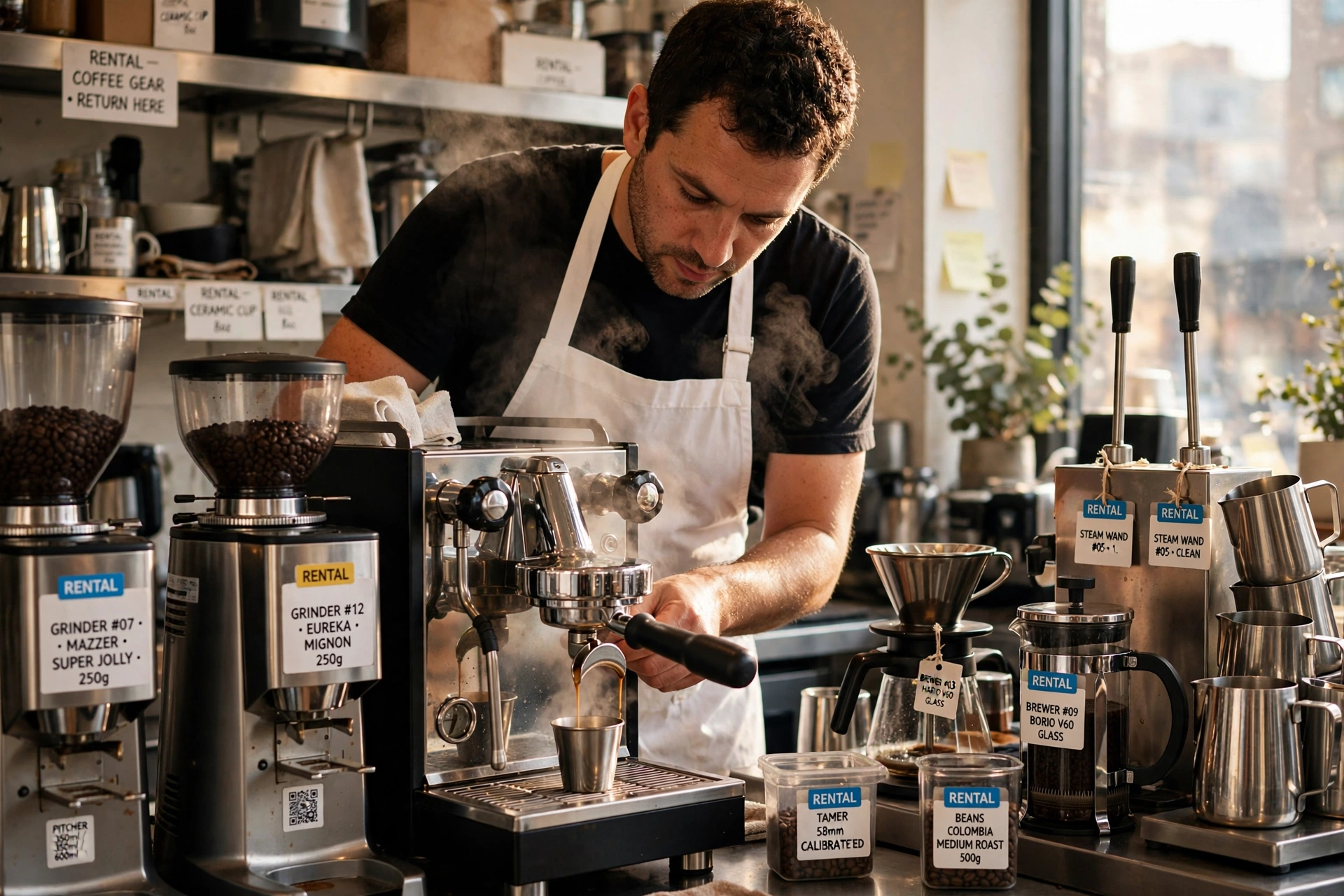
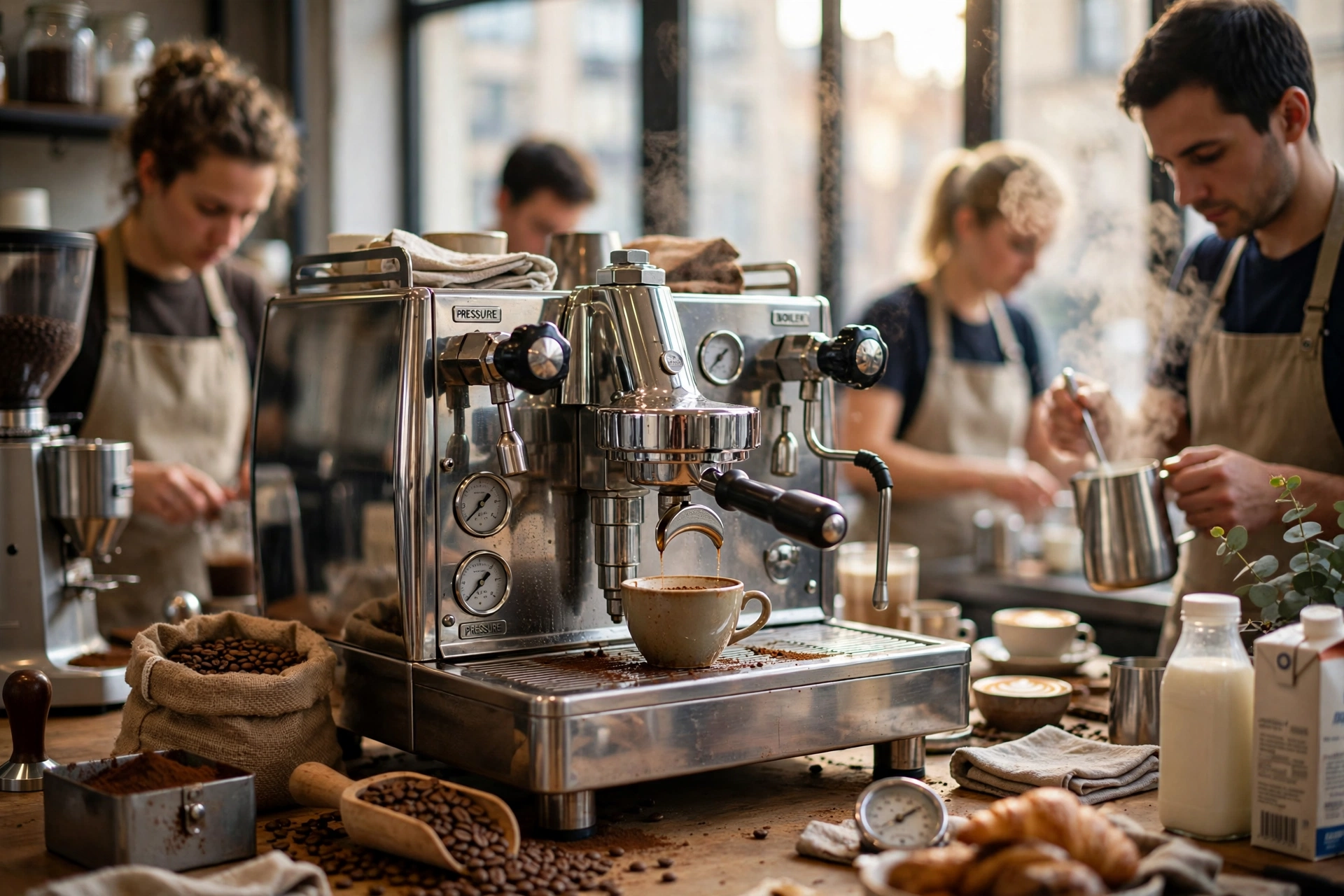
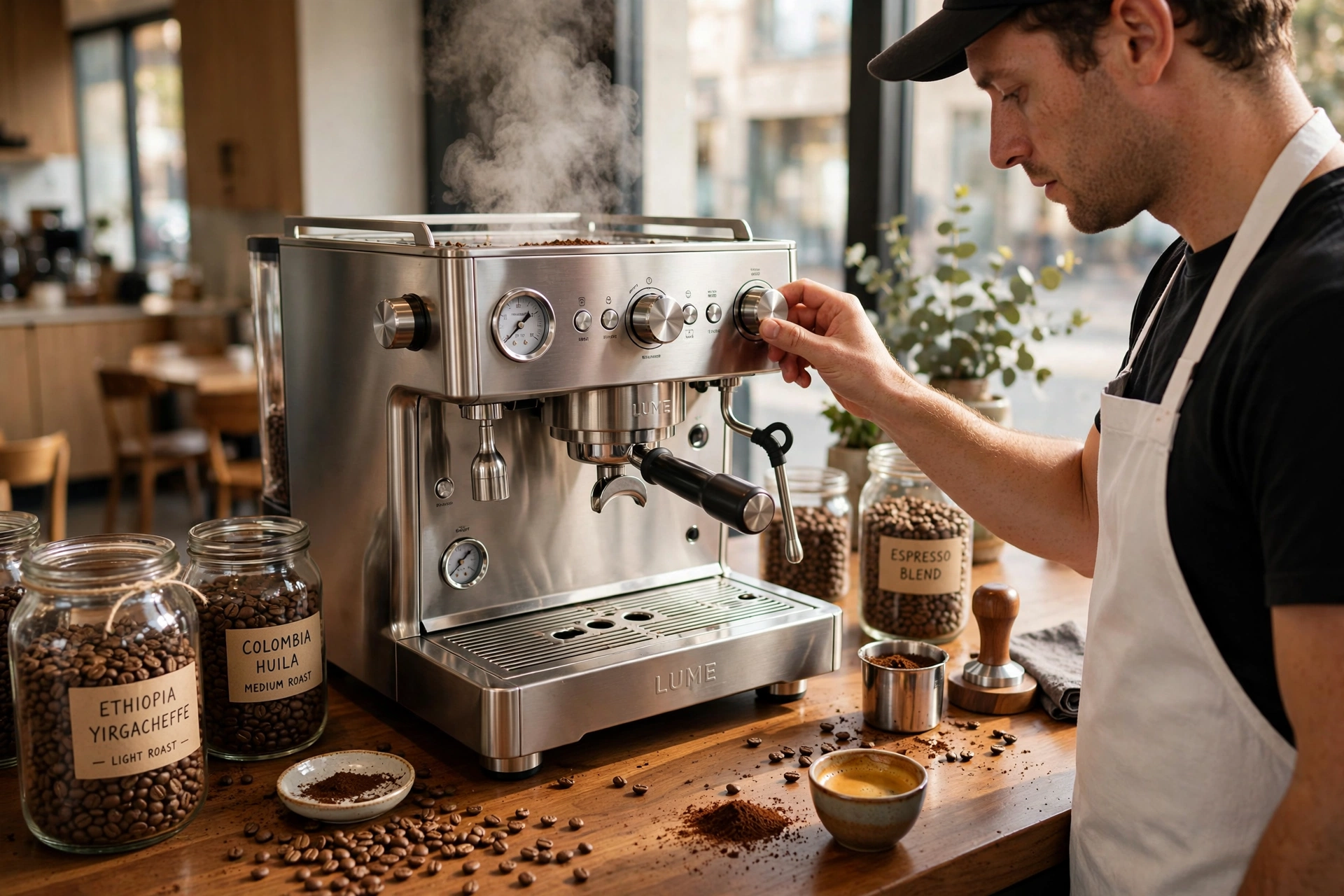
Specialty coffee machine rental provides commercial kitchens with access to the same precision technology used by world-class baristas without the prohibitive upfront cost of purchasing an espresso machine or a high-end batch brewer. Unlike standard commercial coffee makers, these machines are engineered to control variables like water temperature, pressure, and saturation, which are essential for extracting the complex flavors of Coffea arabica.
In a professional setting, this typically involves an all-inclusive agreement. This means the rental includes not just the hardware, but the installation, calibration by a Q-Grader, and ongoing preventative maintenance. For a commercial kitchen, this transforms a volatile capital expense into a predictable operational expense (OpEx), allowing the business to maintain a high-end beverage program while keeping liquidity for other kitchen upgrades. According to the Specialty Coffee Association (SCA), the standards for specialty coffee require precise temperature stability between 195°F and 205°F, a level of control that only professional-grade rental equipment can consistently provide in a high-volume environment.
Why Does Specialty Coffee Machine Rental Matter for Commercial Kitchens?
Integrating a specialty coffee program is no longer a luxury; it is a strategic revenue driver. The primary reason this matters is the ability to capture the "premium coffee" segment of the market without risking five figures in equipment depreciation. A high-end espresso machine can lose a significant portion of its resale value within three years, making rental the mathematically superior choice for most operators.
Beyond the financials, there is a critical quality component. When a kitchen serves specialty coffee, they are selling an experience. The National Coffee Association USA (NCA) notes that consumer preference is shifting heavily toward specialty brews and espresso-based drinks. By utilizing a rental model, kitchens can pivot their offerings to match these trends instantly. If the market shifts from lattes to cold brew, a managed rental service allows the business to update their hardware without having to sell old equipment at a loss.
Furthermore, the reliability of the equipment is paramount. In a busy commercial kitchen, a broken coffee machine during a Sunday brunch rush is a disaster that leads to immediate revenue loss and negative reviews. Rental agreements with companies like Busy Bean Coffee include guaranteed uptime and rapid maintenance. This removes the burden of technical troubleshooting from the kitchen staff, allowing the head chef or manager to focus on food quality rather than fixing a boiler leak.
For those operating in specific regions, the demand varies. For instance, businesses utilizing Sensa Coffee Service in Charlotte, NC often find that the local demographic expects a higher standard of Arabica coffee, making the leap to specialty equipment a necessity for staying competitive against boutique cafes.
How to Implement Specialty Coffee Machine Rental in Your Workflow
Implementing a specialty coffee program requires more than just plugging in a machine; it requires a workflow integration that ensures speed without sacrificing the integrity of the brew. The core approach is to align the machine's output capacity with the kitchen's peak hour volume while ensuring the staff is trained in basic barista skills.
- Volume Analysis and Equipment Matching: Start by calculating your peak hour cups per hour (CPH). A commercial kitchen serving 50 guests per hour requires a different setup than a boutique bistro serving 15. You must choose between a super-automatic machine (for speed and consistency) or a semi-automatic machine (for maximum quality and artisanal control).
- Infrastructure Preparation: Ensure your kitchen has the necessary electrical load (often 220V for professional machines) and a dedicated water filtration system. According to NSF International, commercial food equipment must meet strict sanitary standards, including the use of certified filtration to prevent scale buildup and ensure taste consistency.
- Staff Calibration: Even the best machine fails if the grind is wrong. A professional rental service provides initial calibration. Your staff must be trained on the "dialing in" process—adjusting the grind size of the coffee bean to ensure the espresso pours in the optimal 25-30 second window.
- Integration into POS: Create a distinct menu category for specialty coffees. By separating "Regular Coffee" from "Specialty Latte" or "Single Origin Pour-over," you can psychologically justify a higher price point, which directly increases the ROI of the rental fee.
If you are managing multiple locations, you might look at how Sensa Coffee Service in Raleigh NC (2026 Overview) handles regional scaling, as consistent quality across sites is only possible through standardized rental hardware and centralized maintenance.
The Traditional Purchase vs. Generic AI-Automation vs. Managed Specialty Rental
Many kitchens struggle to decide between buying their own gear, using a low-cost automated pod system, or opting for a professional managed service. The following table breaks down the operational reality of each approach:
| Feature | Traditional Purchase | Generic/Cheap Pods | Managed Specialty Rental |
|---|---|---|---|
| Upfront Cost | Extremely High ($5k - $20k) | Low to Moderate | Zero to Low (Membership) |
| Coffee Quality | Variable (depends on skill) | Low/Standardized | High (Q-Grader Calibrated) |
| Maintenance | Owner's Responsibility | Replace Unit | Included/Proactive |
| Tech Obsolescence | High Risk | Moderate | Zero (Upgrades included) |
| Workflow Impact | Heavy training required | Minimal | Guided & Professional |
💡
Key Takeaway
While purchasing seems like a way to "own the asset," the hidden costs of maintenance and the risk of equipment obsolescence usually make the managed rental model more profitable over a 36-month period.
Common Mistakes to Avoid in Specialty Coffee Rental
One of the most frequent mistakes I see is the "Equipment Mismatch." Kitchens often rent the most expensive machine available, thinking it equals the best coffee. However, if your staff doesn't have the time to manually steam milk or pull shots, a high-end manual machine becomes a bottleneck that slows down the entire kitchen. In these cases, a high-performance super-automatic machine is actually the "better" specialty choice because it maintains quality while preserving speed.
Another critical error is neglecting water quality. Many operators assume the city water line is sufficient. In reality, mineral buildup (scale) is the number one killer of espresso machines. Without a professional filtration system—which should be a non-negotiable part of your rental agreement—you risk permanent damage to the heating elements and a flat, metallic taste in your coffee.
Furthermore, some businesses fail to link their coffee program to their overall brand. Specialty coffee is a luxury product. If you are serving a $40 steak but a 10-cent cup of burnt coffee, you are actively damaging your brand equity. You must ensure the coffee bean quality matches the food quality. This is why we emphasize the use of Arabica coffee, which offers the acidity and sweetness required for a true specialty experience.
For those looking for similar high-standard implementations in the Carolinas, exploring the Sensa Coffee Service in Charleston SC - Complete Guide can provide insights into how hospitality-driven markets integrate these systems.
Deep Dive: The Economics of Specialty Coffee ROI
To truly understand the value of specialty coffee machine rental, we must look at the margin. A standard cup of drip coffee might cost a kitchen $0.15 to produce and sell for $2.00, yielding a gross profit of $1.85. However, a specialty latte, utilizing a professional espresso machine and high-quality beans, can cost $0.60 to produce and sell for $5.50 to $7.00, yielding a gross profit of $4.90 to $6.40 per cup.
If a commercial kitchen serves just 20 specialty drinks per day, the additional daily profit is approximately $100 compared to standard coffee. Over a month, that is $3,000 in additional gross profit. When you compare this to a monthly rental fee that might range from $150 to $500 (depending on the equipment tier), the ROI is astronomical. The equipment effectively pays for itself within the first week of every month.
This is why we recommend businesses prioritize a membership model. It allows for the scaling of these margins without the risk of a massive capital outlay. If you are expanding your footprint, you can mirror this success by checking out the Sensa Coffee Service in Savannah GA - Complete Guide to see how regional hubs are optimizing their beverage margins.
Implementation Guide for Commercial Kitchens
For a successful rollout, I suggest a phased approach. Do not attempt to launch a full barista menu on day one. Instead, start with a "Specialty Focus" phase.
Phase 1: The Foundation (Weeks 1-2)
Install the rented equipment and focus exclusively on the espresso and Americano. These are the core of any specialty program. Ensure your water filtration is active and your staff can consistently pull a shot that meets the SCA standards for viscosity and crema.
Phase 2: Texture and Milk (Weeks 3-4)
Introduce milk-based drinks. The key here is the micro-foam. Your baristas (or kitchen staff) should be trained to create a velvet-like texture, not just bubbles. This is where the professional steam wands of a rented specialty machine outperform home or generic commercial units.
Phase 3: The Signature Series (Month 2+)
Once the basics are flawless, introduce a signature beverage that uses your specific specialty beans. This creates a "destination" product that encourages customers to visit specifically for the coffee, increasing foot traffic during off-peak hours.
Busy Bean Coffee simplifies this entire process. Our managed membership removes the technical friction, providing professional installation and a dedicated account manager to ensure your equipment is always performing at its peak.
Frequently Asked Questions
Is rental really better than buying for a high-volume kitchen?
Yes, because of the total cost of ownership. When you buy a machine, you are responsible for the initial cost, the installation, and every single repair. In a high-volume environment, wear and tear is aggressive. A rental membership covers all maintenance, meaning you never have to pay for an emergency technician visit or a replacement pump. This predictability is essential for maintaining tight food-cost margins in 2026.
How does specialty coffee differ from standard commercial coffee?
Standard commercial coffee focuses on caffeine delivery and cost-efficiency, often using lower-grade beans with inconsistent roasting. Specialty coffee, however, focuses on the intrinsic quality of the Coffea arabica bean, the precision of the roast, and the science of the extraction. Specialty machine rental ensures you have the thermal stability and pressure control necessary to express these complex flavors, which are lost in cheaper, non-specialty machines.
Do I need a dedicated barista to run a specialty machine?
Not necessarily. Depending on the equipment you rent, you can choose between manual and super-automatic options. Super-automatic machines handle the grinding, tamping, and frothing at the touch of a button, providing specialty-grade results without needing a certified barista on staff. For kitchens that want maximum artisanal quality, a semi-automatic machine is better, but it will require a small amount of staff training.
What happens if the machine breaks during a rush?
This is the primary advantage of a managed rental service. Unlike a purchased machine where you have to find and pay a technician, a membership includes a Service Level Agreement (SLA). This ensures a technician is dispatched immediately. In many cases, we can provide a loaner machine or an on-site fix within hours, ensuring your revenue stream is not interrupted by technical failures.
How do I know if my kitchen has the right power for these machines?
Most professional specialty machines require a dedicated 220V circuit to power the boilers and heating elements efficiently. During the initial consultation with Busy Bean Coffee, we perform a site survey to check your electrical panel and plumbing. If upgrades are needed, we coordinate the installation so that your kitchen remains operational and the equipment is installed safely and according to local building codes.
Conclusion
Specialty coffee machine rental is the most efficient way for a commercial kitchen to enter the high-margin world of premium beverages without compromising their balance sheet. By shifting the financial burden from CapEx to OpEx and leveraging professional maintenance, businesses can focus on what they do best: serving exceptional food and drinks. Whether you are a boutique bistro or a high-volume restaurant, the ability to serve a perfectly extracted espresso is a powerful tool for increasing guest loyalty and average check size.
If you're ready to upgrade your beverage program, start by exploring our Complete Guide to Coffee Equipment Rental for Foodservice to understand the full spectrum of available solutions.
Ready to elevate your guest experience with professional-grade coffee? Visit Busy Bean Coffee today to find the perfect managed membership for your commercial kitchen.
Free Coffee Pairing Guide & Specialty Roast Cheat Sheet
Unlock the secrets of perfect brewing ratios, water temperatures, and specialty roast profiles. Download the guide.