📖This article is part of the complete guide to Complete Guide to Coffee Equipment Rental for Foodservice.
In my experience working with boutique hotel owners and large-scale resorts, the biggest point of friction in guest satisfaction isn't the bedding or the check-in process; it is the coffee. When a guest wakes up in a hotel room or visits the lobby, they expect a beverage that rivals their favorite local café. For many operators, the cost of upgrading to professional-grade machinery is prohibitive, leading to the common mistake of relying on outdated, low-quality drip machines that alienate the modern traveler.
For a comprehensive overview of how to scale your beverage program, explore our Complete Guide to Coffee Equipment Rental for Foodservice.
What Exactly is Hotel Coffee Equipment Leasing?
📚
Definition
Hotel coffee equipment leasing is a financial and operational arrangement where a hotel acquires the use of professional coffee machinery—such as high-end espresso machines or automated brewers—through a monthly payment plan rather than an upfront purchase.
Hotel coffee equipment leasing allows hospitality operators to deploy state-of-the-art technology without depleting their capital reserves. Unlike a traditional purchase, leasing typically bundles the hardware with maintenance, technical support, and sometimes the coffee beans themselves, transforming a capital expense into a predictable operating expense. This model is particularly effective for hotels because it allows for rapid scaling; as a hotel expands its lobby offerings or adds a new executive lounge, it can add equipment without needing a new board-approved budget for machinery.
In the specialty coffee industry, we see a shift toward "Coffee as a Service." This means the leasing company doesn't just drop off a machine and disappear. Instead, they provide a managed ecosystem. For instance, when we implement solutions at Busy Bean Coffee, we ensure the equipment is calibrated to the specific roast profile of the beans provided, ensuring that a barista in a hotel lobby in Mount Pleasant, SC, delivers the same quality as one in a high-end urban center.
Why Does High-Quality Coffee Equipment Matter for Guest Loyalty?
Guest expectations in 2026 have shifted. The modern traveler views coffee not as a commodity, but as an experience. According to the National Coffee Association USA (NCA), a significant percentage of consumers now prioritize specialty coffee, which is defined by higher quality standards and traceable sourcing. When a hotel provides a subpar cup of coffee, it sends a subtle signal that the establishment is out of touch with current quality standards.
First, high-quality equipment directly impacts the "Guest Satisfaction Score" (GSS). A guest who enjoys a premium espresso in the morning is more likely to perceive the overall hotel stay as a luxury experience. When hotels use hotel coffee equipment leasing to upgrade to professional systems, they often see an immediate uptick in positive mentions of their breakfast and lobby services in online reviews.
Second, there is a significant revenue opportunity. Most hotels treat lobby coffee as a complimentary amenity, but by upgrading to a leased professional system, they can transition to a "premium tier" model. By offering a high-end latte or a specialty brew, hotels can generate ancillary revenue that offsets the cost of the lease. I've seen clients implement a tiered system where basic drip is free, but specialty beverages are priced competitively, resulting in a net profit on their coffee program.
Third, operational efficiency is vastly improved. Traditional owned equipment often suffers from "maintenance lag," where a machine breaks down and remains offline for days while waiting for a technician. With a managed lease, the service level agreement (SLA) typically guarantees rapid response times. This ensures that the hotel never has to tell a guest, "Our coffee machine is currently out of order," a phrase that is lethal to guest experience.
If you are considering different ways to fund your equipment, you might want to look into no capex coffee equipment solutions to see how they compare to traditional leasing.
How to Implement a Coffee Leasing Program in Your Hotel
Implementing a leasing program requires more than just signing a contract; it requires a strategic alignment between your guest personas and your equipment capabilities. The first step is conducting a volume analysis. A 200-room hotel with a high business-traveler demographic will have vastly different needs than a 50-room boutique hotel catering to leisure tourists. You must determine the peak-hour demand to ensure the leased machinery can handle the throughput without creating long queues in the lobby.
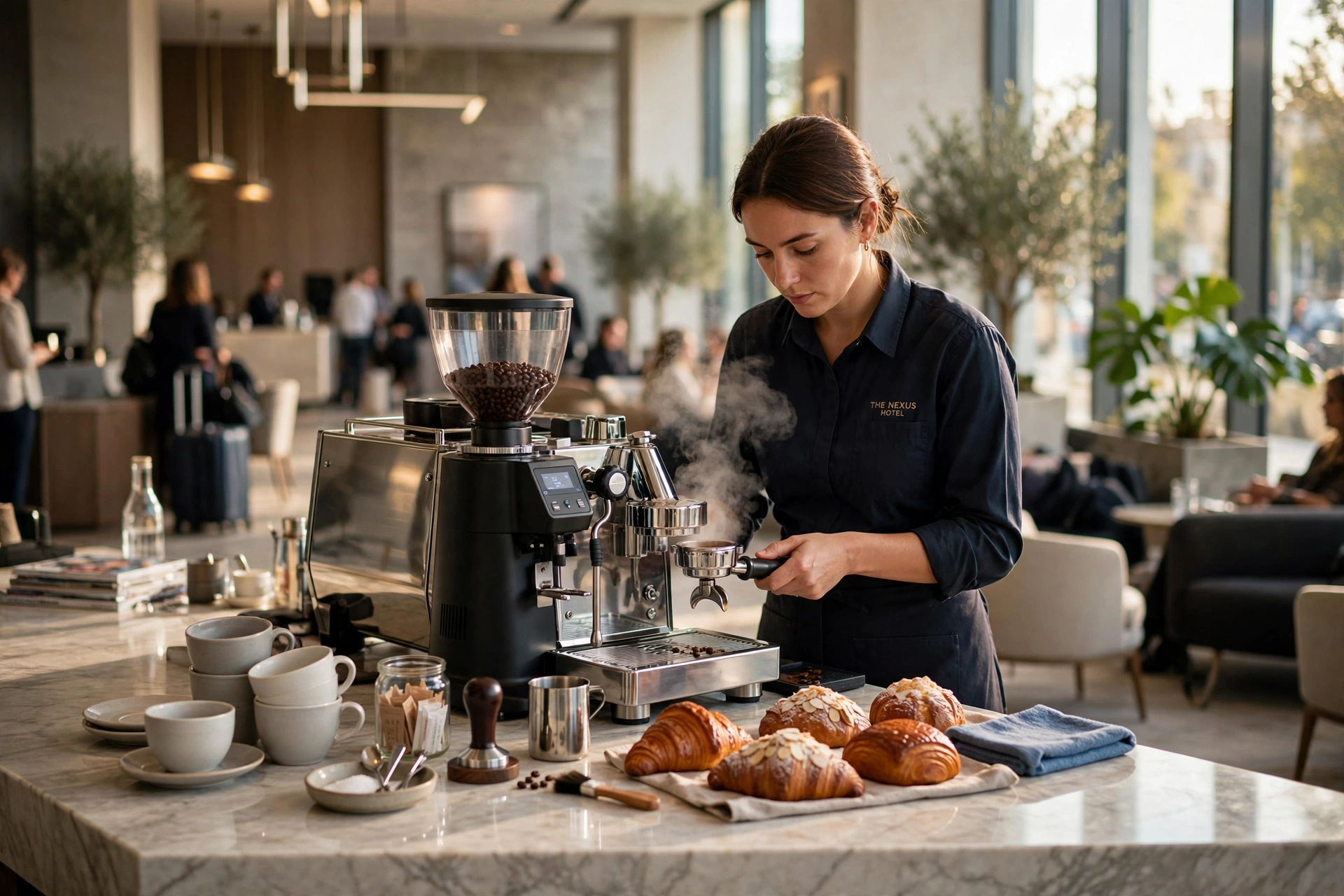
Once volume is established, select the right equipment tier. For high-traffic lobbies, a super-automatic espresso machine is often the best choice because it provides consistency regardless of the staff's barista skill level. For a luxury executive lounge, a semi-automatic machine managed by a trained barista creates an artisanal atmosphere that justifies a higher room rate. This is where the flexibility of leasing shines; you can trial different machines in different areas of the hotel without the risk of owning an obsolete piece of hardware.
Next, integrate the equipment into your staff's workflow. A common mistake is installing a $15,000 machine and expecting the front desk staff to operate it without training. A professional leasing partner should provide comprehensive barista training. At Busy Bean Coffee, we emphasize that the machine is only as good as the person operating it. Proper milk steaming and grind adjustment are what separate a mediocre latte from a world-class one.
Finally, establish a quality control loop. Use a tasting log to ensure the coffee remains consistent. Because the Specialty Coffee Association (SCA) sets rigorous standards for brew ratios and temperature, your staff should be trained to recognize when a machine needs calibration. A leased model typically includes periodic visits from a technician to perform these calibrations, ensuring the coffee never dips below the specialty threshold.
For those operating in specific regions, it is helpful to see how these services are deployed. For example, checking out Sensa Coffee Service in Mount Pleasant SC - Complete Guide can provide insights into how local hospitality businesses optimize their beverage setups.
Comparing Coffee Equipment Acquisition Models
When deciding how to equip your hotel, you generally have three paths. The following table breaks down the trade-offs between the traditional purchase, a low-cost generic rental, and a professional managed lease.
| Feature | Traditional Purchase | Cheap Generic Rental | Professional Managed Lease |
|---|---|---|---|
| Upfront Cost | Very High (CapEx) | Low to Medium | Low (OpEx) |
| Maintenance | Owner's Responsibility | Basic / Slow Response | Proactive / Guaranteed SLA |
| Tech Currency | Risk of Obsolescence | Outdated Models | Access to Latest Tech |
| Quality Control | Variable | Low / Inconsistent | High / Q-Grader Validated |
| Financial Impact | Asset Depreciation | Monthly Expense | Predictable Monthly Fee |
As shown, the professional lease is the only model that removes the risk of equipment obsolescence. In the coffee world, technology evolves quickly. A machine bought five years ago may lack the precision temperature control required for the latest specialty roasts. Leasing allows hotels to upgrade their fleet every few years, ensuring they always offer a cutting-edge guest experience.
Common Mistakes to Avoid in Hotel Coffee Leasing
One of the most frequent errors I see is the "Feature Overload Trap." Hotels often lease the most expensive, feature-rich machine available, only to find that their staff cannot operate 80% of the functions. This leads to underutilization and frustration. Instead, focus on the guest's primary need: speed and quality. A simpler, more robust machine that is used correctly is infinitely better than a complex machine that is used incorrectly.
Another critical mistake is ignoring water quality. Many hotels assume the city water is sufficient. However, mineral buildup (scale) is the number one killer of espresso machines. According to NSF International, equipment that is not properly filtered fails significantly faster and can contaminate the flavor profile of the coffee. Ensure your leasing agreement includes professional-grade water filtration systems and a schedule for filter replacement.
Finally, beware of the "Locked-In Bean" contract. Some leasing companies provide equipment for a very low monthly fee but force the hotel to buy overpriced, mediocre beans. This ruins the guest experience. A true specialty coffee partner, like Busy Bean Coffee, focuses on the quality of the bean. If you are forced to serve a bitter, over-roasted bean just to satisfy a lease agreement, the high-end machine becomes irrelevant.
If you are curious about the broader market for these services, we recommend reviewing the best coffee equipment rental companies to understand what a gold-standard partnership looks like.
Deep Dive: The Financial Logic of OpEx vs. CapEx in Hospitality
For a Hotel General Manager or CFO, the argument for leasing is fundamentally about cash flow. A high-end espresso setup for a lobby and breakfast area can easily exceed $20,000 to $40,000 in capital expenditure. In a world where hotel renovations are constant and occupancy rates fluctuate, tying up that much capital in a depreciating asset is often unwise.
By moving to a leasing model, the hotel converts this into an operating expense (OpEx). This is not just a bookkeeping trick; it provides a hedge against risk. If the hotel decides to change its brand identity or renovate the lobby in two years, they aren't stuck with a massive piece of equipment that no longer fits the aesthetic or the operational flow. They can simply update their lease.
Furthermore, the "hidden costs" of ownership—technician call-outs, replacement gaskets, group head cleaning agents, and calibration tools—are all internalized into the monthly lease fee. In my experience, hotels that own their machines often underestimate these maintenance costs by 15-20% annually. A managed lease eliminates this variance, providing a flat line on the budget that is far easier to manage during quarterly reviews.
For those who want to dive deeper into specific subscription models, our guide on coffee machine subscription plans explores how these differ from traditional leases.
Frequently Asked Questions
Does leasing coffee equipment actually save the hotel money?
Yes, primarily by eliminating the large upfront cost and removing the unpredictability of repair bills. While the total cost over five years might be slightly higher than a purchase, the "cost of downtime" is drastically reduced. When a machine breaks in a hotel, you lose revenue and guest trust immediately. A lease with a guaranteed SLA ensures that the machine is fixed or replaced rapidly, preserving your revenue stream and guest satisfaction scores.
Which type of machine is best for a hotel lobby?
For most hotels, a super-automatic espresso machine is the gold standard. These machines handle the grinding, tamping, and frothing automatically, meaning any staff member can produce a consistent, high-quality latte. This removes the need for a full-time professional barista while still providing a specialty coffee experience. However, for ultra-luxury hotels, a semi-automatic machine paired with a trained barista is preferred to create a "theater" of coffee preparation that guests appreciate.
How do I ensure the coffee quality stays consistent with a lease?
Consistency is achieved through two things: high-quality beans and regular calibration. Ensure your leasing partner provides specialty-grade coffee and includes a monthly or quarterly calibration visit. A Q-Grader should verify that the extraction time and temperature are optimal for the specific beans being used. If the lease includes a managed coffee service, the provider will typically handle these adjustments automatically as part of the membership.
Can I upgrade my equipment mid-lease if my guest volume increases?
Most professional leasing agreements allow for scalability. Because you are paying for a service rather than owning a piece of metal, you can often negotiate an upgrade to a higher-capacity machine as your needs grow. This is a major advantage over purchasing, where you would have to sell a used machine at a loss before buying a new, larger one. Always check your contract for "upgrade paths" or "equipment refresh' clauses.
What happens if the machine breaks down on a holiday weekend?
This is where the Service Level Agreement (SLA) is vital. A quality provider will have 24/7 support or a guaranteed response time (e.g., within 4-8 hours). In some high-end leases, the provider will even keep a "hot swap" machine in the region, allowing them to replace your broken unit entirely while the original is being repaired at the shop. This ensures your coffee service never stops, even during the busiest hotel seasons.
Conclusion
Elevating the guest experience in 2026 is about the details. A hotel that masters the morning coffee ritual creates a lasting positive impression that resonates throughout the entire stay. Hotel coffee equipment leasing removes the financial and operational barriers to achieving this, allowing you to provide specialty-grade coffee without the risk of capital loss or the headache of maintenance.
By shifting from a purchase mindset to a managed service mindset, hotel operators can focus on what they do best—hospitality—while leaving the technical complexities of extraction and equipment upkeep to the experts. Whether you are managing a boutique inn in Mount Pleasant or a corporate tower in a major city, the goal remains the same: a perfect cup of coffee every single time.
To learn more about how these models fit into a broader strategy, read our Complete Guide to Coffee Equipment Rental for Foodservice and discover the best path for your business.
For more specialized regional information, you can explore our guides on Sensa Coffee Service in Charlotte, NC or Sensa Coffee Service in Raleigh NC (2026 Overview).
Visit us at www.busybeancoffee.com to start your journey toward a premium coffee experience.
Free Coffee Pairing Guide & Specialty Roast Cheat Sheet
Unlock the secrets of perfect brewing ratios, water temperatures, and specialty roast profiles. Download the guide.