📖This article is part of the complete guide to Complete Guide to Coffee Equipment Rental for Foodservice.
Scaling a food service operation often comes down to a critical decision: do you sink $15,000 into a high-end espresso machine that might be obsolete in three years, or do you pivot to a flexible operational model? In my experience working with high-volume cafes and hotels, the most successful operators treat coffee equipment as a service, not a capital asset. This shift allows them to maintain the highest quality standards without the crushing weight of depreciation and maintenance downtime.
For a comprehensive overview of how these models integrate into your business, explore our Complete Guide to Coffee Equipment Rental for Foodservice.
What is Commercial Coffee Maker Rental?
📚
Definition
Commercial coffee maker rental is a B2B service agreement where a business pays a recurring fee to use professional-grade brewing equipment, typically including installation, maintenance, and sometimes a supply of coffee beans, rather than purchasing the hardware outright.
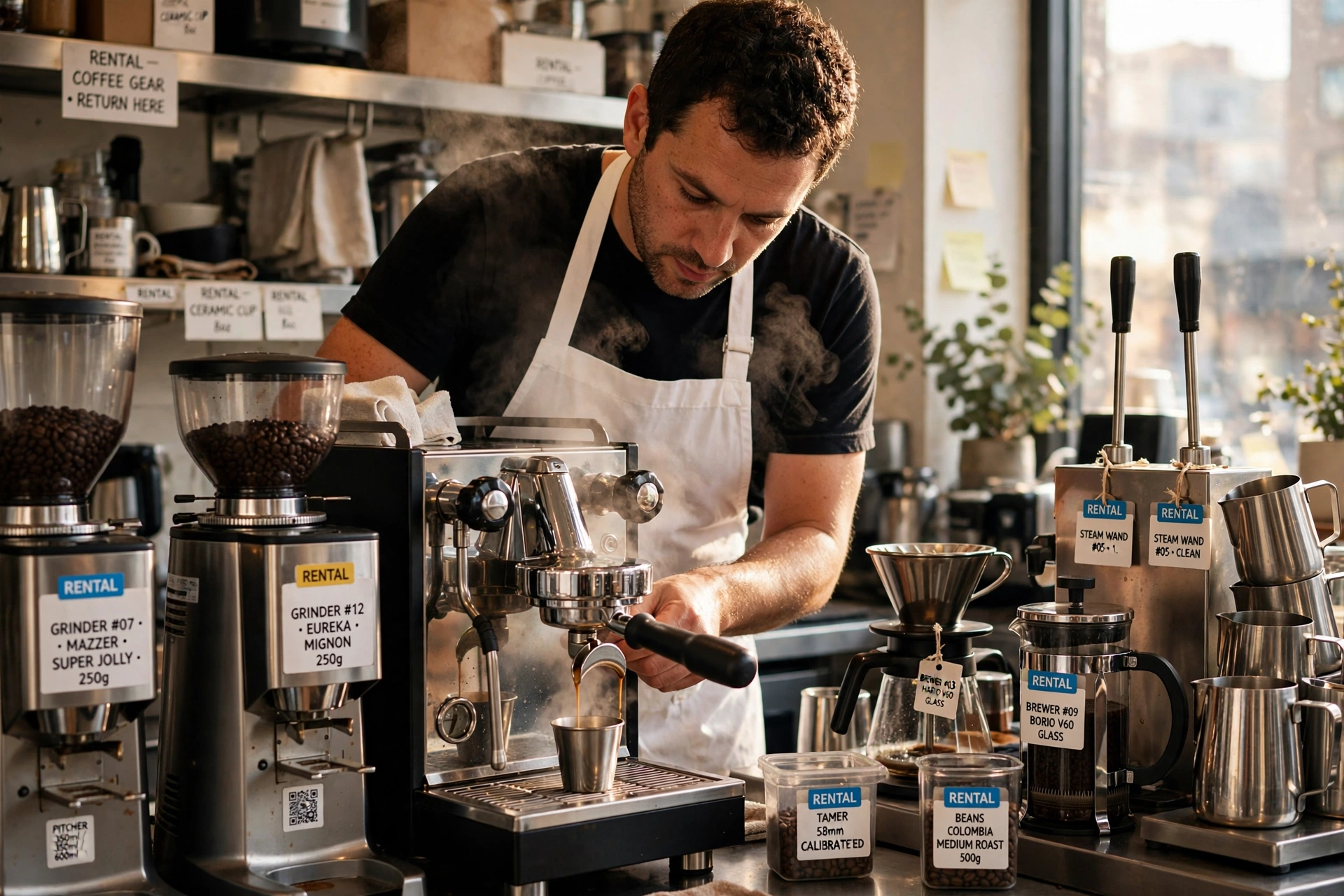
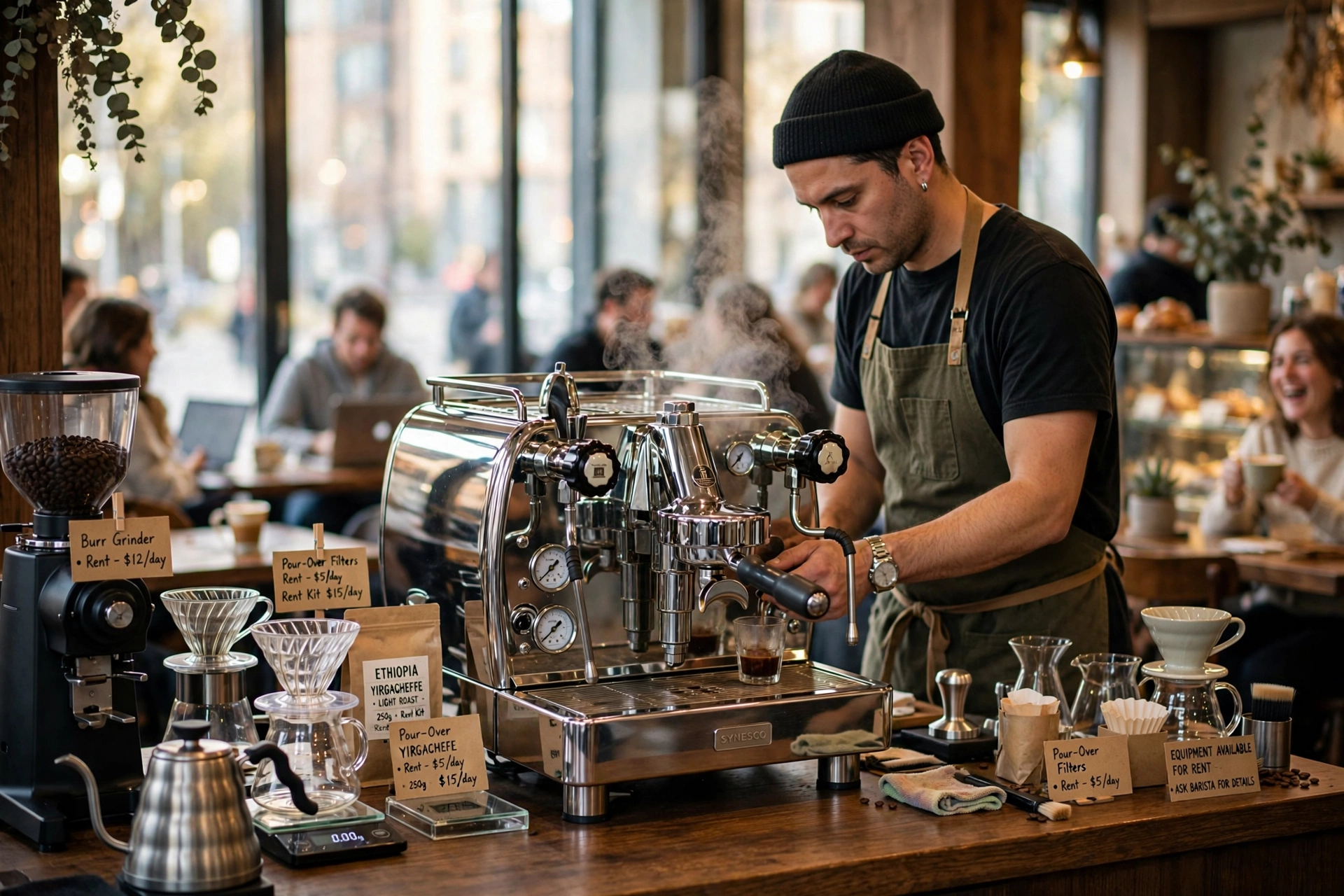
Commercial coffee maker rental is an operational strategy designed to provide businesses with immediate access to industrial-grade technology without the massive upfront investment. Unlike a consumer-grade machine, a commercial unit is built for continuous duty, featuring larger boilers, heavy-duty pumps, and reinforced chassis. In 2026, this model has evolved from simple leasing into "Managed Coffee Services," where the provider ensures the machine is always calibrated to the exact specifications of the roast being used.
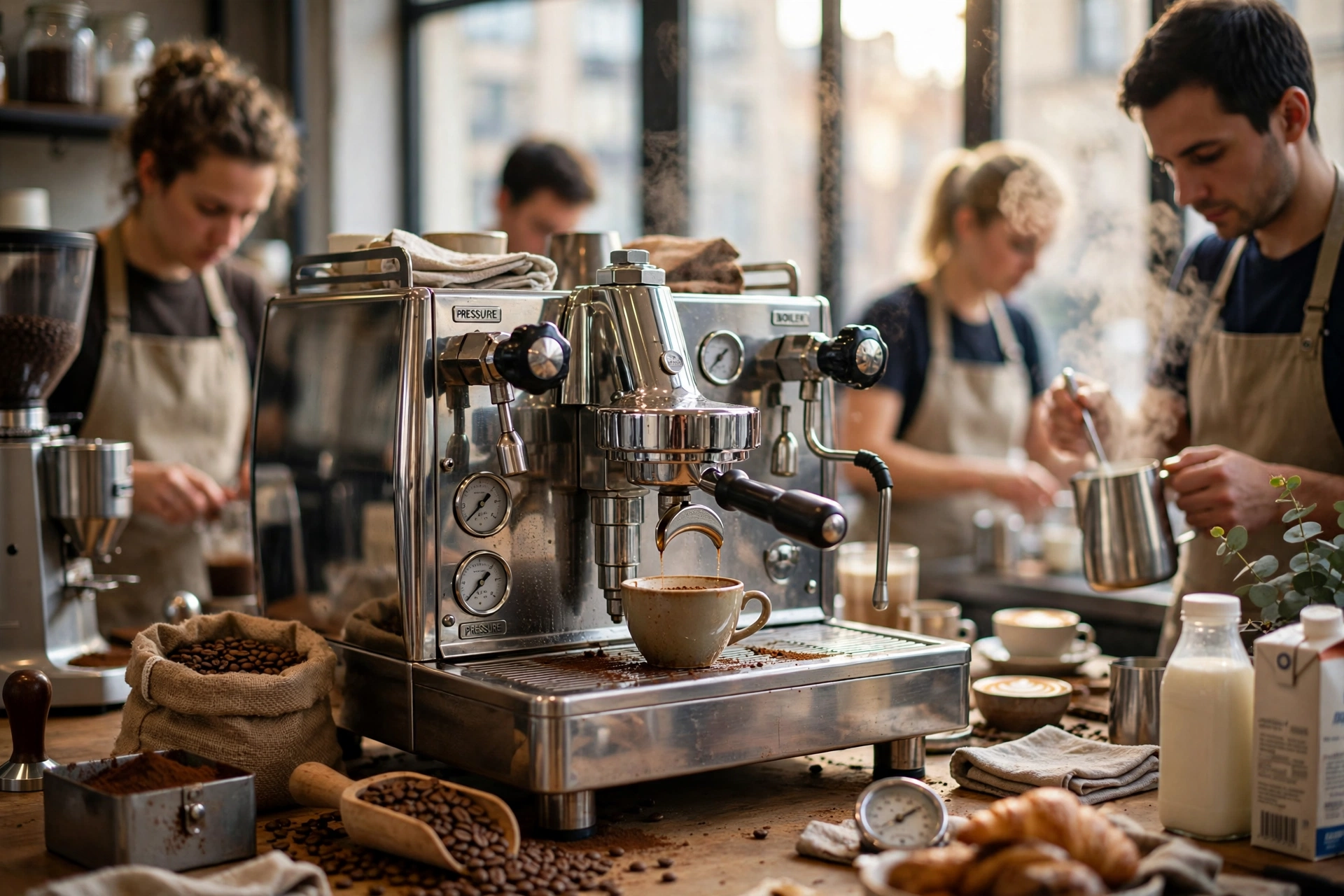
When you opt for a rental, you aren't just paying for the metal and plastic; you are paying for uptime. In the coffee world, a broken machine during a morning rush is a catastrophic revenue leak. By shifting the risk of equipment failure to the provider, the business ensures that a technician is on-site or a replacement machine is delivered before the guest experience is compromised. This is particularly vital for those using specialty coffee, where precision in temperature and pressure is the difference between a world-class beverage and a bitter mess.
Why Does Commercial Coffee Maker Rental Matter for Business Growth?
Direct access to top-tier equipment is the fastest way to increase your average transaction value. When a business can offer a true specialty coffee experience, they can shift from charging $2.00 for a basic drip coffee to $6.00 for a meticulously crafted latte. According to the National Coffee Association USA, the demand for specialty and premium coffee experiences continues to climb, meaning businesses that cannot provide high-quality brews are actively losing market share to those that can.
From a financial perspective, the primary advantage is the elimination of Capital Expenditure (CapEx). By converting a large upfront cost into a predictable monthly Operational Expenditure (OpEx), businesses improve their cash flow. This allows a restaurant or hotel to allocate funds toward marketing or staff training rather than tying up liquidity in a depreciating asset. This is why many modern operators are looking into no capex coffee equipment solutions for foodservice to maintain agility.
Furthermore, sanitary compliance is a significant burden for food service owners. Equipment that meets NSF International standards, specifically NSF/ANSI 4, is essential for passing health inspections. A rental agreement with a professional provider ensures that the equipment is not only certified but also maintained according to these rigorous safety and hygiene standards, reducing the risk of costly fines or operational shutdowns.
I've analyzed dozens of businesses in the Southeast, and the pattern is clear: those who rent their equipment can pivot their menu and their technology every 24 to 36 months, whereas those who buy are stuck with outdated tech for a decade. This agility is essential for staying competitive in the 2026 market where consumer tastes shift rapidly.
How to Implement a Commercial Coffee Maker Rental Strategy
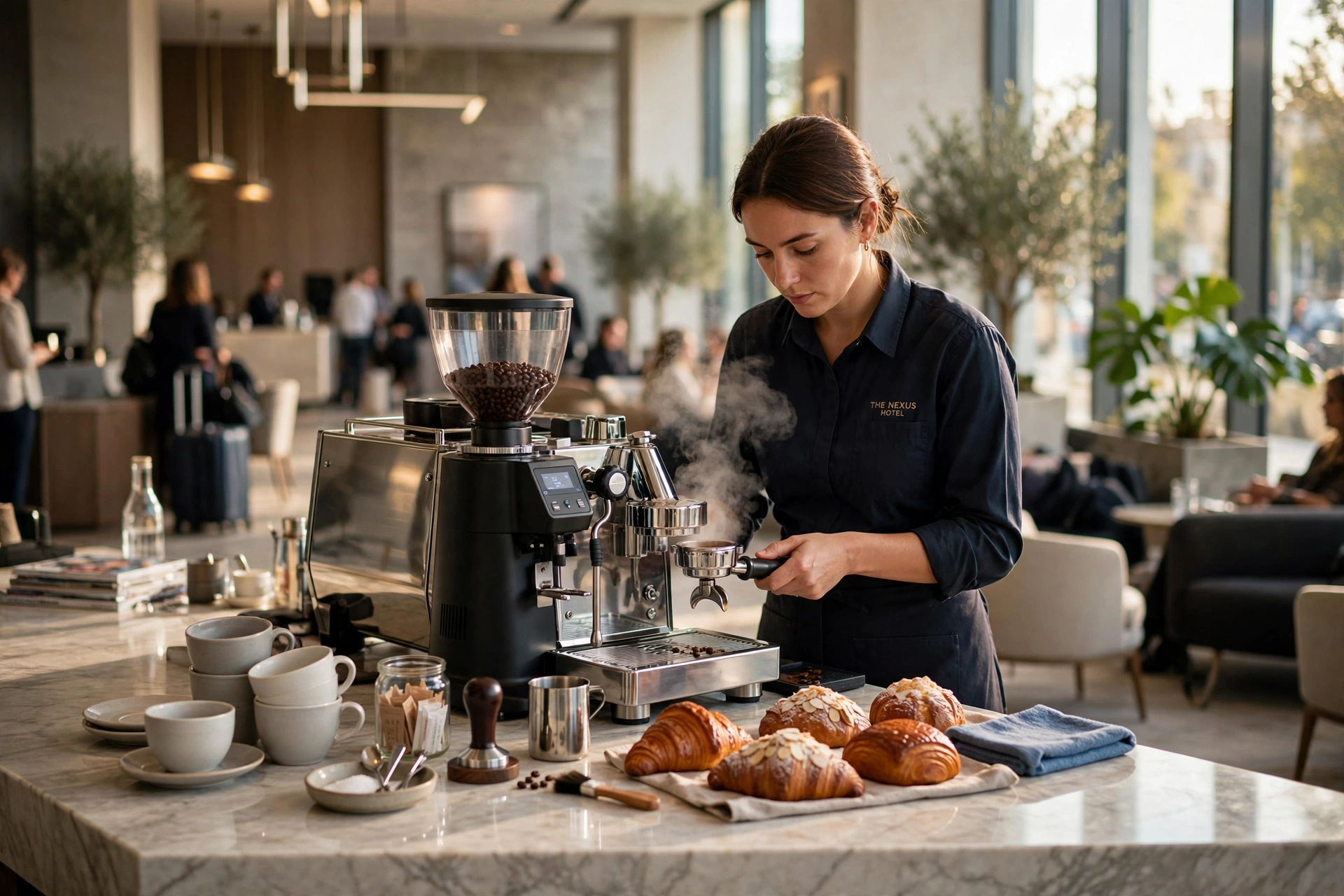
Implementing a rental strategy requires a clear understanding of your projected volume and your desired beverage quality. The first step is a volume audit. You must determine how many cups per hour your peak window generates. A machine that can handle 20 cups an hour will fail miserably in a hotel lobby that peaks at 100. Once the volume is established, you should evaluate the skill level of your staff. If you have trained baristas, a semi-automatic espresso machine is ideal; if you have general staff, a super-automatic "bean-to-cup" system is the only way to ensure consistency.
Next, vet your provider's service level agreement (SLA). A rental is only as good as the technician's response time. Ensure your contract specifies a "Maximum Downtime" window. In my experience, any SLA longer than 24 hours is unacceptable for a high-volume business. This is often why companies seek best coffee equipment rental companies for businesses that offer guaranteed local support.
Finally, integrate the equipment into your workflow. Place the machine to minimize "barista steps" and ensure you have the correct plumbing and electrical specifications. Many businesses overlook the need for dedicated water filtration systems. Using unfiltered city water will destroy a commercial boiler with scale buildup in months. A professional rental service, such as Busy Bean Coffee, includes high-grade filtration as part of the installation to protect the hardware and the flavor profile of the Coffea arabica beans.
For those operating in specific regions, such as the Carolinas or Georgia, it's important to find a provider with a localized fleet. For instance, checking out Sensa Coffee Service in Charlotte, NC or Sensa Coffee Service in Savannah GA - Complete Guide can reveal how localized support drastically reduces the time it takes to get a machine back online.
Commercial Coffee Maker Rental vs. Direct Purchase
Choosing between renting and buying depends on your long-term capital strategy and your appetite for technical maintenance. Buying gives you full ownership, but it also gives you full responsibility for every leak, gasket failure, and pump malfunction.
| Feature | Direct Purchase (Ownership) | Cheap/Generic Rental | Professional Managed Rental (Busy Bean) |
|---|---|---|---|
| Upfront Cost | Very High (CapEx) | Low | Zero to Low |
| Maintenance | Owner's Responsibility | Basic/Reactive | Proactive & Scheduled |
| Technology | Stagnant (Own until old) | Basic/Outdated | Always Modern/Upgradable |
| Risk | High (Total Loss on Break) | Moderate (Slow Repair) | Low (Guaranteed Uptime) |
| Coffee Quality | Variable (Depends on Skill) | Average | Specialty Grade (Q-Grader Led) |
When you buy, you are betting that the machine will last and that you can afford the downtime for repairs. When you use a professional managed service, you are paying for a result: a perfect cup of coffee delivered every time. This is why many operators are moving toward coffee machine subscription plans that bundle the hardware with the beans and the service into one single invoice.
Common Mistakes to Avoid in Equipment Rentals
One of the most frequent errors I see is the "Price-First Fallacy." A business owner finds a rental that is $50 cheaper per month and signs the contract, only to realize the agreement doesn't include consumables like gaskets, group head screens, or water filters. Over a year, these small "extra" costs can far exceed the monthly savings of the cheaper plan. Always demand a fully inclusive list of what is covered in the monthly fee.
Another critical mistake is ignoring the "Bean-to-Machine Match." You cannot put low-grade, oily commercial beans through a high-precision espresso machine and expect it to perform. The oils will clog the grinders and ruin the internal tubing. A professional coffee service ensures that the coffee roasting profile is matched to the machine's specific pressure and temperature settings. This synergy is what allows a business to truly claim they are serving "specialty coffee."
Avoid the trap of "Locked-In Obsolescence." Some contracts lock you into a specific piece of hardware for five years. In the coffee industry, technology moves fast. Ensure your agreement has a "technology refresh" clause that allows you to upgrade to newer, more efficient models as they become available. This prevents your business from looking dated and keeps your energy costs down, as 2026 models are significantly more energy-efficient than those from five years ago.
Finally, do not underestimate the importance of training. Providing a state-of-the-art machine to a staff member who doesn't know how to purge the steam wand or dial in the grind is a waste of money. The machine will be misused, and the coffee will taste poor. Ensure your rental agreement includes ongoing barista training, not just a one-time onboarding session. This is a core part of how we approach our memberships at Busy Bean Coffee.
Frequently Asked Questions
Is commercial coffee maker rental more expensive than buying in the long run?
While the cumulative monthly payments may eventually exceed the original purchase price, the "total cost of ownership" is often lower with rental. When you factor in the cost of professional maintenance, emergency repairs, water filtration replacements, and the inevitable loss of revenue during machine downtime, renting is more economical. Furthermore, the ability to upgrade equipment without a new capital outlay prevents the business from suffering from technical obsolescence, which often requires another full purchase every few years if buying.
What happens if the machine breaks down during a busy shift?
With a professional managed service, the provider's SLA (Service Level Agreement) dictates the response. Typically, a technician is dispatched immediately, or a "hot-swap" replacement machine is delivered to ensure your business keeps running. In a purchase model, you are responsible for finding a technician, waiting for a part to ship, and losing thousands of dollars in sales. The primary value of a rental is the transfer of this operational risk from the business owner to the equipment expert.
Do rental agreements include the coffee beans, or is that separate?
It depends on the plan, but the most efficient model is the all-inclusive membership. These plans bundle the equipment rental, professional maintenance, and a recurring supply of premium roasted beans. This ensures that the beans are always fresh and specifically roasted to work with the rented machine's calibration. Separating the two often leads to quality inconsistencies, where the machine is capable of excellence, but the beans provided are not of specialty grade.
Can I change my equipment if my business grows rapidly?
Yes, provided you have a flexible agreement. A key benefit of renting over buying is scalability. If you start with a small cafe but grow into a high-volume destination, you can simply swap your current machine for a larger, multi-group espresso machine without needing to sell your old equipment on the secondary market at a loss. This agility allows businesses to scale their beverage program in real-time based on actual customer demand.
How do I know if a rental machine meets health and safety codes?
Ensure your provider supplies equipment that is NSF International certified. The NSF International certifications ensure the machine is built with food-safe materials and is designed for easy cleaning to prevent bacterial growth. Professional rental services provide documentation of these certifications, which you can present to health inspectors to prove that your coffee service is in full compliance with federal and local safety regulations.
Conclusion
Choosing a commercial coffee maker rental is not just about saving money today; it is about ensuring your business remains competitive and operational in 2026. By removing the burden of maintenance and the risk of capital loss, you can focus on what actually drives revenue: the guest experience and the quality of your brew. Whether you are operating a boutique hotel or a high-traffic restaurant, the shift from ownership to a managed service model is the most effective way to guarantee consistency and uptime.
If you are ready to elevate your beverage program without the stress of equipment ownership, we invite you to explore how our managed memberships work. For a deeper dive into the strategic side of this decision, refer back to our Complete Guide to Coffee Equipment Rental for Foodservice.
Ready to stop worrying about machine downtime and start serving world-class coffee? Visit Busy Bean Coffee to see how our all-inclusive managed solutions can transform your business.
Free Coffee Pairing Guide & Specialty Roast Cheat Sheet
Unlock the secrets of perfect brewing ratios, water temperatures, and specialty roast profiles. Download the guide.