What Exactly Is Specialty Coffee Equipment?
Most business owners assume that a high price tag on a machine automatically makes it "specialty." In my experience working with dozens of hotels and cafes, the reality is that the equipment is only as good as the precision it allows the barista to maintain. Specialty coffee equipment refers to the professional-grade tools designed specifically to control the variables of extraction—temperature, pressure, and particle size—to highlight the unique flavor profiles of high-scoring Coffea arabica beans. Unlike standard commercial brewers that focus on volume and speed, these tools prioritize consistency and quality, ensuring that a complex roast from Ethiopia or Brazil tastes exactly as the roaster intended.
If you are operating a foodservice business in 2026, the shift toward "specialty" isn't just a trend; it is a requirement for customer retention. For those managing high-traffic environments, finding the best office espresso machines for small teams in 2026 often comes down to balancing this technical precision with operational ease. When the equipment is calibrated correctly, you aren't just serving caffeine; you are serving a curated sensory experience.

The Core Components of Professional Brewing Systems
To understand how this ecosystem works, we have to look at the gear not as individual gadgets, but as a chain of precision. If one link in that chain—the grinder, the machine, or the water filtration—is weak, the entire cup is compromised.
📚
Definition
Specialty coffee equipment is a category of hardware characterized by "precision control," allowing users to manipulate brewing variables (such as brew temperature and pressure) to achieve a specific extraction yield.
The heart of any setup is the espresso machine. In a true specialty environment, this isn't just a boiler with a pump. We are talking about PID controllers (Proportional-Integral-Derivative) that keep water temperature stable within a fraction of a degree. According to the Specialty Coffee Association (SCA), precision in temperature is fundamental because even a two-degree variance can shift a coffee from tasting sweet and balanced to sour or overly bitter.
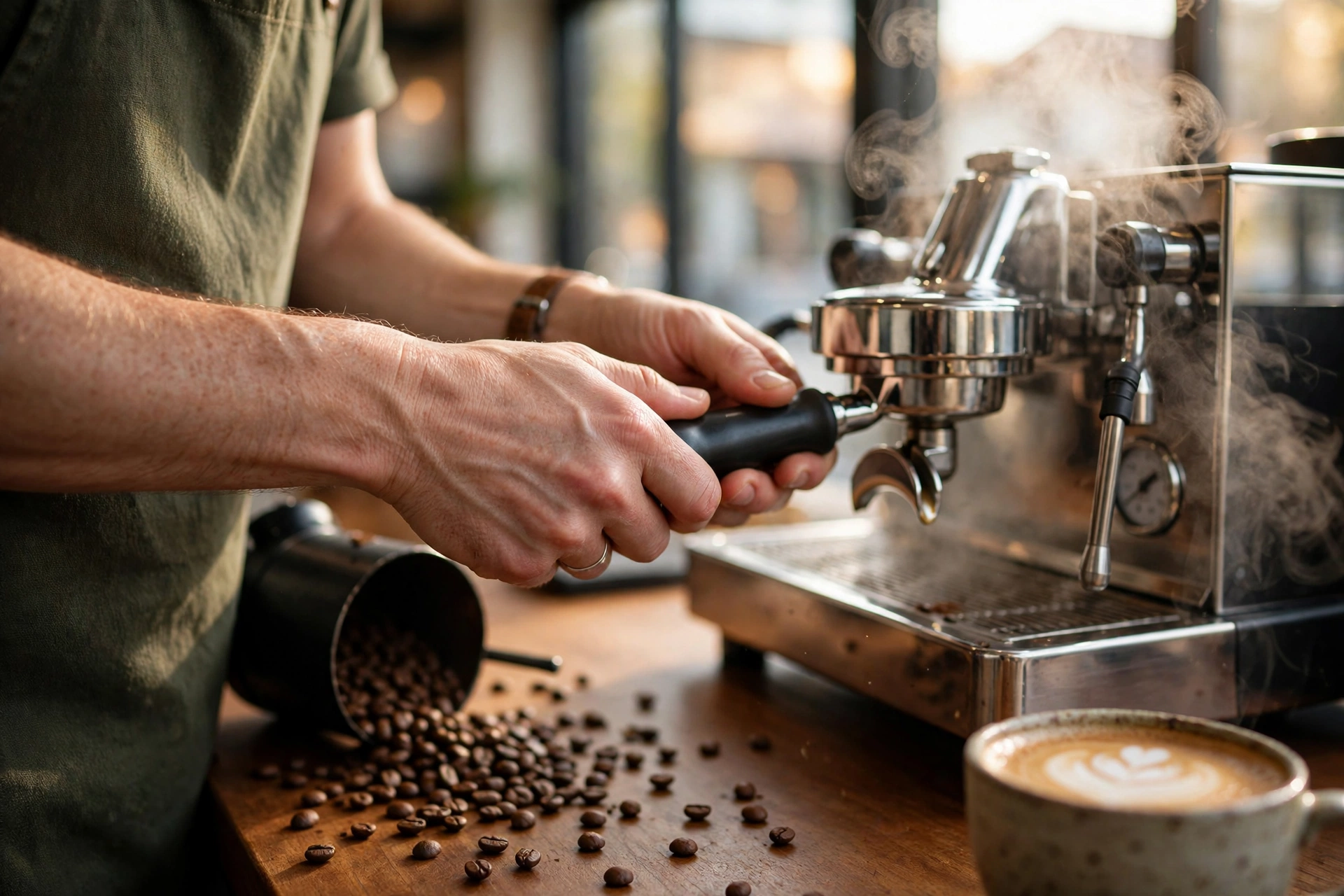
Then there is the grinder. You cannot have a specialty program without a high-end burr grinder. Cheap grinders "crush" the coffee bean, creating uneven shards that lead to "channeling," where water finds the easiest path through the puck, leaving most of the coffee under-extracted. A professional burr grinder ensures a uniform particle size, which is the only way to consistently hit the gold-cup standard.
Finally, we must address the often-ignored component: water chemistry. Since a cup of coffee is 98% water, the equipment used to filter and soften that water is just as important as the machine itself. In my years at Busy Bean Coffee, the most common reason I see for equipment failure is not user error, but scale buildup from unfiltered water. Using NSF-certified filtration systems is non-negotiable for protecting your investment and the flavor of the brew.
Why Does Precision Equipment Matter for Your Bottom Line?
Investing in high-tier gear isn't about prestige; it is about waste reduction and revenue per cup. When you use imprecise equipment, your staff spends half their morning "dialing in" the roast, wasting pounds of expensive specialty coffee just to get a decent shot.
The business impact is measurable. According to market research from the National Coffee Association USA (NCA), consumers are increasingly willing to pay a premium for "craft" or "specialty" experiences. When you can guarantee a consistent, high-quality product, your average transaction value increases. Conversely, using "prosumer" or low-end commercial gear in a high-volume setting leads to "drift." By 11:00 AM, your temperatures have dropped, your grind has shifted, and your customers are tasting inconsistency.
Furthermore, the longevity of the equipment plays a massive role in ROI. Cheap machines are designed to be replaced; specialty equipment is designed to be maintained. When you invest in a managed solution like those offered by Busy Bean Coffee, you eliminate the capital expense of the machine and replace it with a predictable operational cost. This shifts the financial burden from a massive upfront hit to a manageable monthly fee, all while ensuring the equipment is kept in peak condition by professionals.
If you are scaling your operations in the Southeast, you might consider a coffee delivery service in Charlotte NC to ensure your high-end equipment is always paired with the freshest possible roasts, maximizing the equipment's potential.
How to Implement a Specialty Coffee Program Step-by-Step
Setting up a professional beverage station is more than just plugging in a machine. It requires a strategic approach to workflow and technical calibration. The mistake I made early on—and that I see constantly—is placing the machine first and the workflow second. If your barista has to take three steps to reach the knock box, you are losing seconds on every drink, which adds up to hours of lost productivity per month.
Here is the professional approach to implementation:
- Water Analysis and Filtration: Before a single machine arrives, test your local water. Install a filtration system that removes chlorine and manages mineral content to prevent scale.
- The Grinder-Machine Pairing: Match your grinder's output to the machine's basket size. A high-volume cafe needs a grinder with a large hopper and a fast motor to avoid bottlenecks.
- Calibration (The Dial-In Process): Establish a baseline for your coffee roasting profile. Determine the exact dose (grams of dry coffee) and yield (grams of liquid espresso) required to hit the target flavor profile.
- Staff Training: Equipment is only as good as the person operating it. Your team must understand "tamping pressure" and "milk texturing" to ensure the gear performs as intended.
- Preventative Maintenance: Schedule weekly back-flushing and monthly deep cleans.
💡
Key Takeaway
Precision equipment removes the "guessing game" from coffee preparation, allowing your staff to focus on hospitality rather than fighting with a malfunctioning machine.
For businesses that want this level of quality without the technical headache, our managed coffee memberships at Busy Bean Coffee handle the installation, the equipment sourcing, and the ongoing maintenance. Whether you need an automated coffee service in Fort Worth TX or a bespoke setup in a boutique hotel, the goal is to make the technology invisible so the quality of the coffee takes center stage.

Comparing Equipment Approaches: Manual vs. Automated vs. Managed
Not every business needs a manual lever machine. The "right" equipment depends entirely on your staffing levels and your target customer.
| Approach | Pros | Cons | Best For |
|---|---|---|---|
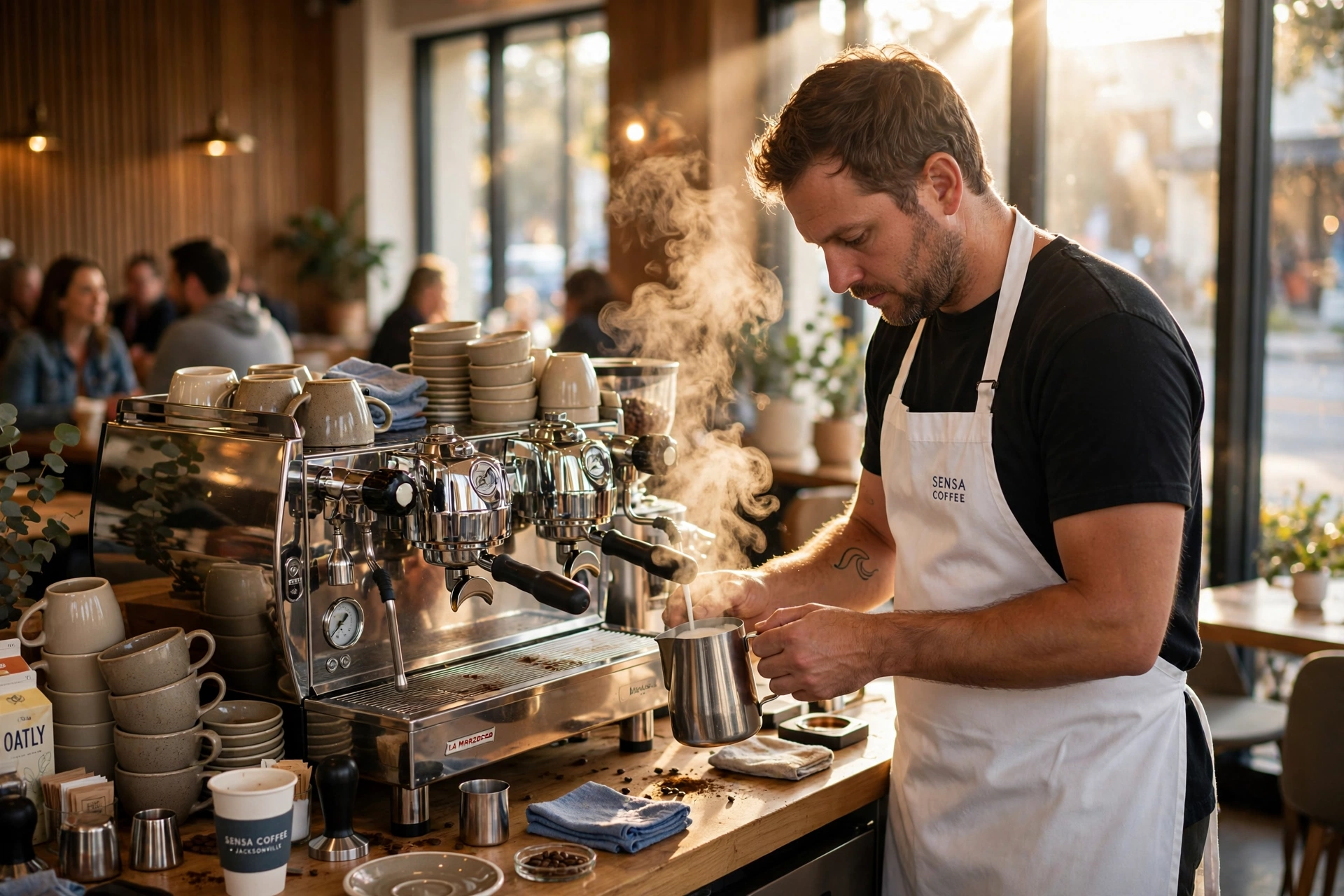
| Manual/Traditional | Absolute control, "craft" appeal, maximum flavor potential. | Slow, requires highly skilled baristas, high waste during dial-in. | Third-wave cafes, specialty coffee shops. |
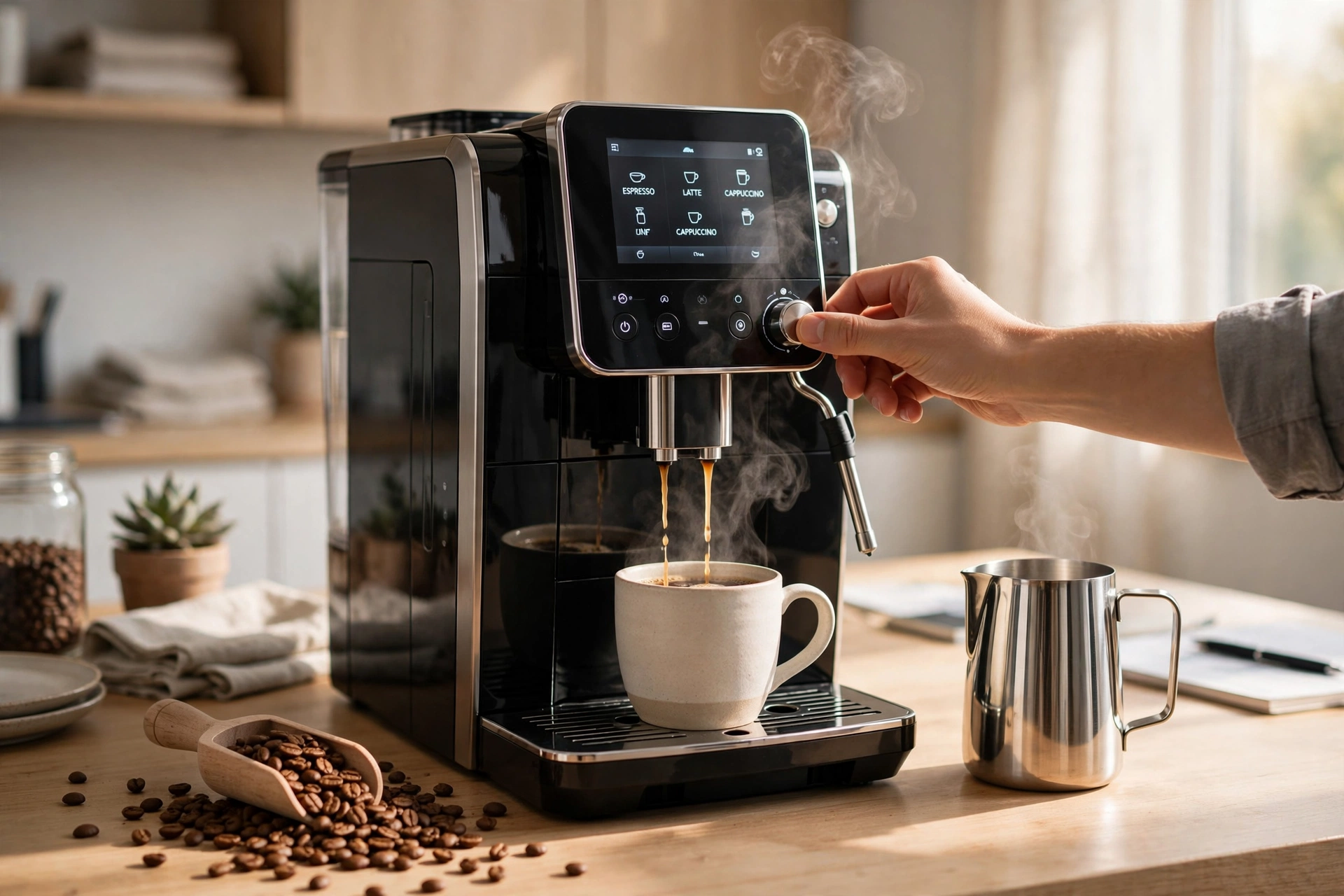
| Super-Automatic | Fast, consistent, requires zero training, no waste. | Less flavor complexity, higher cost of repair, "robotic" feel. | Offices, hotel lobbies, high-volume quick service. |
| Managed (Busy Bean) | Zero upfront CapEx, professional maintenance, guaranteed quality. | Monthly subscription fee, dependent on provider for repairs. | Restaurants, upscale offices, growing foodservice brands. |
When choosing between these, look at your labor costs. If you cannot afford a full-time, trained barista, a manual machine is a liability, not an asset. In those cases, moving toward an automated coffee service in Wilmington NC allows you to maintain a specialty-adjacent quality without the overhead of specialized labor.
Common Questions & Misconceptions About Coffee Gear
Most guides get this wrong by telling you that "more features equal better coffee." That is simply not true. I have seen $20,000 machines produce mediocre coffee because the owner ignored the water quality or used stale beans.
Myth 1: "Super-automatic machines can't produce 'specialty' coffee."
While it's true that a manual shot has a higher ceiling for quality, modern automated equipment has closed the gap significantly. The key is the bean. If you use high-grade specialty coffee and a machine with a precise grinder, the result is often 90% as good as a manual brew, but 100% more consistent across a 12-hour shift.
Myth 2: "You need a separate scale for every single station."
Some argue that "eye-balling" the dose is fine for experienced staff. This is a recipe for disaster. Consistency is the hallmark of a professional operation. Even a 0.5g variance in a dose can change the taste from sweet to sour. Every single shot should be weighed. If you're looking for a way to standardize your tools, checking out where to buy latte art tools for foodservice pros is a great way to start rounding out your station's precision.
Myth 3: "Expensive machines don't need regular servicing if they are new."
This is the most dangerous assumption in the industry. Espresso machines are essentially high-pressure boilers. According to NSF International, maintaining sanitary and operational standards in food equipment is critical for safety and longevity. A "new" machine running on hard water will be ruined in six months without a strict maintenance schedule.
Frequently Asked Questions
What is the most essential piece of specialty coffee equipment?
While the espresso machine gets all the glory, the grinder is actually the most essential piece of equipment. You can take the most expensive machine in the world, but if you use a cheap blade grinder, you will never achieve a balanced extraction. A high-quality burr grinder allows you to control the micron-level size of the coffee particles, which directly dictates how water flows through the coffee. Without this control, you cannot "dial in" your coffee, meaning your drinks will be inconsistent and likely waste a significant amount of product.
How do I know if my equipment is "professional grade" or just "prosumer"?
Professional-grade equipment is defined by its ability to handle "thermal stability" under load. A prosumer machine might make one great latte, but if it cannot maintain that temperature for 50 lattes in a row, it is not a commercial tool. Look for features like dual boilers, volumetric dosing, and heavy-duty stainless steel internals. Furthermore, professional gear is designed for "serviceability," meaning parts can be replaced individually without tossing the whole machine. If the manufacturer doesn't offer a comprehensive parts list and a network of certified technicians, it's likely prosumer gear.
Does the type of espresso machine affect the flavor of the coffee?
Absolutely. For example, a "volumetric" machine ensures that the exact same amount of water passes through the puck every time, removing human error. A "manual" machine allows a skilled barista to tweak the pressure in real-time, which can highlight specific floral or fruity notes in a light-roast Coffea arabica. The machine doesn't "create" the flavor—the bean does—but the machine acts as the lens. A dirty or imprecise lens blurs the flavor, while a precision machine brings the unique characteristics of the roast into sharp focus.
Why is water filtration considered part of "equipment"?
Water is the solvent that extracts the flavor from the coffee bean. If your water has too many minerals (hard water), it can "block" the extraction, leading to a flat, dull taste. More importantly, those minerals precipitate out as scale inside your boilers and heat exchangers. This can cause catastrophic equipment failure or, at the least, wildly inconsistent temperatures. Professional filtration isn't just a utility; it is a critical component of the brewing chain that ensures both the taste of the coffee and the lifespan of the hardware.
How often should specialty coffee equipment be calibrated?
In a high-volume environment, calibration (or "dialing in") should happen at least once a day, and often every few hours. Coffee is organic; it reacts to the humidity and temperature of the room. As the morning warms up, the beans can expand or contract, changing how they fit in the basket. If you don't adjust your grinder settings accordingly, your shots will start to run too fast or too slow. This is why we emphasize a managed approach—having the right tools and the knowledge to adjust them ensures your 4:00 PM customer gets the same quality as your 7:00 AM customer.
Final Thoughts on Specialty Coffee Equipment
Navigating the world of specialty coffee equipment can feel like an overwhelming technical dive, but it boils down to one thing: control. When you control your variables, you control your quality. And when you control your quality, you control your customer's experience and your business's growth.
Whether you are looking for a white glove coffee service in Los Angeles CA or a white glove coffee service in Denver CO, the goal is to remove the friction between your business and a perfect cup of coffee. You shouldn't have to be a mechanical engineer to run a successful cafe or a high-end office coffee station.
If you're tired of managing broken machines and inconsistent brews, it's time to move toward a managed solution. At Busy Bean Coffee, we provide the gear, the beans, and the expertise to make sure your coffee program is a profit center, not a headache.
Visit us at www.busybeancoffee.com to discover how we can transform your beverage service.
Free Coffee Pairing Guide & Specialty Roast Cheat Sheet
Unlock the secrets of perfect brewing ratios, water temperatures, and specialty roast profiles. Download the guide.