Introduction
If you run a restaurant, hotel, or café, your coffee program is a silent profit center—or a hidden drain. The difference often comes down to one thing: your specialty coffee bean supply. Inconsistent quality, unreliable deliveries, and mismanaged inventory can sabotage guest satisfaction and eat into margins. After a decade of working with foodservice operators, I’ve seen the same patterns repeat: businesses that treat coffee as a commodity miss an opportunity to build loyalty and revenue. Those that treat it as a crafted experience—with a dependable specialty coffee bean supply chain—see repeat customers and higher check averages.
For a comprehensive overview of the specialty coffee landscape, check out our Ultimate Guide to Specialty Coffee Bean Supply for Foodservice. This satellite article dives deep into the logistics and best practices of sourcing, storing, and managing specialty coffee beans for your establishment.

What Is Specialty Coffee Bean Supply for Foodservice?
📚
Definition
Specialty coffee bean supply for foodservice refers to the end-to-end process of sourcing, purchasing, receiving, storing, and using high-grade coffee beans (scoring 80+ points on the SCA scale) in a commercial foodsetting. It encompasses relationships with roasters, logistics partners, and equipment vendors to ensure consistent quality and freshness.
Unlike buying retail bags at a supermarket, foodservice supply requires volume predictability, freshness guarantees, and often customized roasting profiles. The supply chain typically involves:
- Direct trade or fair trade sourcing from coffee-growing regions.
- Roasting partners that offer consistent profiles and batch traceability.
- Distribution networks that deliver on a schedule matching your consumption rate.
- Inventory management to rotate stock and prevent stale beans.
In my experience helping restaurants transition to specialty coffee, the biggest shock is how much more involved supply logistics are than ordering a generic truckload. One client—a 50-table bistro—saw their coffee sales jump 30% simply by switching to a weekly delivery cycle of fresh-roasted beans instead of biweekly. Why? Because freshness directly impacts flavor, and flavor drives repeat orders.
💡
Key Takeaway
A reliable specialty coffee bean supply is not just about purchasing—it’s a system that preserves bean quality from roaster to cup.
Why Specialty Coffee Bean Supply Matters for Your Business
Specialty coffee is no longer a niche trend; it’s a customer expectation. According to the Specialty Coffee Association (SCA) , the specialty coffee market has grown 20% annually over the past five years (SCA Market Report, 2024). Restaurants that serve specialty coffee can command $4–$6 per cup versus $2–$3 for standard coffee, boosting margins by 30–50%.
But the benefits go beyond price. A National Coffee Association (NCA) survey found that 79% of coffee drinkers say coffee quality influences their choice of restaurant or hotel (NCA 2024 Trends). That means investing in your supply chain directly impacts customer acquisition and retention.
Here are three reasons to prioritize specialty coffee bean supply:
- Consistency Builds Trust: Guests expect the same great taste every visit. A dependable supply from a roaster who can replicate roast profiles ensures that.
- Differentiation in a Crowded Market: In cities saturated with options, a distinctive coffee program—like offering single-origin Ethiopian or a signature blend—sets you apart.
- Operational Efficiency: Reliable supply reduces emergency orders, waste from stale inventory, and staff frustration from explaining poor quality.
For more on selecting the right beans, see our guide on How to Choose Specialty Coffee Beans for Restaurants.
How to Build a Reliable Specialty Coffee Bean Supply Chain
Building an effective supply chain involves five key steps. Follow these to avoid common pitfalls and maximize ROI.
Step 1: Choose the Right Roaster Partner
Not all roasters understand foodservice needs. Look for partners who offer:
- Custom roasting profiles tailored to your water and equipment.
- Minimum order flexibility (e.g., 5 lb bags up to totes).
- Direct communication with your chef or beverage manager.
Step 2: Negotiate Pricing and Frequency
Wholesale pricing for specialty coffee typically ranges from $8–$16 per pound. Request volume discounts, but don’t sacrifice freshness for a lower price. A good rule: order every 7–10 days for peak flavor. This is a key cost-saving tip for wholesale specialty coffee beans.
Step 3: Implement Proper Storage
Coffee beans are perishable. Store them in:
- Airtight containers with one-way valves (or keep in original valve bags).
- Cool, dark place (60–75°F, away from heat and moisture).
- First-in, first-out rotation to use oldest stock first.
Step 4: Train Your Team
Baristas and servers must understand how to handle beans: grind just before brewing, use scales for dose consistency, and clean equipment daily. We offer training resources that many clients find invaluable.
Step 5: Monitor and Adjust
Track usage, waste, and customer feedback. If a batch tastes off, your supplier should stand behind it. Regular cupping sessions with your staff can identify issues early.
Comparison: Supply Models
| Feature | Traditional Bulk Supplier | Generic Online Supplier | Managed Specialty Supply (Busy Bean Coffee) |
|---|---|---|---|
| Bean Quality | Low–Medium (often stale) | Medium (variable) | High (SCA 80+ points, fresh roasted) |
| Consistency | Poor | Fair | Excellent (custom profiles, batch tracking) |
| Delivery Schedule | Fixed (weekly/monthly) | Varies by order | Flexible, aligned to consumption |
| Support | None | Email only | Dedicated account manager + training |
| Equipment Integration | Separate purchase | Not included | All-inclusive (SENSA machines + service) |
As you can see, a managed service like Busy Bean Coffee removes the guesswork. Our white-glove coffee installation gets you set up with minimal downtime.
Common Mistakes in Specialty Coffee Bean Supply
Over the years, I’ve watched foodservice operators repeat the same errors. Here are the top five—and how to avoid them.
1. Buying on Price Alone
Cheap beans often mean old or low-grade stock. The few cents saved per pound cost you in customer satisfaction. One hotel I worked with switched to a $12/lb specialty bean and saw their lobby coffee sales triple—the extra margin more than covered the cost.
2. Ordering Too Far in Advance
Coffee is best consumed 3–14 days after roasting. Ordering a month’s supply at once guarantees that the last bag is stale. Instead, negotiate a weekly or biweekly delivery schedule.
3. Ignoring Water Quality
Bad water ruins great coffee. Test your water hardness and invest in a filtration system. This is especially important for medical office coffee service where taste expectations are high.
4. Skipping Staff Training
Even the best beans produce a mediocre cup if staff don’t know how to grind and brew. A short 30-minute training session can transform your coffee quality.
5. Storing Beans in the Fridge or Freezer
Contrary to popular belief, refrigeration accelerates staling by exposing beans to moisture and odors. Room temperature in an airtight container is best.
💡
Key Takeaway
The most common supply mistakes are avoidable with a little planning. Treat your coffee like a fresh ingredient, not a pantry staple.
Frequently Asked Questions
How often should I order specialty coffee beans for my restaurant?
Order every 7–10 days for optimal freshness. If you go through 20 pounds per week, a 20-pound order weekly is ideal. Many roasters offer standing orders that auto-ship. For seasonal adjustments (holidays, slower months), communicate with your supplier to avoid overstock or shortage.
What is the difference between single-origin and blend for foodservice?
Single-origin beans come from one region and offer distinct flavor profiles (e.g., bright fruit from Ethiopia). Blends combine beans from multiple origins for a balanced, consistent taste. For foodservice, blends are often preferred because they maintain uniformity year-round, while single-origins can change with harvest. However, offering a single-origin as a limited-time or pour-over option can excite regulars.
How do I store bulk coffee beans to maintain freshness?
Store beans in an airtight container (or original one-way valve bag) in a cool, dark cabinet away from the stove or oven. Ideal temperature is 60–75°F. Avoid refrigerators and freezers, as moisture and odors degrade quality. Use FIFO (first in, first out) rotation. For bulk orders, split into smaller weekly portions so you only open what you’ll use soon.
What certifications should I look for in a specialty coffee supplier?
Look for Fair Trade, Rainforest Alliance, Organic, or Direct Trade certifications. These indicate ethical sourcing and environmental responsibility. For higher-end programs, seek suppliers who provide transparency reports and visit their origins. Customers increasingly value sustainability—when you promote your certified coffee, it can be a marketing asset. For more on this, see our sustainable sourcing guide.
How do I calculate the cost per cup of specialty coffee?
Divide the cost per pound by the number of cups you get per pound. A pound yields about 30–40 cups (depending on dose: 10–12g per 8 oz cup). If beans cost $12/lb, that’s $0.30–$0.40 per cup in raw materials. Add labor, milk, cup, and overhead—coffee cost is typically 1–2% of menu price. Specialty coffee’s higher selling price offsets the ingredient cost.
Can I negotiate pricing with specialty coffee roasters?
Yes, especially if you commit to volume or a long-term contract. Most roasters offer tiered pricing: 10% off for 50+ lbs/month, 15% for 100+. Some also offer discounts for using their equipment or joining a membership program. Busy Bean Coffee’s all-inclusive model bundles beans, equipment, and service for a flat monthly fee—often lower than buying separate components. See our cost breakdown for details.
What equipment do I need for specialty coffee in foodservice?
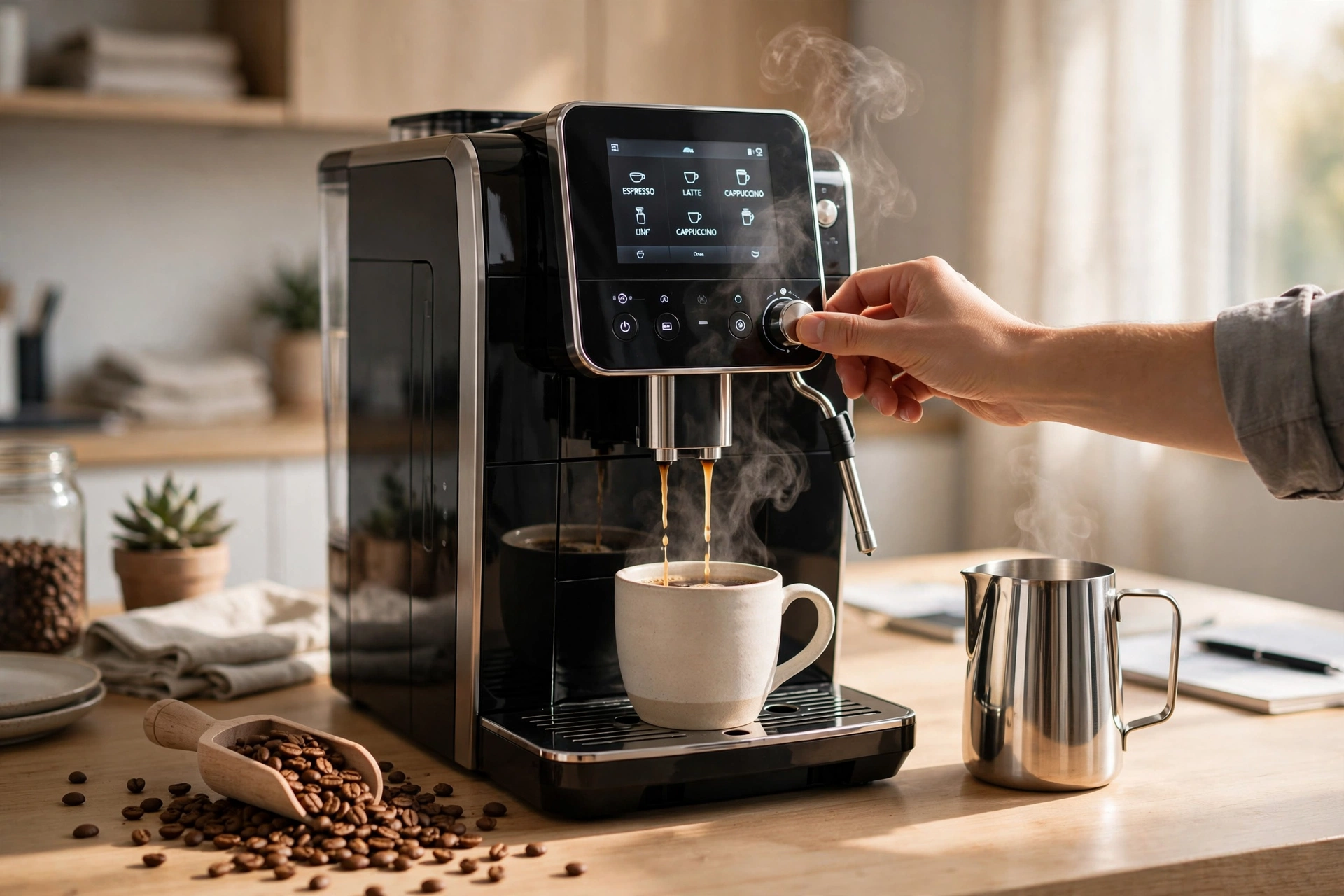
At minimum: a commercial espresso machine, quality grinder, and brewer. For hotels and offices, fully automatic bean-to-cup machines like the SENSA line are popular. Our brewing equipment guide covers options. Equipment maintenance is critical—stale oil buildup ruins flavor. Managed services include regular cleaning and calibration.
How do I know if my coffee supplier is reliable?
Ask for references from other foodservice clients. Check their responsiveness to issues (e.g., delayed shipments, quality complaints). A reliable supplier will offer a product guarantee, have consistent inventory, and provide transparent communication. At Busy Bean Coffee, we pride ourselves on 99.8% on-time delivery and a dedicated support team.
Conclusion
Your specialty coffee bean supply isn’t just a procurement line item—it’s the backbone of your coffee program’s success. By choosing the right partner, managing freshness, and training your team, you can turn coffee from a utility into a profit driver. The supply chain might seem complex, but with a managed approach like Busy Bean Coffee, it becomes seamless.
Ready to elevate your coffee program? Visit Busy Bean Coffee to learn how our all-inclusive membership can simplify your specialty coffee bean supply. For the full picture, return to our Ultimate Guide to Specialty Coffee Bean Supply for Foodservice.
Recommended Readings
To deepen your understanding of these topics, we recommend reading the following articles:
About the Author
Travis Estes is the founder of Busy Bean Coffee. With over a decade of experience in the specialty coffee industry, he has helped hundreds of foodservice businesses design and optimize their coffee programs. He believes that great coffee should be accessible without operational headaches.
Free Coffee Pairing Guide & Specialty Roast Cheat Sheet
Unlock the secrets of perfect brewing ratios, water temperatures, and specialty roast profiles. Download the guide.