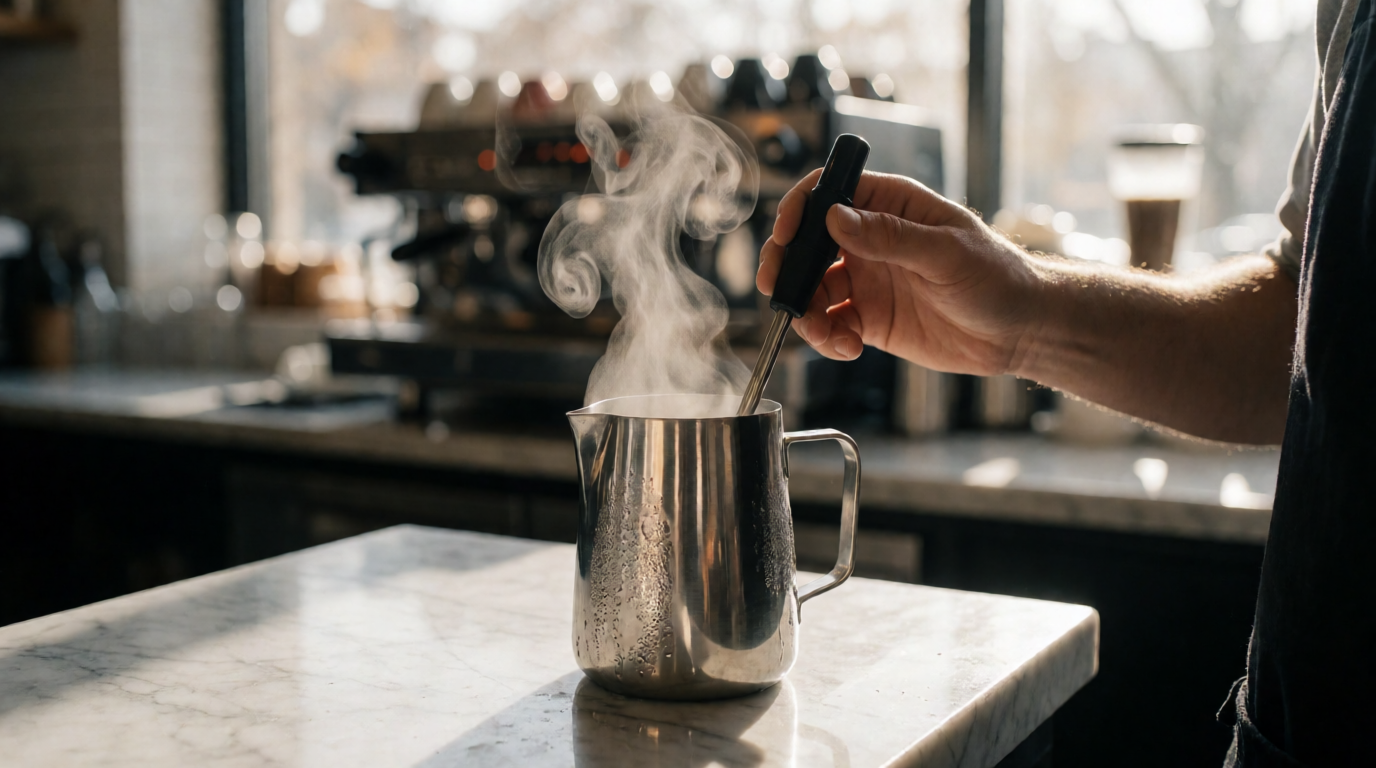
Commercial milk frothers can cost anywhere from $200 for a basic handheld unit to over $8,000 for a high-volume automatic model integrated into a commercial espresso machine. The price depends on type, capacity, build quality, and automation level. For most foodservice businesses, the right investment balances upfront cost with long-term reliability and beverage consistency.
📚Definition
A commercial milk frother is a device designed to heat and aerate milk to produce microfoam for specialty coffee drinks like lattes, cappuccinos, and flat whites. Unlike home models, commercial frothers are built to withstand continuous use in high-volume settings.
Understanding Commercial Milk Frother Price Ranges
The commercial milk frother market is segmented into three primary categories: handheld frothers, countertop automatic frothers, and built-in steam wand systems. Each comes with distinct price points and operational considerations.
Handheld battery‑operated frothers retail between $20 and $50, but they are not truly commercial-grade. They lack durability and speed, making them suitable only for very low‑volume cafes or emergency backup.
Countertop automatic frothers are the sweet spot for most small to mid‑sized coffee shops. These units — often from brands like Bunn, Hamilton Beach Commercial, or Melitta — range from $600 to $1,500. They heat and froth milk automatically with programmable temperature and texture controls. For example, a Bunn Ultra-2 retails around $1,200 and can produce up to 100 drinks per day.
Integrated steam wand systems come built into commercial espresso machines. These are the most expensive option because you're buying the whole espresso machine. A dual‑boiler machine with a powerful steam wand can cost $3,000 to $8,000 or more. However, this setup is the gold standard for producing high‑quality microfoam.
According to a report by Allied Market Research, the global commercial coffee equipment market is projected to reach $35.7 billion by 2030, driven by the rising demand for specialty coffee. This growth pushes manufacturers to innovate, creating more efficient frothing solutions.
In my experience working with dozens of cafes and hotel kitchens, the mistake I see most often is buying a cheap home‑grade frother and expecting it to survive 200 drinks a day. The cost per breakdown — lost sales, upset customers — far outweighs the upfront savings.
Why Investing in the Right Milk Frother Matters
The quality of your milk foam directly impacts customer satisfaction and repeat business. According to a National Coffee Association survey, 63% of specialty coffee consumers say that “perfect milk texture” is a key factor in choosing a cafe. A subpar frother can ruin an otherwise excellent espresso.
💡Key Takeaway
A reliable commercial milk frother not only improves drink quality but also reduces waste, speeds up service, and lowers long-term maintenance costs.
Consider the math: a high‑volume cafe making 150 lattes per day at $5 each generates $750 daily revenue. If a frother fails and you lose just 10% of those sales for one day while waiting for a replacement, you lose $75. A $1,200 frother that lasts three years costs about $1.10 per day. The payback is immediate.
Furthermore, electric automatic frothers can reduce milk waste by precisely controlling temperature and aeration, saving up to 20% in milk costs, as noted in a Specialty Coffee Association study.
How to Choose the Right Milk Frother for Your Business
Follow these steps to match the frother to your volume, budget, and skill level.
1. Estimate daily drink volume. A handheld frother works for under 50 drinks/day; an automatic countertop frother for 50–200; a steam wand setup for 200+.
2. Decide on automation. Automatic frothers require minimal training, while steam wand mastery needs practice. If your staff turnover is high, go automatic.
3. Consider space and workflow. Countertop frothers take up counter space. Integrated steam wands use the espresso machine’s boiler. Plan your layout.
4. Factor in total cost of ownership (TCO). Include maintenance, parts, and electricity. Many automatic frothers have replaceable parts; steam wand maintenance is part of espresso machine service.
5. Look for certifications. NSF/ANSI 4 and UL listings ensure commercial safety and durability.
At Busy Bean Coffee, we often recommend automatic countertop frothers for clients using our
All-Inclusive Coffee Membership Models Explained because they pair well with our SENSA equipment line, simplifying training and service.
💡Key Takeaway
The best milk frother is the one that matches your actual output — not just your budget. A $600 frother can be a better investment than a $3,000 one if it fits your volume.
Comparison of Commercial Milk Frother Options
| Option | Price Range | Pros | Cons | Best For |
|---|
| Handheld battery frother | $20 – $50 | Low cost, portable | Very slow, not durable, inconsistent foam | Emergency backup, low volume (<10/day) |
| Countertop automatic frother | $600 – $1,500 | Consistent, fast, easy to clean, programmable | Takes counter space, lower steam power | Cafes and offices doing 50–200 drinks/day |
| Integrated steam wand (espresso machine) | $3,000 – $8,000+ | Highest quality microfoam, no extra machine | High cost, requires training, more maintenance | Specialty coffee shops, high volume (200+ drinks/day) |
| Pitcher-style commercial frother (e.g., Bonamat) | $800 – $2,000 | Large capacity, very durable, simple controls | Bulky, longer heating time, limited texture options | Buffets, hotels, large offices |
Common Questions and Misconceptions About Milk Frothers
Misconception 1: “Any frother can make latte art.” Only steam wands or high‑end automatic frothers produce microfoam fine enough for latte art. Handheld and basic electric frothers create large bubbles that collapse quickly.
Misconception 2: “A cheap frother saves money.” Not if it breaks every three months. Commercial‑grade frothers are built with hardened stainless steel and robust motors. A $200 “commercial” unit from an unknown brand may fail after 1,000 cycles.
Misconception 3: “I need a steam wand for quality.” Not anymore. Many automatic frothers now use vortex technology to produce microfoam comparable to steam. They also eliminate the need for a skilled barista.
Misconception 4: “All automatic frothers are the same.” Far from it. Cheaper models use plastic parts that crack, and thermostats that drift. Look for units with metal frothing chambers and PID temperature control.
Frequently Asked Questions
What is the average cost of a commercial milk frother?
The average cost for a reliable commercial-grade automatic milk frother is between $1,000 and $1,500. Entry-level commercial units start around $600, while high‑end integrated steam wand systems can exceed $8,000 when purchased as part of an espresso machine. Always factor in installation, training, and maintenance when budgeting.
How long do commercial milk frothers typically last?
With proper daily cleaning and descaling, a commercial milk frother should last 3 to 5 years. Units with replaceable parts (seals, pumps) can last longer. For example, the Melitta E‑Frother series is designed for 50,000 cycles — that’s about 3 years at 50 uses per day. Regular maintenance extends this lifespan significantly.
What maintenance do commercial milk frothers require?
Daily: Rinse the frothing chamber and probe with cold water, wipe exterior. Weekly: Deep clean with a food‑grade detergent to remove milk protein residue. Monthly: Descale with a vinegar or commercial descaler. Many automatic frothers have self‑clean cycles. Neglecting maintenance leads to scale buildup and bacterial growth, which can ruin drink flavor and void warranties.
Can I use a home milk frother in a commercial setting?
No. Home frothers are not built for continuous use and lack safety certifications (NSF, UL). They overheat quickly, have plastic components that degrade, and may not meet health department codes. Using a home frother commercially risks equipment failure, inconsistent drinks, and potential fines.
Does Busy Bean Coffee offer milk frother solutions for businesses?
Yes. Busy Bean Coffee provides a range of commercial milk frothing options as part of our all‑inclusive managed coffee membership. We feature SENSA automatic frothers that integrate seamlessly with our espresso machines. Our
White Glove Coffee Installation: Seamless Setup Guide for Businesses ensures your equipment is professionally installed and maintained. Contact us to learn how we can tailor a solution for your volume and budget.
Summary and Next Steps
Choosing the right commercial milk frother depends on your drink volume, staff skill level, and budget. Handheld units are cheap but not viable for high output; automatic countertop models offer excellent consistency for most cafes; integrated steam wands provide top‑tier quality for specialty shops. Always look for certified commercial construction, and consider total cost of ownership.
At Busy Bean Coffee, we help businesses navigate these decisions every day. Whether you run a coffee shop, hotel, or office breakroom, our
No Capex Coffee Solutions for Foodservice Businesses let you get premium equipment — including milk frothers — without a large upfront investment. Visit
www.busybeancoffee.com to explore our offerings or schedule a consultation.
💡Key Takeaway
The best investment in a milk frother is not the cheapest or the most expensive — it’s the one that matches your actual output and staff capability. A well‑chosen frother pays for itself through improved drink quality, reduced waste, and fewer service interruptions.
Recommended Readings
To deepen your understanding of these topics, we recommend reading the following articles:
About the Author
Travis Estes is the founder of Busy Bean Coffee, a
specialty coffee equipment provider serving foodservice businesses since 2014. He has personally helped hundreds of cafes, hotels, and offices select and implement coffee solutions that balance quality, cost, and simplicity. His expertise centers on making professional coffee accessible without the usual capital expense.
Free Coffee Pairing Guide & Specialty Roast Cheat Sheet
Unlock the secrets of perfect brewing ratios, water temperatures, and specialty roast profiles. Download the guide.