How to Build a Professional Cafe Equipment Supply Chain for Maximum ROI
Most new cafe owners make the mistake of buying a "bundle" from a generic restaurant wholesaler, only to find out six months later that their espresso machine isn't calibrated for specialty coffee or their grinders can't keep up with the morning rush. To properly manage your cafe equipment supply, you must align your hardware choices with your projected volume, your staff's technical skill level, and your long-term maintenance budget. The most efficient way to execute this is by moving away from fragmented purchasing and toward a managed equipment service that bundles high-end hardware with professional installation and ongoing technical support.

What Exactly is a Professional Cafe Equipment Supply Strategy?
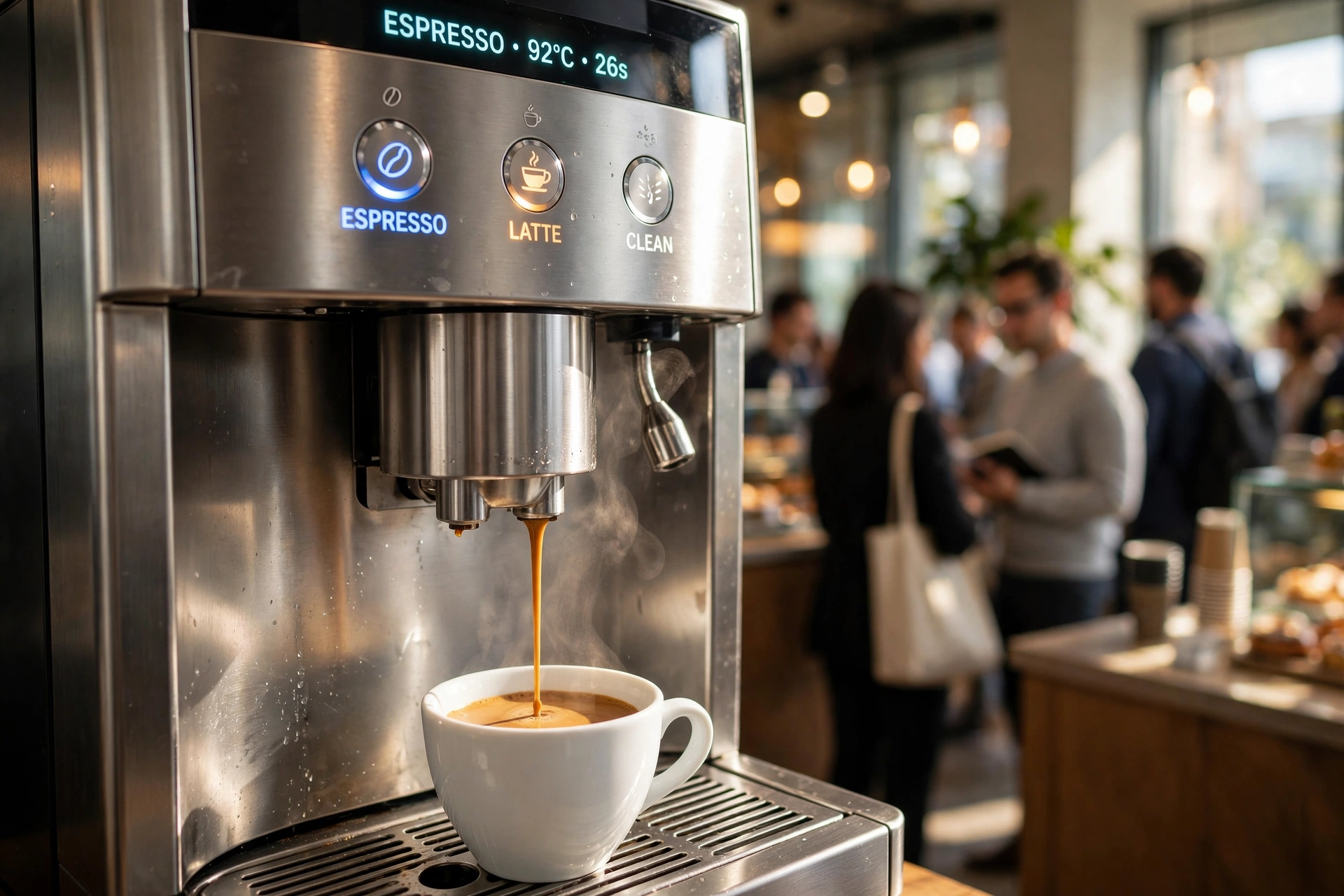
When we talk about cafe equipment supply, we aren't just discussing the act of buying a machine; we are talking about the strategic sourcing and lifecycle management of every piece of hardware that touches your product. From the water filtration system, which is the most overlooked component of any coffee shop, to the high-capacity espresso machines and precision grinders, every link in the supply chain affects your drink consistency and your bottom line.
📚
Definition
Cafe equipment supply refers to the end-to-end process of sourcing, installing, maintaining, and upgrading the commercial hardware necessary to produce beverage and food items in a professional hospitality environment.
In my experience working with dozens of foodservice businesses, the "equipment gap" occurs when a business buys a machine based on price rather than throughput. I've seen operators purchase a two-group machine for a high-traffic location in Mount Pleasant, SC, only to realize that the boiler recovery time is too slow for their peak hour. This results in "temperature drift," where the first espresso is perfect, but the tenth is sour because the machine cannot maintain a stable thermal mass.
To avoid this, you need to focus on the technical specifications of your supply. For instance, the Specialty Coffee Association (SCA) sets rigorous standards for brew water quality and temperature stability. If your equipment supply doesn't include a professional-grade reverse osmosis (RO) system or a multi-stage filtration unit, you are essentially inviting scale buildup into your boilers, which can reduce the lifespan of a $15,000 machine by 50% in just two years.
Why Does Your Equipment Supply Strategy Dictate Your Profitability?
The relationship between your equipment supply and your profit margin is direct and measurable. In the coffee industry, consistency is the only thing that drives repeat customers. If your grinder drifts by two millimeters every morning, your baristas spend the first hour of the day wasting expensive specialty coffee beans just to "dial in" the shot. This is known as "calibration waste," and in a high-volume shop, it can cost hundreds of dollars per month.
According to the National Coffee Association USA (NCA), consumer demand for specialty coffee continues to rise, meaning customers are more discerning about flavor profiles than ever before. If you are using a low-end cafe equipment supply chain that provides inconsistent heat or pressure, you cannot compete with the "third wave" coffee shops that prioritize precision.
Furthermore, the cost of downtime is astronomical. If your primary espresso machine fails on a Saturday morning, you aren't just losing the cost of the coffee; you are losing the high-margin pastries and the customer lifetime value of everyone who walked away. This is why professional operators prioritize "uptime" over "initial cost." A cheap machine with no service contract is a liability; a premium machine with a managed service agreement is an asset.
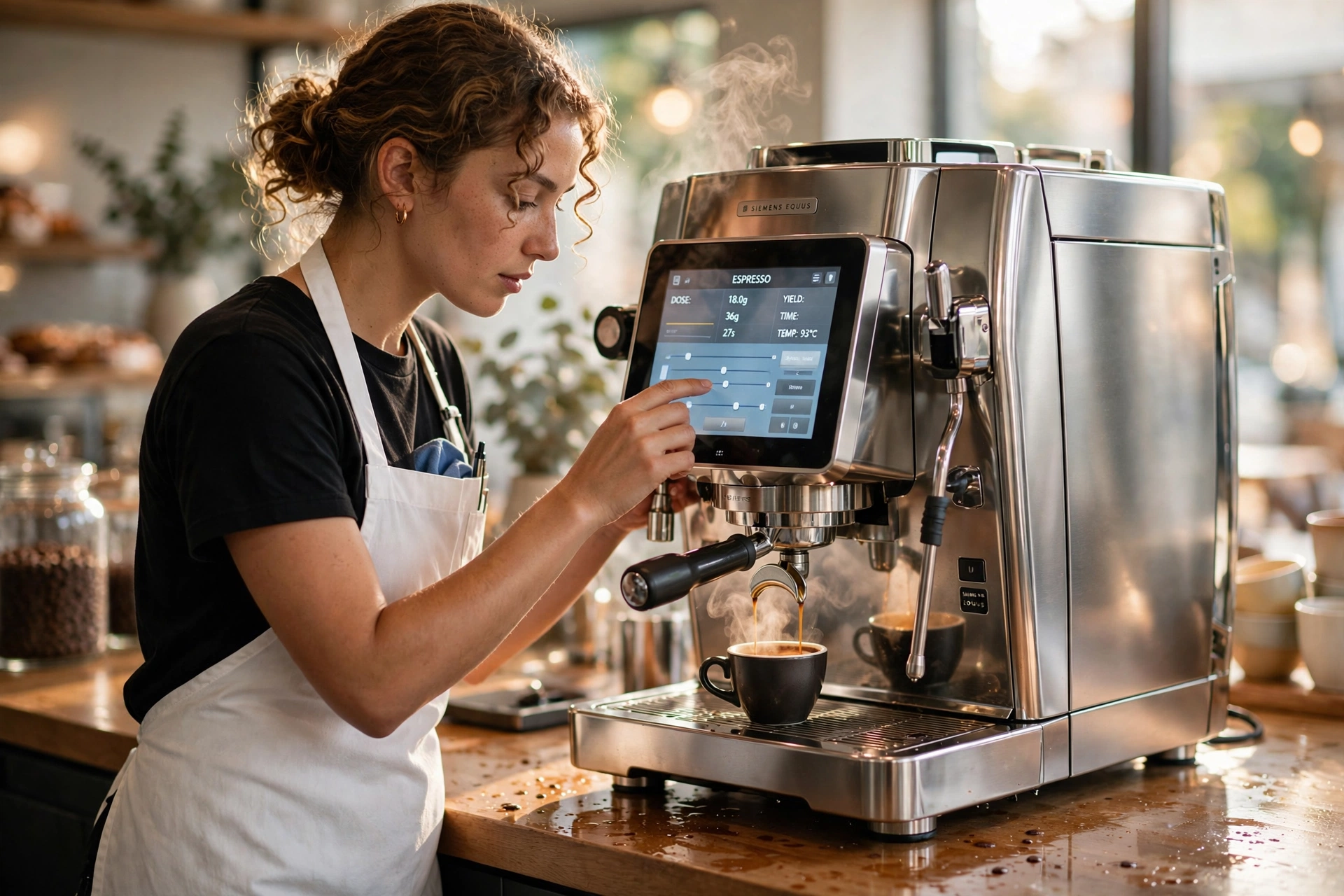
The financial impact of poor equipment choices also manifests in labor costs. Equipment that is difficult to clean or requires manual calibration increases the "labor per cup." When you invest in a streamlined supply of automated or semi-automated equipment, you reduce the training time for new baristas and decrease the likelihood of human error during the rush.
How to Implement Your Cafe Equipment Supply Step-by-Step
Building a sustainable supply chain requires a shift from "shopping" to "architecting." Here is the professional framework for doing it correctly.
Step 1: Calculate Your Peak Throughput
Before looking at catalogs, determine your "cups per hour" (CPH) during the busiest 60 minutes of your day. If you expect 60 customers per hour, you cannot rely on a single-group machine. You need a multi-group setup with independent PID temperature controllers. This ensures that while one barista is steaming milk, another is pulling a shot, and the machine isn't struggling to keep up with the demand.
Step 2: Solve the Water Problem First
The biggest mistake I see constantly is buying the machine before the water filter. Coffee is 98% water. If your water is too hard, you get scale; if it's too soft, you get corrosive pitting. Your supply chain must include a water analysis report for your specific location. Only after you know your TDS (Total Dissolved Solids) levels should you select a filtration system that balances mineral content for flavor while protecting the metal internals of your machines.
Step 3: Select Hardware Based on "The Golden Triangle"
Your supply should be centered around three pillars: The Espresso Machine, the Grinder, and the Brewer.
- The Machine: Look for volumetric dosing and stable pressure profiling.
- The Grinder: Ensure it has low retention. High-retention grinders leave old coffee in the chute, meaning your customers are drinking stale grounds.
- The Brewer: Whether it's a batch brewer or a pour-over station, it must meet the standards of precision brewing to avoid over-extraction.
Step 4: Integrate a Managed Service Model
Instead of buying equipment outright and hoping for the best, the most successful cafes use a managed membership. This is where Busy Bean Coffee excels. By utilizing an all-inclusive managed coffee membership, you move the risk of equipment failure from your balance sheet to the provider. You get premium SENSA equipment, professional installation, and full maintenance coverage for one predictable monthly fee. This eliminates the "capital expenditure shock" and ensures your equipment is always calibrated to the highest standards.
💡
Key Takeaway
Stop viewing equipment as a one-time purchase and start viewing it as a service. The value isn't in the machine itself, but in the machine's ability to produce a perfect cup of coffee 1,000 times a day without failing.

Comparing Equipment Supply Models: Which is Right for You?
Not every business needs the same approach. Depending on your capital and risk tolerance, you have three primary paths.
| Supply Model | Pros | Cons | Best For |
|---|---|---|---|
| Traditional Retail Buy | Full ownership, no monthly fees. | Huge upfront cost, no support, risky warranties. | Very small, low-volume hobby shops. |
| Generic Lease/Rent | Lower upfront cost than buying. | High interest, no maintenance, generic hardware. | Temporary pop-ups or low-end kiosks. |
| Managed Membership (Busy Bean) | No CapEx, all-inclusive maintenance, premium gear. | Monthly recurring commitment. | Serious cafes, hotels, and high-growth restaurants. |
Now, here is where it gets interesting: most people think "ownership" is the safest bet. In reality, ownership of commercial equipment is often a liability because technology evolves quickly. In three years, the "standard" for espresso extraction may change. With a managed supply model, you aren't stuck with an obsolete machine; you have a partner who ensures your hardware remains competitive.
Common Misconceptions About Cafe Equipment Supply
Many guides on the internet are written by people who have never actually run a commercial line. They give "safe" advice that actually hurts your business.
Myth 1: "A high-end home machine is enough for a small cafe."
This is a recipe for disaster. Home machines, even expensive ones, are not built for the thermal duty cycle of a commercial environment. They lack the boiler capacity to handle back-to-back shots. After five drinks, the temperature will drop, and your coffee will taste sour. Commercial equipment is engineered for "duty cycle," not just "capability."
Myth 2: "The most expensive machine is always the best."
Price does not equal productivity. A $20,000 machine with a complex interface that takes your baristas 10 seconds longer to navigate per drink is actually a net loss in a high-volume environment. You need equipment that balances precision with "workflow efficiency." If the machine is too complex, your staff will stop using the advanced features, and you'll be paying for technology you aren't utilizing.
Myth 3: "Maintenance is something you do when the machine breaks."
This is the most expensive way to run a business. Reactive maintenance is always 3x to 5x more expensive than preventative maintenance. When a gasket blows during a rush, you lose revenue and pay "emergency" technician rates. Professional cafe equipment supply includes a preventative schedule, changing filters, replacing group gaskets, and descaling, before the failure happens.
Frequently Asked Questions
How do I determine which espresso machine size I need for my cafe?
You must calculate your projected "Peak Hourly Volume." A single-group machine is suitable for low-volume environments or "slow bars" focused on pour-overs. However, for any standard commercial operation, a two-group or three-group machine is the baseline. This allows multiple baristas to work simultaneously and ensures the boiler can recover heat fast enough to maintain a consistent temperature. If you are in a high-traffic area like Mount Pleasant, SC, I recommend over-specifying your equipment by 20% to account for growth and unexpected surges in demand.
What is the most important piece of equipment besides the espresso machine?
The grinder is arguably more important than the machine itself. You can have a $20,000 espresso machine, but if your grinder produces an inconsistent "particle size distribution," your espresso will be unevenly extracted, resulting in a taste that is simultaneously sour and bitter. A professional cafe equipment supply must include a high-quality burr grinder with minimal retention. This ensures that the coffee you grind is the coffee you serve, with no stale grounds lingering in the machine from the previous hour.
How often should I replace my water filters in a commercial setting?
Filter replacement schedules are not "one size fits all"; they depend entirely on your local water chemistry. However, as a general rule, pre-filters should be checked monthly and main cartridges replaced every 3 to 6 months. According to NSF International, maintaining sanitary and functional equipment standards is paramount for food safety and machine longevity. If you ignore filter changes, you risk calcium buildup in the heat exchanger, which can lead to permanent boiler failure and void your warranty.
Should I buy used equipment to save money on my initial setup?
In my experience, buying used equipment is a high-risk gamble that often costs more in the long run. Used machines often hide "invisible" damage, such as scale buildup inside the boiler or worn-out heating elements. Unless you are a certified technician, you cannot verify the internal health of a used machine. It is far more efficient to use a managed service like Busy Bean Coffee, where you get brand-new, high-performance equipment without the massive upfront capital expenditure of buying new.
What are the essential "smallwares" I need for a complete supply?
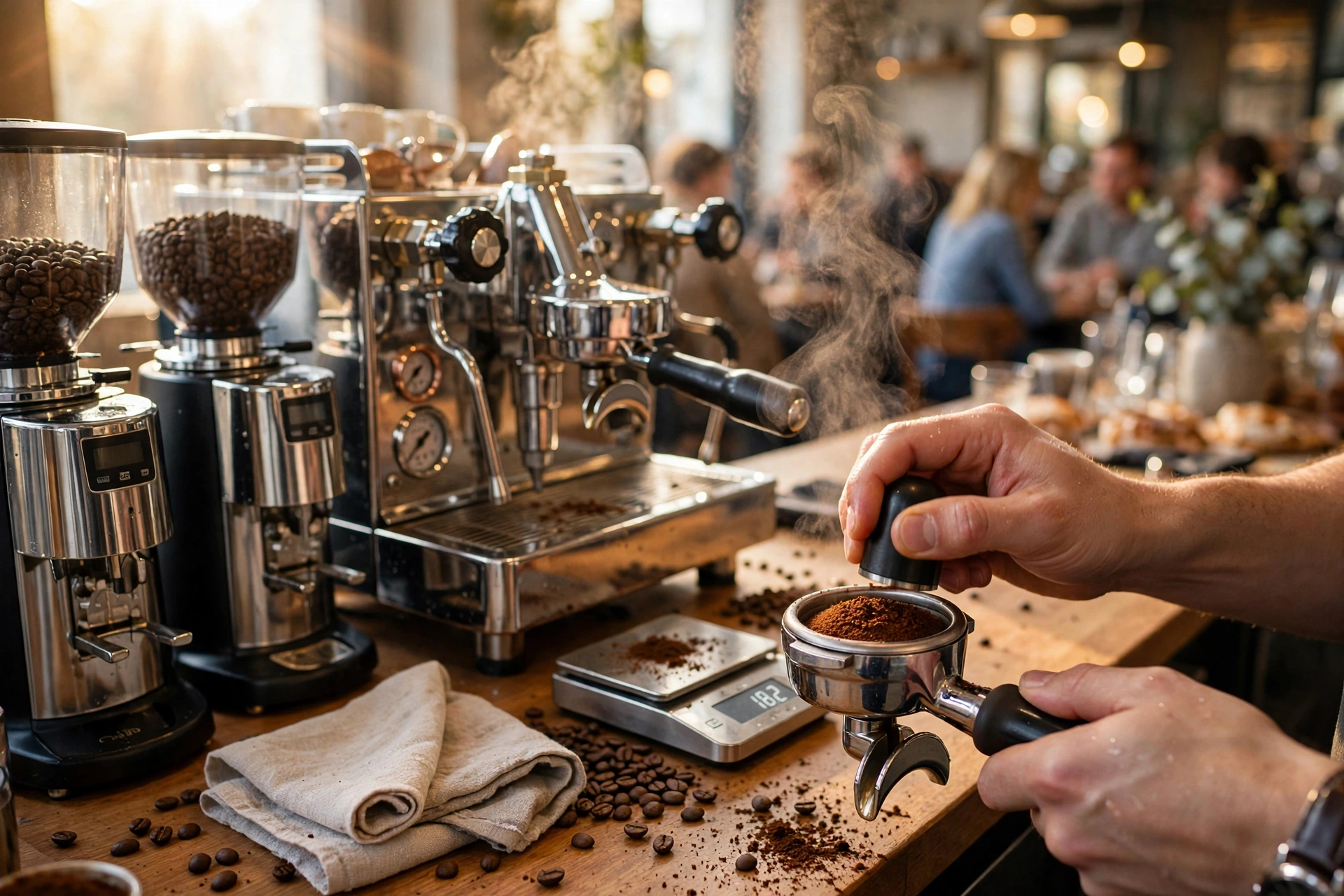
Beyond the big machines, your supply chain must include precision scales, tempered tamps, distribution tools, and high-quality milk pitchers. A precision scale is non-negotiable; without it, your baristas are guessing the dose, which leads to inconsistent taste and wasted coffee beans. I recommend standardizing your smallwares so that every barista uses the exact same tools, which removes variables from the brewing process and ensures that a latte tastes the same regardless of who is behind the counter.
Final Thoughts on Cafe Equipment Supply
Building a successful cafe requires more than just a passion for coffee; it requires a clinical approach to your cafe equipment supply. If you treat your hardware as a series of isolated purchases, you will spend your first year fighting fires, dealing with downtime, and wasting product. If you treat your equipment as a managed system, you can focus on what actually matters: your customers and your craft.
The goal is to remove the friction between your barista and the cup. Whether you are scaling a single location in Mount Pleasant or managing a regional chain, the shift toward managed equipment services is the only way to ensure 100% uptime and professional-grade consistency.
Stop worrying about the logistics of repairs and the stress of capital expenses. Let the experts handle the hardware so you can handle the hospitality. Visit Busy Bean Coffee Blog today to explore our all-inclusive managed coffee memberships and get the professional equipment your business deserves.
Recommended Readings
To deepen your understanding of these topics, we recommend reading the following articles:
- The Complete Guide to White Glove Coffee Service
- Ultimate Guide to All-Inclusive Coffee Service for Businesses
- Ultimate Guide to Automated Coffee Machines for Business
- Ultimate Guide to Specialty Coffee Equipment for Business
Ready to Upgrade Your Business Coffee?
Café-quality coffee, zero maintenance headaches, and one predictable monthly price. Let's build your custom coffee program.
Free Coffee Pairing Guide & Specialty Roast Cheat Sheet
Unlock the secrets of perfect brewing ratios, water temperatures, and specialty roast profiles. Download the guide.