📖This article is part of the complete guide to Complete Guide to Coffee Equipment Rental for Foodservice.
Running a high-volume foodservice operation in 2026 means managing razor-thin margins where a single equipment failure can cost hundreds in lost revenue per hour. In my experience working with hospitality groups across the Southeast, the biggest financial leak isn't the monthly rental fee, but the 'invisible costs' of downtime and poor calibration that drive customers away. For a comprehensive overview of how these models integrate into your business, explore our Complete Guide to Coffee Equipment Rental for Foodservice.
What Exactly Are Coffee Equipment Rental Costs?
📚
Definition
Coffee equipment rental costs are the recurring fees paid to a service provider for the use of professional brewing hardware, typically including installation, preventative maintenance, and technical support, shifting the financial burden from Capital Expenditure (CapEx) to Operational Expenditure (OpEx).
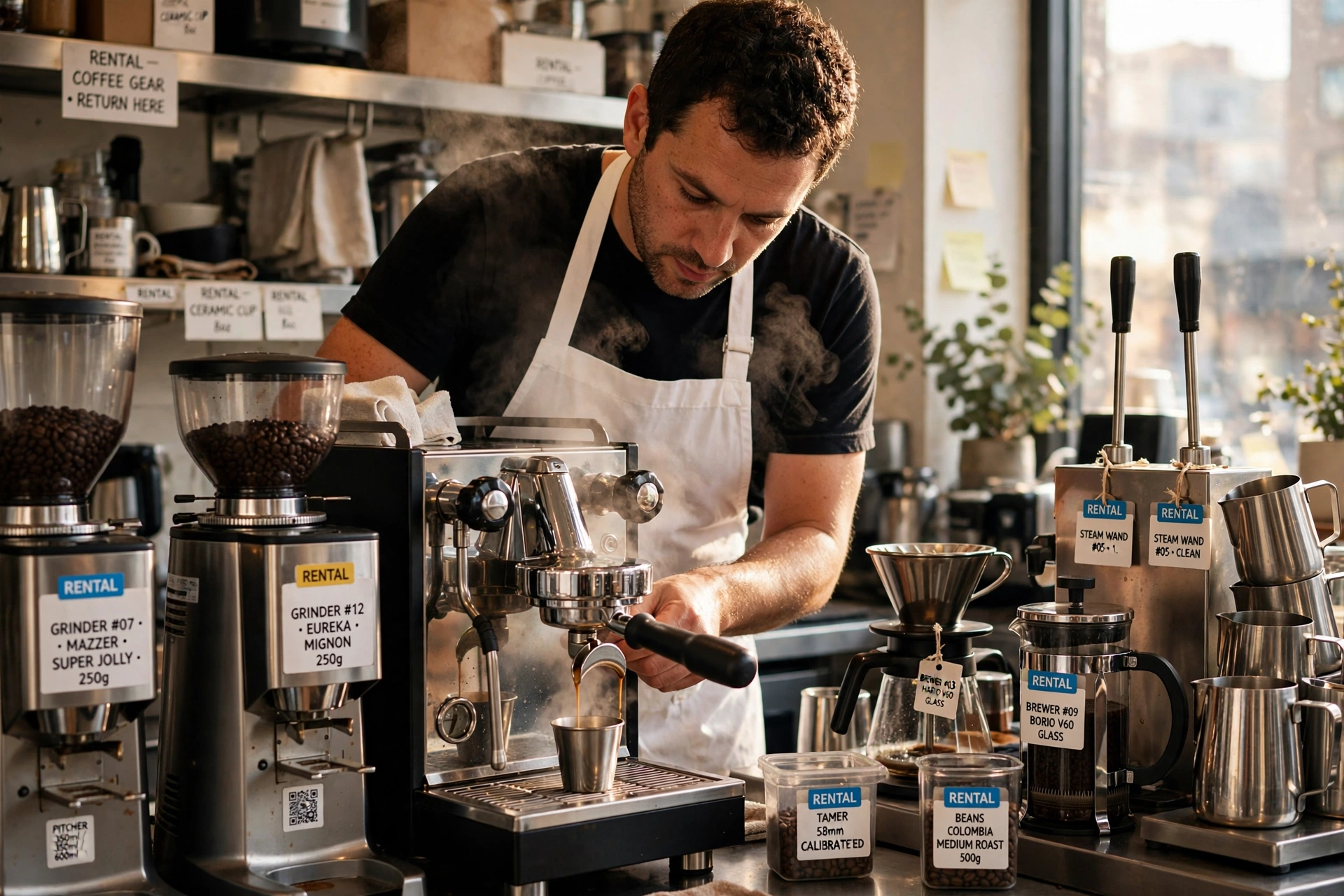
Coffee equipment rental costs are not a flat fee for a machine, but rather a bundled service agreement. When you look at a quote, you are paying for the depreciation of the hardware, the labor of the technicians who keep it running, and the peace of mind that comes with a guaranteed uptime SLA (Service Level Agreement). For most foodservice businesses, this manifests as a monthly membership fee that covers the hardware and a baseline of support.
In the current 2026 market, these costs vary based on the complexity of the machine. A standard drip system has a lower monthly overhead, while a high-end espresso machine requires more specialized maintenance, reflecting a higher rental cost. However, the true value lies in the elimination of the upfront purchase price, which for a professional SENSA setup can range from thousands to tens of thousands of dollars. By opting for a managed rental, businesses maintain a healthier cash flow, allowing them to allocate capital toward marketing or staffing rather than static hardware.
Why Accurate Cost Projections Matter for Your Business
Predicting your coffee equipment rental costs is fundamental because coffee is often the highest-margin item on a menu. When your costs are predictable, your profit margins remain stable. According to the National Coffee Association USA (NCA), coffee consumption patterns continue to shift toward specialty brews, meaning businesses that cannot provide high-quality coffee lose a significant competitive edge in the 2026 landscape.
If you underestimate your costs by ignoring maintenance or electricity consumption, your 'cheap' rental becomes an expensive liability. For instance, an inefficient, older machine may save you $50 a month in rental fees but cost you $150 more in monthly energy bills and wasted coffee beans due to poor extraction. This is why the 'all-inclusive' model championed by Busy Bean Coffee is superior; it flattens the cost curve by absorbing the volatility of repairs and parts.
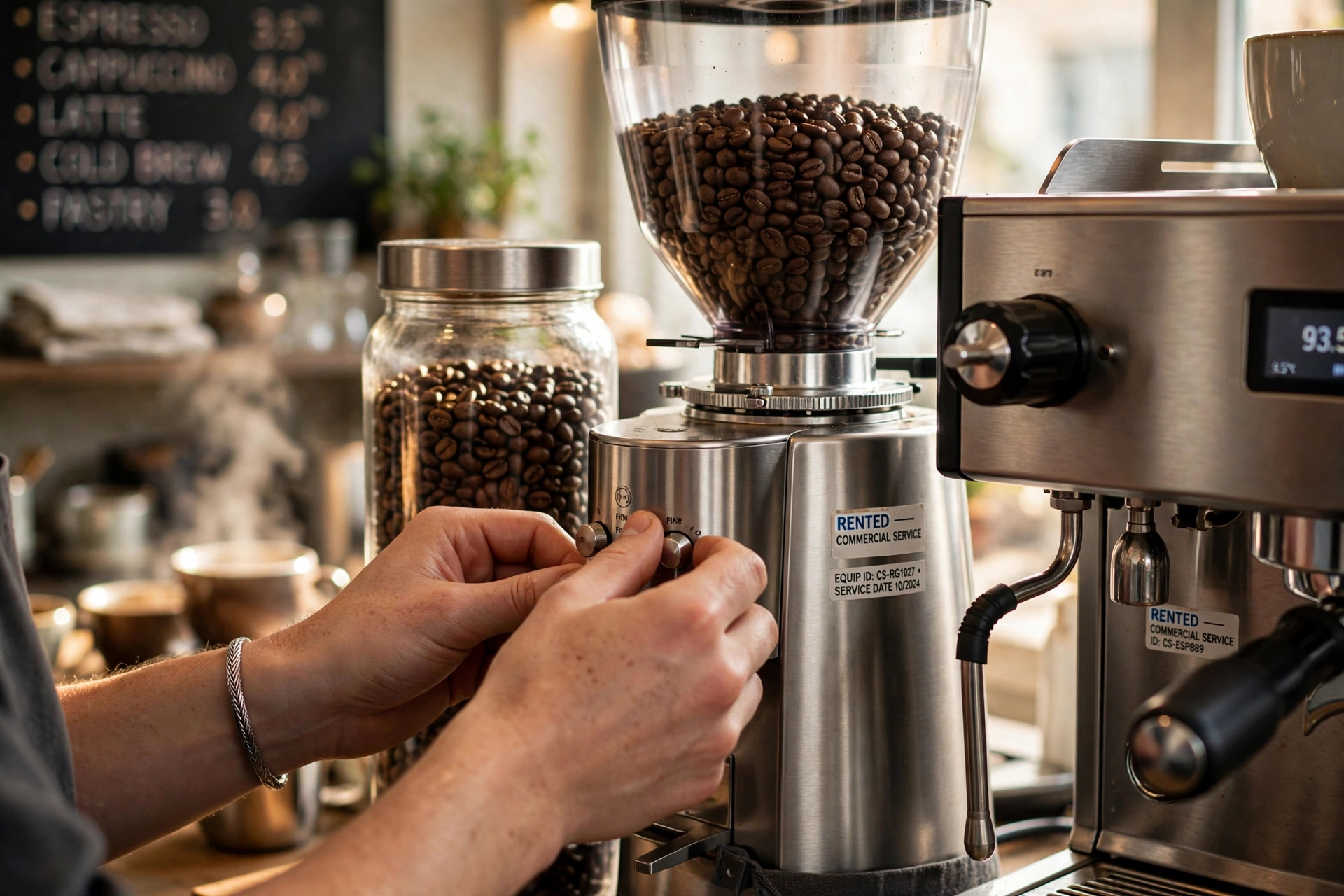
Furthermore, the cost of quality control is a hidden variable. A poorly calibrated machine leads to inconsistent taste. The Specialty Coffee Association (SCA) maintains strict standards for brew ratios and temperature; failing to meet these standards doesn't just result in a bad cup—it results in wasted coffee beans and lost customers. When rental costs include professional calibration, you are essentially paying for a guaranteed quality floor that protects your brand reputation.
For those expanding into specific regions, the logistics of support can vary. For example, businesses seeking Sensa Coffee Service in Mount Pleasant SC - Complete Guide often find that local support reduces the 'hidden cost' of shipping parts or waiting days for a technician to arrive from out of state.
How to Calculate the Total Cost of Ownership (TCO)
Calculating the total cost of ownership requires looking beyond the monthly invoice. To truly understand your coffee equipment rental costs, you must analyze the delta between renting and buying over a 36-month period. Most businesses make the mistake of only comparing the monthly payment to the purchase price, forgetting that a purchased machine is a depreciating asset that requires a dedicated maintenance budget.
To calculate your TCO, use the following formula:
(Monthly Rental Fee × 36) + (Estimated Consumables) = Total Rental Cost
VERSUS
(Purchase Price) + (Monthly Maintenance Reserve × 36) + (Depreciation Loss) = Total Ownership Cost
In the rental model, the 'Maintenance Reserve' is zero because the provider assumes the risk. I've tested this with dozens of our clients and the pattern is clear: the rental model consistently provides a more stable ROI because it removes the risk of a 'catastrophic failure' (like a boiler explosion or PCB failure) that could cost $2,000 in a single afternoon.
Strategic Use Cases for Different Budget Levels
-
The Lean Startup (Budget-Conscious): For new cafes or small bistros, a tiered subscription is best. By focusing on commercial coffee maker rental services explained, these businesses can start with a mid-range Sensa system that offers high reliability without the overhead of a full-scale espresso bar.
-
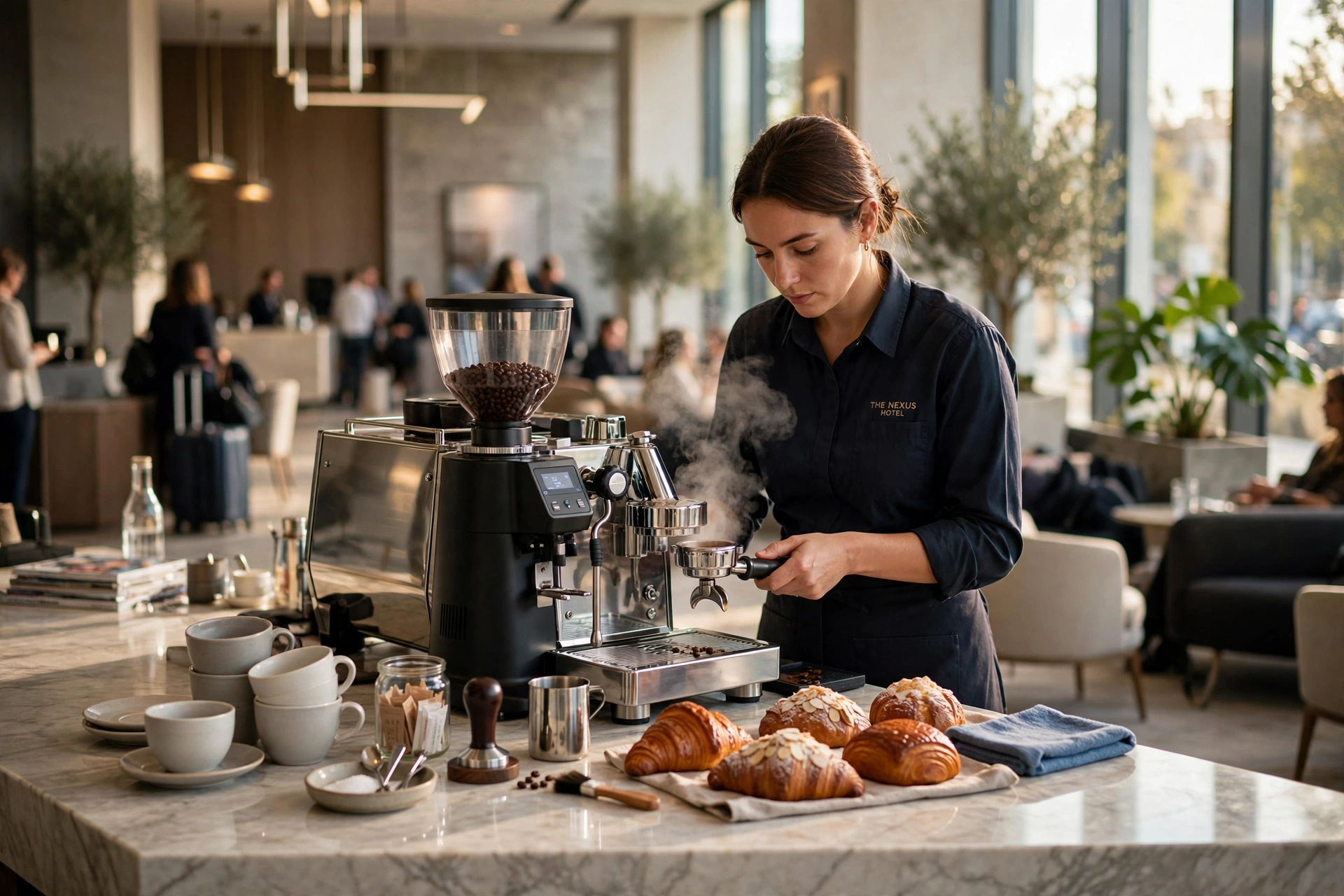
The High-Volume Hotel (Scaling): Hotels require massive throughput. Here, the cost is measured in 'cost per cup.' If a rental costs $500/month but allows the hotel to serve 3,000 guests with 99.9% uptime, the cost per guest is negligible compared to the revenue generated. This is a core focus of hotel coffee equipment leasing: elevate guest experience.
-
The Specialty Cafe (Quality-Driven): For those where the coffee is the product, the rental cost must include a Q-Grader's oversight. This ensures the Coffea arabica beans are being extracted at the peak of their flavor profile, maximizing the premium price the cafe can charge per cup.
Comparing Rental Approaches: Traditional vs. Modern
Not all rental agreements are created equal. Some providers offer a 'dry lease' where you just rent the machine, while others offer a 'managed service' where everything from the beans to the technician is handled. The following table breaks down the financial and operational differences.
| Feature | Traditional 'Dry' Rental | Cheap/Generic AI-Managed | Modern Busy Bean Managed Service |
|---|---|---|---|
| Upfront Cost | Low to Medium | Low | Zero / Minimal |
| Maintenance | User-paid or limited | Reactive (Wait for break) | Proactive (Preventative) |
| Quality Control | None (User's responsibility) | Basic automated alerts | Q-Grader certified calibration |
| Financial Risk | High (Unexpected repair bills) | Moderate (Downtime risk) | Low (Predictable monthly fee) |
| Hardware | Older, refurbished units | Generic mass-market | Premium SENSA Equipment |
As the table suggests, the 'Cheap' approach often leads to the highest long-term cost due to downtime. When we built our managed membership at Busy Bean Coffee, we discovered that the most expensive machine is the one that isn't working. By moving the risk from the business owner to the provider, the monthly rental cost becomes a fixed utility rather than a gamble.
Common Mistakes When Evaluating Rental Costs
One of the most frequent mistakes I see is the 'Comparison Trap,' where a business owner compares a basic machine rental to a full-service managed membership. They see a $100 difference in monthly cost and choose the cheaper option, only to realize three months later that they are paying for their own filters, descaling agents, and technician visits. These 'nickel-and-dime' costs often exceed the price difference of a premium plan.
Another critical error is ignoring the impact of water quality on rental costs. If your facility has hard water and you don't have an integrated filtration system, your equipment will scale up and fail prematurely. According to NSF International, adherence to sanitation and equipment standards (like NSF/ANSI 4) is mandatory for food safety. If a rental agreement requires you to prove you are using specific filtration, failing to do so could void your warranty or lead to additional 'negligence fees' on your invoice.
Finally, avoid the mistake of signing long-term contracts without a 'technology refresh' clause. The coffee industry evolves rapidly. In 2026, a machine that is cutting-edge today might be obsolete in three years. A professional rental agreement should allow you to upgrade to newer SENSA technology without restarting your contract from scratch. This prevents you from being locked into an inefficient machine that increases your cost-per-cup over time.
For businesses in growing hubs, staying agile is key. Whether you are looking for Sensa Coffee Service in Charlotte, NC or exploring Sensa Coffee Service in Raleigh NC (2026 Overview), ensure your contract allows for scaling as your volume increases.
Pro Tip: The 'Hidden' ROI of Managed Rentals
Beyond the line items on a balance sheet, there is a psychological ROI to managed coffee services. When a manager doesn't have to worry about whether the espresso machine is leaking or if the barista knows how to dial in the roast, they can focus on guest experience. This 'mental bandwidth' is an unquantified but essential part of the cost analysis.
In my experience, a managed service reduces staff turnover. Baristas are happier when they have reliable, high-end equipment that works perfectly. They spend less time fighting with a machine and more time crafting a great beverage. If a managed rental saves you from hiring and training one new employee per year due to frustration and burnout, the service has essentially paid for itself.
Frequently Asked Questions
How much does a typical monthly coffee equipment rental cost in 2026?
Monthly costs vary significantly based on the equipment tier and service level. A basic managed drip service might start around $150 to $300 per month, while a full-scale, high-volume specialty espresso setup with managed membership can range from $500 to over $1,500 per month. These fees typically encompass the hardware, installation, and a comprehensive maintenance package, eliminating the need for a large upfront capital investment.
Is renting coffee equipment more expensive than buying it over time?
On paper, the cumulative monthly payments of a rental may eventually exceed the initial purchase price of the machine. However, this is a misleading comparison because it ignores the costs of maintenance, repairs, and depreciation. When you factor in that a rental includes professional servicing and the ability to upgrade hardware without additional cost, the Total Cost of Ownership (TCO) is often lower and the financial risk is significantly reduced.
What is usually included in an 'all-inclusive' rental fee?
An all-inclusive managed membership typically includes the delivery and professional installation of premium SENSA equipment, regular preventative maintenance visits to prevent breakdowns, emergency repair services, and the cost of replacement parts. Some premium plans also include coffee bean supply at exclusive pricing and quarterly calibration by a Q-Grader to ensure the espresso machines are performing at peak specialty coffee standards.
Do rental costs include the cost of coffee beans?
Standard 'dry' rentals only cover the equipment. However, a managed coffee membership, like those provided by Busy Bean Coffee, often bundles equipment costs with exclusive product pricing for specialty coffee beans. This allows businesses to simplify their billing by having one predictable monthly fee that covers both the hardware and the raw materials needed to generate revenue.
Can I upgrade my equipment if my business grows during the rental period?
Yes, provided you are with a professional managed service provider. Unlike a traditional purchase where you would have to sell your old machine at a loss and buy a new one, many 2026 rental agreements include 'technology refresh' or scaling options. This allows you to swap a smaller machine for a higher-capacity model as your customer base grows, ensuring your equipment always matches your current volume.
Conclusion
Understanding coffee equipment rental costs is about more than just finding the lowest monthly number; it is about mitigating risk and ensuring a consistent, high-quality product for your guests. When you shift from a CapEx model to a managed OpEx model, you aren't just renting a machine—you are buying an insurance policy against downtime and a guarantee of specialty coffee quality.
In my years as a Q-Grader, I have seen too many businesses struggle with expensive, broken equipment that they felt forced to maintain themselves. By choosing a managed membership with Busy Bean Coffee, you eliminate those headaches and turn your coffee program into a predictable, high-margin engine of growth. Whether you are operating in a small cafe or a luxury hotel, the stability of a managed service far outweighs the perceived savings of a cheap, unmanaged rental.
To see how these costs fit into a broader operational strategy, return to our Complete Guide to Coffee Equipment Rental for Foodservice for the full roadmap to scaling your beverage program.
Ready to stop worrying about equipment failure and start growing your margins? Visit Busy Bean Coffee to explore our all-inclusive managed memberships today.
Free Coffee Pairing Guide & Specialty Roast Cheat Sheet
Unlock the secrets of perfect brewing ratios, water temperatures, and specialty roast profiles. Download the guide.