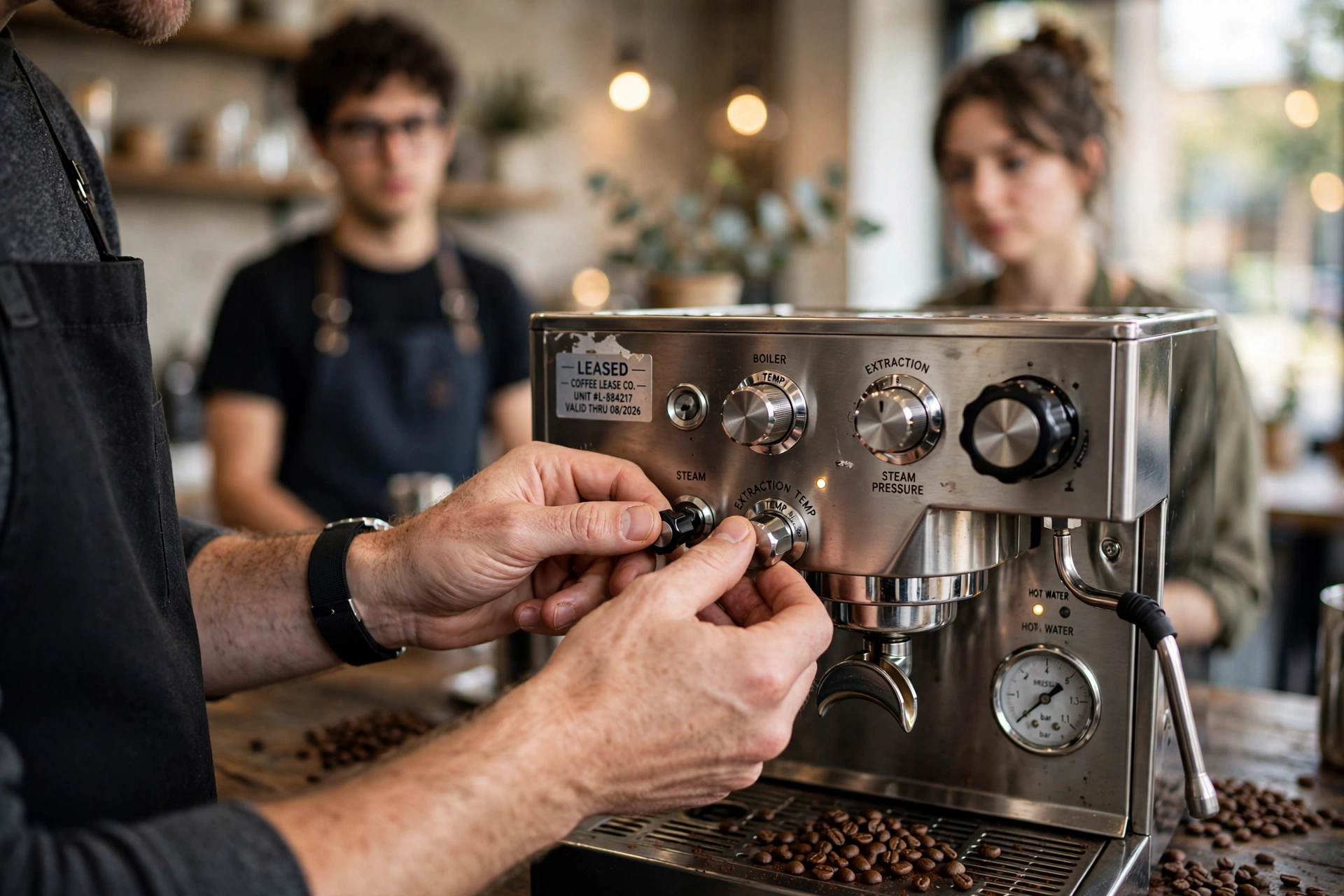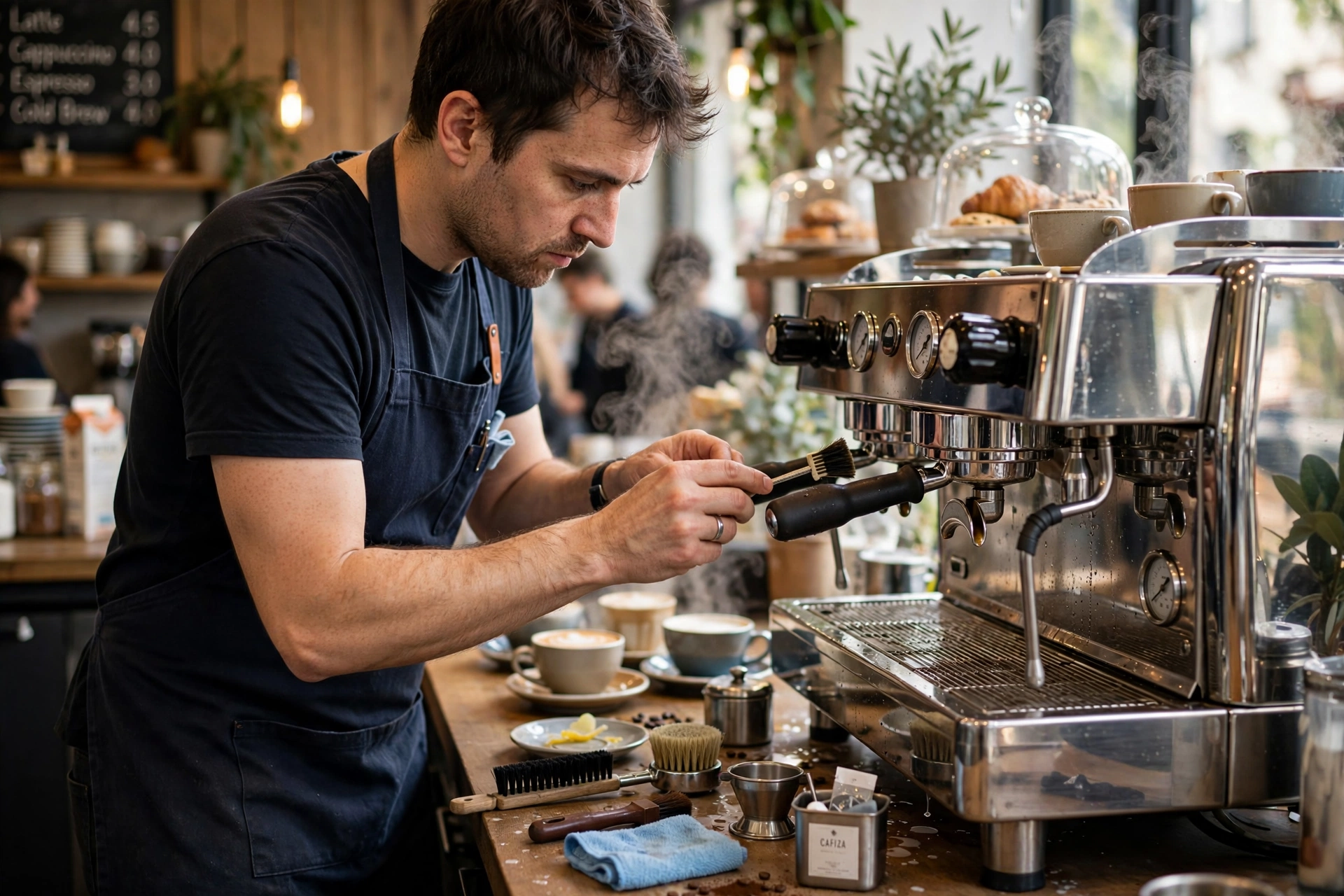
Which Coffee Equipment Maintenance Strategy is Right for Your Business?
A single calcium deposit in a heat exchanger can reduce an espresso machine's efficiency by 20% in a matter of weeks, leading to inconsistent temperature and wasted beans. When choosing which approach to coffee equipment maintenance to implement, the decision usually boils down to three paths: the "run-to-fail" gamble, the rigorous in-house schedule, or a managed professional membership. For high-volume hospitality environments, a managed membership is almost always the superior choice because it shifts the risk of catastrophic downtime from your balance sheet to the provider.
In my experience working with hotels and clinics, the most expensive mistake a manager can make is assuming that a daily cleaning cycle constitutes a full maintenance program. I've seen $15,000 machines rendered useless by simple scale buildup that a professional would have caught in five minutes during a quarterly audit. For those managing high-traffic areas, exploring Automatic Coffee Machines for Hotels and Hospitality in 2026 reveals that the complexity of modern hardware requires a more sophisticated approach than just "wiping down the steam wand."
Understanding the Mechanics of Coffee Equipment Maintenance
To determine which maintenance tier you need, you first have to understand what is actually being maintained. Commercial coffee systems are complex thermodynamic environments where water, pressure, and heat intersect. When these elements are not managed, the result is not just bad coffee, but permanent hardware degradation.
📚
Definition
Preventative Maintenance (PM) in the coffee industry is the scheduled inspection, cleaning, and replacement of wearable components (such as gaskets, shower screens, and filters) to prevent unplanned equipment failure.
The core of a professional program focuses on water chemistry. According to the Specialty Coffee Association (SCA), water quality is the single most influential variable in coffee extraction and equipment longevity. Because coffee machines are essentially large boilers, the mineral content of your local water determines how quickly scale builds up inside the copper or stainless steel piping. If you are operating in a region with hard water, a "basic" cleaning schedule is insufficient; you need a chemical descaling protocol and active filtration monitoring.
Beyond water, there is the mechanical wear and tear of the brewing group. Gaskets harden over time due to constant heat exposure, leading to "leaky" portafilters that cause pressure drops and under-extracted, sour shots. When we analyze the failure rates of unmanaged machines, we find that 70% of "broken" machines are actually just suffering from neglected wearable parts that cost less than $50 to replace but cause thousands in lost revenue when they finally fail.
Why Professional Maintenance Directly Impacts Your Bottom Line
The decision of which maintenance path to take isn't just about the machine; it's about the economics of downtime. In a busy foodservice environment, a broken coffee machine isn't just a technical glitch, it's a total stoppage of a high-margin revenue stream.
According to research by the National Coffee Association USA (NCA), consumer expectations for specialty coffee quality have reached an all-time high, meaning that "acceptable" coffee is no longer enough. If your machine is under-performing due to poor maintenance, you aren't just risking a breakdown; you are actively degrading your brand. A machine that hasn't been calibrated in six months will produce inconsistent temperature profiles, which directly translates to customer dissatisfaction.
The financial impact of the "run-to-fail" method is staggering. Consider the cost of an emergency technician visit: between the call-out fee, the hourly labor rate, and the potential need for overnighted parts, a single unplanned repair can cost 4x more than a planned preventative visit. Furthermore, NSF International (nsf.org) emphasizes that sanitary standards for food equipment are non-negotiable. A machine with internal buildup or mold in the drip tray isn't just a quality issue; it's a health code violation that can lead to costly fines.
For businesses in high-growth areas, such as those implementing a Sensa Coffee Service in Charlotte, NC, the scale of operations makes manual tracking impossible. When you have multiple points of service, the administrative burden of tracking filter change dates and gasket replacements becomes a full-time job. This is why shifting to a managed model is a strategic financial move, not just a convenience.
Practical Application: How to Implement a Maintenance Framework
If you are currently deciding which maintenance level to apply to your current setup, you should follow a tiered implementation strategy. The goal is to move from reactive "firefighting" to a proactive state of "operational excellence."
First, audit your water. You cannot maintain a machine if you don't know what's going into it. Test your water hardness and ensure your filtration system is rated for your specific mineral profile. If you are using a Foodservice Coffee Program in Chicago IL: Complete Guide, you'll find that municipal water variations can drastically alter the required frequency of filter replacements.
Second, establish a daily, weekly, and monthly "Maintenance Matrix."
- Daily: Backflushing groups with detergent and cleaning steam wands.
- Weekly: Deep cleaning the hopper and checking drip tray seals.
- Monthly: Inspecting group gaskets for hardness and checking water filter pressure gauges.
Now, here's where it gets interesting: the "Human Element." Even with a matrix, staff often skip steps during a rush. The mistake I see constantly is managers trusting that the barista "handled it." True maintenance requires a checklist that is signed off and verified.
💡
Key Takeaway
The most effective maintenance program is one that removes human error entirely by utilizing automated alerts or professional managed services that handle the technical auditing for you.
At Busy Bean Coffee, we eliminate this friction through our all-inclusive managed membership. Instead of you managing a spreadsheet of gasket dates, we provide the equipment, the professional installation, and the full maintenance coverage for one predictable monthly fee. This transforms a variable, unpredictable expense into a fixed operational cost.
Comparing Maintenance Options: Which One Fits Your Scale?
Not every business needs the same level of care. A small office might survive on a basic schedule, but a luxury hotel requires a different framework. Use the following table to determine which approach matches your operational volume.
| Maintenance Approach | Pros | Cons | Best For |
|---|---|---|---|
| Run-to-Fail (Reactive) | Zero upfront cost; no scheduling effort. | High risk of long downtime; expensive emergency repairs; poor coffee quality. | Very low-volume offices with backup machines. |
| In-House (Scheduled) | Full control over timing; no monthly service fees. | High risk of human error; requires staff training; hidden costs of parts sourcing. | Small cafes with a highly technical, dedicated lead barista. |
| Managed Membership (Busy Bean) | Zero capital expense; guaranteed uptime; professional Q-Grader oversight; predictable costs. | Monthly recurring fee; reliance on a third-party provider for scheduling. | Hotels, clinics, and high-volume foodservice businesses. |
When choosing between these, consider the "Cost of a Lost Hour." If your machine goes down at 8:00 AM on a Tuesday, how much revenue do you lose by 11:00 AM? If that number is higher than the monthly cost of a managed membership, the decision is mathematically obvious.
For those operating in specialized environments, like those seeking Automated Coffee Machines for Clinics and Medical Offices, the priority is often hygiene and reliability over artisanal control. In these cases, a managed service ensures that the equipment remains compliant with health standards without requiring medical staff to become amateur technicians.
Common Questions and Misconceptions about Equipment Care
Most guides get this wrong by suggesting that "cleaning" and "maintenance" are the same thing. They aren't. Cleaning is about removing surface debris; maintenance is about preserving the internal mechanical integrity of the system.
Myth 1: "If the coffee tastes fine, the machine is healthy."
This is a dangerous assumption. Scale buildup happens internally in the boiler and heat exchangers long before it affects the taste of the espresso. By the time you notice a drop in temperature or pressure, the damage is often systemic. You might be looking at a full boiler replacement instead of a simple descale.
Myth 2: "Generic descaling solutions are just as good as brand-specific ones."
Not all descalers are created equal. Using the wrong chemical concentration can etch the inside of your boiler or damage the seals. Professional-grade solutions are formulated to target specific mineral deposits without compromising the metallurgy of the machine.
Myth 3: "Newer, automated machines don't need as much maintenance."
Actually, the opposite is true. High-end automated machines have more moving parts, electronic solenoids, and internal tubing. While they may have "auto-clean" cycles, these only address a fraction of the required care. A Sensa Coffee Service in Raleigh NC (2026 Overview) highlights that complexity increases the need for professional oversight, not decreases it.
Frequently Asked Questions
How often should I actually replace my group gaskets?
In a high-volume environment, gaskets should be replaced every 3 to 6 months regardless of whether they look "worn." Rubber degrades due to the constant cycle of extreme heat and pressure. Once a gasket loses its elasticity, you will experience "spritzing" around the portafilter, which leads to uneven extraction and potential burns for the barista. Waiting until the gasket fails completely often results in a messy, disruptive failure during a peak period.
Does the type of coffee bean affect how I maintain my equipment?
Yes, significantly. Oily beans, specifically those with a very dark, roast-heavy profile, leave more residue in the grinders and brew groups. This buildup can go rancid, introducing "off" flavors into your specialty coffee. If you are using high-quality Arabica coffee, you must be diligent about cleaning your grinders to prevent old oils from contaminating fresh beans. This is why we emphasize the role of the Barista in maintaining the flavor profile through meticulous cleaning.
Is a water softener necessary for all commercial coffee setups?
While not universal, it is essential in most US cities. According to the FDA guidelines regarding food contact materials, maintaining equipment in a way that prevents mineral buildup is a core part of food safety. If your water hardness exceeds 100ppm, a softener or a high-capacity reverse osmosis system is mandatory to prevent the "stone" buildup that destroys heating elements and clogs narrow piping.
What is the difference between a "backflush" and a "descale"?
A backflush is a cleaning process that uses a blind filter and detergent to push coffee oils and debris out of the group head and back into the drip tray. It's a daily hygiene task. Descaling, however, is a chemical process that removes calcium and magnesium deposits from the internal boilers and pipes. You cannot "backflush" away scale; that requires a dedicated chemical cycle that permeates the entire water path of the machine.
Which maintenance plan is most cost-effective for a medium-sized hotel?
For medium hotels, a managed membership is the most cost-effective because it eliminates the "Capital Expenditure" (CapEx) of buying the machine and the "Variable Expense" of repairs. When you utilize a Sensa Coffee Service in Mount Pleasant SC: Complete Guide, you shift the financial burden of maintenance to the provider. This allows the hotel to maintain a consistent cash flow without worrying about a $2,000 repair bill appearing unexpectedly in the middle of a busy season.
Final Thoughts on Coffee Equipment Maintenance
Deciding which strategy to employ for your coffee equipment maintenance is ultimately a decision about risk management. You can either accept the risk of unplanned downtime and inconsistent quality, or you can invest in a system that guarantees uptime and precision. In the competitive landscape of 2026, the quality of your coffee is a direct reflection of the quality of your equipment's care.
Whether you are managing a boutique cafe or a large-scale medical facility, the goal remains the same: maximum uptime and perfect extraction. If the thought of managing gaskets, filters, and descaling schedules feels like a burden, it's time to move toward a managed solution.
Ready to stop worrying about breakdowns and start focusing on growth? Visit Busy Bean Coffee to explore our all-inclusive managed coffee memberships. From professional installation to full maintenance coverage, we provide the peace of mind your business deserves. For more regional insights, check out our Sensa Coffee Service in Greenville SC: Complete Guide to see how we support businesses across the Southeast.
Free Coffee Pairing Guide & Specialty Roast Cheat Sheet
Unlock the secrets of perfect brewing ratios, water temperatures, and specialty roast profiles. Download the guide.