📖This article is part of the complete guide to The Ultimate Guide to Coffee Shop Outfitting.
In my experience working with dozens of high-volume cafes, the most expensive mistake a business owner can make is ignoring the water quality coming out of their taps. I have seen $20,000 espresso machines rendered useless in under two years because of calcium buildup, simply because the owner thought 'city water is fine.' Water is 98% of your final cup of coffee; if the water is flawed, the coffee is flawed regardless of how expensive your beans are.
For a comprehensive overview of setting up your space, explore our guide on coffee shop outfitting.
What is Water Filtration for Coffee?
📚
Definition
Water filtration for coffee is the process of removing impurities, minerals, and contaminants from the municipal water supply to ensure the water is chemically balanced for extraction and safe for commercial machinery.
Water filtration for coffee is not just about removing the smell of chlorine; it is about managing the mineral content—specifically calcium and magnesium—to prevent scale and optimize taste. In a commercial setting, this typically involves a multi-stage process including sediment filtration, carbon filtration for taste, and often ion exchange or reverse osmosis to control the Total Dissolved Solids (TDS).
When we set up systems at Busy Bean Coffee, we focus on the balance between 'pure' water and 'optimized' water. Completely pure water (distilled) is actually detrimental to coffee because it lacks the minerals needed to bind to the flavor compounds in the coffee bean. The goal is a precise level of hardness that protects the boiler of your espresso machine while enhancing the brightness of the brew. According to the Specialty Coffee Association (SCA), water should ideally have a TDS range that allows for proper extraction without causing rapid scale accumulation in the heating elements.
Why Does Water Filtration Matter for Your Business?
Water filtration is the single most effective insurance policy for your commercial equipment. The primary reason it matters is the prevention of mineral scale. When water is heated in a boiler, minerals like calcium precipitate out of the liquid and form a hard, rock-like crust on the heating elements. This scale acts as an insulator, forcing the machine to work harder to heat the water, which leads to increased energy costs and, eventually, total element failure.
Beyond the machinery, the flavor profile of your coffee is directly tied to your water chemistry. Magnesium and calcium ions in the water act as 'hooks' that pull flavor from the coffee grounds during extraction. If your water is too soft, the coffee will taste flat and thin. If it is too hard, the coffee will taste bitter and metallic. By controlling this via filtration, you ensure a consistent product every single time a customer visits your shop.
From a financial perspective, the ROI on a high-end filtration system is immediate. A cafe in Mount Pleasant, SC, that ignores filtration might face a $1,500 repair bill for a descaling service every six months, whereas a filtered system reduces that frequency to once every two years. This isn't just about maintenance; it's about uptime. If your main machine goes down on a Saturday morning, you aren't just losing the cost of the repair; you are losing thousands in potential revenue. This is why we always integrate water quality checks into our Sensa Coffee Service in Mount Pleasant SC - Complete Guide.
Furthermore, the National Coffee Association USA (NCA) emphasizes that consumer preferences are shifting toward specialty profiles. Achieving these profiles requires a level of precision that is impossible with unfiltered tap water, which varies in composition based on municipal treatment cycles and seasonal changes.
How to Implement a Professional Water Filtration Strategy
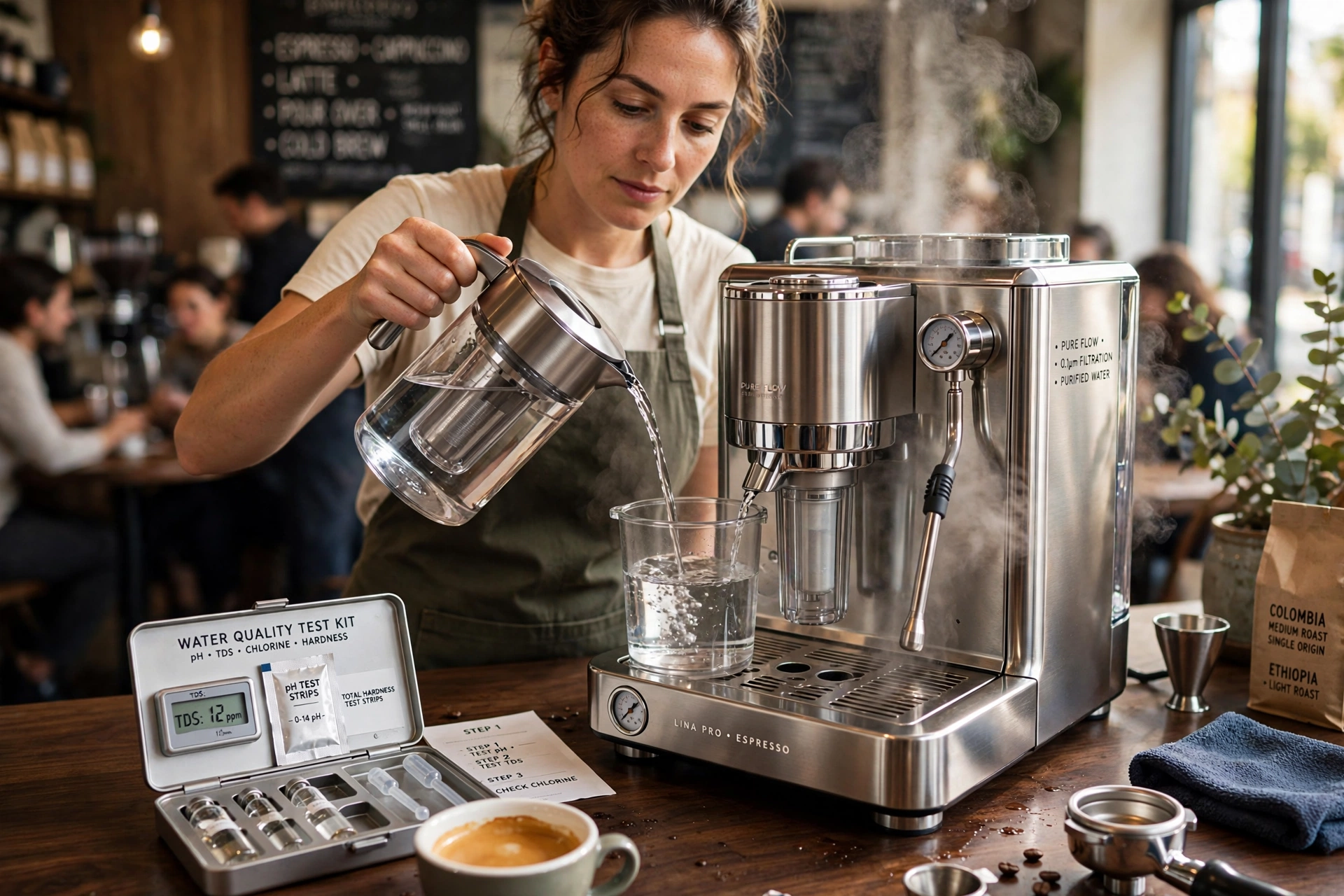
Implementing a filtration strategy starts with a water analysis. You cannot fix what you haven't measured. I recommend using a digital TDS meter and a titration kit to check for permanent and temporary hardness. Once you have your baseline, you can choose the appropriate filtration technology based on your specific water chemistry.
-
Sediment Filtration: This is the first line of defense. A 5-micron sediment filter removes sand, rust, and particulates that could clog the solenoid valves in your best espresso machines for coffee shops.
-
Carbon Filtration: Activated carbon removes chlorine and chloramines. Chlorine not only tastes terrible in coffee but can also corrode the stainless steel components of your boiler over time.
-
Ion Exchange/Water Softening: If your water is "hard" (high calcium), a softener replaces calcium ions with sodium ions. This prevents the "white crust" that destroys heating elements.
-
Reverse Osmosis (RO) with Remineralization: For extreme water conditions, RO strips everything out. However, you must then add specific minerals back in to ensure the coffee tastes good and the machine doesn't corrode from using purely distilled water.
For those operating in diverse locations, such as those utilizing our Sensa Coffee Service in Charleston SC - Complete Guide, the local water table can vary significantly between neighborhoods. It is essential to calibrate your filters every quarter to account for these shifts.
💡
Key Takeaway
Never install a commercial espresso machine without a dedicated water filtration system; the warranty of most high-end brands is void if scale buildup is the cause of failure.
Water Filtration vs. Manual Descaling vs. Generic Filters
Many owners believe that manual descaling is a viable substitute for filtration. This is a dangerous misconception. Descaling is a reactive process—it removes damage that has already occurred. Filtration is a proactive process—it prevents the damage from happening in the first place. Using a cheap, generic "big box" filter often results in inconsistent water flow and inadequate mineral removal, leading to a "false sense of security" where the owner thinks they are protected while scale is still accumulating.
| Feature | Manual Descaling | Generic Filter | Professional Filtration |
|---|---|---|---|
| Protection | Reactive (After damage) | Minimal/Inconsistent | Proactive (Prevention) |
| Taste Impact | None (only cleans) | Basic chlorine removal | Optimized for extraction |
| Equipment Life | Shortened | Moderate | Maximized |
| Labor Cost | High (Frequent downtime) | Low | Very Low (Scheduled swaps) |
| Consistency | Low | Medium | High |
In my experience, the "Generic Approach" is the most expensive in the long run. I've seen shops spend $200 on a basic filter only to have their commercial coffee grinders and brewers fail because the water was too aggressive. A professional approach, like the managed solutions we offer at Busy Bean Coffee, ensures the water chemistry is tailored to the specific roast and machine used.
Common Water Filtration Mistakes to Avoid
One of the most common mistakes I see is the "set it and forget it" mentality. Filters are consumables; they have a finite capacity for trapping contaminants. When a carbon filter becomes saturated, it can actually start releasing the trapped chlorine back into your water in a concentrated burst, which can ruin an entire batch of specialty coffee. Establish a strict calendar for filter replacements based on gallonage, not just time.
Another error is ignoring the relationship between water and temperature. As water temperature increases, the rate of scale precipitation increases. If you are using high-temperature top commercial drip coffee makers reviewed, your water filtration needs are even more acute than they would be for a standard drip setup. The higher the heat, the faster the minerals bond to the metal.
Lastly, avoid using water that is too "pure." I once worked with a client who installed a powerful RO system without a remineralization stage. The resulting coffee was acidic and thin, lacking the body and sweetness that comes from a healthy amount of magnesium. This is why we advocate for a "balanced' approach to water chemistry. If you are scaling your operations, consider how a managed service like Sensa Coffee Service in Raleigh NC (2026 Overview) can handle these technical calibrations for you.
According to NSF International, ensuring that food-contact surfaces and water systems meet NSF/ANSI 4 standards is fundamental for health safety and equipment longevity. Failing to use certified filtration can lead to bacterial biofilms in the lines, which is a serious health risk and a violation of safety codes.
Frequently Asked Questions
How often should I change my coffee shop water filters?
Filter replacement schedules depend on your water's initial TDS and your daily volume. Typically, sediment and carbon filters should be replaced every 3 to 6 months. However, for high-volume cafes, we recommend monitoring gallonage. Once a filter reaches its rated capacity, its effectiveness drops sharply. In my experience, a quarterly audit of water hardness is the best way to determine if your filters are working or if they need to be swapped early due to a spike in municipal mineral levels.
Does water filtration affect the taste of the coffee?
Absolutely. Water is the solvent that extracts flavors from the coffee bean. If your water has too much calcium (hard water), it can hinder the extraction of certain aromatic compounds, making the coffee taste dull or overly bitter. Conversely, if the water is too soft, it can over-extract, leading to a sour or salty taste. Proper filtration balances the minerals, ensuring that the specialty coffee's unique origin notes—like citrus or chocolate—are highlighted rather than masked by the taste of chlorine or minerals.
Can I just use bottled water in my commercial espresso machine?
No, this is not a viable solution for a commercial business. First, the labor and cost of pouring thousands of bottles of water into a reservoir are unsustainable. Second, many bottled waters are "purified," meaning they lack the essential minerals needed for proper coffee extraction. Most importantly, commercial machines are designed to be plumbed directly into a water line. Using a reservoir-based approach in a high-volume environment leads to frequent downtime and increases the risk of air pockets in the pump, which can damage the machine.
What is the difference between a water softener and a water filter?
A water filter (like carbon or sediment) removes physical particles and chemicals from the water. A water softener is a chemical process that replaces calcium and magnesium ions (which cause hardness) with sodium ions. You need both for a complete coffee shop setup. The filter cleans the water for taste and safety, while the softener protects the internal components of your essential milk frothers for busy cafes and espresso machines from scale buildup. Without the softener, your machine will still scale even if the water tastes clean.
How do I know if my water filtration system is failing?
There are three main red flags. First, a change in taste—if your coffee suddenly tastes more "chemical" or "metallic," your carbon filter is likely spent. Second, a drop in water pressure—if your groups heads are flowing slower than usual, your sediment filter may be clogged. Third, the appearance of white flakes in your drip trays or a visible "crust" on your steam wand. If you notice any of these, you should immediately test your water with a TDS meter and check your filter dates.
Conclusion
Water filtration is not a luxury; it is a core operational requirement for any serious coffee business. From protecting your capital investment in high-end machinery to ensuring that every customer experiences the true flavor of your specialty coffee, the quality of your water defines the quality of your brand. Ignoring this step is essentially gambling with your equipment's lifespan and your customers' taste buds.
Whether you are just starting out or looking to optimize an existing space, we recommend a holistic approach to your equipment. For more information on how to integrate water systems with the rest of your gear, return to our The Ultimate Guide to Coffee Shop Outfitting.
If you want to eliminate the stress of maintenance and water chemistry entirely, explore the all-inclusive managed solutions at Busy Bean Coffee. We handle the installation, the filtration, and the maintenance, so you can focus on roasting and brewing.
Free Coffee Pairing Guide & Specialty Roast Cheat Sheet
Unlock the secrets of perfect brewing ratios, water temperatures, and specialty roast profiles. Download the guide.