How to Optimize Your Cafe Equipment Supply for Maximum Profitability
The most expensive mistake a new cafe owner can make is treating their equipment as a one-time purchase rather than a strategic asset. When you organize your cafe equipment supply, you aren't just buying a machine; you are establishing the production capacity and quality ceiling of your entire business. To do this correctly, you must align your hardware with your projected volume, your staff's skill level, and your maintenance budget to ensure you don't face catastrophic downtime during a morning rush.
In my experience working with specialty coffee shops across the Southeast, I've seen many owners overspend on a flashy espresso machine while neglecting the water filtration system. This is a critical error. If your water chemistry is wrong, even a $20,000 machine will scale up and fail within 18 months, effectively erasing your investment. By focusing on a balanced ecosystem of high-performance gear and a predictable supply chain, you can reduce waste and maintain a consistent cup that keeps customers returning.
For those scaling their operations in specific regions, implementing a Sensa Coffee Service in Charlotte, NC can remove the capital expenditure burden entirely by shifting to a managed membership model.
What Exactly Is a Strategic Cafe Equipment Supply Strategy?
A strategic approach to equipment procurement means moving beyond a simple shopping list and instead creating a technical blueprint for your beverage program. It involves the careful selection of machines that balance throughput (how many drinks per hour) with precision (the ability to maintain a specific flavor profile). This process requires a deep understanding of the "Golden Cup" standards and the mechanical requirements needed to achieve them consistently.
📚
Definition
Cafe Equipment Supply refers to the end-to-end procurement, installation, and maintenance of the hardware necessary to produce professional-grade beverages, ranging from industrial grinders and espresso machines to water filtration and refrigeration systems.
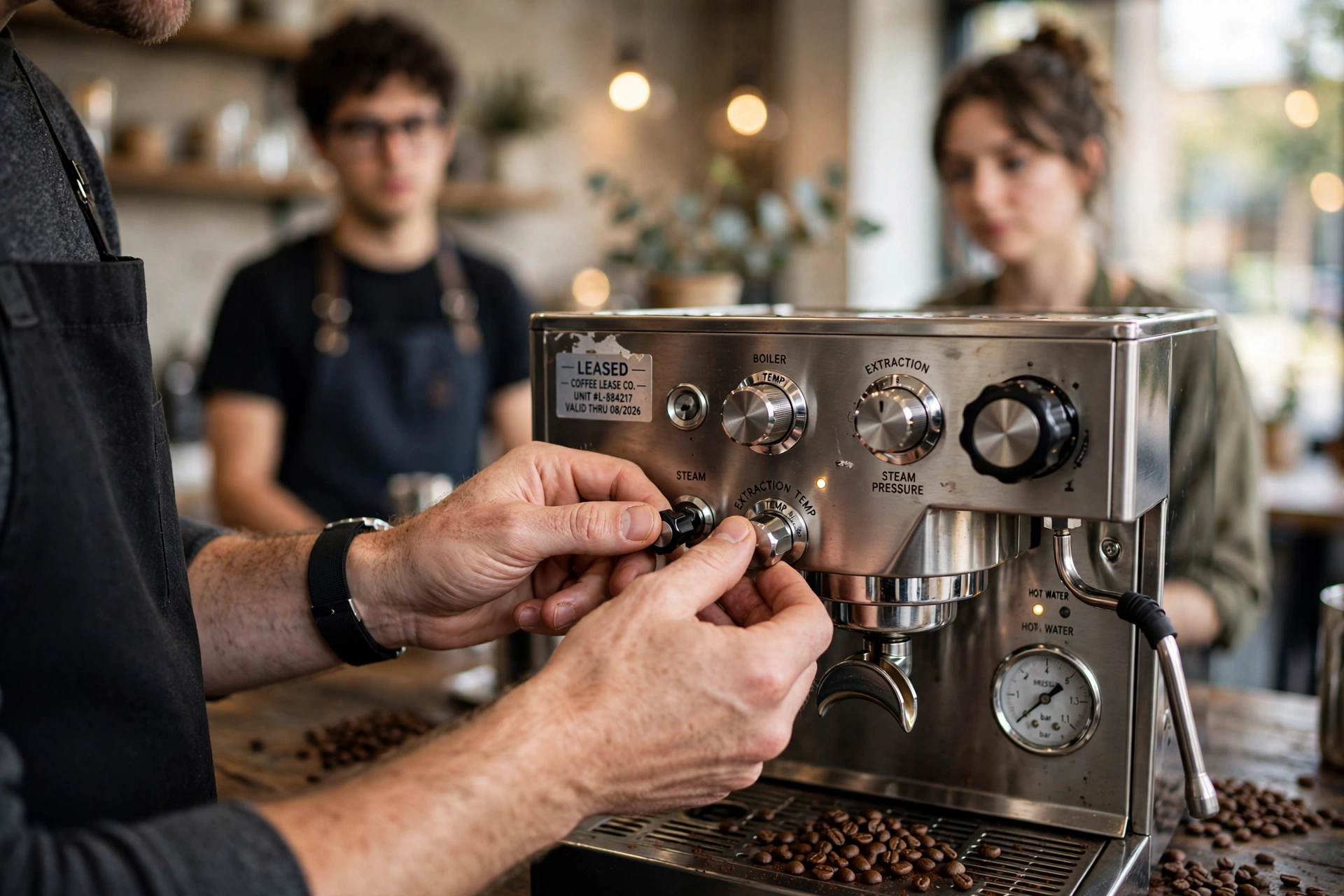
When building this supply chain, you must consider the lifecycle of the equipment. A professional espresso machine isn't a "plug-and-play" appliance; it is a high-pressure boiler system that requires regular calibration. According to the Specialty Coffee Association (SCA), maintaining strict temperature stability and pressure profiles is essential for extracting the complex flavors of Coffea arabica. If your equipment supply doesn't include a plan for quarterly calibration, your "specialty" coffee will quickly taste generic.
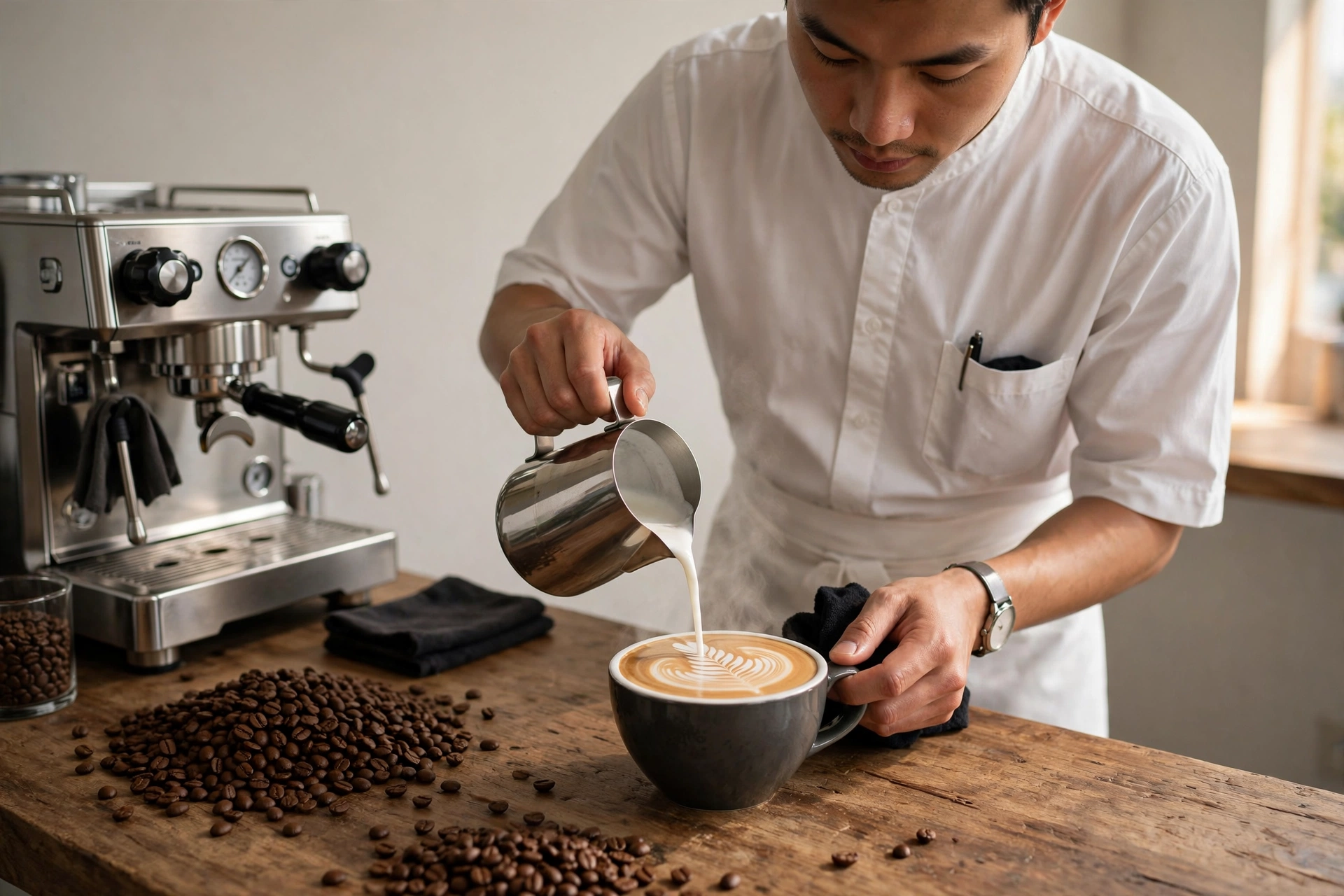
Now, here is where it gets interesting: the synergy between your grinder and your machine. Many owners buy a top-tier machine but pair it with a consumer-grade grinder. This creates a bottleneck. A high-end machine cannot compensate for poor grind consistency. In a professional environment, the grinder is actually the more important piece of equipment for quality control, as it dictates the surface area of the coffee bean exposed to water.

Why Does Your Equipment Choice Directly Impact Your Bottom Line?
The relationship between your gear and your profit margin is linear. Every single second of friction in your workflow, whether it's a slow steam wand or a grinder that clumps, translates directly into lost revenue during peak hours. If your workflow is inefficient, your "drinks per hour" metric drops, and your labor costs per cup rise.
The financial risk of poor procurement is staggering. According to research by the National Coffee Association USA (NCA), consumer preferences are shifting heavily toward specialty-grade beverages, meaning the margin for error in quality has shrunk. If your equipment fails to deliver a consistent product, your customer acquisition cost skyrockets because you cannot rely on repeat business.
Furthermore, the cost of "unplanned downtime" is the silent killer of cafes. When a main boiler fails on a Tuesday morning, you aren't just losing the cost of the repair; you are losing every single transaction for the next 48 hours. This is why I always advocate for a managed service. When we implemented managed solutions for our clients, such as the Sensa Coffee Service in Raleigh NC (2026 Overview), we saw a significant reduction in operational stress because maintenance was proactive rather than reactive.
Beyond the immediate revenue, there is the issue of regulatory compliance and safety. Equipment that isn't certified can lead to massive fines or insurance denials. Ensuring your gear meets NSF International standards is not optional; it is a fundamental requirement for any commercial kitchen to ensure food safety and equipment durability.
How to Build Your Cafe Equipment Supply Step-by-Step
Building a professional coffee program requires a sequenced approach. You cannot simply buy everything at once without a floor plan. If you place your grinder too far from the machine, your barista will waste thousands of steps per day, slowing down your service.
Step 1: Define Your Volume and Menu
Before looking at brands, calculate your "Peak Hour Volume." If you expect to serve 60 lattes per hour, you need a multi-group head machine with a high-capacity boiler. If you are running a low-volume boutique shop focusing on pour-overs, your investment should shift toward precision brewing equipment and high-end scales.
Step 2: Prioritize the Water Foundation
I cannot stress this enough: the water is 98% of your coffee. You must install a commercial-grade filtration system that handles both sediment and scale. Without this, you are essentially inviting mineral buildup to destroy your heating elements.
Step 3: Select the "Core Three" (Grinder, Machine, Brewer)
Focus on the synergy between these three. Your grinder must match the dosage requirements of your machine. If you are serving a high volume of varied drinks, consider Automatic Coffee Machines for Hotels and Hospitality in 2026 to ensure consistency regardless of who is operating the machine.
Step 4: Map the Workflow (The Triangle)
Arrange your equipment in a "work triangle": Grinder $\rightarrow$ Machine $\rightarrow$ Serving Station. Every single movement should be minimized.
Step 5: Establish a Maintenance Contract
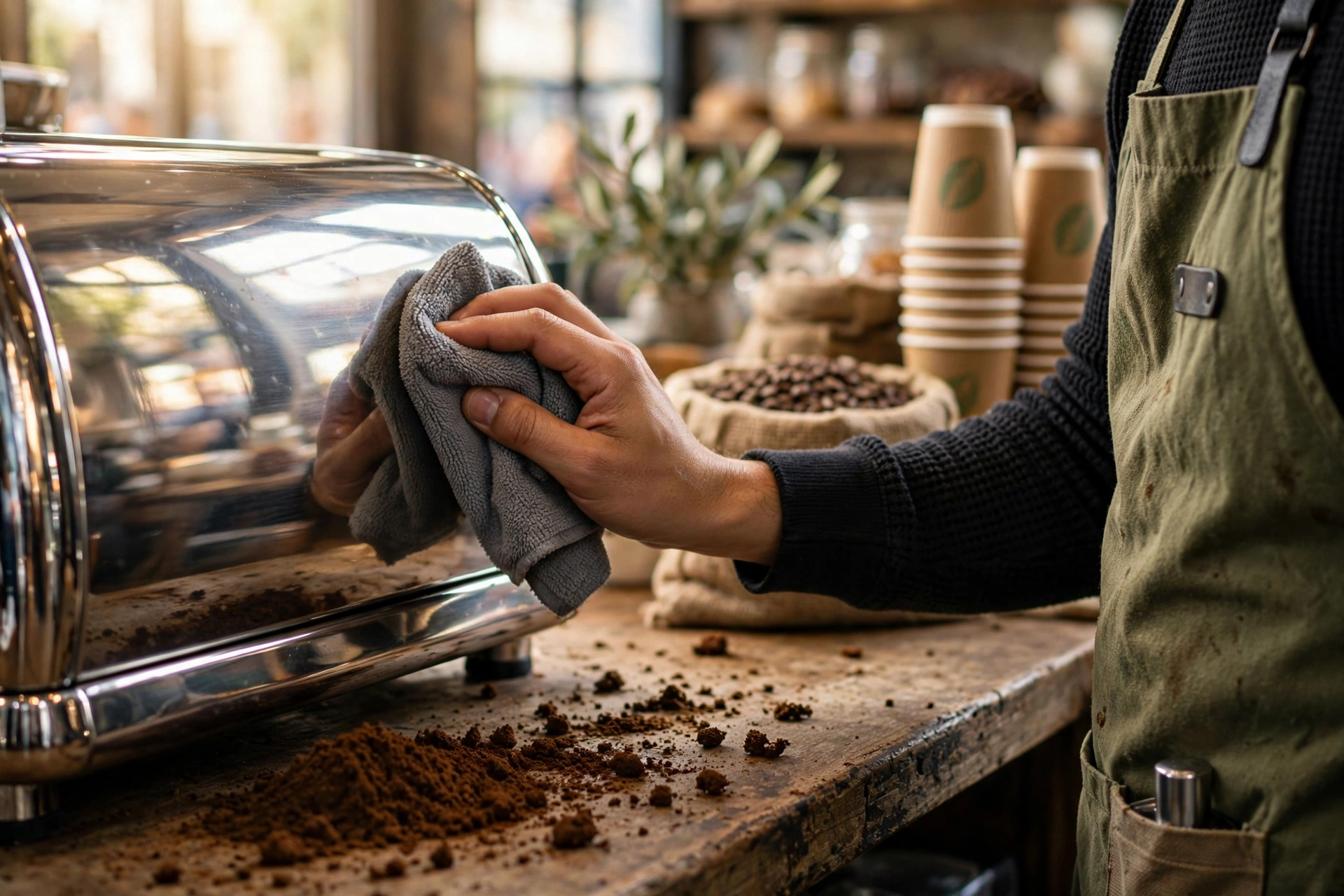
The mistake I see constantly is owners thinking they can "fix it when it breaks." You need a preventative maintenance schedule. This includes backflushing daily, changing gaskets every six months, and professional descaling annually.
💡
Key Takeaway
To avoid operational bottlenecks, prioritize the "Grinder $\rightarrow$ Machine $\rightarrow$ Water" sequence. A high-end machine is useless without a precision grinder and purified water.
For businesses that want to skip the complexity of individual procurement and maintenance, a Sensa Coffee Service in Mount Pleasant SC: Complete Guide provides an all-in-one membership that covers the equipment, the coffee, and the upkeep for one predictable fee.
Comparing Procurement Models: Which Is Right For You?
Most cafe owners are torn between buying their gear outright or leasing/subscribing. The traditional "buy it all" approach seems cheaper on paper, but it ignores the "Total Cost of Ownership" (TCO), which includes electricity, water, technician visits, and depreciation.
| Option | Pros | Cons | Best For |
|---|---|---|---|
| Traditional Purchase | Full ownership, no monthly fees | Huge upfront CAPEX, you handle all repairs | Established brands with deep cash reserves |
| Standard Leasing | Lower upfront cost, tax benefits | Interest payments, fixed terms | Growing cafes with moderate capital |
| Managed Membership (Busy Bean) | Zero CAPEX, all-inclusive maintenance, premium gear | Monthly recurring fee | New ventures, hotels, and high-growth foodservice |
If you are operating a medical facility or a corporate office, the needs change. You don't need a full barista staff; you need automation. In those cases, Automated Coffee Machines for Clinics and Medical Offices provide the best ROI because they offer a "premium" experience without the labor cost of a professional barista.

Common Misconceptions About Cafe Equipment
Many guides will tell you to "buy the most expensive machine" to ensure quality. This is simply wrong. Most guides get this wrong because they are written by enthusiasts, not business operators.
Myth 1: "The most expensive machine makes the best coffee."
The machine is merely a tool for temperature and pressure. The quality of the coffee roasting and the precision of the grind are what actually create the flavor. A mid-range machine with a world-class grinder will outperform an expensive machine with a poor grinder every single time.
Myth 2: "I can use a home-grade machine for a low-volume cafe."
This is a recipe for disaster. Home machines are not designed for "thermal stability." After three drinks, the boiler temperature drops, and your coffee becomes sour. Professional gear is designed for "back-to-back" production, which is essential for maintaining a professional standard.
Myth 3: "Maintenance is just about cleaning."
Cleaning is just the surface. Real maintenance is about replacing consumables. Gaskets harden, screens clog, and pumps wear out. If you aren't replacing your group head gaskets every few months, you're losing pressure, which ruins your extraction.
Myth 4: "Automatic machines are lower quality."
In 2026, the gap between manual and super-automatic machines has narrowed significantly. Modern automated systems can now maintain SCA standards for temperature and pressure, making them ideal for Sensa Coffee Service in Jacksonville, FL where speed and consistency are the primary goals.
Frequently Asked Questions
How do I determine how many group heads I need for my espresso machine?
The number of group heads determines your maximum throughput. A single-group machine is suitable for very low-volume shops or "slow bars" focusing on precision. A two-group machine is the industry standard for most small to mid-sized cafes, allowing two baristas to work simultaneously or one barista to pull two shots at once. For high-volume locations, a three-group machine is essential to prevent long queues. In my experience, it is better to have an extra group head you don't use than to have a line of frustrated customers waiting ten minutes for a latte during the morning rush.
What is the most overlooked piece of equipment in a cafe supply list?
Without a doubt, it is the water filtration system. Many owners spend $15,000 on a machine and $50 on a basic filter. This is a catastrophic mistake. Hard water causes calcium buildup (scale) inside the boiler, which reduces heating efficiency and eventually leads to total system failure. According to FDA guidelines regarding food-grade equipment, maintaining clean and safe water sources is fundamental to operational safety. A professional reverse osmosis or multi-stage filtration system is an investment that pays for itself by doubling the lifespan of your equipment.
Should I buy a separate espresso machine and brewer, or a combined unit?
For a professional cafe, separate units are always superior. A dedicated espresso machine is optimized for high pressure (9 bars), while a separate batch brewer is optimized for gravity-fed drip coffee. Combined units often compromise on one or both functions. By separating them, you can optimize your workflow, having one station for "fast" espresso and another for "slow" drip coffee. This separation also prevents a single point of failure; if your espresso machine needs a repair, you can still sell drip coffee, keeping your revenue flowing.
How often should I actually service my professional coffee equipment?
You should think of maintenance in three tiers: daily, monthly, and annually. Daily maintenance involves backflushing the group heads and cleaning the steam wands to prevent milk buildup. Monthly maintenance should include checking the pressure gauges and cleaning the grinder burrs. Annually, you must have a certified technician perform a "deep service," which includes replacing all rubber gaskets, checking the boiler's integrity, and recalibrating the temperature probes. Ignoring the annual service often leads to expensive emergency repairs that cost three times more than a planned maintenance visit.
Is it better to buy new or used cafe equipment to save money?
While the temptation to buy used gear is high, it is often a "false economy." Used equipment frequently comes with hidden scale buildup or worn-out pumps that aren't apparent during a quick test. Unless you are a technician yourself, the risk of buying a "lemon" is too high. This is why many modern businesses prefer a Sensa Coffee Service in Savannah GA: Complete Guide | Busy Bean Coffee approach. Instead of risking capital on used gear, you get brand-new, professional-grade equipment with full maintenance coverage for a monthly fee, removing the risk of unexpected repair costs.
Final Thoughts on Cafe Equipment Supply
Optimizing your cafe equipment supply is a balancing act between capacity, quality, and cost. The goal is to create a frictionless environment where your barista can focus on the craft of the coffee rather than fighting with the machinery. By prioritizing water quality, investing in a high-precision grinder, and establishing a rigorous maintenance schedule, you ensure that your business remains profitable and your customers remain loyal.
Remember that the equipment is the heart of your operation. If the heart fails, the business stops. Whether you choose to purchase your gear outright or leverage a managed membership to preserve your cash flow, ensure that every piece of hardware serves a specific purpose in your workflow.
If you're ready to eliminate the stress of procurement and maintenance, explore the managed solutions at Busy Bean Coffee. We provide the premium equipment and the technical expertise needed to keep your beverage program running at peak performance, so you can focus on growing your brand. For more local insights, check out our Sensa Coffee Service in Greenville SC: Complete Guide to see how managed services are transforming foodservice in the region.
Free Coffee Pairing Guide & Specialty Roast Cheat Sheet
Unlock the secrets of perfect brewing ratios, water temperatures, and specialty roast profiles. Download the guide.