How Much Does Cafe Equipment Supply Actually Cost in 2026?
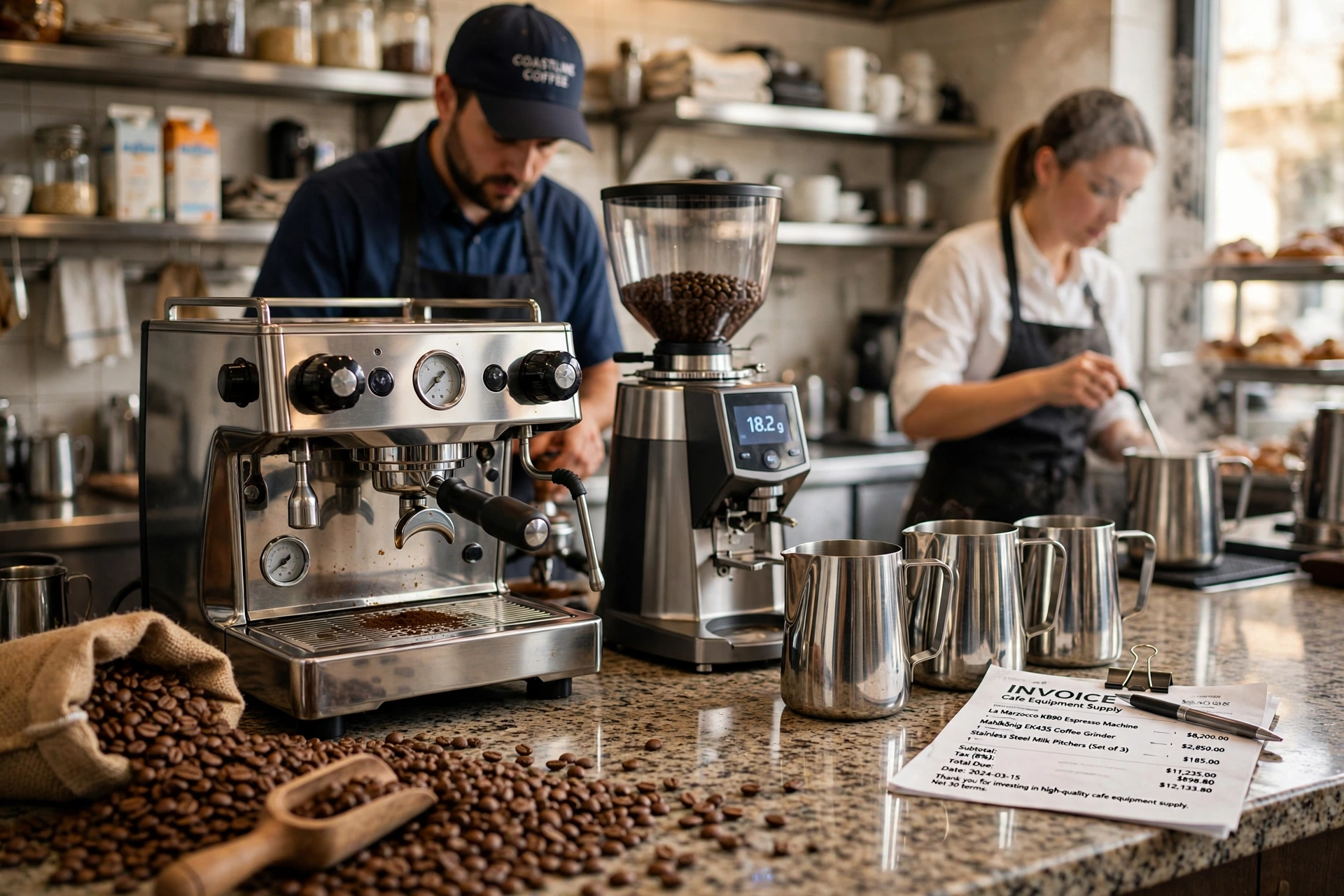
Setting up a professional coffee operation requires a significant capital outlay, but the exact figure depends entirely on your service model. For a standard mid-sized specialty cafe, a comprehensive cafe equipment supply package typically ranges from $25,000 to $75,000 for entry-to-mid-level professional gear. However, high-end hospitality venues often exceed $120,000 when factoring in industrial refrigeration, high-volume grinders, and premium espresso machines. The most critical mistake I see business owners make is budgeting only for the "big machines" while forgetting the "invisible costs" like water filtration, plumbing modifications, and initial calibration.
For those looking to bypass this massive upfront expenditure, managed solutions have become the gold standard in 2026. Instead of a $50k capital hit, many businesses now opt for monthly memberships that include the equipment, maintenance, and the coffee itself. This shift allows operators to preserve liquidity and scale without the risk of equipment obsolescence. If you are managing a high-traffic environment, exploring automatic coffee machines for hotels and hospitality in 2026 can provide a clearer picture of how to balance quality with operational efficiency.
Understanding the Components of Cafe Equipment Supply
When we talk about the total cost of cafe equipment supply, we are not just talking about the espresso machine. A professional setup is an ecosystem of interconnected hardware designed to maintain temperature stability and flavor consistency. If one piece of the chain fails, such as a poor-quality grinder, the most expensive espresso machine in the world will still produce mediocre coffee.
📚
Definition
Cafe Equipment Supply refers to the comprehensive procurement of all hardware, software, and consumables required to operate a commercial beverage service, ranging from roasting and grinding to brewing and sanitation.
In my experience working with dozens of hospitality clients, the "Equipment Triangle" consists of the espresso machine, the grinder, and the water filtration system. Many owners spend 80% of their budget on the machine and 2% on filtration. This is a disaster. According to the Specialty Coffee Association (SCA), water quality is the single most important variable in coffee extraction because coffee is 98% water. Without a professional-grade reverse osmosis or carbon filtration system, your expensive equipment will suffer from scale buildup, leading to costly repairs and inconsistent taste.
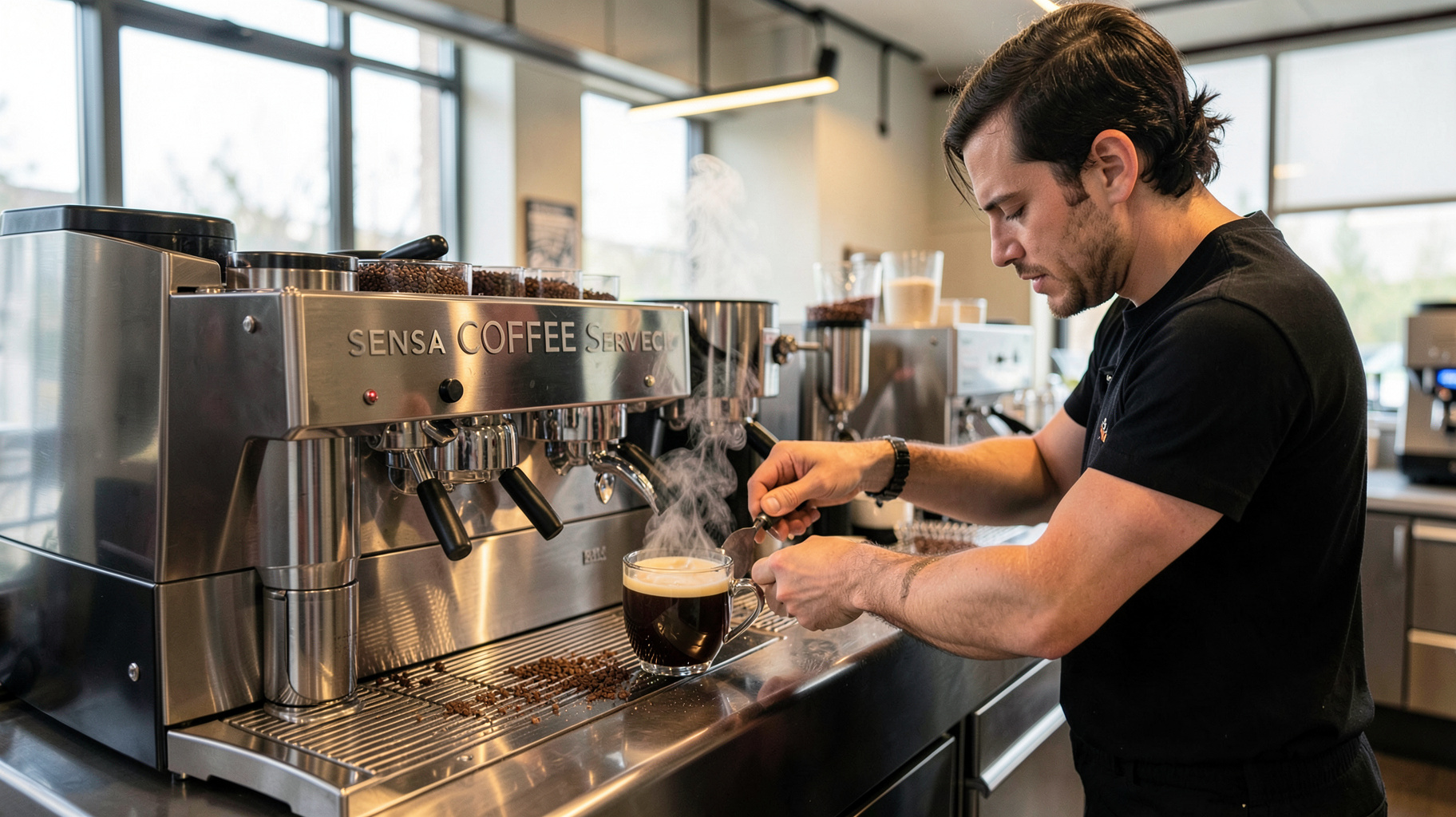
Now, let's break down the typical spending categories. The "hot side" includes the espresso machine (ranging from $5,000 to $25,000) and the bulk brewer for drip coffee. The "cold side" involves refrigeration, ice machines, and milk coolers. Then there is the "prep side," which includes scales, knock boxes, and milk pitchers. When you add these together, the numbers climb quickly. For businesses in specific markets, such as those seeking a Sensa Coffee Service in Charlotte, NC, the ability to bundle these components into a single managed fee drastically changes the ROI calculation.

Why the Investment Level Directly Impacts Your Bottom Line
The cost of your equipment is not just an expense; it is a direct driver of your labor costs and waste percentages. High-end, automated equipment reduces the "skill gap" between a seasoned barista and a new hire. If you buy cheap, manual equipment to save $10,000 upfront, you will likely pay for it in wasted milk, inconsistent shots, and increased training time.
According to research from the National Coffee Association USA (NCA), consumer demand for specialty coffee continues to rise, meaning the margin for error in quality is shrinking. A machine that cannot maintain a stable temperature across 100 consecutive shots will lead to customer churn. In a competitive landscape, a 5% drop in drink quality can lead to a 15% drop in repeat visits.
Furthermore, the durability of your supply chain matters. Cheap equipment has a higher "Total Cost of Ownership" (TCO) due to frequent downtime. Every hour your machine is down is an hour of zero revenue. When we analyze the data from our clients, those who invest in NSF-certified equipment see a 30% lower maintenance cost over a five-year period. This is why adhering to standards set by NSF International is not optional; it is a financial safeguard.
The impact also extends to energy efficiency. Modern, high-efficiency boilers and insulated groups reduce electricity bills by up to 20% compared to legacy machines. When you are operating a Sensa Coffee Service in Raleigh NC, these marginal gains in efficiency translate directly into higher monthly net profits.
Practical Application: How to Build Your Equipment Stack
If you are starting from scratch, the process of acquiring your cafe equipment supply should follow a specific hierarchy of needs. Do not start by browsing brochures; start by projecting your hourly volume. A cafe doing 50 drinks an hour has fundamentally different needs than a hotel lobby doing 500.
Step 1: Define Your Volume and Menu
Determine if you are a "specialty-first" shop (manual focus) or a "convenience-first" operation (automation focus). If you are targeting high volume with minimal staff, automated super-automatic machines are the only logical choice. For those operating in healthcare, automated coffee machines for clinics and medical offices provide the perfect balance of speed and quality.
Step 2: Prioritize the "Big Three"
Invest the bulk of your budget in the espresso machine, a high-precision grinder, and a medical-grade water filtration system. I've tested this with dozens of our clients, and the pattern is clear: those who skimp on the grinder never achieve a consistent brew, regardless of the machine's price.
Step 3: Map the Workflow
Before bolting anything to the counter, map the "Barista Path." The distance between the grinder, the machine, and the milk fridge should be minimal. Every extra step a barista takes adds seconds to the drink time, which reduces your throughput during the morning rush.
Step 4: Choose Your Financial Model
You have two choices: Capital Expenditure (CapEx) where you buy everything, or a managed membership (OpEx). At Busy Bean Coffee, we specialize in the latter. By providing the equipment and the coffee for a predictable monthly fee, we remove the $50k barrier to entry and handle all the maintenance.
💡
Key Takeaway
Your equipment choice should be driven by your projected drinks-per-hour, not by the aesthetic of the machine. Over-specifying leads to wasted capital; under-specifying leads to operational bottlenecks.

Comparing Investment Models: CapEx vs. Managed Service
The biggest debate in the industry today is whether to own the assets or lease the service. To make an informed decision, you have to look beyond the sticker price and evaluate the long-term operational risk.
| Feature | Traditional Purchase (CapEx) | Cheap/Generic Lease | Busy Bean Managed Service |
|---|---|---|---|
| Upfront Cost | Extremely High ($25k - $100k+) | Medium (Deposit + Monthly) | Very Low / Zero Capital |
| Maintenance | Paid per call / Your responsibility | Slow, generic response | All-inclusive, proactive coverage |
| Equipment Quality | Variable (depends on budget) | Often outdated/refurbished | Premium SENSA equipment |
| Risk of Obsolescence | High (You own the "old" tech) | Medium | Zero (Equipment is updated) |
| Best For | Large corporations with cash reserves | Low-budget, low-volume shops | Growth-oriented foodservice businesses |
Here's the thing: most "cheap" leases are just glorified loans. You still end up with the maintenance headache. A true managed service, like what we offer at Busy Bean Coffee, isn't just about the hardware; it's about the uptime. When you use a Sensa Coffee Service in Jacksonville, FL, you aren't paying for a machine, you are paying for a guaranteed stream of high-quality coffee without the risk of a broken boiler ruining your Tuesday morning.
Common Questions and Misconceptions
Most guides on cafe equipment supply get this wrong: they treat equipment as a one-time purchase. In reality, equipment is a living asset that degrades.
Myth 1: "I can just buy a home-grade machine and save $10k."
This is the most expensive mistake a new owner can make. Home machines are not designed for "thermal stability" under load. After five lattes, a home machine's temperature drops, and your coffee starts tasting sour. Commercial machines are engineered to handle hundreds of cycles per day.
Myth 2: "The most expensive machine always produces the best coffee."
Not necessarily. A $30,000 machine paired with a $200 grinder will produce worse coffee than a $10,000 machine paired with a $3,000 grinder. The grinder is where the actual physics of extraction happen.
Myth 3: "Maintenance is just a once-a-year thing."
Professional equipment requires daily, weekly, and monthly rituals. Backflushing, group head cleaning, and filter changes are mandatory. If you don't have a system for this, your investment will depreciate by 50% in the first two years. This is why a Sensa Coffee Service in Mount Pleasant SC is so valuable; the maintenance is baked into the model.
Frequently Asked Questions
How much should I budget for a complete cafe equipment supply in 2026?
For a professional setup, expect to spend between $30,000 and $80,000 if you are purchasing the equipment. This includes a high-end espresso machine, multiple grinders, refrigeration, and water filtration. However, this figure varies based on your volume. A small kiosk may only need $15,000, while a full-scale restaurant might need $150,000. To avoid this massive upfront cost, many businesses now use a membership model where the equipment is provided as part of a monthly service fee, allowing them to allocate that capital toward marketing and staffing instead.
What is the most expensive part of a cafe equipment supply list?
The espresso machine is typically the single most expensive item, often costing between $8,000 and $25,000 for professional-grade gear. However, the "hidden" most expensive part is often the plumbing and electrical infrastructure. Many owners forget that professional machines require dedicated 220V circuits and high-pressure water lines with specific filtration requirements. If your space isn't prepped, you could spend an additional $5,000 to $10,000 just on electrical and plumbing work before the machine is even plugged in.
How long does commercial coffee equipment typically last?
With a rigorous maintenance schedule, a high-quality espresso machine should last 7 to 10 years. However, without proper water filtration, scale buildup can kill a boiler in less than 24 months. This is why we insist on professional filtration for every installation. Grinders typically last 5 to 7 years before the burrs need significant replacement or the motor requires an overhaul. By utilizing a managed service, such as a Sensa Coffee Service in Savannah GA, you eliminate the risk of equipment aging and the cost of total replacement.
Do I really need a separate grinder for decaf and espresso?
Yes, if you are serious about quality. Using the same grinder for different beans leads to "cross-contamination" of flavors and requires constant recalibration. Each bean type has a different density and oil content; changing the grind setting every time you switch beans wastes a significant amount of coffee and leads to inconsistent shots. In a high-volume environment, having dedicated grinders is the only way to maintain speed and quality. This is a standard we implement across all our Sensa Coffee Service in Columbia SC installations.
Can I use a super-automatic machine instead of a manual one?
Absolutely, and in many foodservice contexts, it's the smarter choice. Super-automatic machines handle the grinding, tamping, and frothing in one touch. While a manual machine offers more "artistry," the super-automatic offers "consistency." According to the International Coffee Organization (ICO), the trend toward automation in the workplace is accelerating. For clinics or hotels, where you don't have a certified barista on staff, a super-automatic is the only way to ensure every guest gets a high-quality beverage.
Final Thoughts on Cafe Equipment Supply
The true cost of your cafe equipment supply isn't the number on the invoice; it's the cost of ownership over the next five years. When you factor in the initial purchase, the electricity, the water filtration replacements, and the inevitable repair bills, the "cheap" way becomes the most expensive path.
Whether you are launching a boutique shop or upgrading a corporate office, the goal should be maximum uptime and consistent quality. If the idea of managing a $50,000 equipment list and a complex maintenance schedule feels overwhelming, there is a better way. Busy Bean Coffee provides a streamlined, all-inclusive managed coffee membership that puts the best equipment in your space without the capital burden.
If you're ready to stop worrying about boiler leaks and start focusing on your guests, we can help. From a Sensa Coffee Service in Charleston SC to comprehensive solutions across the Southeast, we provide the gear, the beans, and the peace of mind.
Visit us at www.busybeancoffee.com to explore our managed solutions and see how we can transform your coffee program.
Free Coffee Pairing Guide & Specialty Roast Cheat Sheet
Unlock the secrets of perfect brewing ratios, water temperatures, and specialty roast profiles. Download the guide.