What Exactly Is Cafe Equipment Supply and How Does It Work?
Launching a coffee business often feels like solving a puzzle where the pieces are expensive, technical, and incredibly sensitive to error. For most beginners, a comprehensive cafe equipment supply refers to the entire ecosystem of hardware, consumables, and technical support required to transform raw coffee beans into a consistent, profitable beverage service. It is not merely about buying a machine; it is the strategic sourcing of an integrated system, including espresso machines, grinders, filtration, and brewing peripherals, that ensures every cup meets a professional standard without compromising the operator's margins.
📚
Definition
Cafe equipment supply is the professional procurement and management of specialized hardware and tools used in the preparation of specialty coffee, ranging from heavy-duty espresso machines to precision weighing scales and water filtration systems.
In my experience working with dozens of new cafe owners, the most common mistake is treating equipment as a one-time purchase rather than a long-term operational asset. I have seen entrepreneurs spend 80% of their budget on a flashy espresso machine only to realize they have no budget left for a high-grade water filtration system, leading to scale buildup that destroys the boiler within six months. A professional supply chain doesn't just sell you a box; it provides the calibration, installation, and maintenance framework necessary to keep the business running.

Why Does a Professional Cafe Equipment Supply Matter for Your Bottom Line?
When you are starting out, it is tempting to look at the lowest price point on a website. However, the financial impact of equipment failure in a high-volume environment is catastrophic. If your primary espresso machine goes down on a Saturday morning, you aren't just losing the cost of a latte; you are losing the customer's trust and the lifetime value of that client. According to the Specialty Coffee Association (SCA), consistency in extraction and temperature is the primary driver of customer retention in specialty coffee. Without the right supply of calibrated gear, consistency is mathematically impossible.
The operational cost of "cheap" equipment is often hidden in the energy bills and the waste. Low-efficiency boilers consume more electricity, and imprecise grinders lead to massive amounts of wasted coffee bean inventory. Research from the National Coffee Association USA (NCA) indicates that the specialty coffee segment continues to grow, but consumers are becoming more discerning about quality. If your equipment cannot maintain a steady 200°F (93°C) water temperature, your customers will taste the bitterness or sourness of an uneven extraction, and they will not return.
Furthermore, sanitation and safety standards are non-negotiable. Using equipment that isn't certified by recognized bodies can lead to health code violations. For instance, NSF International provides the gold standard for food equipment safety; using non-NSF certified gear in a commercial setting creates significant liability and risk. A professional supply partner ensures that every piece of hardware in your shop meets these rigorous safety and sanitary standards, protecting your business from legal and health-related shutdowns.
How Do You Build Your Initial Cafe Equipment Supply List?
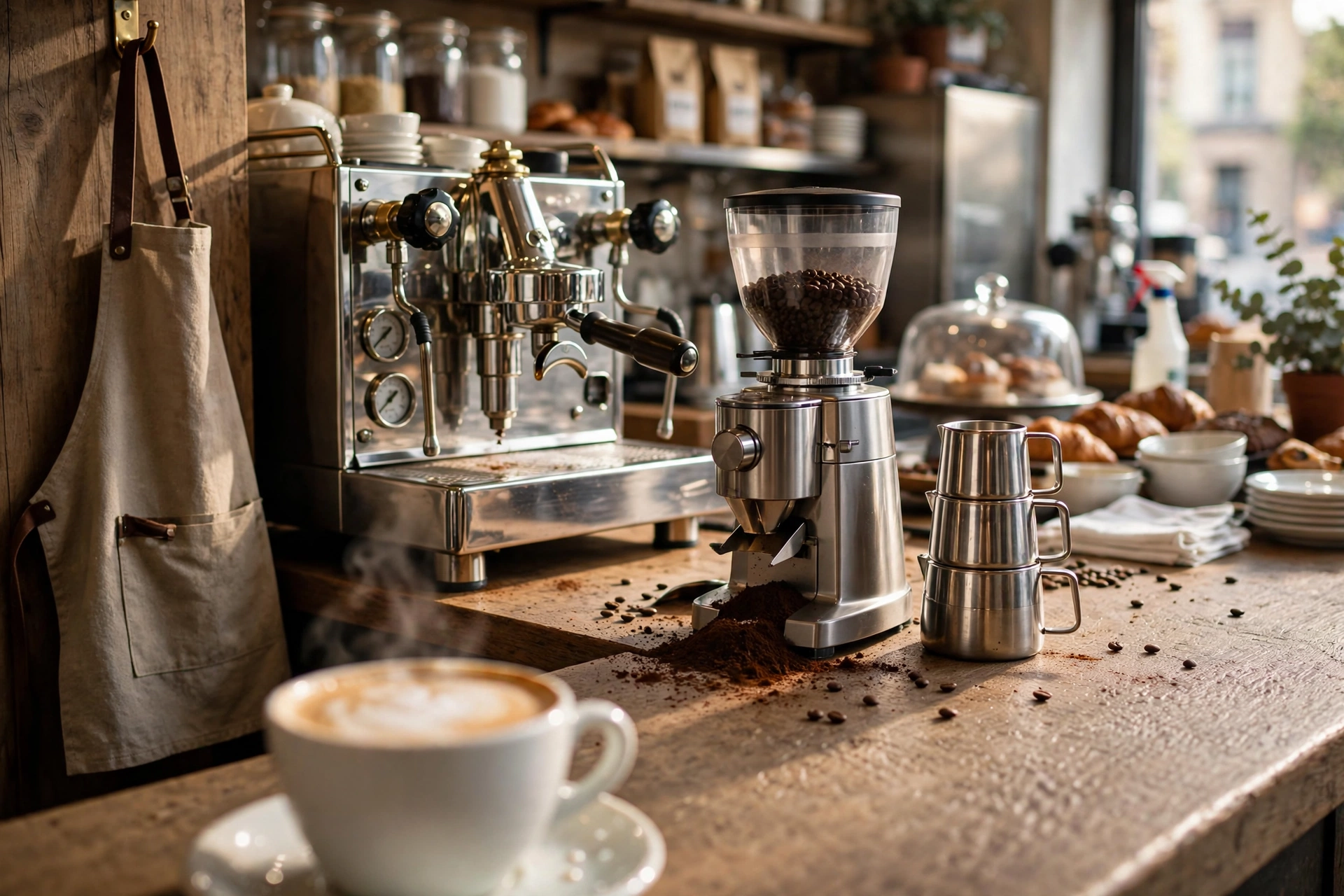
Building a supply list requires a "workflow-first" mentality. You must map out the journey of a single bean from the bag to the cup before spending a single dollar. The core of your supply will always be the "Golden Triangle": the espresso machine, the grinder, and the water filtration system. If any one of these three fails, the other two are useless.
First, determine your volume. A small kiosk in Mount Pleasant, SC, has very different needs than a full-scale bistro. For high-volume shops, a multi-boiler espresso machine is essential to allow simultaneous steaming and brewing. Second, prioritize the grinder. Many beginners overspend on the machine and underspend on the grinder, but the grinder is actually more important for flavor consistency. A precision burr grinder ensures that the Coffea arabica particles are uniform, preventing the "channeling" that leads to watery, sour espresso.
Now, here is where it gets interesting: the water. Coffee is 98% water. If your water is too hard, it creates limescale; if it is too soft, the coffee tastes flat. You need a supply of professional-grade filtration, ideally reverse osmosis or multi-stage carbon filtration, integrated directly into your plumbing.
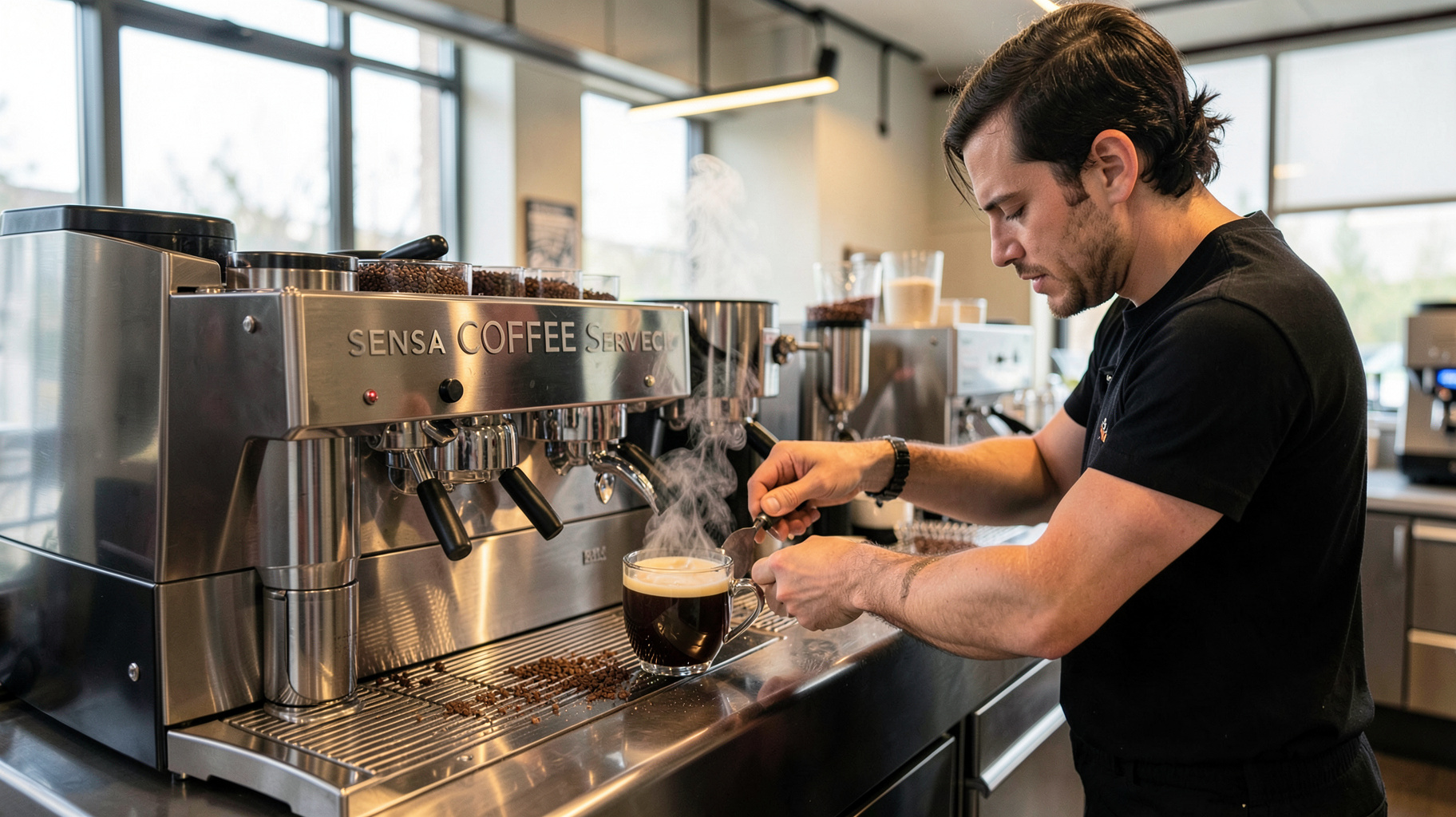
At Busy Bean Coffee, we simplify this entire headache through our managed coffee solutions. Instead of forcing a beginner to navigate fifty different vendors and worry about the capital expense of a $15,000 setup, we provide an all-inclusive membership. We supply the premium SENSA equipment, handle the professional installation, and provide full maintenance coverage. This transforms a massive upfront capital expenditure into a predictable monthly operational cost, allowing you to focus on your craft rather than your plumbing.
💡
Key Takeaway
Never buy equipment based on features alone; buy based on your projected volume and the specific water chemistry of your location.
Choosing Between Equipment Supply Options: A Comparison
Not all supply models are created equal. Depending on your risk tolerance and available capital, you might choose to buy outright, lease, or use a managed service. I've tested these models with various clients, and the pattern is clear: the "cheapest" upfront option is almost always the most expensive over a three-year period due to maintenance and downtime.
| Supply Model | Pros | Cons | Best For |
|---|---|---|---|
| Retail Purchase | Full ownership; no monthly fees. | Huge upfront cost; no support if it breaks. | Very low-volume hobby shops. |
| Traditional Lease | Lower entry cost than buying. | Long contracts; high interest; limited support. | Established businesses with credit. |
| Managed Service (Busy Bean) | Zero CapEx; all-inclusive maintenance; expert support. | Monthly subscription fee. | New entrepreneurs and scaling cafes. |
The traditional approach of buying a machine from a generic retailer is fraught with risk. You are essentially on your own once the warranty expires. A generic AI-driven "equipment list" might tell you to buy a specific brand because it is popular, but it won't tell you that the brand has no certified technicians in your specific region. The professional approach, such as the one we implement at Busy Bean Coffee, integrates the hardware with the service. This means when a pump fails, you aren't searching YouTube for a tutorial; you are calling a professional who arrives with the part already in hand.

Common Questions and Misconceptions About Equipment Supply
Most guides for beginners get this wrong by focusing on "the best machine" rather than "the best system." There is a persistent myth that a more expensive machine automatically produces better coffee. This is false. A $20,000 machine paired with a $200 grinder will produce mediocre coffee. A $5,000 machine paired with a $3,000 precision grinder will produce world-class espresso. Focus your budget on the grinding and filtration first.
Another common misconception is that "home-prosumer" equipment is sufficient for a commercial environment. I see this constantly in new shops. A prosumer machine may look professional, but it is not designed for the thermal stability required to pull 100 shots in an hour. The boilers are too small, and the components aren't rated for commercial duty. Using home gear in a business leads to rapid degradation and frequent breakdowns, which eventually costs more than buying the professional gear in the first place.
Finally, many beginners assume that "automatic" machines are a shortcut to quality. While super-automatic machines can be useful for breakrooms or very low-skill environments, they lack the nuance required for true specialty coffee. To achieve the flavor profiles expected of specialty coffee, you need a barista who can manually control the dose, distribution, and tamping process. The equipment should empower the human, not replace them.
Frequently Asked Questions
What is the most essential piece of cafe equipment supply for a beginner?
While the espresso machine is the centerpiece, the most essential piece of equipment for quality is actually the burr grinder. Without a precision grinder, you cannot control the particle size of the coffee bean, which means you cannot control the extraction rate. If the grind is inconsistent, the water will find the path of least resistance, leading to a cup that is simultaneously bitter and sour. Investing in a high-quality, commercial-grade grinder ensures that every shot of espresso is identical, which is the foundation of a successful coffee business.
How do I know if my cafe equipment supply meets health and safety standards?
You should look for certifications from recognized bodies such as NSF International or the UL (Underwriters Laboratories). NSF certification ensures that the equipment is designed to be easily cleaned and is made from materials that will not contaminate food or beverages. In the United States, the FDA provides guidelines on food contact surfaces. Any equipment you source for your cafe supply should be "commercial grade," meaning it can withstand the heat and humidity of a kitchen and is built with food-safe stainless steel.
Should I buy new or used equipment for my first cafe?
Buying used equipment can save money upfront, but it is a high-risk strategy for beginners. Commercial coffee machines undergo immense stress; a used machine may have hidden scale buildup in the boiler or worn-out gaskets that will cause leaks. Unless you are a trained technician, it is difficult to verify the internal health of a used machine. In my experience, the "savings" of buying used are quickly wiped out by the cost of emergency repairs and lost revenue during downtime. For those who cannot afford new gear, a managed service like Busy Bean Coffee provides the best of both worlds: professional equipment without the massive upfront cost.
How often does commercial cafe equipment require maintenance?
Maintenance is not a yearly event; it is a daily and quarterly process. Daily, you must perform "backflushing" with detergent to remove coffee oils from the group heads. Weekly, you should deep-clean your steam wands and check your water softener levels. Every three to six months, a professional technician should perform a preventative maintenance check, replacing gaskets and checking the pressure regulators. Ignoring these cycles leads to "catastrophic failure," where a small $10 gasket leak turns into a $2,000 boiler replacement because the machine was run dry.
What is the difference between a single-boiler and a multi-boiler machine?
A single-boiler machine uses one tank of water for both brewing espresso and steaming milk. This requires the user to "purge" or change the temperature of the boiler between tasks, which slows down service significantly. A multi-boiler machine has separate boilers for the brew group and the steam wand. This allows a barista to pull a shot and steam milk simultaneously without any drop in temperature or pressure. For any business intending to serve more than a handful of customers per hour, a multi-boiler system is an absolute necessity for efficiency and quality.
Final Thoughts on Cafe Equipment Supply
Building your cafe equipment supply is the most significant technical hurdle you will face when starting your business. It is a balancing act between capital expenditure, operational efficiency, and the uncompromising pursuit of quality. Whether you are sourcing a high-end espresso machine for a boutique shop in Mount Pleasant or setting up a high-volume coffee service for a hotel, the goal remains the same: consistency.
The mistake most beginners make is viewing equipment as a commodity. In reality, your equipment is your primary employee. If it is unreliable, your business is unreliable. By focusing on a holistic system, prioritizing filtration, precision grinding, and professional maintenance, you set your business up for long-term success.
If the prospect of managing multiple vendors and risking thousands of dollars on hardware feels overwhelming, there is a better way. Busy Bean Coffee provides a fully managed, all-inclusive coffee solution that removes the risk and the stress. From premium SENSA equipment to professional installation and ongoing maintenance, we handle the technical side so you can focus on your customers.
Stop guessing and start brewing. Visit www.busybeancoffee.com today to discover how our managed membership can launch your cafe with professional-grade equipment and zero capital stress.
Free Coffee Pairing Guide & Specialty Roast Cheat Sheet
Unlock the secrets of perfect brewing ratios, water temperatures, and specialty roast profiles. Download the guide.