📖This article is part of the complete guide to Complete Guide to Coffee Equipment Rental for Foodservice.
Running a convenience store is a game of margins and foot traffic. In my experience working with high-volume C-stores, the coffee station is often the single most important driver of morning momentum. When a customer stops for a large coffee, they rarely leave with just that; they grab a pastry, a breakfast sandwich, or a newspaper. However, the mistake I see constantly is owners treating their coffee program as a passive utility rather than a strategic revenue center. Relying on outdated, leaking pots leads to inconsistent quality and wasted product, which directly erodes your bottom line.
For a comprehensive overview of how these models work, explore our Complete Guide to Coffee Equipment Rental for Foodservice.
What is Convenience Store Coffee Rental?
📚
Definition
Convenience store coffee rental is a managed service model where a C-store operator acquires professional-grade brewing equipment through a monthly membership or lease rather than an upfront capital purchase, usually bundled with a recurring supply of specialty coffee beans and technical support.
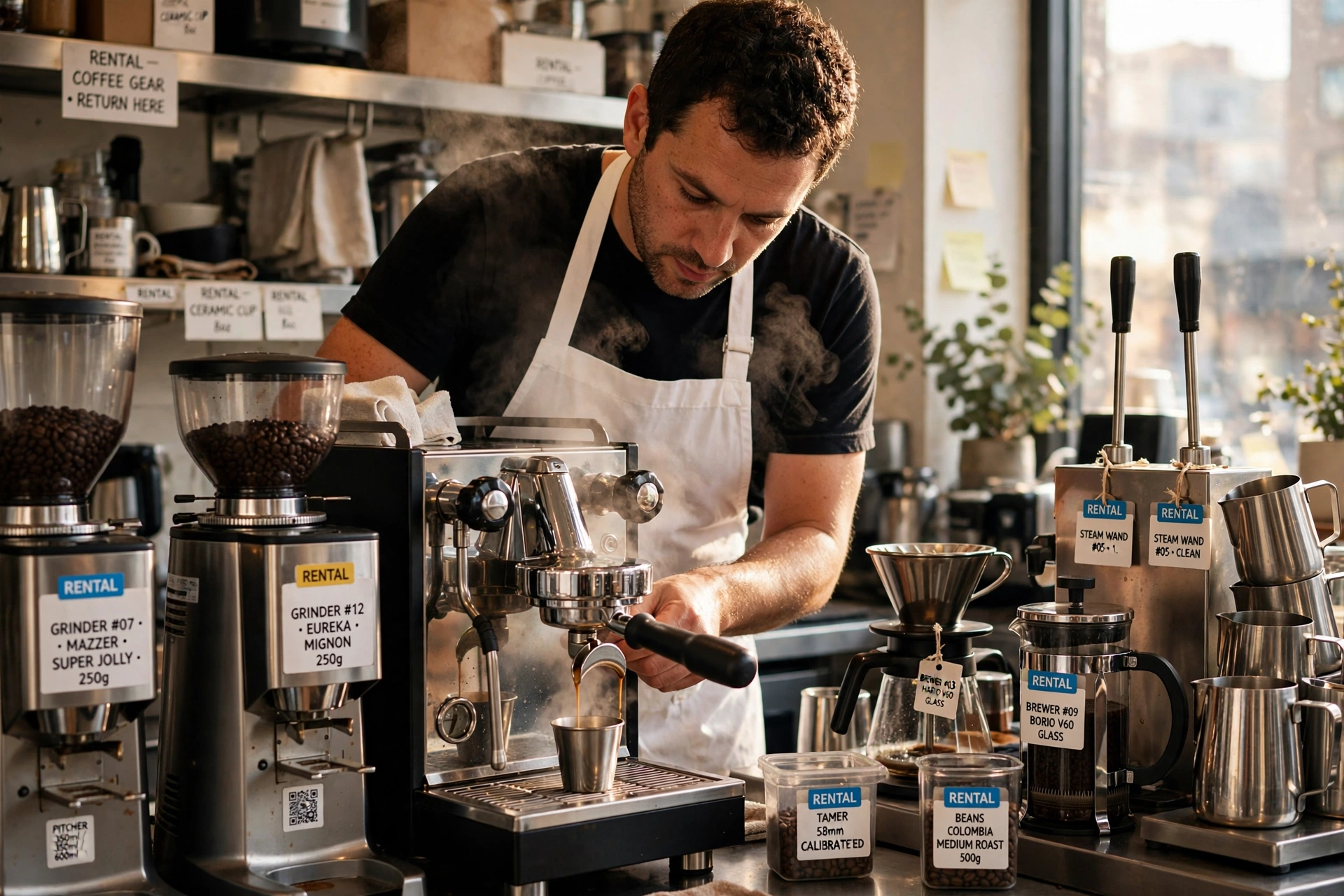
Convenience store coffee rental shifts the financial burden from a Capital Expenditure (CAPEX) to an Operational Expenditure (OPEX). Instead of spending thousands of dollars on high-capacity brewers and grinders that depreciate the moment they are installed, the store pays a predictable monthly fee. This fee typically covers the equipment, professional installation, and a comprehensive maintenance agreement. In the 2026 market, this has evolved into "managed coffee services," where the provider ensures the equipment is always calibrated for the specific roast profile of the beans provided.
In my time as a Q-Grader, I've seen that the difference between a "gas station coffee" reputation and a "destination coffee" reputation comes down to the equipment's ability to maintain thermal stability. Rental models allow C-stores to access top-tier gear—like the SENSA systems used by Busy Bean Coffee—without the risk of owning obsolete hardware. When the technology evolves or your volume increases, the rental agreement allows for seamless upgrades. This is especially vital for stores in high-growth areas, such as those utilizing Sensa Coffee Service in Mount Pleasant SC - Complete Guide, where customer expectations for specialty coffee are rising rapidly.
Why Does Convenience Store Coffee Rental Matter for Your Bottom Line?
Convenience store coffee rental matters because it maximizes the "basket size" of every morning visitor while eliminating the risk of equipment downtime. In a C-store, a broken brewer at 6:00 AM isn't just a technical glitch; it is a total loss of the most profitable window of the day. According to the National Coffee Association USA (NCA), coffee consumption patterns have shifted toward a preference for specialty-grade brews, meaning customers are now willing to pay a premium for quality over sheer convenience.
By moving to a rental model, you solve three critical problems: liquidity, quality control, and maintenance. First, preserving cash flow is essential for C-stores that need to pivot quickly to new inventory trends. Second, using a managed service ensures that you are serving Coffea arabica of a consistent grade, which prevents the bitter, burnt taste associated with cheap, oversized percolators. Third, the maintenance is outsourced. When a heating element fails, you aren't hunting for a technician; your service provider handles it as part of the monthly fee.
Furthermore, the ROI on specialty coffee in a convenience setting is staggering. When you elevate your offering from generic coffee to specialty coffee, you can often increase the price per cup by 20-40% while increasing the attachment rate of food items. This is the same pattern we've observed with clients using Sensa Coffee Service in Charleston SC - Complete Guide, where the shift to premium equipment led to a measurable increase in morning foot traffic.
How to Implement a High-Revenue Coffee Program in Your C-Store
Implementing a successful coffee rental program requires a shift from "providing a drink" to "curating an experience." The goal is to create a destination that makes your store the preferred stop over a competitor.
Step 1: Volume Analysis and Equipment Scaling
Start by analyzing your peak hour traffic. A store serving 50 cups an hour requires a different setup than one serving 500. You need a system that can brew quickly without sacrificing the extraction quality of the coffee bean. This is where professional-grade thermal carafes and high-output brewers become essential. If you are scaling in a busy hub, you might look into the specialized setups described in our Sensa Coffee Service in Raleigh NC (2026 Overview).
Step 2: Selecting the Right Roast Profile
Not all coffee is created equal. For a C-store, you need a roast that holds up well in a thermal server without oxidizing too quickly. As a Q-Grader, I recommend a medium-dark roast for general crowds, as it provides the traditional "coffee smell" that triggers impulse buys while maintaining the complexity of specialty coffee. Ensure your rental partner provides beans specifically roasted for the equipment they install.
Step 3: Optimizing the "Coffee Path"
Place your coffee station in a way that forces customers to walk past high-margin impulse items. The path from the door to the coffee, and then to the creamers and sugars, should be clear but strategically routed. This layout optimization, combined with professional equipment, turns a 2-minute visit into a 5-minute shopping trip.
Step 4: Staff Training and Maintenance
Even with rental equipment, your staff must know the basics of cleanliness. Residue buildup in the brew head can ruin a batch of expensive specialty coffee. A managed service from Busy Bean Coffee includes training for your team, ensuring they know how to maintain the machine between technician visits. This level of operational excellence is what separates top-tier stores from the rest, similar to the standards we implement for Sensa Coffee Service in Charlotte, NC.
Convenience Store Coffee Rental vs. Buying Equipment
Many owners struggle with the decision to buy or rent. The reality is that buying equipment creates a "hidden tax" of depreciation and unplanned repair costs. When you buy a machine, you are responsible for the 2026 technical standards, the NSF certifications for health inspections, and the labor for cleaning.
| Feature | Traditional Purchase (CAPEX) | Cheap Low-End Rental | Busy Bean Managed Rental |
|---|---|---|---|
| Upfront Cost | High ($5k - $20k+) | Low | Zero / Low Setup Fee |
| Quality Control | Owner's Responsibility | Inconsistent | Q-Grader Certified Roasts |
| Maintenance | Pay-per-call (Slow) | Basic / Limited | All-Inclusive / Proactive |
| Tech Updates | Obsolescence Risk | Slow Updates | Latest SENSA Technology |
| Financial Impact | Asset Depreciation | Low Monthly Fee | Predictable OPEX / High ROI |
💡
Key Takeaway
While buying seems cheaper over five years, the downtime costs and loss of quality usually make the managed rental model more profitable for high-volume C-stores.
Common Mistakes to Avoid in C-Store Coffee Programs
One of the most frequent errors I encounter is the "bottom-barrel bean" trap. Owners rent a high-end machine but then buy the cheapest bulk coffee they can find. This is like putting low-grade fuel in a Ferrari; the machine cannot fix a bad bean. To truly unlock revenue, your coffee bean quality must match your equipment quality. According to NSF International, maintaining sanitary standards in brewing equipment is non-negotiable, but the flavor profile is what brings customers back.
Another mistake is ignoring water filtration. In many regions, hard water creates scale buildup that destroys heating elements and makes coffee taste metallic. A professional rental agreement should always include a high-capacity water filtration system. If you are operating in areas with challenging water chemistry, like those served by Sensa Coffee Service in Savannah GA - Complete Guide, filtration is the only way to protect your equipment and your flavor.
Finally, avoid the "set it and forget it" mentality. Coffee tastes are evolving. In 2026, customers are more aware of origin and roast profiles. Periodically rotating your offerings or introducing a "featured roast" can create a sense of novelty that keeps your regulars engaged and encourages them to spend more.
Frequently Asked Questions
Does coffee rental include the coffee beans?
Yes, most professional managed services, including those at Busy Bean Coffee, bundle the equipment rental with a subscription to specialty coffee beans. This ensures that the roast profile is perfectly matched to the machine's calibration, maximizing flavor and reducing waste. By combining equipment and supply, you simplify your vendor management and ensure a consistent product for your customers every single morning.
How does the rental model affect my taxes?
Because rental payments are typically classified as operational expenses (OPEX) rather than capital assets, they can often be fully deducted in the year they are paid. This provides a significant tax advantage over purchasing equipment, where you must deal with depreciation schedules over several years. You should consult with your accountant, but generally, the monthly fee is much cleaner for bookkeeping and cash flow management.
What happens if the machine breaks during the morning rush?
This is the primary benefit of a managed rental. In a standard purchase model, you'd be calling a technician and waiting hours or days. With a managed service, you have a guaranteed service level agreement (SLA). Professional providers prioritize C-stores because they know how critical the morning window is. We provide proactive maintenance to prevent breakdowns and rapid-response repairs to ensure your revenue stream remains uninterrupted.
Can I upgrade my equipment if my store grows?
Absolutely. One of the biggest risks of buying equipment is "outgrowing" your capacity. If your foot traffic increases by 30% in a year, a machine you bought today may become a bottleneck tomorrow. Rental agreements are flexible. As your volume grows, you can transition to higher-capacity brewers or add additional units without having to sell old equipment at a loss on the second-hand market.
Is specialty coffee too expensive for a convenience store?
Actually, it's the opposite. While the cost per pound of specialty coffee is higher than commodity coffee, the perceived value is significantly higher. Customers are willing to pay a premium for a brew that tastes like it came from a high-end cafe. When you combine this with the eliminated cost of equipment maintenance and CAPEX, the net profit margin per cup is often higher than with low-quality bulk coffee.
Conclusion
Turning your coffee station from a basic amenity into a revenue engine requires the right partnership and the right technology. Convenience store coffee rental removes the friction of high entry costs and technical headaches, allowing you to focus on what matters: serving your customers and growing your business. By leveraging a managed service, you ensure that every cup of specialty coffee served meets the highest standards of quality and consistency, which in turn drives higher foot traffic and larger average transaction values.
Whether you are managing a single location or a regional chain, the shift toward a predictable, OPEX-based model is the smartest way to scale in 2026. If you are ready to stop worrying about equipment failure and start increasing your margins, it is time to explore a professional membership. For a deeper dive into the various models available, check out our Complete Guide to Coffee Equipment Rental for Foodservice.
To get started with a tailored solution for your store, visit us at www.busybeancoffee.com.
Free Coffee Pairing Guide & Specialty Roast Cheat Sheet
Unlock the secrets of perfect brewing ratios, water temperatures, and specialty roast profiles. Download the guide.