Introduction
Choosing the right restaurant coffee solutions for your establishment isn’t just about picking a machine off the shelf. With dozens of options—from manual espresso bars to fully automated managed services—the decision directly impacts your customer satisfaction, operational costs, and bottom line. After working with hundreds of restaurants over the past decade, I’ve seen that the best choice depends on three factors: volume, quality expectations, and the level of control you want in-house. Let’s break down the options so you can make a confident, data-backed decision.
What Are Restaurant Coffee Solutions?
📚
Definition
Restaurant coffee solutions refer to the equipment, sourcing, training, and maintenance services that enable a foodservice operation to serve coffee—ranging from simple drip brewers to full-service managed programs.
At its core, a coffee solution includes the machine (espresso, super-automatic, or drip), the beans (commodity vs. specialty), and the support infrastructure (staff training, repair, and replacement). The industry has evolved far beyond the days of a single Bunn brewer. Today, restaurants can choose from three main categories:
-
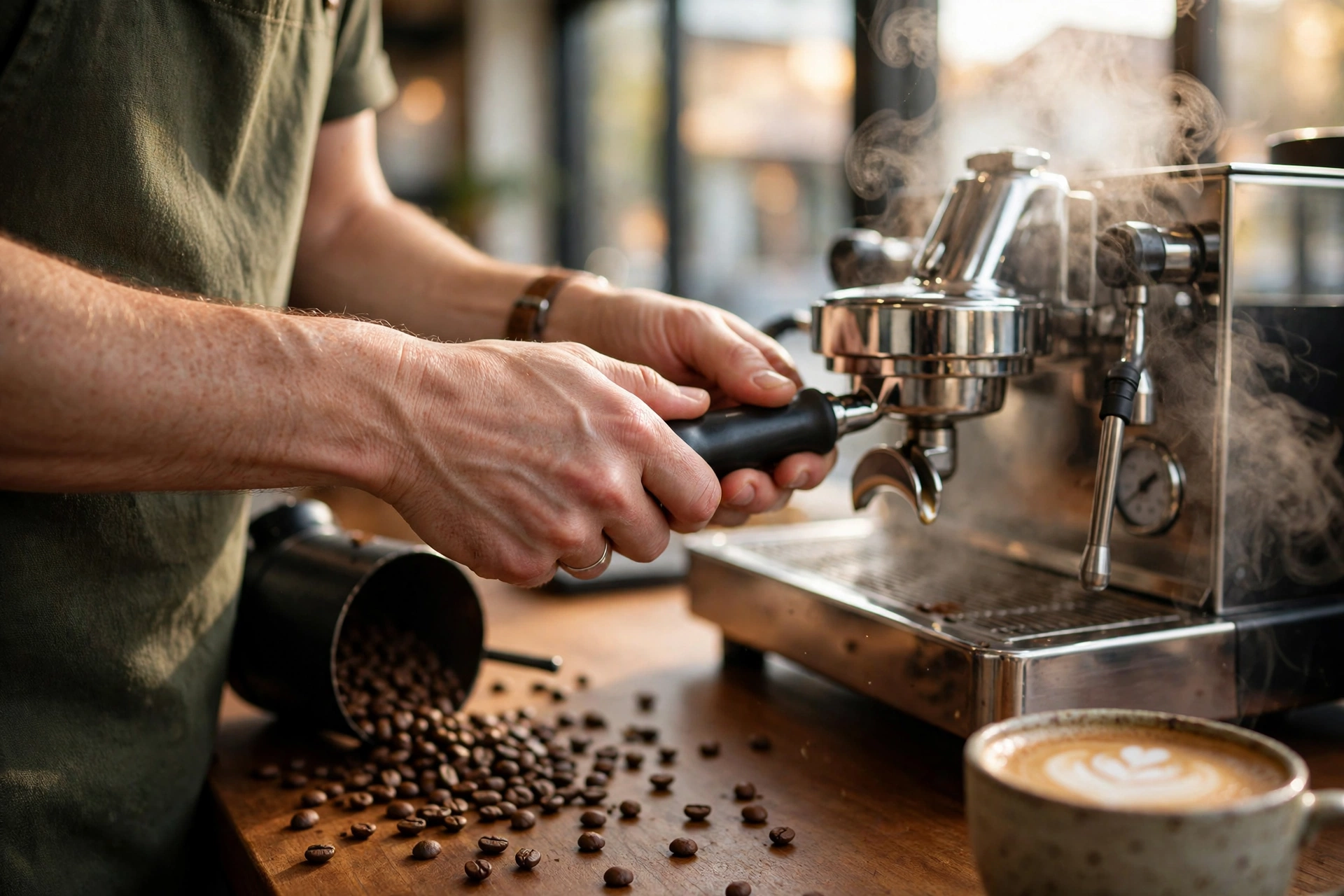
In-house barista program – You invest in commercial espresso equipment, hire trained baristas, source beans directly, and manage maintenance yourself. Best for high‑volume, upscale venues where coffee is a signature offering.
-
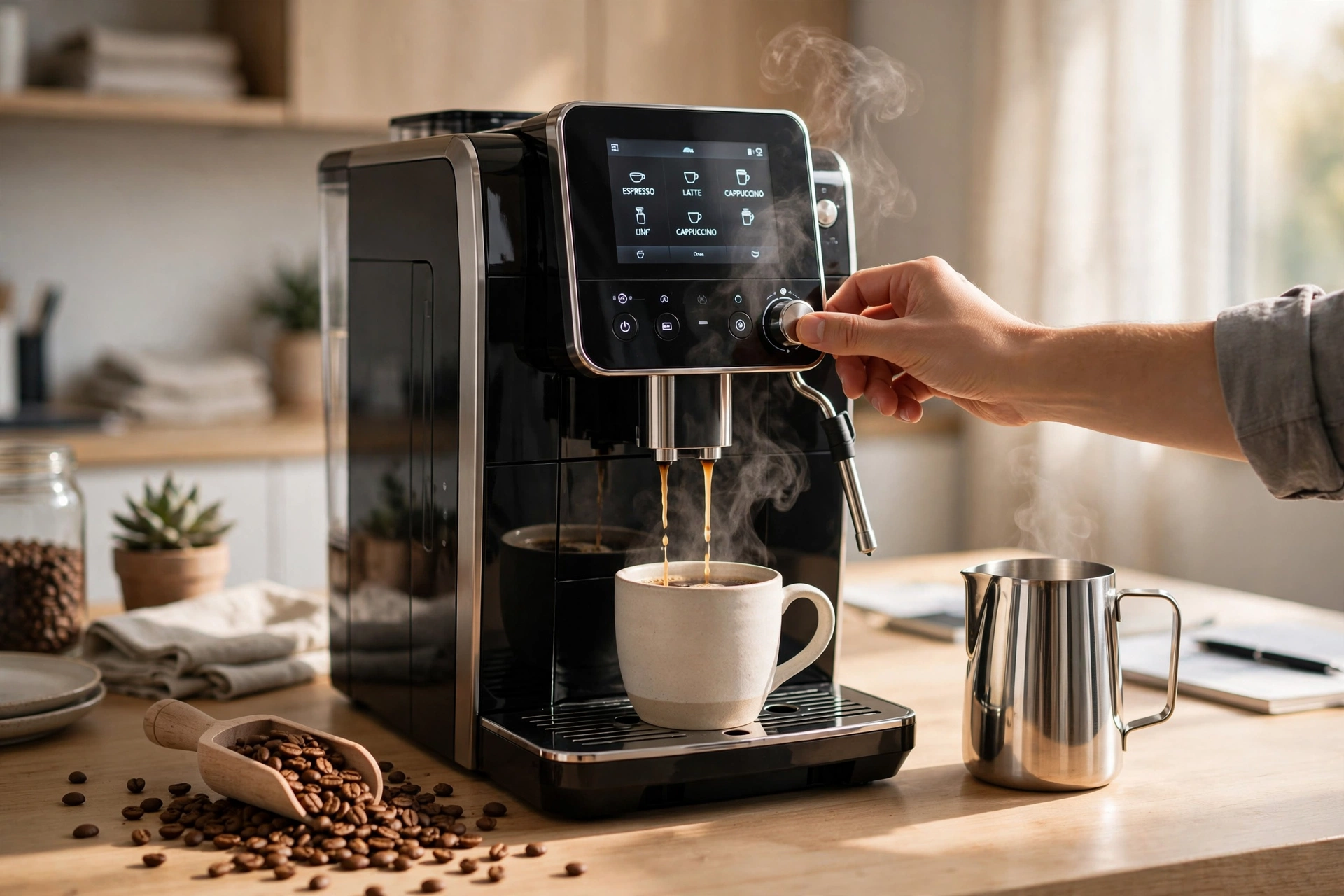
Self-serve super-automatic machines – A bean-to-cup machine that grinds, brews, and dispenses with minimal labor. Requires regular cleaning and restocking. Common in fast‑casual and delis.
-
Managed coffee services – A turnkey partner provides the equipment (often premium), professional installation, full maintenance, and specialty bean supply for a single monthly fee. No capital expense, no hassle. This model, exemplified by companies like Busy Bean Coffee, is gaining traction because it eliminates the hidden costs of ownership.
According to the Specialty Coffee Association’s 2023 U.S. Coffee Market Report, over 70% of coffee service decisions in foodservice are now influenced by the total cost of ownership (TCO) rather than just upfront price. That shift is driving more restaurants toward managed solutions.
Why Restaurant Coffee Solutions Matter More Than You Think
Coffee is often the second or third most profitable item on a restaurant menu—but only if executed well. The National Restaurant Association’s 2024 State of the Industry report found that 54% of consumers say a restaurant’s coffee quality influences their decision to return. Bad coffee doesn’t just lose a beverage sale; it can taint the entire dining experience.
Here’s the financial reality:
- A typical mid‑scale restaurant sells 50–150 cups of coffee per day. At $3.50 per cup, that’s $175–525 in daily revenue, or $63,000–$190,000 annually.
- Marginalize that with poor quality or equipment downtime, and you’re not just losing drink revenue—you’re losing repeat customers.
On the flip side, a well‑executed coffee program can increase average check size by 8–12%, according to data from McKinsey’s “Experience Economy” report (2023). Customers are willing to pay $1–$2 more for a craft coffee beverage, turning a commodity into a premium add‑on.
Yet the biggest mistake I see restaurants make is treating coffee as an afterthought. They buy a cheap machine, skip maintenance, and buy the cheapest beans. Within six months, breakdowns and bad taste drive customers away. The consequences of not investing in the right solution are clear: lower margins, higher waste, and a damaged brand reputation.
How to Choose the Best Restaurant Coffee Solution for Your Business
Making the right choice requires a systematic evaluation of your operations. Here’s a step‑by‑step framework I’ve used with dozens of clients, including fast‑casual chains, independent bistros, and hotel restaurants.
Step 1: Determine Your Volume
Track your current coffee sales (or projected volume for new openings).
- Low volume (<50 cups/day): A simple drip brewer or a small super‑automatic may suffice.
- Medium volume (50–150 cups/day): A robust super‑automatic or a managed service with a bean‑to‑cup machine works well.
- High volume (>150 cups/day): An in‑house barista program or a commercial‑grade espresso machine with trained staff is justified.
Step 2: Decide on Quality Standards
Do you want “good enough” or “memorable”? If coffee is a secondary beverage, reliable consistency may be fine. If coffee is a differentiator—say, for a brunch spot or fine‑dining restaurant—you need specialty‑grade beans and equipment capable of producing latte art.
Step 3: Calculate Total Cost of Ownership (TCO)
Beyond the purchase price, factor in:
- Equipment lifespan (3–7 years)
- Annual maintenance and repairs (10–15% of equipment cost/year)
- Training and labor (barista training vs. machine operation)
- Bean cost (commodity vs. specialty) ‐ Downtime costs (lost revenue per hour of downtime)
A managed coffee service like Busy Bean Coffee bundles all these into a predictable monthly fee—typically $300–$800/month for a commercial restaurant. Compare that to buying a $15,000 espresso machine plus $3,000/year in maintenance and $2,000/year in training. Over five years, the managed service often saves 20–40% while guaranteeing uptime and quality.
Step 4: Evaluate Staff Capability
If you can’t afford a trained barista, super‑automatics or managed solutions are safer. If you have a skilled team, the margin on a manual espresso bar can be higher.
💡
Key Takeaway
The optimal restaurant coffee solution balances volume, quality, and operational complexity. For most independent restaurants, a managed service delivers a “set‑it‑and‑forget‑it” premium coffee program without capital outlay, making it the most cost‑effective choice.
Restaurant Coffee Solutions Comparison: Which Option Is Right for You?
| Option | Pros | Cons | Best For |
|---|---|---|---|
| In‑house barista program | Highest quality potential; brand differentiation; higher margins per cup | High upfront cost ($15k–$30k); requires trained staff; ongoing maintenance burden | High‑volume, upscale venues (50+ espresso drinks/day) |
| Self‑serve super‑automatic | Low labor cost; consistent with minimal training; lower upfront ($5k–$12k) | Limited drink variety; bean freshness degrades quickly; repair costs add up | Fast‑casual, delis, cafeterias with moderate volume |
| Managed coffee service (e.g., Busy Bean Coffee) | Zero capital expense; full maintenance included; premium equipment and beans; predictable monthly fee; 24/7 support | Monthly commitment; less control over equipment selection; vendor lock‑in risk | Most medium‑to‑high volume restaurants that want hassle‑free premium coffee |
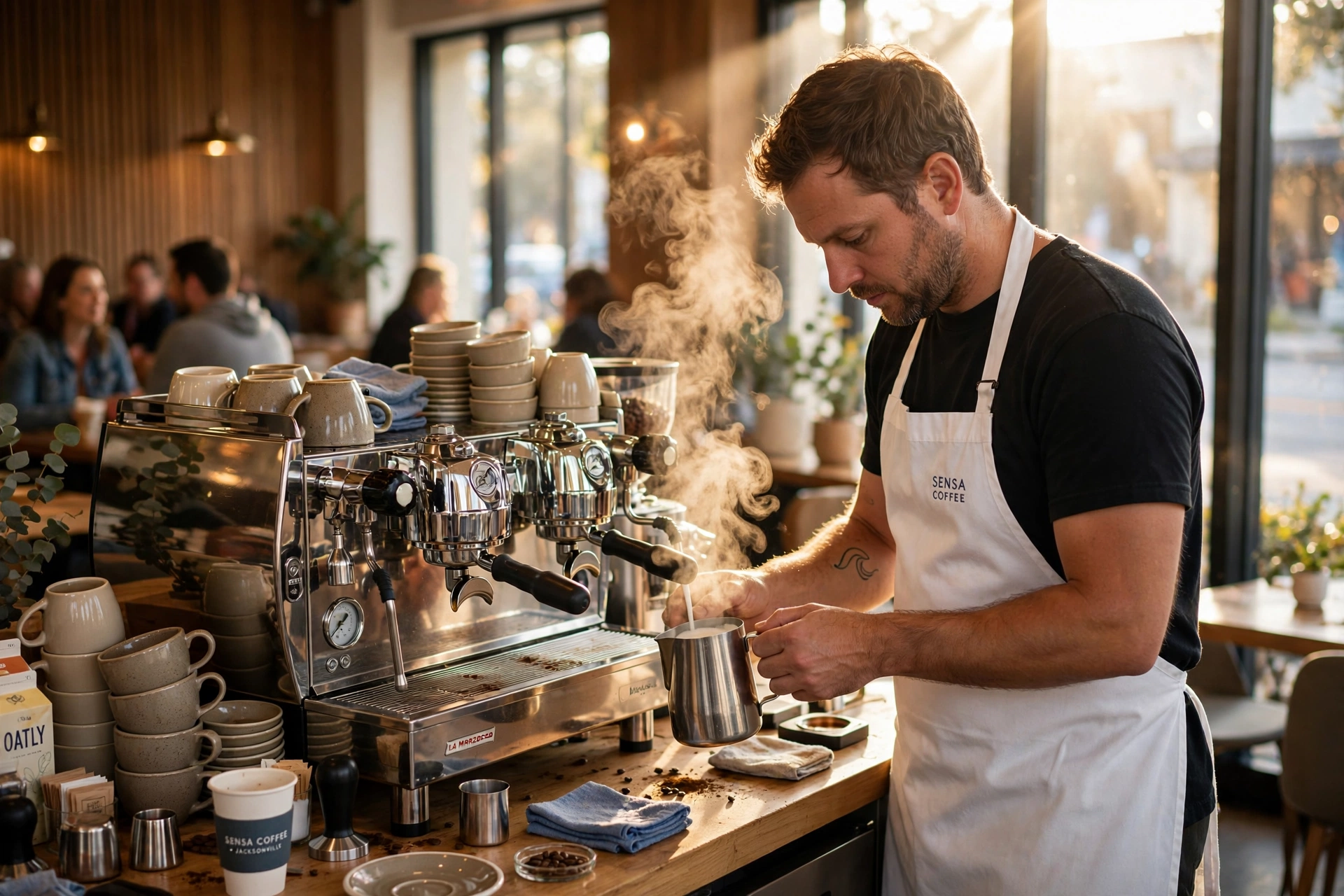
I’ve found that the managed model consistently wins on TCO for any restaurant doing 75+ cups per day. Busy Bean Coffee specifically offers SENSA equipment—commercial‑grade machines designed for high throughput—along with ethical sourcing and preventive maintenance that reduces downtime to near zero. For restaurants planning a new build or a remodel, also consider coffee shop outfitting to integrate the coffee station seamlessly.
Common Myths About Restaurant Coffee Solutions
Myth 1: “Specialty coffee is too expensive for a restaurant.”
Truth: Specialty beans cost about $0.25–$0.50 more per cup than commodity beans. If you charge $0.75–$1.00 more per cup, you’re still making higher margins while delighting customers. According to Technomic’s 2024 Beverage Trend Report, 62% of diners say they’d pay up to $1 extra for a sustainably sourced, high‑quality cup.
Truth: Specialty beans cost about $0.25–$0.50 more per cup than commodity beans. If you charge $0.75–$1.00 more per cup, you’re still making higher margins while delighting customers. According to Technomic’s 2024 Beverage Trend Report, 62% of diners say they’d pay up to $1 extra for a sustainably sourced, high‑quality cup.
Myth 2: “Managed services are only for large chains.”
The opposite is true. Many managed providers tailor programs for single‑location independents. Because they purchase equipment and beans at scale, they can offer premium gear to small restaurants that couldn’t afford it otherwise.
The opposite is true. Many managed providers tailor programs for single‑location independents. Because they purchase equipment and beans at scale, they can offer premium gear to small restaurants that couldn’t afford it otherwise.
Myth 3: “A super‑automatic machine can produce barista‑quality drinks.”
In my experience, no. Super‑automatics are excellent for consistent coffee and simple milk drinks, but they can’t replicate the texture of microfoam or the nuance of a single‑origin shot. If your menu includes cappuccinos and lattes as a focus, hire a barista or use a managed solution with a trained attendant.
In my experience, no. Super‑automatics are excellent for consistent coffee and simple milk drinks, but they can’t replicate the texture of microfoam or the nuance of a single‑origin shot. If your menu includes cappuccinos and lattes as a focus, hire a barista or use a managed solution with a trained attendant.
Myth 4: “Buying equipment outright is always cheaper long term.”
Only if you never have a breakdown. Downtime costs (lost sales, unhappy customers) average $500–$2,000 per day for a busy restaurant. A managed service that provides a backup machine or quick repair can save thousands annually.
Only if you never have a breakdown. Downtime costs (lost sales, unhappy customers) average $500–$2,000 per day for a busy restaurant. A managed service that provides a backup machine or quick repair can save thousands annually.
Frequently Asked Questions
How much does a restaurant coffee solution typically cost?
Cost varies widely. A basic drip brewer runs $500–$2,000. A commercial espresso machine and grinder set is $10,000–$25,000. Managed services charge $300–$1,200 per month depending on volume and equipment tier. For a detailed breakdown, see our coffee equipment supply prices guide.
What is the difference between a managed coffee service and renting a machine?
Renting just a machine usually means you still buy beans, handle maintenance, and source a repair tech yourself. A managed service bundles the machine, installation, preventive maintenance, emergency repairs, and often includes premium bean supply. This all‑inclusive model eliminates surprise costs and administrative hassle.
Do I need to train my staff on the coffee equipment?
If you use a super‑automatic or managed service with intuitive touchscreens, staff training is minimal (15–30 minutes). For a manual espresso machine, plan on 20–40 hours of training per barista. Many managed providers include on‑site training as part of the contract.
How often should coffee equipment be serviced?
Commercial espresso machines should have preventive maintenance every 3–6 months, including descaling and gasket replacement. Scheduled maintenance prevents 90% of breakdowns. Managed services automatically handle this on a pre‑set schedule.
Can I switch from an in‑house program to a managed service mid‑contract?
Yes, but check your equipment lease terms. If you own the equipment, you can sell it or repurpose it. Managed services often offer a trial period or month‑to‑month flexibility. Busy Bean Coffee provides a 30‑day satisfaction guarantee on new accounts.
Final Thoughts on Restaurant Coffee Solutions
Selecting the best restaurant coffee solutions isn’t a one‑size‑fits‑all decision. The right answer balances your volume, quality standards, and operational bandwidth. For most independent and mid‑scale restaurants, a managed service offers the sweet spot: premium equipment and beans, zero capital expense, and guaranteed uptime—all in one predictable monthly payment.
If you’re ready to elevate your coffee program without adding stress, explore how Busy Bean Coffee can transform your beverage offering. We’ve helped restaurants from Charleston to Austin increase coffee revenue by 25% while cutting total coffee costs by 15%. Start with a free consultation to see which solution fits your restaurant’s unique needs.
About the Author
Travis Estes is the (Founder) at Busy Bean Coffee. With over a decade in the coffee service industry, he has designed and implemented coffee programs for hundreds of restaurants, hotels, and corporate cafés.
Free Coffee Pairing Guide & Specialty Roast Cheat Sheet
Unlock the secrets of perfect brewing ratios, water temperatures, and specialty roast profiles. Download the guide.