📖This article is part of the complete guide to Complete Guide to Coffee Equipment Rental for Foodservice.
In my experience working with high-volume hospitality groups, the single biggest mistake a manager can make is tying up $15,000 in capital for a top-tier espresso machine that will be obsolete or out of calibration within three years. I've seen countless businesses struggle with 'equipment paralysis,' where they either buy a cheap machine that breaks during the morning rush or overspend on a premium unit they can't afford to maintain. The shift toward managed rentals isn't just about saving money; it's about risk mitigation.
For a comprehensive overview of how these models work, explore our Complete Guide to Coffee Equipment Rental for Foodservice.
What Exactly Are the Benefits Renting Coffee Machines Provides?
📚
Definition
Commercial coffee machine rental is a service model where a business pays a recurring monthly fee for the use of high-end brewing equipment, typically including installation, maintenance, and a consistent supply of specialty coffee.
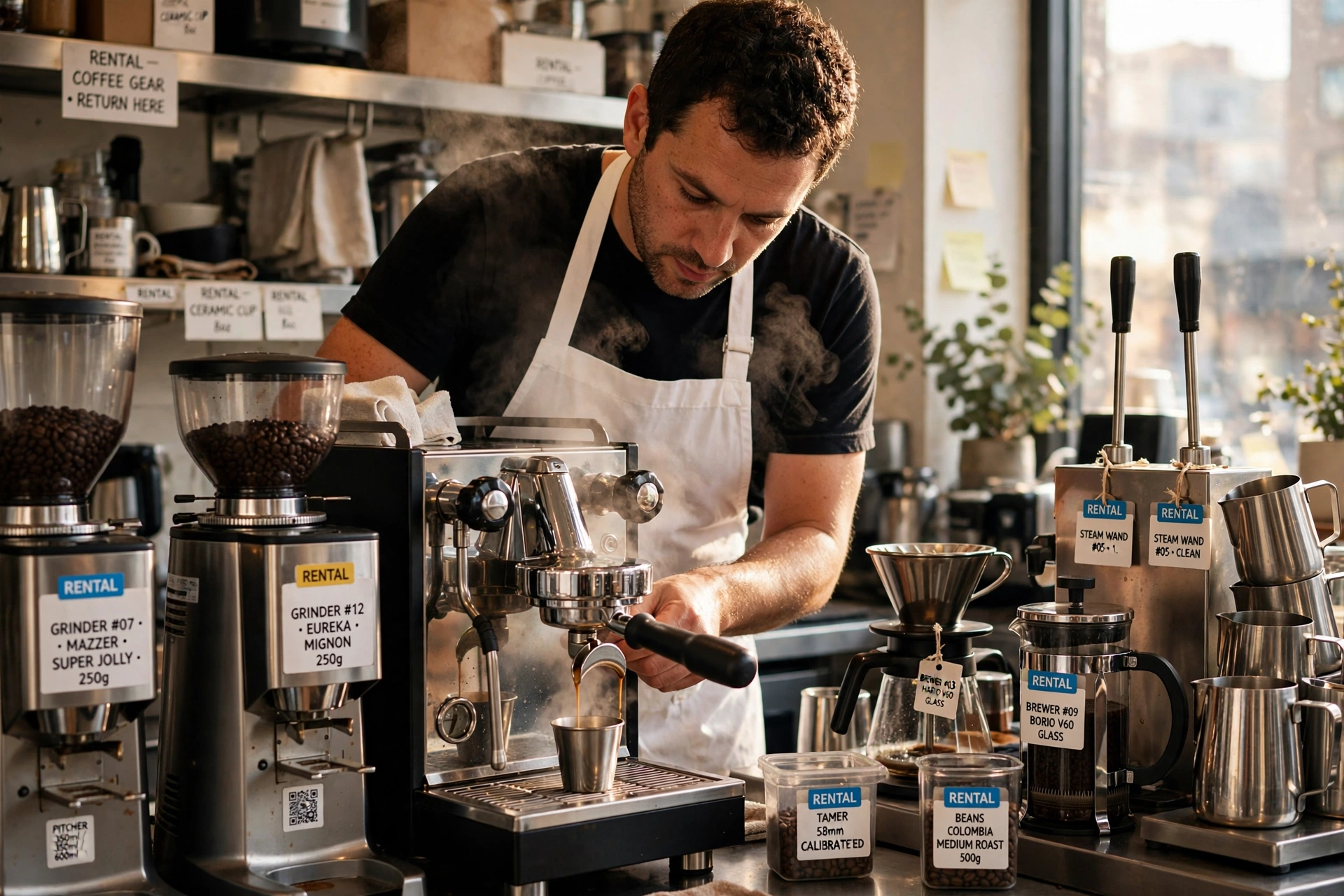
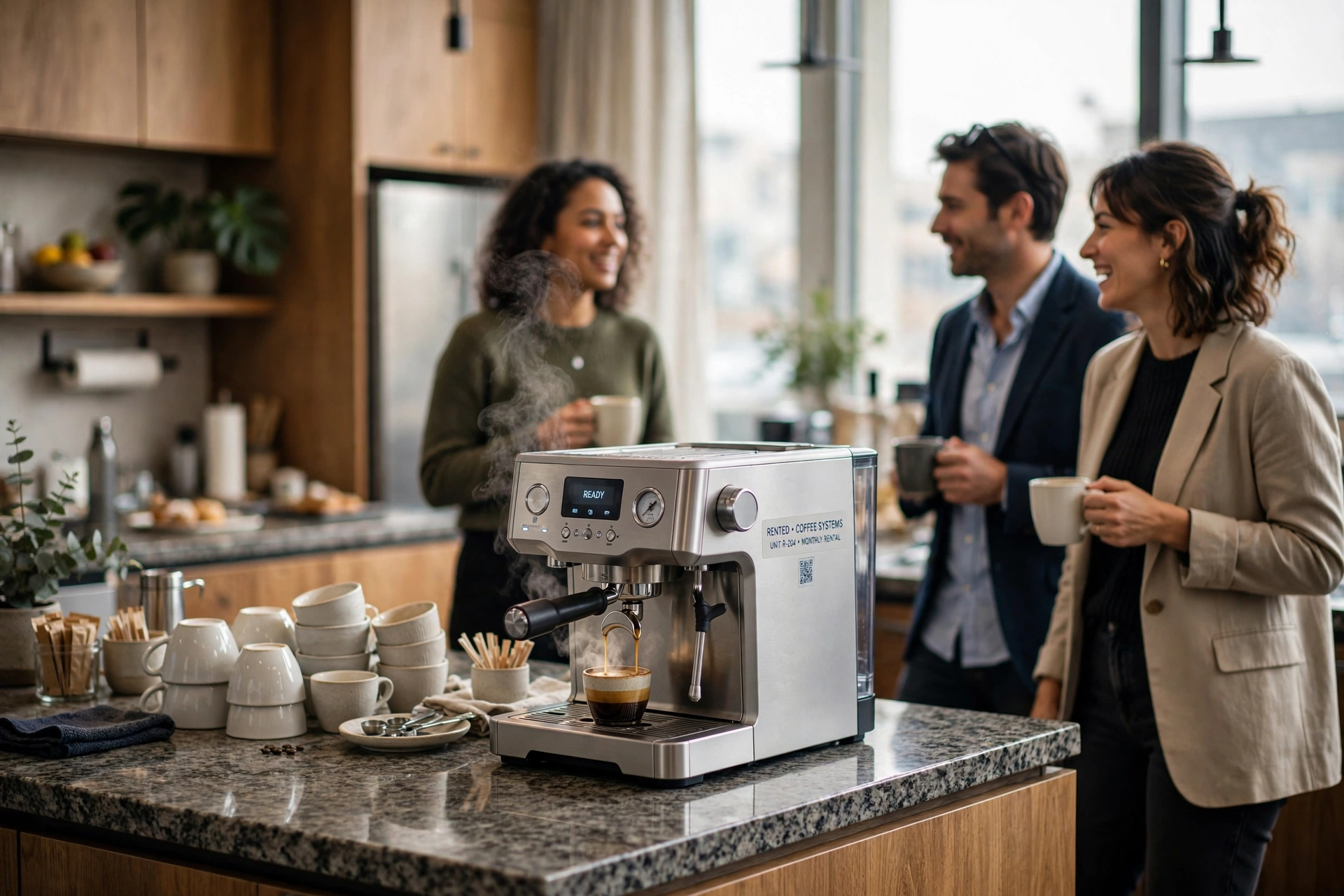
When we analyze the benefits renting coffee machines offers, the primary advantage is the complete removal of capital expenditure (CAPEX). Instead of a massive upfront investment, businesses shift their coffee program to an operational expense (OPEX). This allows a restaurant or hotel to maintain a healthy cash flow while still providing a premium beverage experience. In 2026, this model has evolved into 'managed services,' where the rental isn't just about the hardware, but about the uptime guarantee.
Beyond the financials, rental models provide immediate access to cutting-edge technology. The specialty coffee industry evolves rapidly; new brewing profiles, energy-efficient boilers, and automated dosing systems hit the market every year. If you own your machine, you are stuck with 2022 technology in 2026. If you rent, you can typically upgrade your hardware as part of your membership, ensuring your guests always have the highest quality cup.
Why Does Renting Commercial Equipment Matter for Your Bottom Line?
The most immediate impact is the preservation of working capital. According to the National Coffee Association USA (NCA), the demand for specialty coffee continues to grow, but the cost of professional-grade equipment remains a barrier for many small-to-mid-sized operators. By utilizing a rental model, you can allocate that $10,000 to $20,000 of initial capital toward marketing, staffing, or inventory instead of a depreciating metal asset.
Another fundamental advantage is the elimination of 'Maintenance Anxiety.' When a boiler fails or a pump leaks in an owned machine, the business faces two hits: the cost of the emergency repair and the loss of revenue from every single cup not sold during the downtime. In a managed rental agreement, such as those provided by Busy Bean Coffee, maintenance is proactive. We don't wait for the machine to break; we perform scheduled calibrations and part replacements to prevent the failure from happening in the first place.
Furthermore, the quality of the coffee is directly tied to the precision of the equipment. The Specialty Coffee Association (SCA) establishes rigorous standards for brewing temperatures and extraction times. Maintaining these standards requires consistent calibration by a professional barista or Q-Grader. Rental services typically include this expertise, ensuring that your Coffea arabica beans are extracted perfectly every time, regardless of who is operating the machine.
💡
Key Takeaway
Transitioning from ownership to rental converts a volatile repair cost into a predictable monthly subscription, stabilizing your monthly P&L.
How to Successfully Implement a Coffee Rental Strategy
Implementing a rental strategy requires a shift in how you view your beverage program. You are no longer managing a piece of equipment; you are managing a service level agreement (SLA). To do this correctly, you must first calculate your projected daily cup volume. A machine designed for 50 cups a day will fail if pushed to 300, regardless of whether it is rented or owned.
Once volume is established, the next step is selecting a partner that offers an all-inclusive package. I've tested this with dozens of our clients, and the pattern is clear: the businesses that thrive are those that bundle equipment, beans, and maintenance into one fee. This eliminates the friction of managing multiple vendors. For those expanding their footprint, this model is incredibly scalable. If you open a second location, you simply add another subscription rather than searching for more capital to buy another machine.
For businesses in specific regions, like those looking for Sensa Coffee Service in Mount Pleasant SC - Complete Guide, the proximity of the service provider is a critical factor. A rental agreement is only as good as the speed of the technician. Ensure your provider has a localized presence to guarantee that 'emergency' actually means 'within hours,' not 'within a week.'
Step-by-Step Integration Process:
- Audit Current Volume: Track your coffee sales for 30 days to determine the necessary machine capacity.
- Define Quality Goals: Decide if you need a full-service espresso machine for a barista or an automated system for staff-operated coffee.
- Analyze Total Cost of Ownership (TCO): Compare the monthly rental fee against the cost of purchase + projected maintenance + depreciation.
- Set Up Workflow: Integrate the coffee station into your floor plan to maximize efficiency and guest flow.
- Staff Training: Utilize the rental provider's training sessions to ensure your team understands the equipment's capabilities.
Comparing Coffee Service Models
To truly understand the benefits renting coffee machines provides, we must compare it to the alternatives. Most businesses start with the traditional approach, but they quickly realize the hidden costs.
| Feature | Traditional Purchase | Cheap AI/Auto Rental | Busy Bean Managed Service |
|---|---|---|---|
| Upfront Cost | Extremely High (CAPEX) | Low/Medium | Zero to Minimal |
| Maintenance | Reactive (You pay per fix) | Basic (Slow response) | Proactive (Included) |
| Equipment Age | Depreciates quickly | Often refurbished/old | Latest 2026 Technology |
| Quality Control | User-dependent | Inconsistent | Q-Grader Calibrated |
| Financial Risk | High (Asset depreciation) | Low | Zero (OPEX model) |
As shown above, the "Cheap AI/Auto Rental" often involves older machines with minimal support, which can lead to the same downtime issues as ownership. The modern managed approach, like that offered by Busy Bean Coffee, treats the equipment as a utility—like electricity or water—where you pay for a guaranteed result, not just the hardware.
Common Mistakes to Avoid When Renting
One of the most frequent errors I see is choosing a rental based solely on the lowest monthly price. In the commercial world, a 'cheap' rental often means a lack of a guaranteed response time. If your machine goes down on a Saturday morning, a $20 difference in monthly fees is irrelevant compared to the thousands of dollars in lost revenue.
Another mistake is ignoring the 'hidden' costs of water quality. Even the best espresso machine will be ruined by hard water. According to NSF International, maintaining sanitary and functional standards in food equipment requires specific filtration. Ensure your rental agreement includes water filtration maintenance. If the provider doesn't mention water quality, they aren't looking after the long-term health of your machine.
Finally, avoid signing 'lock-in' contracts that don't allow for equipment scaling. Your business will grow. A contract that locks you into a small, single-group machine for three years is a liability. Ensure there is a path to upgrade your equipment as your volume increases. This is why we focus on Sensa Coffee Service in Charleston SC - Complete Guide and other regional hubs; we understand that local growth patterns require flexible equipment solutions.
Frequently Asked Questions
Is renting actually cheaper than buying in the long run?
For most foodservice businesses, yes. When you buy, you pay for the machine, the installation, and then an average of 5-10% of the machine's value annually in maintenance. When you factor in the depreciation—where a machine loses 40% of its value the moment it's installed—the rental model provides a lower Total Cost of Ownership (TCO). You are essentially paying for a guaranteed outcome rather than owning a depreciating asset that requires constant financial leakage for repairs.
What happens if the machine breaks down under a rental agreement?
In a professional managed service, the provider handles everything. Because the equipment is owned by the service provider, they have a vested interest in keeping it in peak condition. Most high-tier agreements include a guaranteed response time, often within 24 hours, and in some cases, a loaner machine to ensure your business never stops serving coffee. This removes the stress of finding a technician and paying an emergency call-out fee.
Can I choose the type of coffee beans used with a rental?
Yes, but the best results come from integrated packages. To maintain the equipment's warranty and performance, providers usually specify the roast profile and grind size. Using low-quality or oily beans in a high-end espresso machine can clog grinders and foul the internal components. By using a curated specialty coffee service, you ensure the beans are matched to the machine's calibration, resulting in a superior cup for the customer.
How often is the equipment serviced?
Professional rental services perform quarterly or bi-annual preventative maintenance. This includes replacing gaskets, cleaning internal boilers, and recalibrating the dosing and temperature settings. This proactive approach is the only way to ensure the equipment meets the strict standards set by the FDA for food and beverage safety, as well as the quality standards for specialty coffee.
Do I need a professional barista to run rented equipment?
Not necessarily. Depending on the equipment chosen, you can opt for super-automatic machines that produce cafe-quality lattes at the touch of a button. However, if you choose a traditional espresso machine, a level of training is required. Most managed rental services include initial staff training and ongoing support to ensure your team can operate the machine efficiently without causing damage or wasting product.
Conclusion
Choosing to rent commercial coffee machines is a strategic financial decision that allows you to elevate your guest experience without compromising your balance sheet. By eliminating the massive upfront cost of equipment and the unpredictable nature of maintenance, you transform your coffee program from a potential headache into a reliable revenue stream. Whether you are managing a boutique hotel or a high-traffic cafe, the ability to access the latest 2026 brewing technology with zero CAPEX is a competitive advantage that cannot be ignored.
If you are ready to stop worrying about boiler leaks and start focusing on your guests, it is time to move to a managed membership. To see how this fits into a broader strategy for your business, we recommend reading our Complete Guide to Coffee Equipment Rental for Foodservice.
Ready to upgrade your beverage program? Visit Busy Bean Coffee to explore our all-inclusive managed coffee solutions.
Free Coffee Pairing Guide & Specialty Roast Cheat Sheet
Unlock the secrets of perfect brewing ratios, water temperatures, and specialty roast profiles. Download the guide.