Why Does Your Business Need a Professional Cafe Equipment Supply Strategy?
Running a high-volume beverage program without a dedicated equipment strategy is a recipe for operational failure. When a primary espresso machine fails during a Monday morning rush, the cost isn't just the repair bill; it is the immediate loss of revenue and the long-term erosion of customer trust. A professional cafe equipment supply ensures that your hardware is scaled for your specific volume, maintained for consistency, and updated to keep pace with consumer expectations. The core reason to invest in a managed supply chain is to shift the burden of technical uptime from your staff to experts, allowing your team to focus on hospitality rather than troubleshooting boiler pressures.
In my experience working with hospitality groups, the most expensive mistake a business owner can make is buying "consumer-grade" prosumer gear for a commercial environment. I've seen dozens of cafes spend thousands on flashy machines that weren't designed for 200+ cups a day, only to have them burn out within six months. A professional supply approach eliminates this guesswork by aligning the hardware's duty cycle with the actual demand of the venue. For those managing larger portfolios, integrating automatic coffee machines for hotels and hospitality in 2026 is often the only way to maintain quality across multiple outlets without hiring a small army of specialized technicians.
Understanding the Ecosystem of Commercial Cafe Equipment Supply
To understand why a managed supply chain is essential, we first have to define what actually constitutes a professional setup. It is not merely the purchase of a machine, but the ongoing relationship involving procurement, installation, calibration, and preventative maintenance.
📚
Definition
Cafe equipment supply refers to the end-to-end process of sourcing, installing, and maintaining commercial-grade beverage hardware, including espresso machines, grinders, brewers, and water filtration systems, designed to withstand continuous industrial use.
A professional supply chain focuses on the "Total Cost of Ownership" (TCO) rather than the initial sticker price. When you source through a professional partner, you are investing in the reliability of the Coffea arabica extraction process. This involves precisely calibrated grinders that prevent "drift" (where the grind size changes throughout the day) and boilers that maintain temperature stability within a fraction of a degree.
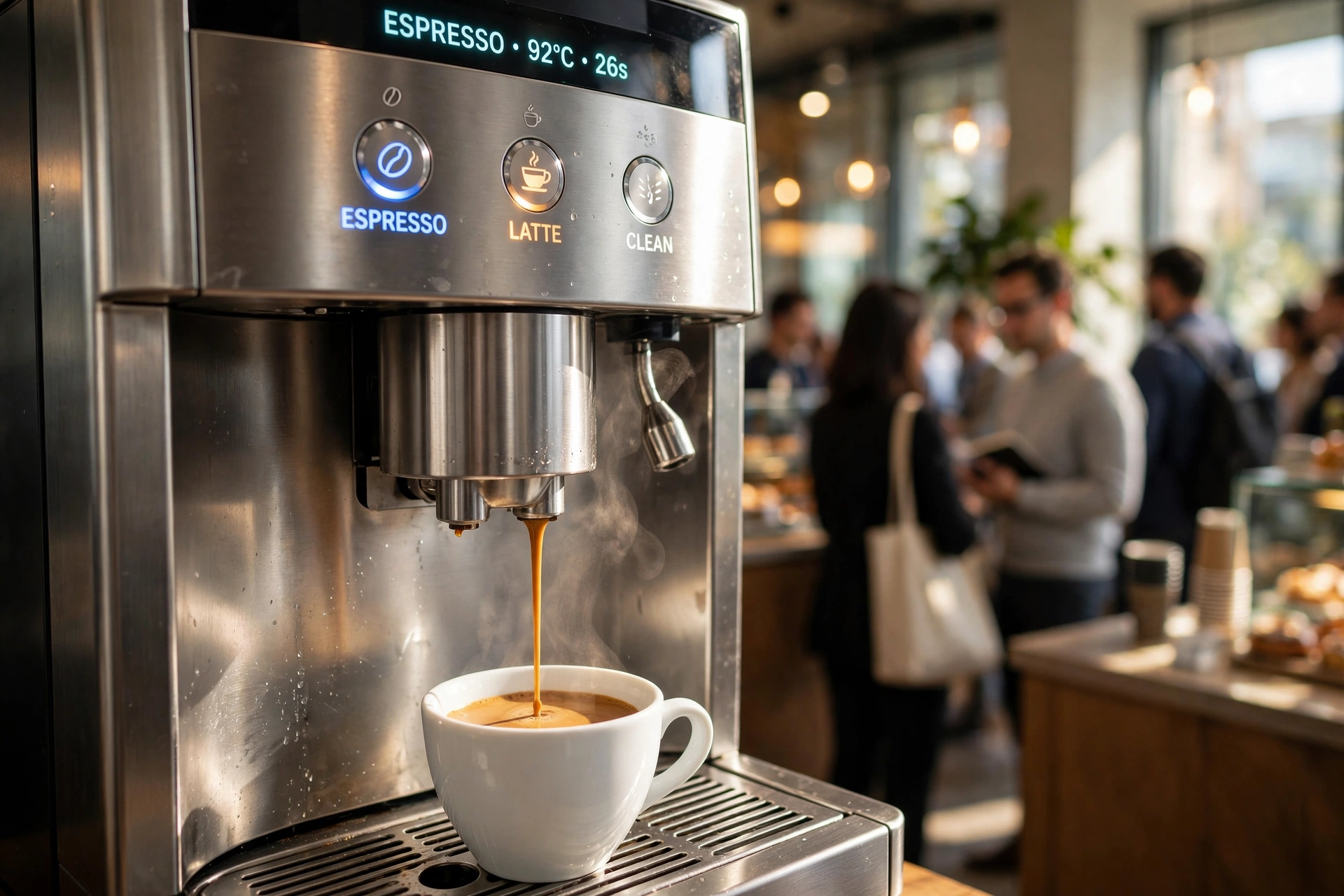
According to the Specialty Coffee Association (SCA), the technical precision of the equipment directly impacts the sensory quality of the final brew. If your equipment cannot maintain a stable 92°C (198°F) during extraction, you will experience inconsistent acidity and bitterness, regardless of how expensive your beans are. This is where the supply chain becomes a quality control tool. A professional supplier doesn't just sell you a box; they ensure your water chemistry is optimized.
Hard water is the silent killer of cafe equipment. Without industrial-grade filtration, calcium buildup destroys heating elements and clogs solenoids. A managed supply strategy includes regular filter replacements and water hardness testing, which can extend the life of a machine from three years to ten. For businesses in specific regions, such as those seeking a Sensa coffee service in Charlotte, NC, local water profiles make this professional oversight non-negotiable.

Why Equipment Reliability Directly Impacts Your Bottom Line
The financial implications of poor equipment supply are staggering. In the foodservice industry, downtime is the most expensive line item on the P&L. If your primary espresso machine goes offline in a medium-sized cafe, you aren't just losing the $5.00 from a latte; you are losing the high-margin pastries and food items that usually accompany that drink.
Research from the National Coffee Association USA (NCA) indicates that consistency is the primary driver of repeat customer behavior in the specialty coffee sector. When equipment fluctuates, resulting in one cup being sour and the next being burnt, customers do not blame the machine; they blame the brand. This inconsistency leads to a measurable drop in Customer Lifetime Value (CLV).
Consider the "Hidden Cost of Friction." When a barista has to fight with a malfunctioning grinder or a leaking steam wand, the service speed slows down. A 30-second delay per drink across 200 drinks a day results in over 1.5 hours of lost productivity. Over a year, that is hundreds of hours of labor paid for zero output.
Furthermore, the risk of non-compliance with health and safety standards increases with neglected equipment. According to NSF International, commercial equipment must meet strict sanitary design standards to prevent biofilm buildup and bacterial growth. A professional supply partner ensures that every piece of gear is NSF-certified and maintained according to those rigorous standards. Failure to do so doesn't just risk a bad cup of coffee; it risks a failed health inspection.
For medical environments where speed and hygiene are even more critical, utilizing automated coffee machines for clinics and medical offices reduces the risk of cross-contamination and ensures that stressed healthcare staff have reliable access to caffeine without the need for manual cleaning rituals.
Practical Application: Implementing a Managed Supply Strategy
Moving from a fragmented "buy-as-needed" approach to a managed supply strategy requires a shift in mindset. You must stop viewing your espresso machine as an appliance and start viewing it as a production asset.
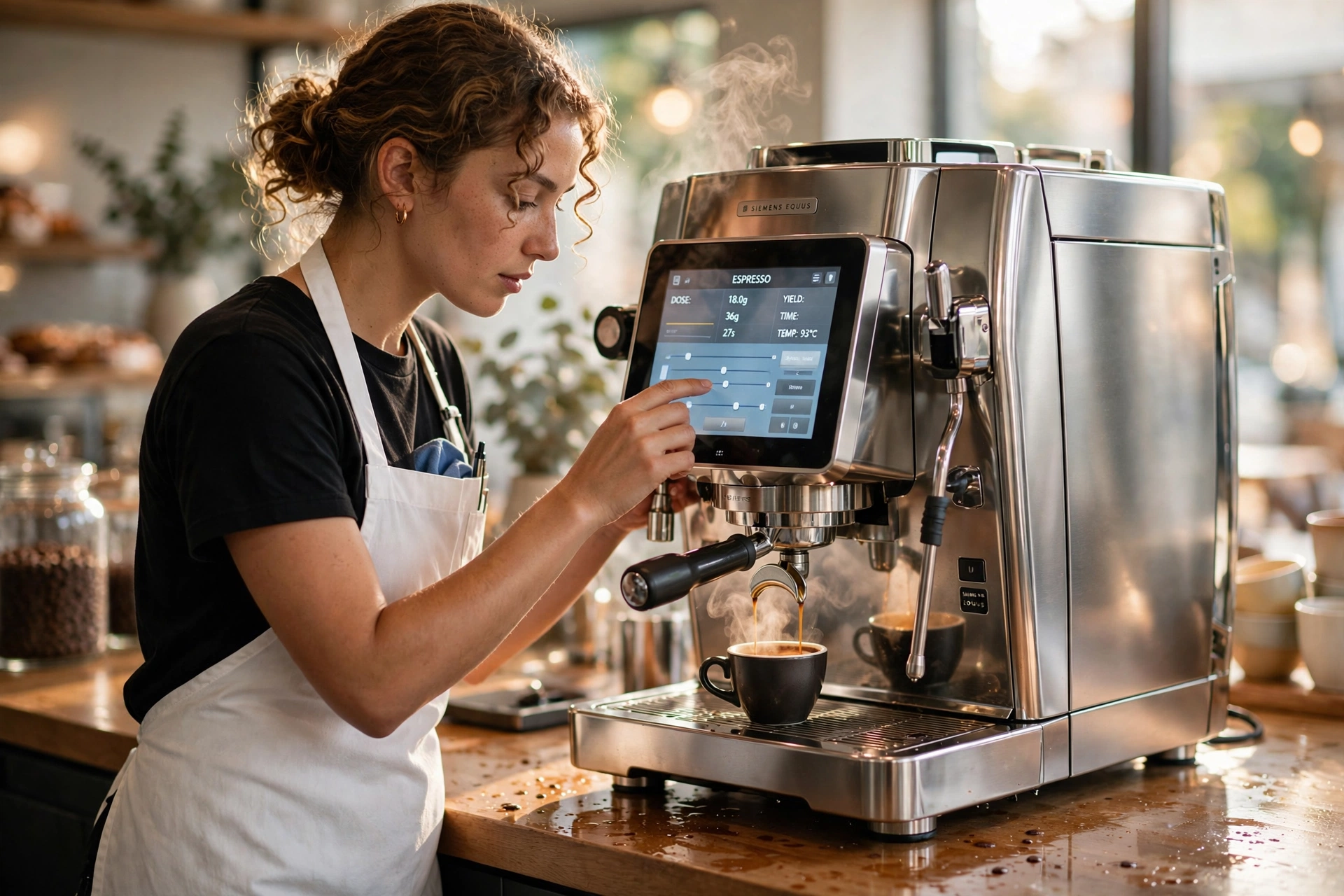
The first step is a Capacity Audit. You must calculate your peak-hour volume. If you are pushing 60 drinks per hour, a single-group machine, no matter how "professional" it looks, will fail under the thermal stress. You need equipment with sufficient boiler capacity and multi-group heads to maintain temperature stability.
Next, establish a Preventative Maintenance (PM) Schedule. The mistake I see constantly is "reactive maintenance", calling a technician only when the machine stops working. By the time a machine breaks, you have already lost revenue. A PM schedule includes monthly group head deep-cleans, quarterly gasket replacements, and semi-annual boiler descale.
At Busy Bean Coffee, we simplify this entire process through our all-inclusive managed coffee membership. Instead of the business owner juggling five different vendors for beans, machines, and repairs, we provide the SENSA equipment, professional installation, and full maintenance coverage for one predictable monthly fee. This transforms a volatile capital expenditure (CapEx) into a stable operational expense (OpEx).
If you are scaling a business in a specific market, such as implementing a foodservice coffee program in Chicago IL: Complete Guide, this managed approach allows you to deploy high-end technology without the crushing upfront cost of purchasing multiple industrial machines.
💡
Key Takeaway
The transition from reactive to proactive equipment management reduces unplanned downtime by up to 70% and ensures that beverage quality remains constant regardless of who is operating the machine.

Comparing Equipment Procurement Models
Not all supply strategies are created equal. Depending on your business stage, you might choose between traditional purchasing, cheap automated alternatives, or a professional managed service.
| Feature | Traditional Purchase (DIY) | Cheap Automated/Pod Systems | Managed Professional Service (Busy Bean) |
|---|---|---|---|
| Upfront Cost | Very High (CapEx) | Low to Medium | Zero to Low |
| Quality Control | Variable (User dependent) | Low (Consistent but mediocre) | High (SCA Standard) |
| Maintenance | Reactive (Break-fix) | Replace unit when broken | Proactive & Included |
| Scalability | Difficult & Expensive | Fast but Low Quality | Seamless & Integrated |
| Technical Support | Third-party / Slow | Limited Warranty | Dedicated Expert Team |
| Best For | Small, hobbyist cafes | Low-traffic breakrooms | Professional Foodservice & Hotels |
Now, here's where it gets interesting: many owners choose the "Cheap Automated" route thinking they are saving money. However, when you factor in the cost of proprietary pods and the lack of brand prestige associated with low-quality coffee, the "savings" vanish. A professional managed service provides the prestige of specialty coffee with the convenience of automation.
Common Questions and Misconceptions about Equipment Supply
Most guides on this topic treat equipment as a commodity. They tell you to look for the "best features" or "most buttons." That is the wrong way to approach it. Equipment is a tool for throughput.
Myth 1: "More features mean better coffee."
Wrong. In a high-volume environment, complexity is the enemy of reliability. A machine with twenty programmable buttons is just twenty more things that can break or be misprogrammed by a tired employee. The best equipment focuses on thermal stability and volumetric precision, not flashy displays.
Myth 2: "I can just buy a high-end home machine and it will work for my small cafe."
This is the most dangerous misconception in the industry. Home machines, even those costing $3,000, lack the heavy-duty pumps and oversized boilers required for commercial duty cycles. Using a home machine in a business environment usually voids the warranty and leads to catastrophic failure during the busiest hours of the week.
Myth 3: "Maintenance is just about cleaning the machine."
Cleaning is only the surface level. Professional maintenance involves checking electrical currents, inspecting pressure relief valves, and analyzing water TDS (Total Dissolved Solids) levels. If you aren't checking the internal health of the boiler, you aren't doing maintenance; you are just washing the outside of the box.
Frequently Asked Questions
Why is a managed equipment service better than buying machines outright?
Buying machines outright puts the entire risk of failure on the business owner. When a machine breaks, you are responsible for finding a technician, paying an emergency call-out fee, and absorbing the lost revenue during the downtime. A managed service, like the one provided by Busy Bean Coffee, shifts that risk. You receive high-end SENSA equipment with maintenance already baked into your monthly fee. This provides financial predictability and ensures that your "coffee engine" is always running at peak efficiency without unexpected capital drains.
How does water quality affect the lifespan of my cafe equipment?
Water is the most critical ingredient in coffee, but it is also the most destructive to hardware. Minerals like calcium and magnesium precipitate out of the water and form "scale" inside the boilers and pipes. According to the FDA, maintaining clean equipment is a fundamental requirement for food safety. Scale buildup not only ruins the taste of the coffee by altering temperature stability but can eventually cause the heating elements to burn out entirely. Professional supply strategies include industrial-grade filtration and regular descaling schedules to prevent this.
What are the signs that my current equipment supply is failing?
The most obvious sign is "quality drift," where the taste of your espresso changes throughout the day. This usually indicates that your machine cannot recover temperature fast enough or your grinder is overheating. Other red flags include a noticeable increase in "drink waste" (shots that have to be thrown away), slower ticket times during peak hours, and a frequency of "small" glitches that require staff to reset the machine. If your baristas are spending more time "fighting" the gear than making drinks, your equipment is no longer supporting your business.
Can automated machines actually deliver specialty-grade coffee?
Yes, provided the technology is designed for it. The gap between manual and automated has closed significantly in 2026. Modern professional automated machines can now control pressure profiling and precise temperature dosing that rivals a manual barista. The key is the quality of the internal components. Cheap machines use plastic internals and basic pumps; professional gear uses stainless steel and high-precision pumps. When integrated with a quality roast, automated systems provide the consistency that is required for scaling a business across multiple locations.
How often should commercial coffee equipment be professionally serviced?
At a minimum, a professional "deep health check" should occur quarterly. While daily cleaning (backflushing) is the responsibility of the barista, internal components require expert attention. This includes replacing group gaskets and shower screens, which wear down and cause "channeling" in the coffee puck. Quarterly service prevents the "cascade failure" effect, where a small worn-out seal leads to a leak, which then shorts out an electrical component, resulting in a total system shutdown.
Final Thoughts on Optimizing Your Cafe Equipment Supply
The difference between a struggling cafe and a thriving beverage program usually comes down to the reliability of the hardware. If your equipment is a bottleneck, your business cannot grow. By moving toward a professional cafe equipment supply strategy, you remove the technical anxiety from your daily operations. You stop worrying about whether the boiler will hold and start focusing on the customer experience.
Whether you are looking for a Sensa coffee service in Mount Pleasant SC: Complete Guide or scaling a national hotel chain, the goal remains the same: maximum uptime and uncompromising quality. The most successful operators in 2026 are those who treat their coffee program as a managed service rather than a collection of appliances.
If you're ready to eliminate equipment stress and upgrade your beverage quality, explore the all-inclusive managed solutions at Busy Bean Coffee Blog.
Ready to Upgrade Your Business Coffee?
Café-quality coffee, zero maintenance headaches, and one predictable monthly price. Let's build your custom coffee program.
Free Coffee Pairing Guide & Specialty Roast Cheat Sheet
Unlock the secrets of perfect brewing ratios, water temperatures, and specialty roast profiles. Download the guide.