How Do You Successfully Implement Automated Coffee Machines in a Commercial Setting?
Most business owners treat their coffee station as a passive amenity, but in my experience working with high-volume hospitality clients, it is actually a critical operational lever. To successfully implement automated coffee machines, you must align the machine's technical capacity with your specific peak-hour traffic and staff skill level. The process involves selecting a bean-to-cup or super-automatic system, calibrating the grind and dosage for your specific roast, and establishing a rigid daily maintenance schedule to prevent scale buildup. When done correctly, this transition removes the "human error" variable from the beverage program, ensuring that a latte served at 7:00 AM tastes identical to one served at 2:00 PM.

What Exactly Are Automated Coffee Machines and How Do They Work?
To understand the "how" of these systems, we must first define the technology. Most commercial operators confuse "automatic" with "super-automatic." While an automatic machine might stop the flow of coffee when a button is pressed, a super-automatic system handles the entire chain of production.
📚
Definition
Automated coffee machines, specifically super-automatics, are integrated systems that perform the entire brewing process, grinding the coffee bean, tamping, brewing, and frothing milk, via a single user interface, requiring minimal manual intervention from the operator.
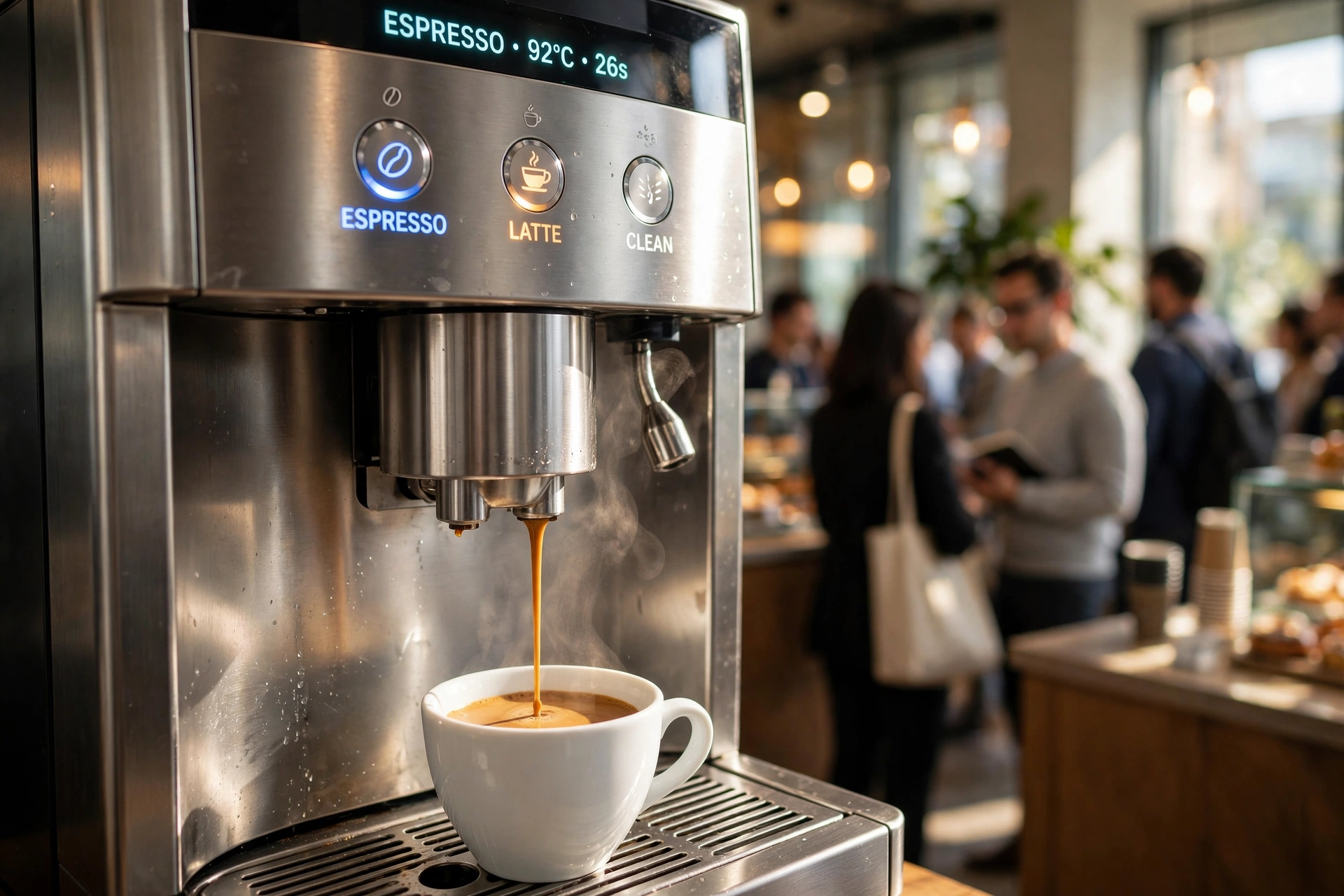
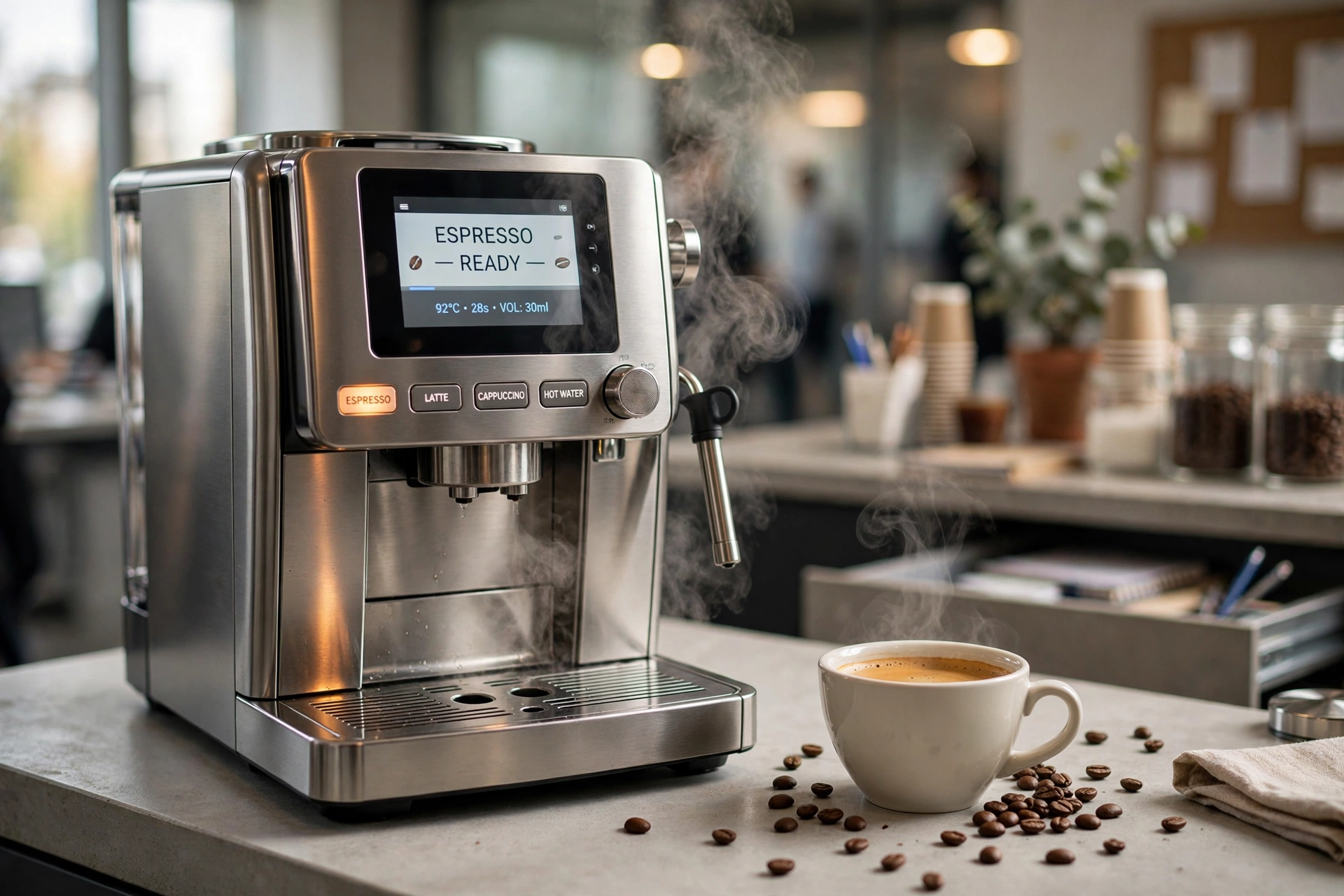
These machines utilize a precision burr grinder and a brewing unit (often a piston or a vacuum system) to extract flavor from Coffea arabica. The process begins with a programmed dose of beans, which are ground instantly to maintain freshness. The machine then compresses the grounds into a "puck" and forces hot water through them at a specific pressure. For milk-based drinks, integrated steam wands or automated frothing carafes use thermal sensors to heat milk to precise temperatures without scorching the proteins.
According to the Specialty Coffee Association (SCA), the quality of extraction in automated systems depends heavily on the consistency of the water temperature and the precision of the grind size. In my tenure as a Q-Grader, I've seen many businesses install expensive hardware only to use low-grade beans, which results in a bitter, over-extracted cup regardless of the machine's cost. The synergy between the hardware and the specialty coffee quality is what determines the final ROI.
Why Does Automation Matter for Your Business Bottom Line?
The shift toward automation is not about replacing the barista's art; it is about mitigating operational risk and stabilizing labor costs. In a commercial environment, the cost of "waste" is often the largest hidden leak in the budget. When a human operator manually tamps a portafilter incorrectly, that shot is wasted. Multiply that by 200 cups a day, and you are losing significant revenue.
Data from the National Coffee Association USA (NCA) indicates that consumer demand for "premiumization" is rising, meaning customers expect cafe-quality drinks even in non-traditional settings like hotels or corporate offices. If your staff cannot consistently produce a micro-foam texture, you aren't just losing a drink; you are losing the perceived value of your brand.
From a financial perspective, the impact is measurable in three areas:
- Labor Efficiency: A trained barista might take 2 minutes to craft a complex latte. An automated system reduces this to 30 seconds. This allows your staff to focus on hospitality and upselling rather than technical mechanics.
- Consistency: Automation eliminates the "Monday Morning Variance," where the coffee tastes different depending on who is on shift.
- Waste Reduction: Precise dosing ensures that exactly 18-20 grams of coffee are used per double shot, removing the guesswork that leads to bean waste.
The mistake I made early on, and that I see constantly in the industry, is focusing on the "speed" of the machine while ignoring the "throughput." A machine that brews fast but takes 10 minutes to refill the water tank is not actually efficient. You must calculate the total cycle time, including maintenance, to understand the true impact on your bottom line.
How to Deploy and Calibrate Automated Coffee Machines: A Step-by-Step Guide
Implementing an automated system is not as simple as plugging it into a wall. To avoid the common pitfalls of bitterness or mechanical failure, follow this technical deployment sequence.
Step 1: Water Filtration and Chemistry
Before the machine even arrives, you must address the water. Most automated machines use sensitive boilers and thermoblocks. According to NSF International, scale buildup is the leading cause of equipment failure in commercial beverage services. You need a professional filtration system that removes calcium and magnesium while retaining enough minerals for flavor. If your water is too soft, the coffee tastes flat; if it's too hard, your machine will be out of commission within six months.
Step 2: Bean Selection and Grinder Calibration
Not every coffee bean works in an automated machine. Oily, dark roasts can clog the internal grinders or cause "bridging" in the hopper. Use a medium-roast specialty coffee with a consistent bean size. Once loaded, calibrate the grind size.
- If the coffee drips too slowly and tastes burnt, the grind is too fine.
- If it gushes out and tastes sour, the grind is too coarse. Adjust the dial in small increments until you achieve a syrupy, honey-like flow.
Step 3: Programming the Recipes
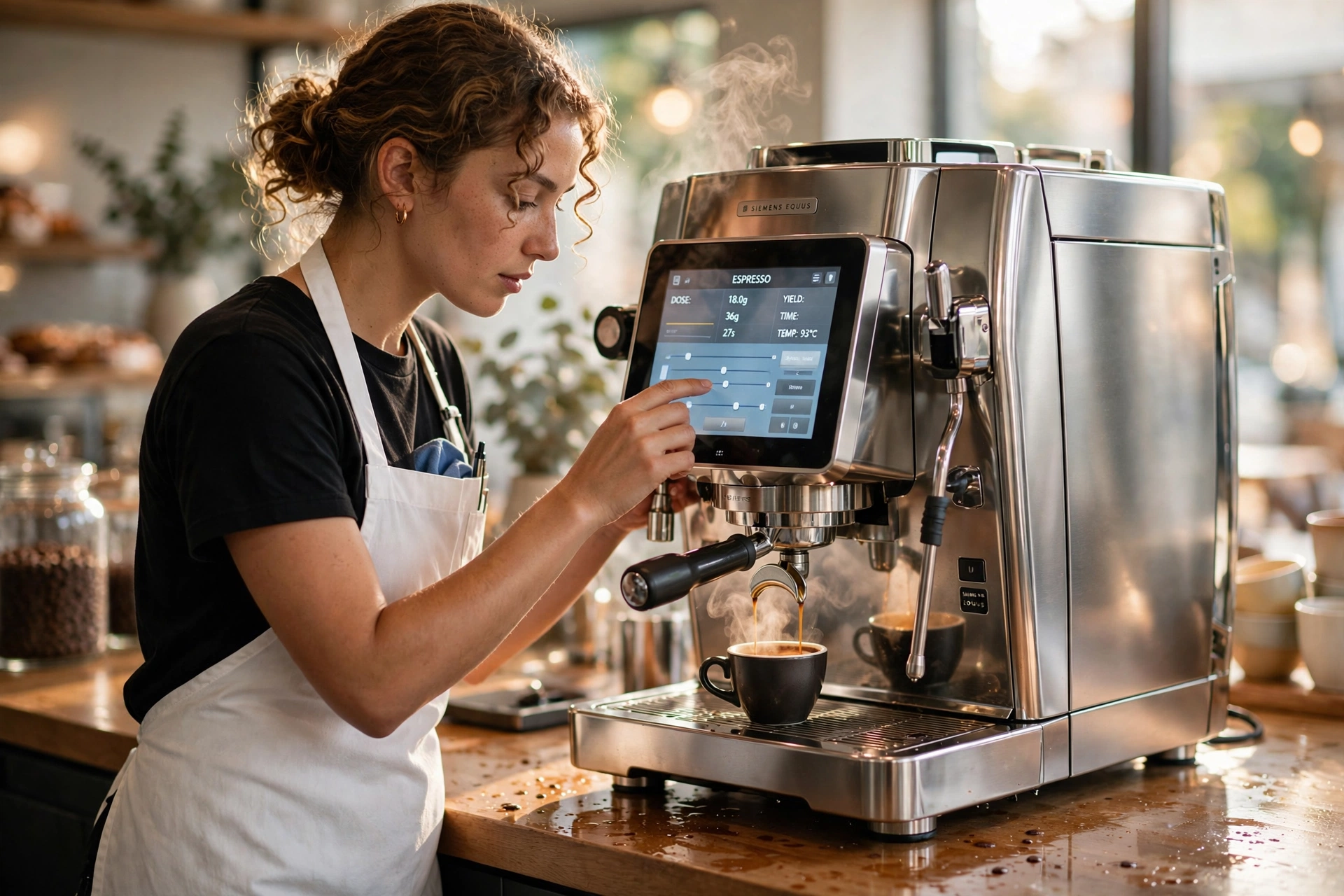
This is where you define your brand's "signature" taste. Set your ratios. A standard double espresso should typically follow a 1:2 ratio (e.g. 18g of coffee to 36g of liquid). Program the milk temperature to exactly 140°F-155°F (60°C-68°C). Any higher and you destroy the sweetness of the lactose; any lower and the drink cools too quickly.
Step 4: Establishing the Maintenance Cadence
Automation is not "set it and forget it." You must implement a three-tier cleaning cycle:
- Daily: Empty the dreg drawer, rinse the milk carafes, and run a quick rinse cycle.
- Weekly: Deep clean the brew group with a specialized detergent to remove coffee oils.
- Monthly: Replace filters and perform a full descaling process.
💡
Key Takeaway
The secret to long-term success with automated coffee machines isn't the initial setup, but the adherence to a strict, documented maintenance schedule that prevents mineral buildup and oil rancidity.
At Busy Bean Coffee, we provide a managed service that handles this entire complexity. Instead of leaving your staff to guess how to descale a machine, our all-inclusive membership provides the equipment, the professional installation, and the full maintenance coverage. This transforms coffee from a stressful operational burden into a predictable monthly utility.
Comparing Your Implementation Options
When deciding how to scale your beverage program, you generally have three paths. Most guides will tell you to just "buy a machine," but the professional approach is to weigh the total cost of ownership (TCO) over three years.
| Feature | Manual/Traditional Approach | Cheap "Prosumer" AI Machines | Busy Bean Managed Solutions |
|---|---|---|---|
| Staff Requirement | Highly trained Barista | Basic operator | Minimal training needed |
| Consistency | Variable (Human dependent) | Medium (Basic settings) | High (Professional calibration) |
| Maintenance | Manual/Piece-meal | Self-managed (High risk) | Fully included/Preventative |
| Upfront Cost | High Capex | Medium Capex | Zero to Low Capex |
| Quality Control | High (if expert) | Low to Medium | Consistently High |
| Best For | Boutique cafes | Low-volume offices | Hotels, Restaurants, High-end Foodservice |
The "Traditional Approach" is wonderful for a destination cafe, but it is an operational nightmare for a restaurant manager who has to worry about a barista calling in sick. On the other hand, "Prosumer" machines often lack the thermal stability required for back-to-back drinks, leading to a drop in quality during the breakfast rush. A managed approach, like the one offered by Busy Bean Coffee, treats the coffee station as a critical piece of infrastructure, ensuring that downtime is virtually zero.
Common Misconceptions About Automated Coffee Machines
Many operators hesitate to move toward automation because of outdated myths. Let's dismantle the three most common ones.
Myth 1: "Automated coffee doesn't taste as good as manual espresso."
Most guides get this wrong by comparing a cheap home machine to a world-class cafe. When you use professional-grade automated coffee machines and high-quality specialty coffee, the difference is negligible to 95% of customers. The "taste" comes from the bean quality and the water chemistry, not whether a human or a piston pushed the water through the grounds.
Myth 2: "Automation removes the 'craft' from the experience."
Here's the thing though: craft isn't just about pulling the shot; it's about the presentation and the guest interaction. By automating the technical extraction, your staff can spend more time engaging with the customer and less time staring at a timer. The "craft" shifts from the mechanical to the relational.
Myth 3: "These machines are too expensive to justify."
People look at the sticker price and panic. However, if you calculate the cost of wasted beans, the cost of labor for a dedicated barista, and the cost of downtime for a broken machine, the automated model is almost always cheaper over a 24-month period. When you shift to a managed membership, you move the expense from a Capital Expenditure (CapEx) to an Operational Expenditure (OpEx), which is significantly healthier for your cash flow.
Frequently Asked Questions
How do I choose the right capacity for my automated coffee machines?
To determine the correct capacity, you must calculate your "Peak Hour Throughput." Look at your busiest 60 minutes of the day. If you serve 40 lattes in that hour, you need a machine capable of producing at least one drink every 90 seconds, including the time it takes to refill milk or clear the grounds. I recommend choosing a machine that can handle 20% more than your current peak to allow for growth. Overloading a machine leads to thermal instability and faster wear and tear on the internal pump.
Does using an automated system affect the freshness of the coffee?
Actually, automation often improves freshness. In a manual setup, beans might sit in a hopper for hours or be pre-ground in batches. High-end automated coffee machines grind the coffee bean on demand, seconds before the water hits the powder. This ensures that the volatile aromatic compounds are preserved. The key is to use beans with a roast date within the last 14 to 21 days. If you use stale beans, no amount of automation can save the flavor profile.
What is the most common reason these machines break down in commercial settings?
Without a doubt, it is poor water quality and neglected cleaning. Most "breakdowns" are actually just clogged lines or scaled boilers. When operators ignore the descaling prompts or use unfiltered tap water, calcium carbonate builds up in the heating elements. This forces the pump to work harder, eventually leading to a motor burnout. This is exactly why we emphasize professional installation and water filtration at Busy Bean Coffee; it is the only way to guarantee a lifespan of 5-10 years.
Can I use any type of coffee bean in a super-automatic machine?
Not recommended. You should avoid "torrefacto" coffee or beans with an extremely oily surface (common in very dark, French roasts). These oils can coat the grinder burrs, causing the beans to slide rather than grind, which leads to inconsistent dosing and "clogging." I always recommend a medium-roast specialty coffee that is roasted for espresso. These beans have the structural integrity to withstand the pressure of the automated tamping process without creating too many "fines" (micro-dust) that block the filter.
How does automation impact the training time for new employees?
The reduction in training time is dramatic. In a manual environment, it takes weeks, if not months, for a new hire to master milk steaming and shot timing. With automated coffee machines, the learning curve is reduced to about 30 minutes of interface training. Your staff only needs to know how to select the drink and perform basic daily cleaning. This makes your business more resilient to staff turnover, as a new employee can be productive on day one without risking the quality of the beverage.
Summary and Next Steps for Your Beverage Program
Transitioning to automated coffee machines is the most effective way to stabilize your quality, reduce labor costs, and eliminate waste in a commercial foodservice environment. By focusing on water chemistry, bean selection, and a rigid maintenance cadence, you can deliver a premium experience that rivals any boutique cafe.
If you are tired of managing the technical headaches of equipment failure and staff training, it is time to move from a "buy and hope" model to a managed solution. At Busy Bean Coffee, we provide the end-to-end infrastructure you need, from SENSA equipment and professional installation to full maintenance coverage, all for one predictable monthly fee.
Stop letting your coffee station be a source of stress. Visit www.busybeancoffee.com today to explore our managed coffee memberships and see how we can help your business thrive.
Recommended Readings
To deepen your understanding of these topics, we recommend reading the following articles:
- The Complete Guide to White Glove Coffee Service
- Ultimate Guide to All-Inclusive Coffee Service for Businesses
- Ultimate Guide to Specialty Coffee Equipment for Business
- Ultimate Guide to Coffee Syrups for Foodservice Businesses
Ready to Upgrade Your Business Coffee?
Café-quality coffee, zero maintenance headaches, and one predictable monthly price. Let's build your custom coffee program.
Free Coffee Pairing Guide & Specialty Roast Cheat Sheet
Unlock the secrets of perfect brewing ratios, water temperatures, and specialty roast profiles. Download the guide.