When Should Your Business Invest in Industrial Coffee Roasters?
Scaling a coffee operation is often a tipping point where passion meets logistics. You know you need to transition to industrial coffee roasters the moment your current roasting capacity forces you to choose between turning away new wholesale clients or sacrificing the consistency of your roast profile. For most specialty coffee businesses, this trigger happens when weekly production exceeds 150 to 200 kilograms, or when the labor cost of managing small-batch roasts outweighs the capital expenditure of a professional system.
In my experience working with rapidly growing cafes, the biggest mistake I see is waiting for a "perfect" moment to upgrade. By the time a business owner realizes they are at capacity, they've already lost months of potential revenue due to an inability to fulfill larger contracts. Transitioning to a professional roasting setup isn't just about volume; it is about achieving a level of thermal stability that small drums simply cannot provide.
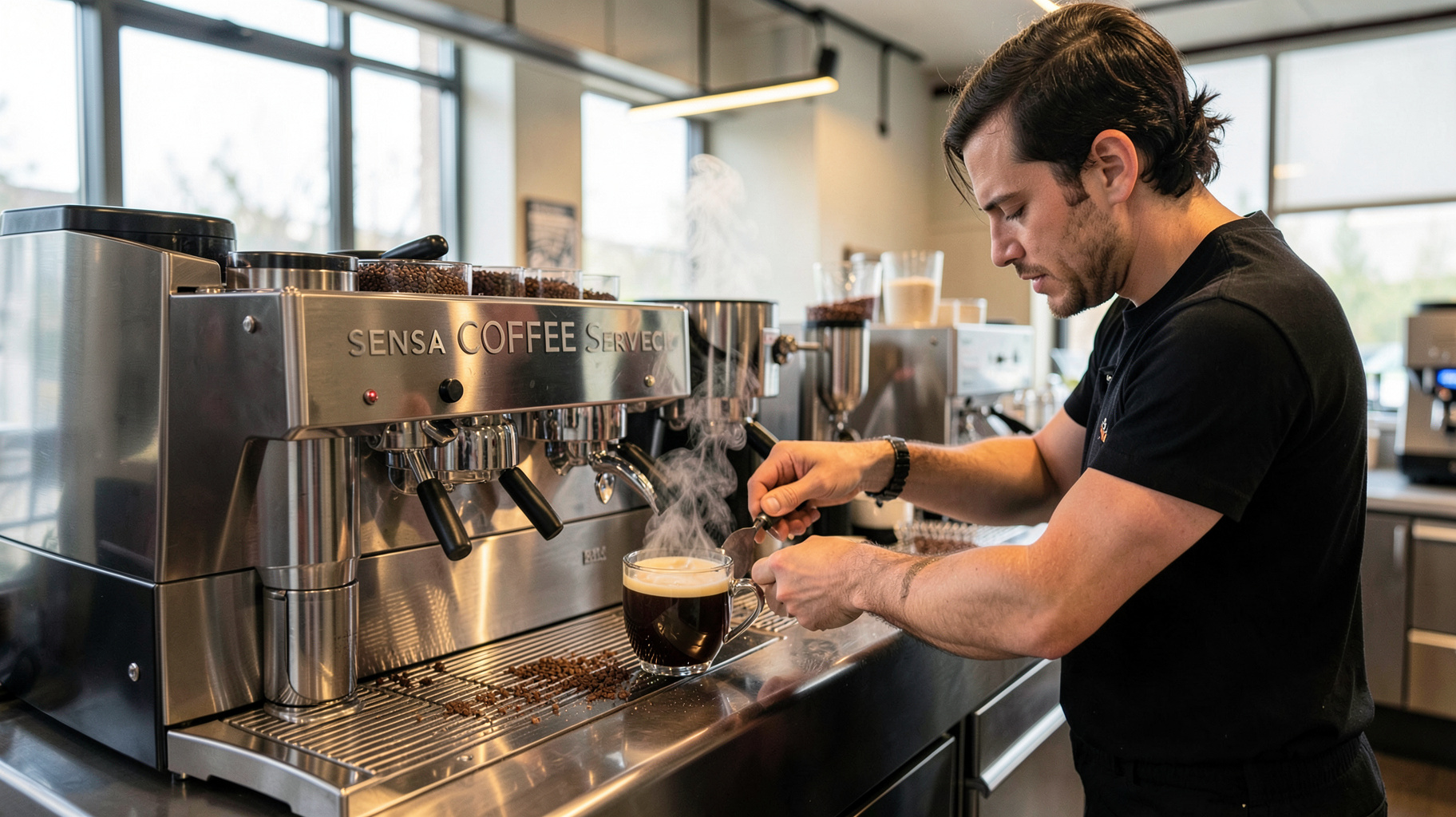
If you are managing a high-volume hospitality environment, you might find that managing your own roasting is overkill. Many of our partners find that implementing a Sensa Coffee Service in Charlotte, NC allows them to focus on front-of-house excellence while we handle the complex logistics of specialty bean sourcing and roasting.
Understanding the Mechanics of Industrial Roasting
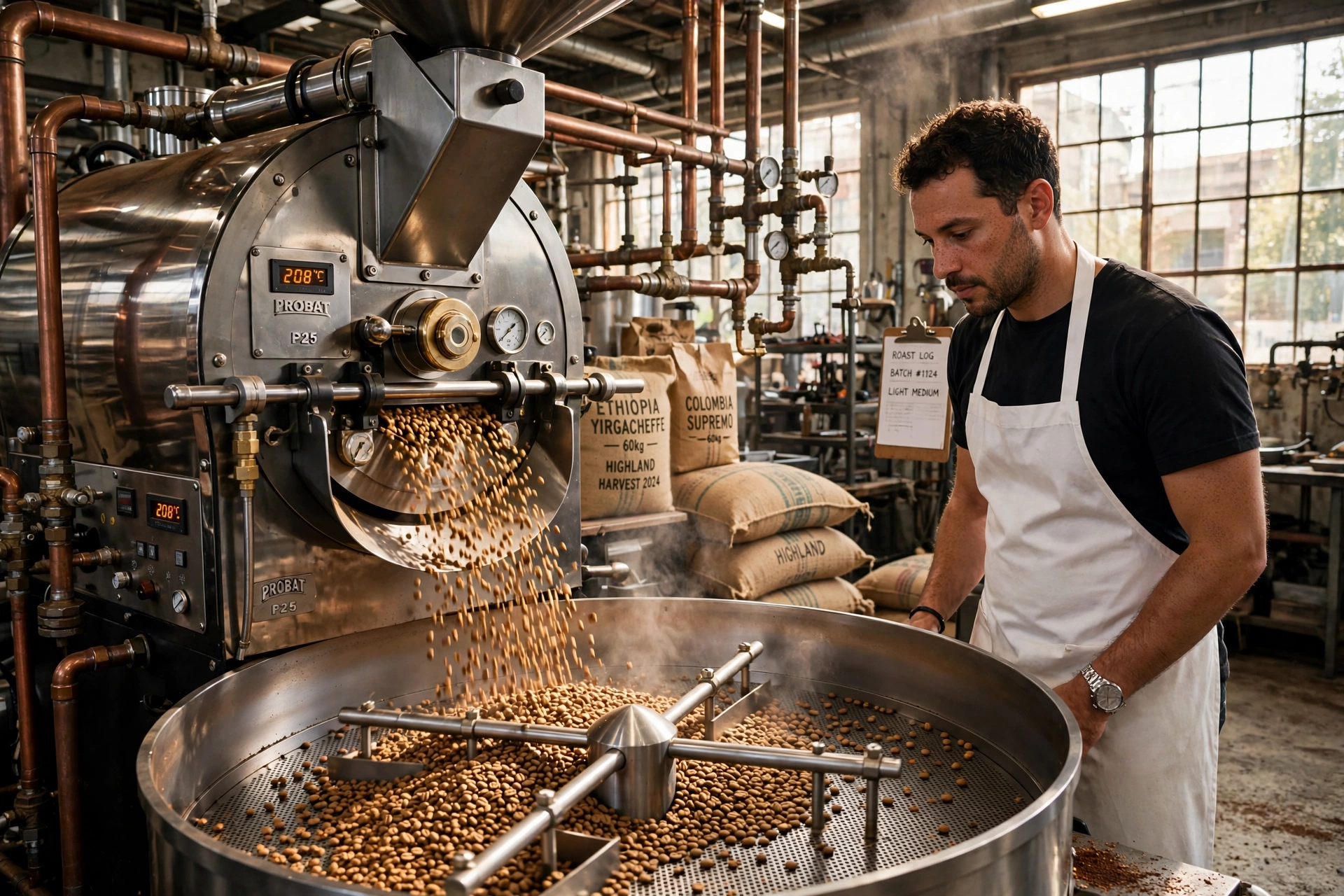
To determine the right timing, you must first understand what separates a commercial or "prosumer" machine from a true industrial setup. While a small roaster might rely on basic temperature probes, an industrial system utilizes sophisticated airflow management and precision heat application to ensure that every single coffee bean in a 30kg batch tastes identical to the last.
📚
Definition
Industrial Coffee Roasting refers to the process of using high-capacity, automated machinery, typically featuring advanced drum technology, convective heating, and integrated cooling trays, to process large volumes of coffee beans while maintaining strict quality control and repeatability.
The core of the industrial process is the "roast profile." In a small machine, a slight draft in the room can alter the temperature of the drum, leading to uneven development. Industrial roasters mitigate this through heavy-duty insulation and precise gas or electric controls. According to the Specialty Coffee Association (SCA), maintaining precise temperature control during the "first crack" is essential for preserving the complex acidity and floral notes found in high-altitude Coffea arabica.
Now, here is where it gets interesting: the shift to industrial equipment changes your entire business model. You move from being a "craft roaster" to a "production facility." This requires a different set of skills, including knowledge of green bean inventory management and industrial ventilation. If you are expanding your footprint into other cities, such as seeking a Sensa Coffee Service in Raleigh NC (2026 Overview), you will notice that the ability to scale roasting determines how quickly you can open new locations without degrading the brand's taste profile.

Why Timing the Upgrade Matters for Your Bottom Line
The decision of when to move to industrial coffee roasters is fundamentally a financial one. There is a "danger zone" in coffee production where you are too big for a small roaster but too small to comfortably afford the overhead of an industrial plant. If you stay in this zone too long, you experience "operational friction", the point where the effort to produce the coffee exceeds the profit margin of the product.
The business impact of poor timing is visible in three specific areas:
1. Consistency and Brand Equity
When a barista or owner is forced to run 20 consecutive batches on a small machine to meet a weekend rush, the machine's thermal mass changes. The first batch is different from the twentieth. This inconsistency is a silent killer of customer loyalty. High-end hospitality clients, such as those utilizing Automatic Coffee Machines for Hotels and Hospitality in 2026, expect a uniform flavor profile across every cup served in their establishment.
2. Labor Costs and Opportunity Cost
Manual roasting is labor-intensive. If your lead roaster is spending 40 hours a week simply tending to a small drum, they aren't spending time on sourcing better beans or developing new blends. An industrial setup with automated profiling reduces the "hands-on" time per kilogram, effectively lowering your labor cost per bag.
3. Wholesale Scalability
You cannot realistically pitch a contract to a regional grocery chain or a large corporate campus if you are roasting in a garage. Industrial capacity signals to B2B clients that you are a reliable partner. According to research from the International Coffee Organization (ICO), the demand for specialty coffee in the B2B sector has grown steadily, requiring producers to increase their throughput to remain competitive in a globalized market.
If you find that the cost of scaling your own roasting facility is becoming a barrier to growth, it may be more efficient to outsource your beverage program. For example, businesses implementing a Foodservice Coffee Program in Chicago IL: Complete Guide often find that a managed service provides the same quality as an industrial roaster without the multi-million dollar capital expenditure.
Practical Application: The Transition Roadmap
If you've identified the triggers, hit your volume ceiling, losing consistency, or missing wholesale opportunities, the transition must be methodical. You cannot simply plug in an industrial roaster and expect a seamless flow. It requires a total reconfiguration of your workspace.
Step 1: Infrastructure Audit
Industrial roasters generate immense heat and smoke. You will need a professional-grade afterburner or smoke scrubber to comply with local environmental laws. I've seen businesses install a massive machine only to be shut down by the city three days later because they lacked the proper ventilation. Ensure your electrical panel can handle the load; industrial units often require 3-phase power.
Step 2: Green Bean Logistics
Once you move to industrial coffee roasters, your storage needs change. You are no longer buying 50kg bags; you are dealing with pallets. You need a climate-controlled environment to prevent the Coffea arabica beans from absorbing moisture or odors from the warehouse.
Step 3: Profiling and Calibration
Do not assume your "small-batch" profile will translate directly to a 60kg drum. Heat transfer differs. You will need to spend several weeks "dialing in" your roast curves. This is where the expertise of a Q-Grader becomes essential to ensure the sensory attributes of the bean are maximized.
Step 4: Integration of Service
As you scale, your equipment needs on the front end must match the quality of the back end. If you are roasting world-class beans but using outdated brewers, you are wasting your effort. This is why we recommend integrating high-end equipment, such as the Sensa Coffee Service in Jacksonville, FL, to ensure the final cup reflects the quality of the roast.
💡
Key Takeaway
The transition to industrial roasting is a move from "art" to "engineering." Success depends less on the roaster's brand and more on the infrastructure (ventilation, power, and storage) surrounding the machine.

Choosing Your Path: Industrial vs. Managed Services
Not every business that needs industrial-level output needs to own the industrial roaster. The "Buy vs. Lease vs. Service" debate is central to 2026 coffee economics. Many business owners assume that owning the means of production is the only way to ensure quality, but the reality of maintenance and bean volatility often proves otherwise.
| Feature | Small/Prosumer Roaster | Industrial Roaster (Owned) | Managed Coffee Service (Busy Bean) |
|---|---|---|---|
| Daily Capacity | 1-5 kg per batch | 15-120 kg per batch | Unlimited/Scalable |
| Consistency | Variable (High Human Error) | High (Automated Profiles) | Professional Grade (Q-Grader Led) |
| Initial CapEx | Low to Moderate | Extremely High | Zero to Low (Membership Model) |
| Maintenance | Owner-managed | Specialized Technicians | Fully Included in Service |
| Best For | Hobbyists / Micro-cafes | Large-scale Roasteries | Hotels, Clinics, & Foodservice |
When you look at this comparison, the "Industrial Roaster (Owned)" path is clearly for those whose primary business is selling roasted beans. However, if your primary business is serving coffee, whether in a hotel, a medical office, or a restaurant, the managed approach is almost always superior. For instance, if you are operating in a healthcare setting, using Automated Coffee Machines for Clinics and Medical Offices ensures a premium experience without the operational nightmare of managing a roasting facility.
Common Misconceptions About Industrial Roasting
Most guides on roasting get this wrong: they tell you that "bigger is better." In the coffee world, scaling too fast is a recipe for failure.
Myth 1: "Industrial roasters guarantee better coffee."
False. An industrial roaster is a tool, not a magic wand. If the roasting profile is poorly designed, an industrial machine will simply produce a huge amount of mediocre coffee very quickly. Quality is a result of the bean sourcing and the roast curve, not the size of the drum.
Myth 2: "I can just put an industrial roaster in my existing kitchen."
This is a dangerous assumption. The heat output of a professional machine can warp ceilings and trigger fire suppression systems. Industrial roasting requires a dedicated zone with reinforced flooring and industrial-grade exhaust.
Myth 3: "Automation removes the need for a skilled roaster."
While automation ensures repeatability, you still need a human to analyze the sensory data. The machine can tell you the temperature, but it cannot tell you if the roast has a "baked" flavor or if the acidity is too sharp. You still need a trained palate to make the final call.
Frequently Asked Questions
When exactly is the "tipping point" for buying industrial coffee roasters?
The tipping point usually occurs when your roasting labor exceeds 30% of your total operational time or when you are consistently unable to fulfill wholesale orders within a 48-hour window. From a volume perspective, once you cross the 150kg per week mark, the inefficiency of small-batch roasting becomes a financial liability. At this stage, the cost of the machine is offset by the reduction in labor hours and the ability to capture a larger share of the local B2B market.
Do industrial roasters require specialized certifications to operate?
Yes, depending on your jurisdiction, operating industrial coffee roasters may require specific health and safety permits. Because these machines use high-pressure gas and generate significant particulate matter, you will likely need a permit from the local fire department and a compliance check from the environmental agency. Furthermore, ensuring your equipment meets NSF International standards for food safety is essential for any business that plans to sell their beans to other commercial entities.
How does the cost of industrial roasting compare to a managed service?
The capital expenditure for an industrial setup, including the roaster, afterburner, and ventilation, can easily reach six figures. When you add the cost of green bean procurement, shipping, and specialized labor, the overhead is immense. A managed service, such as those offered by Busy Bean Coffee, converts these massive upfront costs into a predictable monthly fee. This allows businesses to access industrial-grade quality without the risk of equipment depreciation or the stress of facility management.
Can I use industrial coffee roasters for small-batch specialty releases?
While industrial machines are built for volume, many high-end models allow for "small batch" simulation. However, it is often more efficient to have a hybrid setup: an industrial machine for your core "house" blends and a smaller, precision roaster for limited-edition micro-lots. This prevents the "flavor contamination" that can occur when roasting a very light, floral Ethiopian bean immediately after a heavy, dark Italian roast in a large drum.
What is the impact of industrial roasting on bean freshness?
Industrial roasting allows for "Just-In-Time" (JIT) production. Because you can roast 60kg in the time it takes a small roaster to do 2kg, you can roast more frequently in smaller increments. This means your beans spend less time sitting in a warehouse and more time reaching the customer at their peak degassing stage. This is why partnering with a service that understands local logistics, like a Sensa Coffee Service in Mount Pleasant SC: Complete Guide, ensures that the freshness is maintained from the roast to the cup.
Final Thoughts on Industrial Coffee Roasters
Deciding when to invest in industrial coffee roasters is a pivotal moment in a business's lifecycle. If your goal is to build a roasting empire and sell bags across the country, the investment is essential. However, if your goal is to provide an unparalleled coffee experience to your clients, the "how" is more important than the "who owns the machine."
The reality of 2026 is that the "all-inclusive" model is winning. Why manage the stress of industrial ventilation and green bean volatility when you can have a managed partnership? Whether you are scaling a cafe in the Carolinas or managing a hotel chain, the objective remains the same: quality, consistency, and scalability.
If you are tired of the struggle between quality and volume, let us handle the heavy lifting. From professional installation to exclusive product pricing, we provide the industrial power without the industrial headache.
Explore our managed solutions at Busy Bean Coffee and stop worrying about capacity so you can start focusing on your customers. For those managing larger footprints, we also recommend reviewing our Sensa Coffee Service in Columbia SC: Complete Guide | Busy Bean Coffee to see how we streamline beverage operations for high-volume businesses.
Free Coffee Pairing Guide & Specialty Roast Cheat Sheet
Unlock the secrets of perfect brewing ratios, water temperatures, and specialty roast profiles. Download the guide.