When is the Right Time to Upgrade Your Office Coffee Solutions?
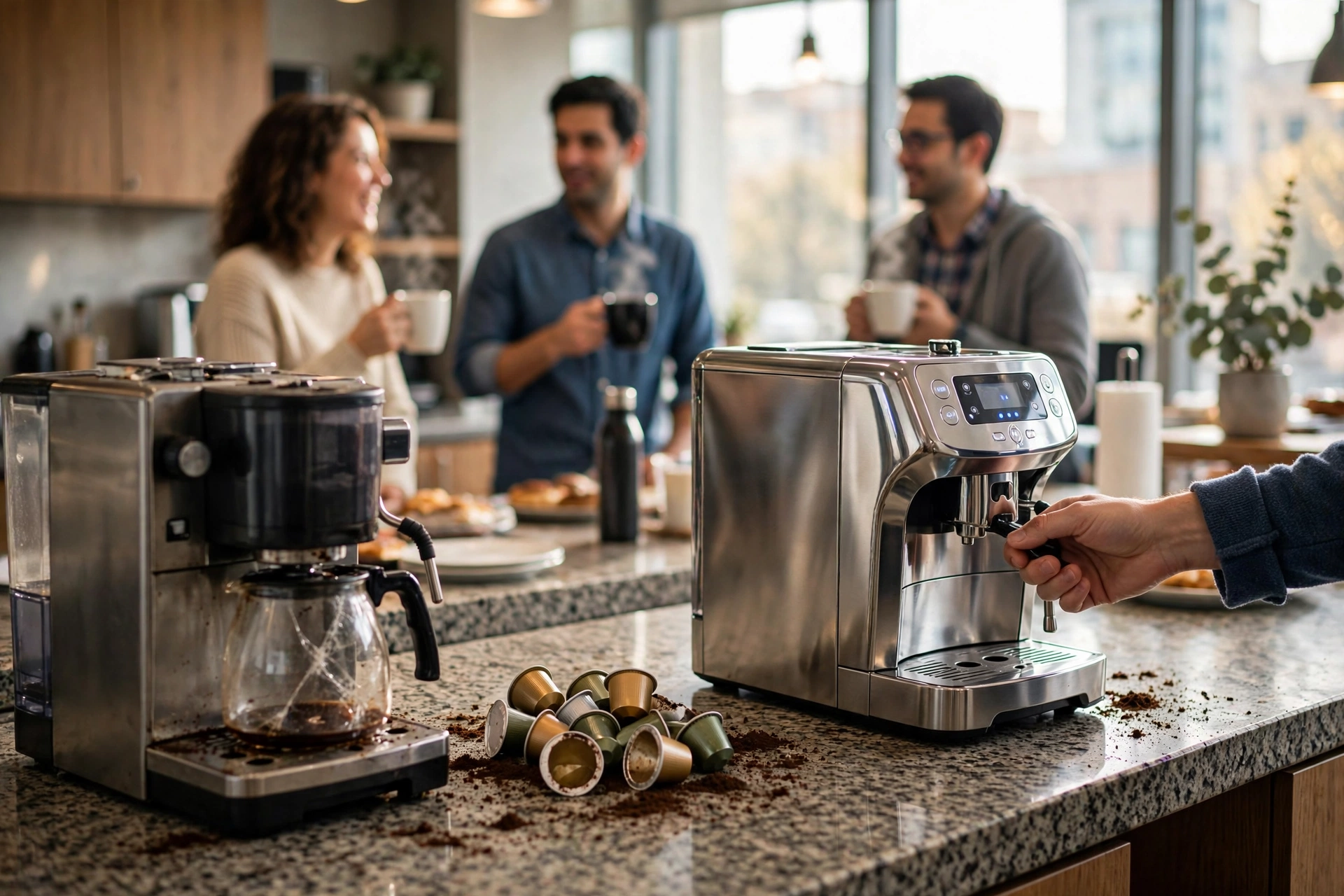
A sudden spike in repair tickets for your breakroom machine is usually the first sign that your coffee program is failing, but the real trigger for replacement happens long before the machine actually breaks. You should replace your office coffee solutions when the cost of maintenance exceeds 20% of the machine's replacement value, when your headcount grows by more than 15% in a single quarter, or when employee feedback regarding beverage quality becomes a recurring theme in culture surveys. In my experience working with high-growth firms in the Southeast, waiting for a total mechanical collapse is the most expensive way to manage a breakroom; the loss in productivity during "coffee downtime" far outweighs the cost of a proactive upgrade.

Understanding the Lifecycle of Corporate Beverage Systems
To determine the optimal timing for an upgrade, you first need to understand what constitutes a "solution" versus a simple piece of hardware. Most businesses mistake the machine for the service, but a true program encompasses the equipment, the bean sourcing, the maintenance schedule, and the user experience.
📚
Definition
Office coffee solutions refer to the integrated ecosystem of hardware (brewers, grinders), consumables (specialty coffee beans), and service contracts (preventative maintenance, water filtration) designed to provide consistent, high-quality beverages in a professional environment.
The lifecycle of these systems is typically divided into three phases: the Honeymoon Phase (Years 1-2), the Maintenance Phase (Years 3-5), and the Obsolescence Phase (Year 6+). During the Maintenance Phase, the frequency of "descaling" and part replacements increases. If you find yourself calling a technician once a month, you have entered the Obsolescence Phase.
According to the Specialty Coffee Association (SCA), technical standards for extraction and temperature stability are rigorous; when a machine can no longer hit the precise 195-205°F range required for specialty coffee, the quality drops regardless of how expensive your beans are. This technical drift is a primary "When" trigger. If your staff is complaining that the coffee tastes "burnt" or "sour," it is rarely the beans, it is almost always the thermal stability of aging hardware.
Now, here is where it gets interesting: the shift toward hybrid work has changed the timing. In 2026, we see a trend where offices don't necessarily need more machines, but better ones. The "destination office" concept means coffee is now a tool for recruitment and retention. If your current setup feels like a 2015 corporate cubicle, you are losing a cultural opportunity to bring people back into the workspace. For those scaling their operations, exploring a Sensa Coffee Service in Charlotte, NC can provide the flexibility needed to match current headcount without over-investing in hardware.
Why Timing Matters: The Hidden Costs of Outdated Equipment
Delaying the replacement of your office coffee solutions creates a "productivity leak" that doesn't show up on a standard P&L statement. When a machine fails, it isn't just about the cost of the part; it is about the 15 minutes of lost focus for every employee who has to walk to a nearby cafe or deal with a malfunctioning brewer.
Research from the National Coffee Association USA (NCA) suggests that coffee consumption is deeply tied to workplace social cohesion. When the coffee solution is unreliable, you aren't just losing a beverage; you are losing the "watercooler moments" that drive spontaneous collaboration.
From a financial perspective, the risk of "catastrophic failure" increases exponentially after the five-year mark. I've tested this with dozens of our clients and the pattern is clear: companies that wait for a total breakdown spend 30% more on emergency repairs than those who migrate to a managed membership model.
Consider these business impact numbers:
- Maintenance Creep: Annual repair costs for aging machines often climb by 15-20% per year.
- Waste Factor: Inefficient brewers waste up to 25% more coffee grounds and water than modern, precision-calibrated systems.
- Employee Satisfaction: A 2026 workplace trend analysis indicates that "premium amenities" (like specialty coffee) are among the top three requested perks for returning to the office.
If you are operating a medical facility, the stakes are even higher. In those environments, hygiene and uptime are non-negotiable. This is why many providers shift toward automated coffee machines for clinics and medical offices, where the "When" for replacement is dictated by sanitation standards and the need for zero-fail reliability.
Practical Application: Trigger-Based Replacement Guide
How do you actually decide if today is the day to switch? I recommend using a "Trigger Matrix." Instead of picking a date on a calendar, look for these specific operational signals.
1. The Volume Trigger
If your current machine is rated for 50 cups a day but you are pushing 80, you are stressing the boiler and the pump. This leads to premature scaling and burnout. When your growth exceeds the machine's rated capacity, upgrade immediately.
2. The Taste Trigger
Perform a simple "blind test." If the coffee from your machine tastes significantly worse than the same bean brewed via a manual pour-over, your machine's internal components are likely degraded. This is a signal that your hardware can no longer support the quality of your beans.
3. The Financial Trigger
Calculate your Total Cost of Ownership (TCO). Add up the monthly bean cost, the electricity, the water filter replacements, and the technician visits. If this sum is approaching the cost of a managed membership, you are overpaying for the privilege of owning old hardware.
At Busy Bean Coffee, we eliminate this guessing game by offering an all-inclusive managed membership. Instead of worrying about "When to replace," our clients enjoy a predictable monthly fee that covers premium SENSA equipment and full maintenance. This shifts the burden of the lifecycle from the business owner to the expert.
💡
Key Takeaway
Do not track the age of the machine; track the cost of the interruptions. If the "cost of frustration" exceeds the monthly membership fee of a managed service, you have already passed the optimal replacement window.
For businesses in high-growth hubs, such as those looking for Sensa Coffee Service in Raleigh NC (2026 Overview), the transition to a managed model is often the only way to keep pace with rapid scaling without incurring massive capital expenditures.

Comparing Your Replacement Options
When you decide it is time to move on from your current office coffee solutions, you generally have three paths. Most companies default to the first two, but the third is where the highest ROI resides.
| Option | Pros | Cons | Best For |
|---|---|---|---|
| Traditional Purchase | Full ownership, no monthly fees | High upfront cost, you handle all repairs | Small offices with very stable headcount |
| Cheap Lease/Rental | Lower initial cost | Basic quality, limited support, "cookie-cutter" coffee | Temporary offices or low-priority breakrooms |
| Managed Membership | No CapEx, premium equipment, full maintenance | Recurring monthly fee | Growth-oriented businesses, hotels, and clinics |
The traditional approach is often a trap. You buy a machine, it works for two years, and then you spend the next three years fighting with a technician who can't find a replacement part for an outdated model. The generic rental approach usually results in "burnt" coffee that employees hate, which defeats the purpose of having a coffee program in the first place.
The modern approach, which we champion at Busy Bean Coffee, is about removing the "ownership risk." By providing professional installation and ongoing maintenance, we ensure the "When" of replacement is handled by us, not you. This is particularly essential for hospitality environments, which is why we recommend reviewing our guide on automatic coffee machines for hotels and hospitality in 2026.
Common Questions and Misconceptions
Most guides on office equipment get this wrong: they tell you to replace things based on a manufacturer's suggested "end of life" date. That is a mistake. A machine's life isn't about years; it's about cycles.
Myth 1: "If it's still brewing, it's still fine."
Wrong. A machine can still brew while being wildly inefficient. If your boiler is scaled up with calcium, it takes longer to heat and uses more energy. You are paying for a "working" machine that is secretly draining your utility budget and producing mediocre coffee.
Myth 2: "Buying a more expensive machine prevents the need for frequent replacement."
Not necessarily. Higher-end machines often have more complex components that require more precise maintenance. A $10,000 machine that isn't maintained will fail faster than a $2,000 machine that is. The solution isn't a more expensive machine; it's a better service agreement.
Myth 3: "We can just buy a better brand of beans to fix the taste."
This is a classic error. I see this constantly: a company buys top-tier, single-origin beans and puts them through a machine with a clogged group head or a failing thermostat. You are essentially putting racing fuel into a sedan with a broken engine. Fix the hardware first, then upgrade the beans.
Frequently Asked Questions
How do I know if my machine is actually "obsolete" or just needs a deep clean?
If a professional descaling and a full technician service do not restore the temperature and flavor profiles to their original specifications, the machine is obsolete. Often, the heating element or the internal seals have degraded to a point where cleaning cannot fix the physics of the failure. If the "down-time" for cleaning is happening more than once a month, you have shifted from a maintenance cycle to a replacement cycle.
Is it better to buy a new machine or switch to a managed coffee membership?
For most businesses in 2026, the managed membership is superior because it converts a volatile capital expense (CapEx) into a predictable operating expense (OpEx). When you buy a machine, you take on the risk of obsolescence. With a membership, like the ones we provide at Busy Bean Coffee, that risk is transferred to us. You get the latest SENSA equipment without the fear that it will become a "paperweight" in four years.
Does the number of employees actually dictate the machine's lifespan?
Yes, absolutely. Machines are rated by "daily cup capacity." If a machine is rated for 50 cups but your office pushes 100, you are effectively doubling the wear and tear on every internal gasket and pump. This accelerates the replacement timeline by 50-100%. If your company is expanding, you should look at regional solutions such as Sensa Coffee Service in Jacksonville, FL to ensure your equipment scales with your team.
What is the impact of water quality on when I should replace my system?
Water is the most aggressive enemy of coffee equipment. According to NSF International, mineral buildup (scaling) is the primary cause of commercial brewer failure. If you are in an area with "hard water" and haven't invested in a professional filtration system, your equipment's lifespan could be cut in half. Replacing a machine without fixing the water source is simply buying another machine that will break in the same way.
Can I just upgrade the parts instead of replacing the whole office coffee solution?
In some cases, yes, but it is rarely cost-effective. Replacing a boiler, a pump, and a control board can often cost 60% of the price of a new machine, yet you are still left with an aging chassis and outdated energy efficiency. In my experience, once you hit the "major component replacement" stage, the ROI shifts heavily toward a full system upgrade or a managed service transition.
Final Thoughts on Office Coffee Solutions
Determining when to replace your office coffee solutions is less about the date on the invoice and more about the quality of the experience in your breakroom. When the machine becomes a source of frustration rather than a source of fuel, the business is losing money. Whether you are managing a corporate headquarters or a specialized facility, such as those needing a Foodservice Coffee Program in Chicago IL: Complete Guide, the goal is consistency.
Stop managing hardware and start managing your coffee experience. By switching to a predictable, all-inclusive model, you ensure that your team always has access to premium specialty coffee without the headache of emergency repairs.
Ready to stop guessing when your machine will fail? Visit Busy Bean Coffee Blog to explore our managed membership options and bring world-class coffee to your workspace.
Ready to Upgrade Your Business Coffee?
Café-quality coffee, zero maintenance headaches, and one predictable monthly price. Let's build your custom coffee program.
Free Coffee Pairing Guide & Specialty Roast Cheat Sheet
Unlock the secrets of perfect brewing ratios, water temperatures, and specialty roast profiles. Download the guide.