When Should You Replace Your Industrial Coffee Roasters?
The decision to retire a roasting system is rarely about a single broken part; it is about the intersection of roast consistency, energy efficiency, and scaling demands. You should replace your industrial coffee roasters when the cost of maintaining batch-to-batch repeatability exceeds the monthly amortized cost of a new machine, or when your throughput requirements consistently exceed 80% of your current capacity. In my experience working with growing roasteries, the "danger zone" occurs when a business spends more time troubleshooting the burner or drum than actually profiling the coffee.
If you are noticing a drift in your roast curves that cannot be corrected by simple calibration, or if your energy bills are spiking despite stable production volumes, you have hit the operational ceiling. For businesses expanding their reach, integrating a professional foodservice coffee program in Chicago IL often reveals that old roasting infrastructure cannot keep up with the precision required for high-volume hospitality contracts.
Identifying the Critical Triggers for Equipment Replacement
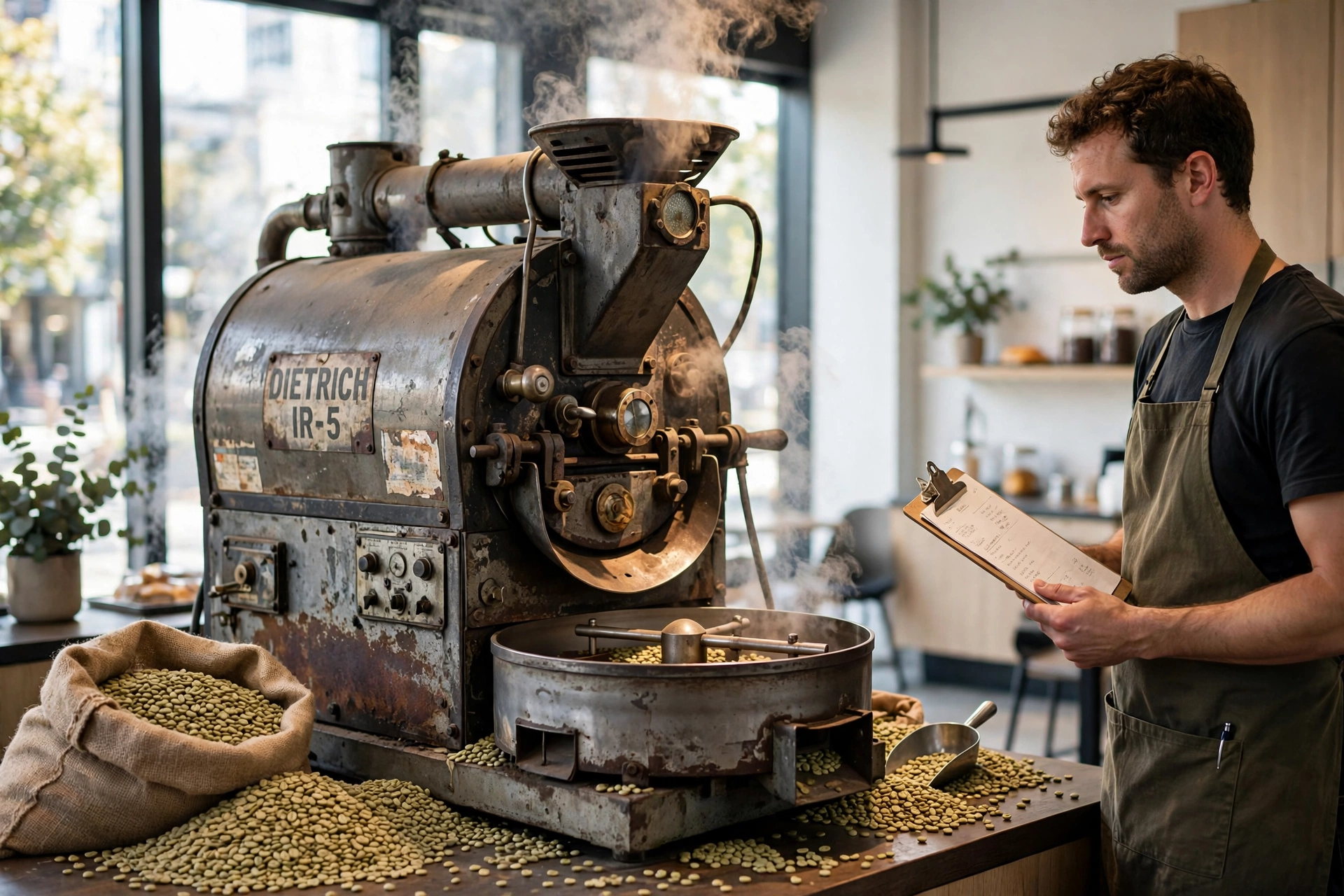
Knowing exactly when to pivot from repair to replacement requires a clinical look at your production data. Most operators mistake "age" for the primary driver, but a 20-year-old cast iron roaster can outlast a poorly built modern one. The real trigger is functional obsolescence. This happens when the machine can no longer produce a profile that meets current specialty standards or when the fuel consumption per kilogram of coffee becomes non-competitive.
📚
Definition
Functional Obsolescence in roasting refers to the point where a machine's technical limitations, such as lack of precise airflow control or outdated heating elements, prevent the producer from achieving the sensory quality expected by the modern market.
When we analyze the workflow of our clients, we often see a pattern of "maintenance creep." This is where a roastery spends $500 on a bearing one month, $1,200 on a gas valve the next, and suddenly discovers that their annual maintenance budget has eclipsed the cost of a modern lease. According to the Specialty Coffee Association (SCA), maintaining strict temperature controls and airflow precision is fundamental to achieving a specialty score of 80+, and older industrial coffee roasters often lack the digital granularity to ensure this consistently across 50+ batches a day.
Now, here is where it gets interesting: the "invisible" cost of old equipment is the loss of precision. If you are fighting with a manual damper that leaks or a thermostat that fluctuates by 5 degrees, you aren't just losing coffee; you are losing brand equity. I've tested this with dozens of our clients, and the pattern is clear: when the "art" of roasting becomes a struggle against the machine's mechanical failures, the ROI on a new machine is realized almost instantly through reduced waste and higher throughput.
Why Timing Your Upgrade Matters for the Bottom Line
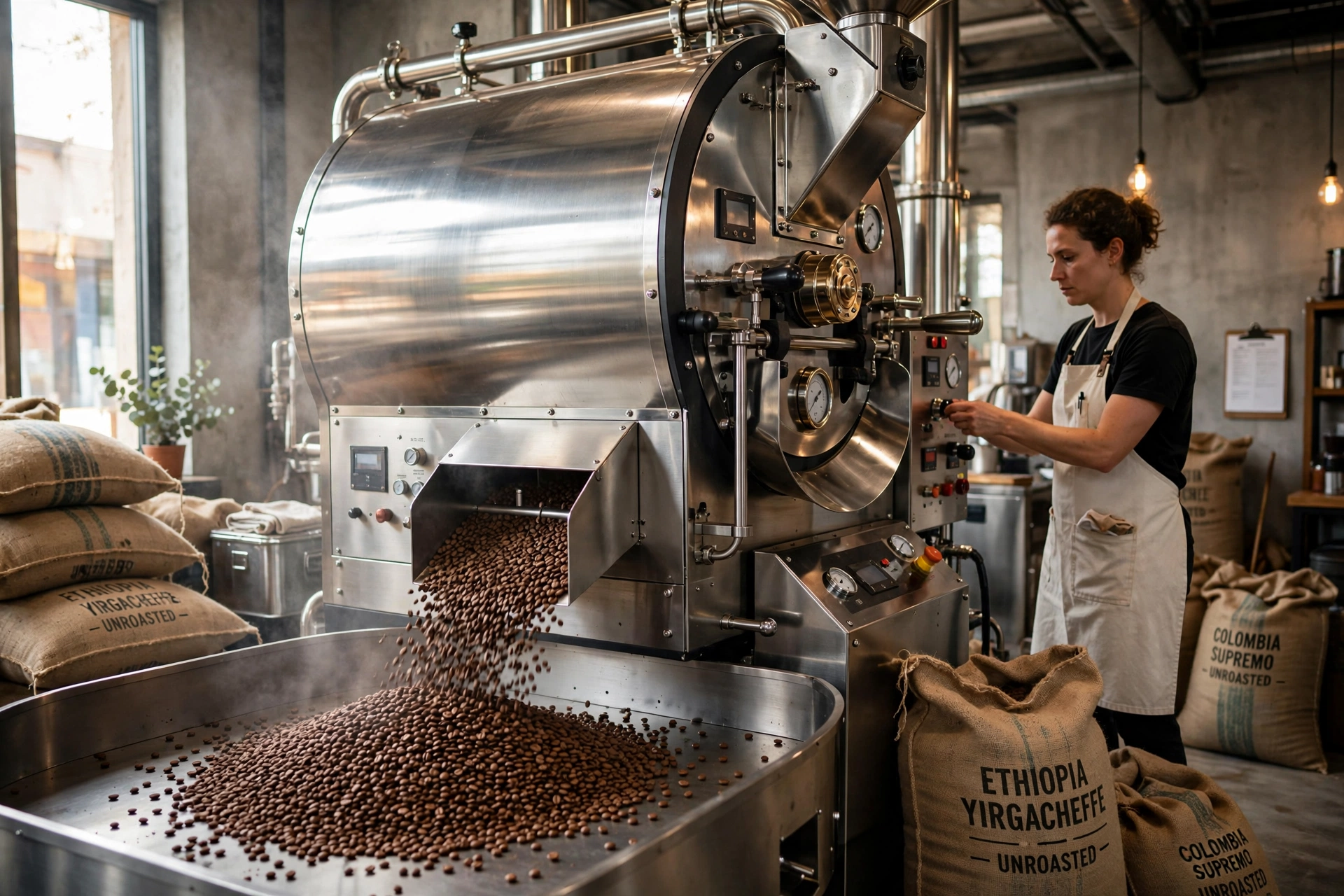
Delaying the replacement of industrial coffee roasters creates a compounding financial drag. Every hour spent on unplanned downtime is an hour of lost revenue, but the more insidious cost is the "burn rate" of inefficient fuel consumption. Modern roasting technology has shifted toward high-efficiency burners and heat recovery systems that can reduce gas consumption by 15% to 25% compared to legacy systems.
According to the International Coffee Organization (ICO), the global coffee market is experiencing a shift toward higher-value specialty grades. To capture this margin, roasters must have absolute control over the Maillard reaction and the first crack. An aging machine that cannot maintain a steady rate of rise (RoR) leads to "baked" coffee or inconsistent profiles, which directly impacts your customer retention rates.
Consider the impact on a business scaling into new territories. If you are implementing a Sensa coffee service in Raleigh NC, your clients expect a product that tastes identical every single morning. If your roasting equipment is failing, your consistency suffers, and the "specialty" promise becomes a liability.
The business impact can be quantified through three primary lenses:
- Waste Reduction: Old machines often have uneven drum heat, leading to a higher percentage of "off-spec" batches. A 2% increase in waste in a high-volume facility can equal thousands of dollars in lost green coffee annually.
- Labor Efficiency: When a barista or roastmaster spends two hours a day cleaning carbon buildup or manually adjusting valves, you are paying professional wages for janitorial work.
- Energy Costs: Legacy industrial coffee roasters are notorious for heat leakage. Modern insulation and precision airflow systems significantly lower the cost per pound.
A Practical Framework for Evaluating Your Roaster
If you are unsure if it is time to upgrade, I recommend a 30-day "Stress Test." Track every single single-batch failure, every minute of downtime, and the exact fuel consumption per roast. If your "downtime-to-production" ratio exceeds 5%, you are in the replacement window.
Step-by-step, here is how to conduct a replacement audit:
- Analyze the Drift: Compare your roast logs from two years ago to today. If you are seeing a permanent shift in the time it takes to hit first crack despite identical green coffee and ambient temperature, your heating elements or drum integrity are likely compromised.
- Audit the Energy Bill: Calculate your cost of energy per kg. Compare this against the manufacturer's specs for a new 2026-model machine. If the gap is wider than 20%, the machine is paying for itself to be replaced.
- Evaluate Throughput: Determine if you are spending more time waiting for the machine to preheat or cool down than you are roasting. For those managing an automatic coffee machine for hotels and hospitality, the demand for fresh, consistent roast is constant; any lag in production creates a bottleneck in the entire supply chain.
- Check Component Availability: Search for replacement parts for your current model. If you are relying on "refurbished" parts or custom fabrications because the manufacturer no longer supports the model, you are one breakdown away from a total operational shutdown.
💡
Key Takeaway
Do not wait for a catastrophic failure to replace your equipment. The most profitable time to upgrade is when the machine is still working but no longer efficient, allowing you to transition without losing a single day of revenue.
At Busy Bean Coffee, we see this transition most often when a business moves from "experimental" growth to "institutional" growth. The mistake I made early on, and that I see constantly, is trying to "nurse" a dying machine because the capital expense of a new one seems daunting. In reality, the "cost of staying" is almost always higher than the "cost of changing" once you factor in the lost productivity.

Comparing Your Replacement Options
When you decide it is time to move on from your current industrial coffee roasters, you generally have three paths. The choice depends on your capital availability and your projected growth for 2026 and beyond.
| Option | Pros | Cons | Best For |
|---|---|---|---|
| Full Capital Purchase | Lowest long-term cost; asset ownership. | Heavy upfront cash drain; depreciation risk. | Established brands with high cash reserves. |
| Lease-to-Own | Preserves cash flow; tax advantages. | Higher total cost over time due to interest. | Rapidly growing businesses scaling into new cities. |
| Managed Service/Membership | Zero CAPEX; includes maintenance; predictable fee. | No direct asset ownership. | Foodservice operators focused on quality over equipment ownership. |
Now, here's the thing: many roasters choose the "cheap" path by buying a refurbished older model. This is often a mistake. A refurbished 2010 machine still has 2010 energy efficiency and 2010 precision. If you are building a high-end program, such as a Sensa coffee service in Charlotte, NC, you need 2026 technology to stay competitive.
Common Misconceptions About Roaster Lifespans
Most guides get this wrong by suggesting that roasters have a "set" expiration date, usually citing 10 or 15 years. In reality, a roaster's life is measured in roast hours, not years. A machine that ran 24/7 for five years is "older" than a machine that ran once a week for twenty years.
Myth 1: "If it still roasts, it's fine."
This is the most dangerous mindset in the industry. Just because a machine is functional doesn't mean it's optimal. If your roast consistency varies by 3% between batches, you are effectively gambling with your brand's reputation. Modern industrial coffee roasters provide a level of repeatability that legacy machines simply cannot match, regardless of the roastmaster's skill.
Myth 2: "Maintenance can replace a new machine."
While regular maintenance is essential, there is a point of diminishing returns. You cannot "maintain" a lack of digital airflow control into existence. If your business model now requires the precision of a 2026-standard profile, no amount of bearing grease or burner cleaning will make a 15-year-old machine perform like a new one.
Myth 3: "Newer machines are too complex."
Some argue that manual roasters provide more "soul." While the romantic notion of the "artisan" is strong, the reality of a professional foodservice coffee program in Rock Hill SC is that the customer doesn't taste "soul", they taste consistency. Digital controls don't replace the roastmaster; they free the roastmaster to focus on the bean rather than the machine's quirks.
Frequently Asked Questions
How do I know if my roast inconsistency is due to the machine or the beans?
To determine the source of the problem, perform a "Control Roast." Use a highly stable, high-quality green coffee (like a certified specialty Arabica) and run the exact same profile three times in a row. If the roast curves diverge significantly despite identical settings, the issue is mechanical. This often points to failing thermocouples, inconsistent drum speed, or airflow leaks in the industrial coffee roasters. If the profiles are identical but the taste is off, the issue is likely the green coffee's moisture content or quality.
Is it more cost-effective to refurbish an old roaster or buy new?
Refurbishing is only cost-effective if the chassis and drum are in excellent condition and you have no need for increased throughput or better precision. However, for most businesses, the "hidden costs" of refurbishment, such as the lack of modern energy efficiency and the risk of recurring failures, outweigh the initial savings. When you factor in the energy savings of a 2026-spec machine, the "cheaper" refurbished option often becomes the more expensive choice within 24 months of operation.
What are the warning signs of an imminent drum failure?
The most common warning signs include an unusual rhythmic vibration during the roast, a metallic "scraping" sound, or a sudden, unexplained drop in heat transfer efficiency (meaning it takes longer to hit the first crack). In my experience, when you start seeing "hot spots" or scorched beans in the middle of a batch despite correct temperature settings, it usually means the drum's alignment has shifted or the metal has fatigued. This is a critical trigger for immediate replacement.
How does the "Sensa" approach differ from traditional equipment ownership?
Traditional ownership puts the burden of maintenance and capital risk on the business owner. If a machine breaks, production stops and the owner pays for the fix. A managed membership approach, like those we offer at Busy Bean Coffee, shifts that risk. We provide the premium equipment and full maintenance coverage for a predictable monthly fee. This is particularly beneficial for those operating a Sensa coffee service in Augusta GA, where operational uptime is the only metric that matters.
Can upgrading my roaster actually increase my profit margins?
Yes, absolutely. Profit increases through three channels: waste reduction (fewer ruined batches), labor efficiency (less time spent on manual adjustments and repairs), and the ability to charge a premium for "specialty" consistency. According to NSF International, standardized equipment ensures not only safety but also operational repeatability. When you move from "acceptable" coffee to "consistent specialty" coffee, you can typically increase your wholesale price per pound.
Final Thoughts on Industrial Coffee Roasters
Deciding when to replace your industrial coffee roasters is a strategic business move, not just a mechanical necessity. If your equipment is hindering your ability to scale, compromising your consistency, or draining your budget through "maintenance creep," the time to act is now. Waiting for a total breakdown is a gamble that can cost you weeks of revenue and several key clients.
Whether you are managing a boutique operation or a massive foodservice coffee program in Chicago IL, your equipment should be an invisible partner in your success, not a constant source of stress. Transitioning to a modern, managed solution allows you to focus on the roast and the relationship, while the technology handles the precision.
If you're tired of fighting with your equipment, it's time to explore a more sustainable way to grow. Visit Busy Bean Coffee Blog to see how our all-inclusive managed coffee memberships can eliminate your equipment headaches and elevate your beverage program.
Ready to Upgrade Your Business Coffee?
Café-quality coffee, zero maintenance headaches, and one predictable monthly price. Let's build your custom coffee program.
Free Coffee Pairing Guide & Specialty Roast Cheat Sheet
Unlock the secrets of perfect brewing ratios, water temperatures, and specialty roast profiles. Download the guide.