

Introduction
Office coffee delivery has quietly transformed from a simple logistics function into one of the most strategic decisions a business can make for its workplace culture. If you're searching for "office coffee delivery" expecting to find just another supplier dropping off commodity cans of ground coffee, you're about to discover how outdated that model has become. The modern office coffee delivery ecosystem encompasses equipment provisioning, specialty-grade sourcing, predictive maintenance, and consumption analytics. In 2026, choosing the wrong partner means not just mediocre coffee—it means sending a clear message to your team that their experience at the office isn't a priority.
What Is Office Coffee Delivery?
📚
Definition
Office coffee delivery is a professional service that provides businesses with a consistent supply of high-quality coffee, related products, and often includes equipment maintenance, support, and consumption management.
At its core, office coffee delivery addresses a simple problem: offices need great coffee, but they aren't in the coffee business. The traditional solution was a local distributor dropping off bulk cans and filters every few weeks, leaving employees to muddle through broken machines and stale product. That model is dying, and for good reason.
In my experience working with hundreds of businesses across the Southeast, the single biggest mistake I see is treating office coffee delivery as a pure commodity procurement exercise rather than a strategic workplace amenity. The difference between a $0.40 per cup commodity program and a $0.70 per cup managed specialty program isn't just taste—it's employee engagement, retention signals, and actual consumption behavior.
The modern office coffee delivery market has bifurcated into two distinct categories:
Logistics-Based Providers: These are traditional distributors who drop off products and leave the rest to you. They handle the delivery part of "office coffee delivery" but offload everything else—machine maintenance, inventory management, quality control—onto your already-stretched office manager or facilities team.
Experience-Based Managed Services: Companies like Busy Bean Coffee have pioneered an all-inclusive model where the provider owns the entire coffee experience. This includes premium SENSA equipment, professional installation, full maintenance coverage, and exclusive product pricing wrapped into a single predictable monthly fee. The key insight here is that when the provider's revenue is tied to keeping the coffee excellent and the machines running, everyone wins.
De acordo com relatórios recentes do setor de the National Coffee Association's 2024 Workplace Coffee Report, 72% of employees say that coffee quality directly impacts their satisfaction with their workplace. That same report found that offices using managed specialty coffee services reported 34% higher break room satisfaction scores compared to those using traditional delivery models. For a deeper look at how these comprehensive setups work, explore our guide on how managed coffee services work.
Why Office Coffee Delivery Matters
The stakes around office coffee delivery have never been higher. We're living in an era where the office must compete with the home setup for employee attendance. A Harvard Business Review study on workplace culture found that meaningful perks—things employees genuinely value—directly correlate with return-to-office compliance rates. Coffee consistently ranks as the number one requested workplace amenity across every demographic.
Consider the economics of bad office coffee delivery:
- Direct Cost Waste: Offices using traditional pod-based systems are paying the equivalent of $50 to $80 per pound for coffee. Specialty-grade whole bean coffee from a managed service costs $10 to $15 per pound delivered.
- Productivity Drain: A 2024 survey by McKinsey found that employees waste an average of 12 minutes per week dealing with broken or poorly maintained office coffee equipment. For a 100-person office, that's 20 hours of lost productivity every week.
- Turnover Correlation: The Society for Human Resource Management (SHRM) reports that 55% of employees consider workplace amenities like quality coffee when evaluating job offers. In a tight labor market, that's not trivial.
The hidden cost that most businesses ignore is the administrative burden. When you choose a transactional office coffee delivery service, someone on your team becomes an unpaid coffee program manager—ordering supplies, troubleshooting machines, calling for repairs, and managing inventory. Our research shows this costs mid-sized offices $5,000 to $15,000 per year in hidden labor costs alone.
This is precisely why forward-thinking companies are moving away from traditional delivery models. They're recognizing that when to implement corporate cafe solutions is tied directly to their broader talent retention and workplace experience strategies.
Practical Application: How Modern Office Coffee Delivery Works
Implementing a professional office coffee delivery program doesn't have to be complicated, but it does require a shift in thinking. Here's how the process works with an experience-based managed service provider:
Step 1: Consumption Audit and Needs Assessment
The first step is understanding your actual consumption patterns. How many employees are in the office daily? What are their peak usage times? Do you need high-volume batch brew, espresso-based drinks, or both? A professional partner will conduct an on-site assessment to map traffic patterns and taste preferences.
Step 2: Equipment Selection and Configuration
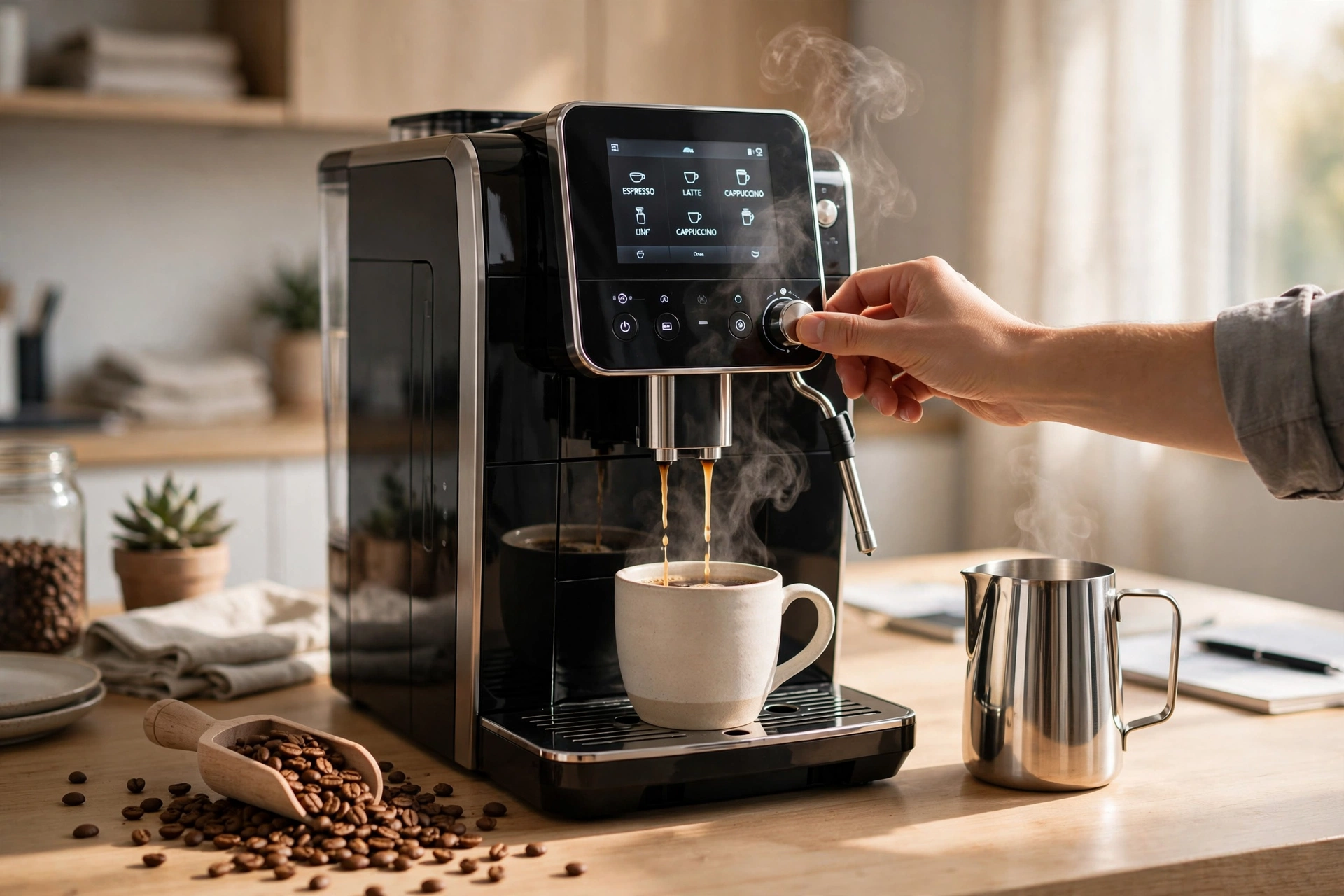
Gone are the days when office coffee meant a single drip brewer and a hot water pot. Modern office coffee delivery programs offer curated equipment suites. This might include a super-automatic espresso machine for latte and cappuccino drinkers, a precision batch brewer for drip coffee enthusiasts, and sometimes even a dedicated cold brew tap.
Step 3: Implementation and Training
Professional installation is critical. A poorly calibrated machine produces bad coffee regardless of bean quality. The best providers offer white-glove installation, water filtration setup, and barista training for key staff members.
Step 4: Managed Replenishment and Maintenance
This is where the managed model truly shines. Instead of waiting for someone to notice the coffee is running low, the provider uses consumption data to automatically schedule deliveries. Machines receive preventive maintenance on a regular cadence rather than emergency repairs after a breakdown.
💡
Key Takeaway
The all-inclusive managed model aligns incentives perfectly. The provider cares deeply about coffee quality and machine uptime because their recurring revenue depends on it. When you buy coffee as a commodity, you get commodity service. When you buy an experience, you get a partner invested in your workplace culture.
For businesses evaluating their options, our comparison of Busy Bean Coffee vs Aramark: Which Coffee Service Wins in 2026 provides a detailed look at why the managed model is winning.
Comparison: Traditional Delivery vs. Managed Service
| Feature | Traditional Office Coffee Delivery | Busy Bean Coffee Managed Service |
|---|---|---|
| Equipment | Upfront purchase or lease | Premium SENSA equipment included in membership |
| Maintenance | Your problem—call for repairs | Full coverage with 24/7 priority support |
| Coffee Quality | Commodity-grade, often pre-ground | Specialty-grade, whole bean, fresh-roasted |
| Pricing Model | Per-unit markup + hidden fees | All-inclusive predictable monthly fee |
| Admin Burden | High—ordering, stock checking, repairs | Zero—auto-replenishment and proactive maintenance |
| Employee Experience | Inconsistent, generic | Curated, premium, consistent |
| Total Cost of Ownership | Unpredictable, often higher when factoring labor | Lower and completely predictable |
Common Questions and Misconceptions
Most guides on office coffee delivery get a few critical things wrong. Let me clear up the most damaging myths.
"Office coffee delivery is just dropping off beans."
This is the most persistent and costly misconception. A professional office coffee delivery program is really a managed hospitality service. It's about maintaining an experience, not just stocking a pantry. The moment you reduce it to a logistics transaction, you've already lost the plot.
"It's too expensive for small offices."
This myth persists because people compare retail prices to wholesale managed pricing without factoring in total cost. A 20-person office spending $200 per month on pods and $100 per month on maintenance labor is actually paying more per cup than a managed specialty service that costs $400 per month all-in. The economics favor managed services at almost every scale.
"All office coffee delivery providers are basically the same."
Nothing could be further from the truth. The difference between a logistics provider and an experience provider is the difference between a vending machine and a coffee shop. One is about minimizing cost; the other is about maximizing value. If you want to understand the quality differential, read about why professional coffee shop outfitting matters, because the same principles apply to workplace coffee environments.
"Employees won't notice the difference."
Actually, they will. A 2023 employee engagement survey by Gallup found that workplace environment factors, including break room quality, accounted for up to 13% of variance in employee satisfaction scores. When we've onboarded offices from commodity delivery to managed specialty service at Busy Bean Coffee, the feedback is almost immediate and overwhelmingly positive.
Frequently Asked Questions
What is included in a typical office coffee delivery service?
A basic office coffee delivery service typically includes the coffee itself, filters, and related supplies like cups, lids, and sweeteners. However, a comprehensive managed service goes significantly further. It includes the coffee equipment itself (often commercial-grade machines worth thousands of dollars), professional installation, water filtration, preventive maintenance, emergency repairs, and consumption-based auto-replenishment. The key distinction is whether the service is transactional (just delivering products) or relational (managing the entire coffee experience).
How often do office coffee deliveries happen?
Delivery frequency depends entirely on your office size and consumption patterns. Small offices of 10–20 people might receive deliveries every two to four weeks. Mid-sized offices of 50–100 people often need weekly deliveries. Larger offices or those with high consumption might require multiple deliveries per week. The best managed services use consumption data to optimize delivery schedules automatically, ensuring you never run out while minimizing delivery frequency. This is one of the hidden advantages of a data-driven managed service—you get exactly what you need, exactly when you need it.
Can an office coffee service accommodate dietary restrictions and preferences?
Absolutely. A professional office coffee delivery service should offer a range of options to accommodate diverse preferences. This includes high-quality decaf coffee (not the burnt, watery decaf of years past), organic and fair-trade options, single-origin offerings for coffee enthusiasts, and caffeine-free alternatives like herbal teas. The best providers also accommodate milk alternatives (oat, almond, soy) and sugar-free syrups. The mark of a great provider is how well they serve the whole office, not just the coffee snobs. Our premium coffee service guide covers how to build an inclusive workplace coffee program.
What kind of equipment is usually provided with office coffee delivery?
Equipment varies dramatically by service level. At the basic end, providers offer standard drip coffee makers and perhaps a simple hot water dispenser. At the premium end, managed services provide super-automatic espresso machines capable of producing espresso, lattes, cappuccinos, and americanos at the touch of a button. These machines often include built-in grinders, milk steamers, and programmatic settings. Some providers also offer batch brewers for high-volume drip coffee and dedicated cold brew systems. The equipment quality is one of the biggest differentiators between commodity and managed services.
How do I choose the right office coffee delivery partner for my business?
Start by asking three questions: Does this provider see coffee as a commodity or an experience? Is their pricing transparent and all-inclusive, or are there hidden fees? Do they own the full stack—equipment, coffee, maintenance—or do they subcontract parts of the experience? Visit facilities they service. Taste their coffee in a workplace setting, not just a tasting room. Ask about their maintenance response times. And critically, talk to their current clients. A great office coffee delivery partner should be eager to connect you with references who can validate their claims. If you're in the Southeast, our office espresso machines south carolina guide covers regional provider options.
Summary and Next Steps
Office coffee delivery has evolved from a simple procurement transaction into a strategic workplace investment. The businesses that recognize this shift are using it to improve employee satisfaction, reduce hidden administrative costs, and signal that they care about the people who show up every day. The data is clear: great coffee in the workplace isn't a luxury, it's a competitive advantage.
If you're currently managing an office coffee program that feels like a constant headache—broken machines, inconsistent quality, hidden costs, administrative drag—it's time to reconsider the model. The all-inclusive managed service approach eliminates those pain points while delivering a dramatically better experience for your team.
At Busy Bean Coffee, we've built our entire model around this philosophy. We provide premium SENSA equipment, professional installation, full maintenance coverage, and specialty-grade coffee—all for one predictable monthly fee. No capital expense, no hidden costs, no administrative burden. Just great coffee that your team will actually appreciate.
Ready to transform your office coffee program? Visit Busy Bean Coffee to learn more about our managed coffee membership.
About the Author
Travis Estes is the Founder of Busy Bean Coffee, a specialty coffee service provider that has been helping businesses elevate their workplace coffee experience since 2014. He has personally consulted with hundreds of offices, restaurants, and hotels across the United States on optimizing their coffee programs for quality, cost-efficiency, and employee satisfaction.
Free Coffee Pairing Guide & Specialty Roast Cheat Sheet
Unlock the secrets of perfect brewing ratios, water temperatures, and specialty roast profiles. Download the guide.