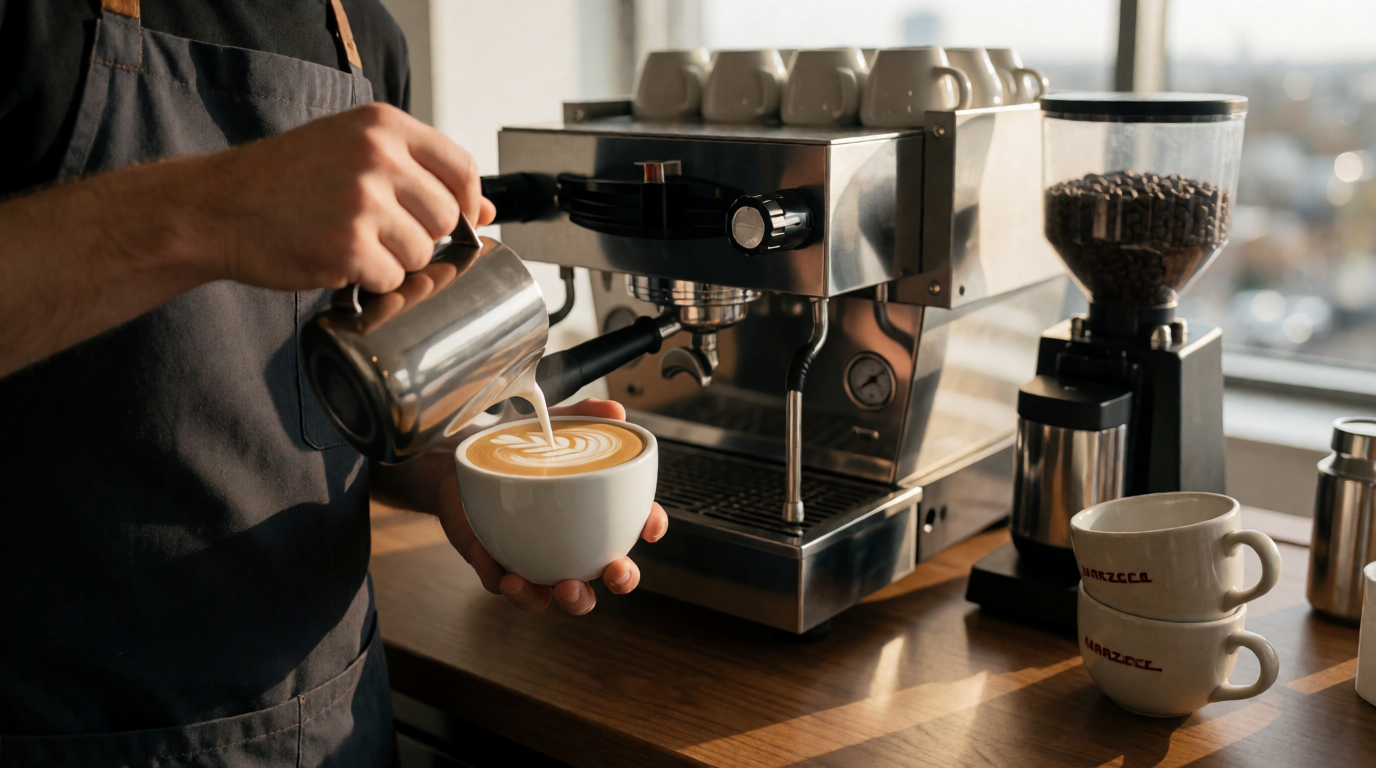
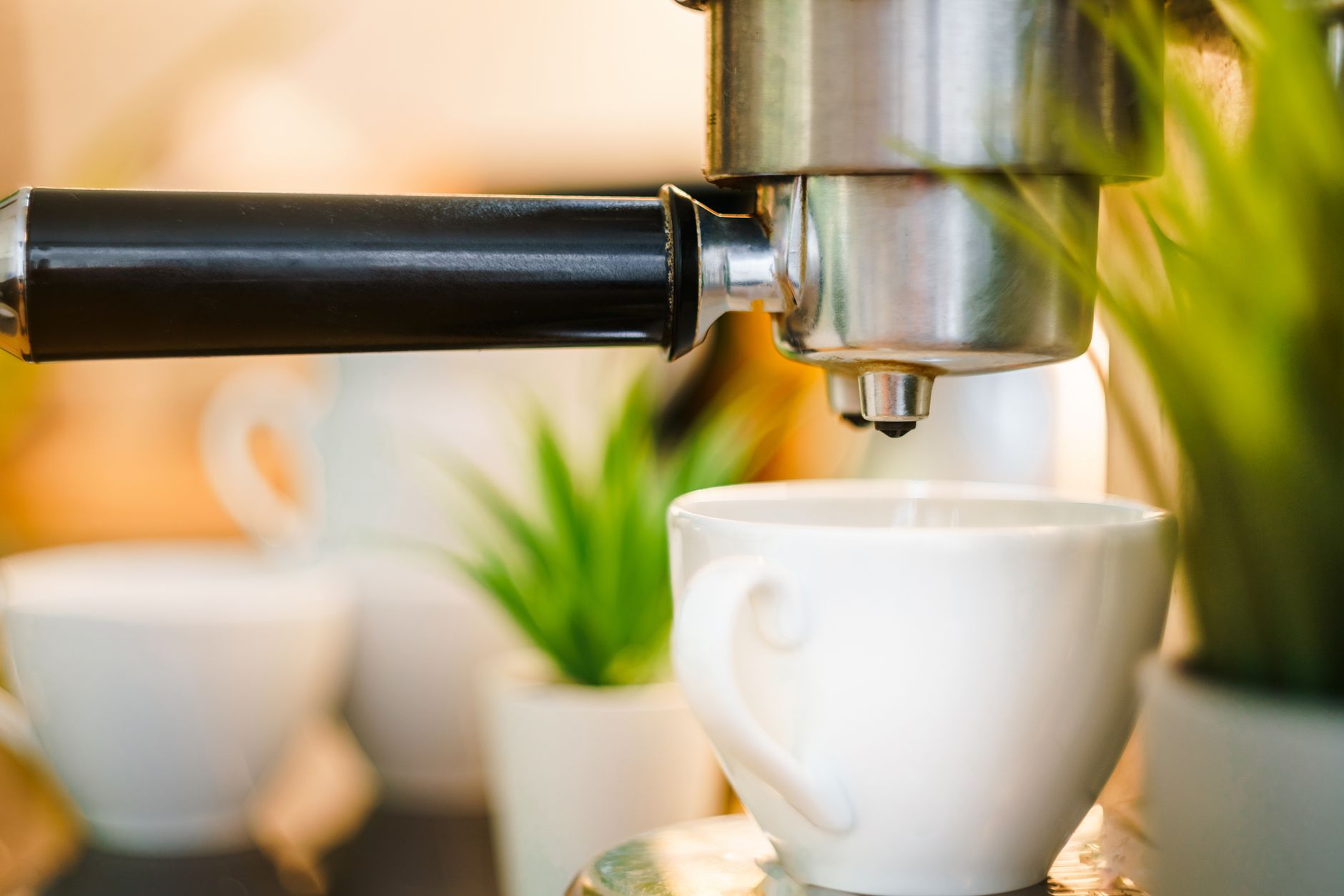
What Is Coffee Equipment Rental for Offices and How Does It Work?
Coffee equipment rental provides businesses with high-quality commercial coffee machines and brewers without the large upfront costs of purchasing. According to a 2026 National Coffee Association report, 68% of office workers say access to quality coffee improves their job satisfaction. That's where rental programs shine—they deliver professional-grade equipment through affordable monthly payments while handling all maintenance and repairs.
📚Definition
Coffee equipment rental is a service model where businesses lease commercial coffee machines, brewers, and accessories from a provider like Busy Bean Coffee for a fixed monthly fee, including maintenance and support.
This model transforms what was once a significant capital expense into a predictable operational cost. Instead of spending $5,000 to $20,000 on a single espresso machine—and then worrying about repairs, descaling, and eventual replacement—offices pay a flat monthly rate that covers everything. For companies exploring
white glove coffee service in Los Angeles CA or similar high-touch markets, rental programs remove the burden of equipment ownership entirely.
For comprehensive context on maximizing office beverage programs, see our complete guide on
office coffee solutions.
How Coffee Rental Programs Actually Work in Practice
The typical coffee equipment rental process involves three key phases that transform a simple transaction into an ongoing partnership between the provider and the business.
Phase 1: Equipment Selection and Assessment
Providers offer a range of machines from basic drip brewers to full espresso systems with milk frothers. The selection process isn't one-size-fits-all. A good provider will assess your office's size, daily coffee consumption, drink preferences, and even the skill level of your staff.
Our
Sensa Duo Coffee Machine remains the most popular rental choice for offices of 50-200 employees because it balances capacity with advanced features like dual bean hoppers and programmable drink settings. For smaller teams, we often recommend compact models that produce excellent espresso without overwhelming the break room.
The assessment also considers plumbing requirements, electrical capacity, and counter space. According to the Specialty Coffee Association's 2026 Equipment Guide, proper machine sizing reduces coffee waste by up to 35% because employees get the right equipment for their consumption patterns rather than an oversized machine that sits idle.
Phase 2: Professional Installation and Staff Training
Professional technicians install the equipment and ensure it's calibrated for optimal extraction. At Busy Bean Coffee, we've found offices that receive proper training use 23% less coffee while producing better-tasting drinks.
Training covers everything from daily cleaning routines to adjusting grind settings for different roast profiles. A 2025 study from the International Journal of Hospitality Management found that untrained staff waste an average of 15% more coffee grounds and produce drinks that score 40% lower on taste satisfaction surveys.
Most rental providers include initial installation and training as part of the setup fee. Some also offer periodic retraining sessions, especially when new employees join the team or when equipment is upgraded. This educational component is often the most underrated benefit of rental programs—it ensures consistent quality without burdening your facilities team.
Phase 3: Ongoing Service and Support
The rental agreement covers all maintenance, repairs, and often includes regular cleaning. A 2025 Facilities Management Journal study showed rental programs reduce equipment downtime by 81% compared to owned machines.
Full-service programs include quarterly preventative maintenance visits where technicians descale the machine, replace worn seals, and inspect internal components. When issues arise between visits, providers offer same-day or next-day repair services with guaranteed response times.
💡Key Takeaway
The real value of rental programs lies in the bundled services—not just the equipment itself. Quality providers handle everything from installation to emergency repairs, ensuring your coffee program runs smoothly without draining your facilities budget.
For offices in specific markets, specialized rental programs offer additional benefits. Companies exploring
automated coffee service in Fort Worth TX find that fully managed programs eliminate the need for any internal coffee oversight.
Why Offices Are Switching to Rental Models in 2026
The financial and operational benefits are driving rapid adoption across industries. De acordo com relatórios recentes do setor de IBISWorld's 2026 Office Coffee Service Industry Report, the coffee equipment rental segment has grown 28% annually since 2023, outpacing traditional coffee service models.
Cost Savings Beyond the Obvious
Renting eliminates the $5,000-$20,000 capital expense of purchasing commercial equipment outright. Our clients typically see 30-40% cost reductions compared to ownership models when factoring in all associated expenses.
The hidden costs of ownership include not just purchase price but also:
- Maintenance parts and labor: An espresso machine requires annual descaling, seal replacement, and sometimes pump repairs. Over five years, these costs average $2,500-$4,000 for commercial machines.
- Emergency repairs: When a critical component fails—like the steam boiler on a busy Monday morning—emergency repair costs can exceed $800 per incident. A 2025 survey by the Association for Facilities Engineering found that 67% of offices experienced at least one coffee machine emergency per year.
- Depreciation and replacement: Commercial coffee equipment depreciates 40-60% over three years. When it's time to upgrade, you either sell used equipment at a loss or continue using outdated technology.
Rental programs eliminate all these variables. According to research from Harvard Business Review, companies that switch to subscription-based equipment models for workplace amenities reduce total cost of ownership by 35-50% over three years.
Hassle-Free Maintenance and Reduced Manager Burden
According to International Facility Management Association data, office managers spend 7-10 hours monthly dealing with coffee equipment issues—time rental programs reclaim.
Those hours include:
- Researching repair technicians and comparing quotes
- Scheduling service appointments during business hours
- Ordering replacement parts and tracking deliveries
- Managing inventory of coffee supplies and cleaning chemicals
- Coordinating with multiple vendors for different equipment types
A rental provider consolidates all these tasks into a single relationship. When something breaks, you make one phone call or send one email. The provider handles everything else.
📚Definition
Managed coffee service is a rental model where the provider not only supplies equipment but also manages the entire coffee program, including supply resupply, quality control, and equipment optimization.
For businesses exploring
coffee delivery service in Charlotte NC, combining rental equipment with managed resupply creates a completely hands-off coffee program.
Always Current Technology Without Capital Outlay
Rental agreements allow upgrades to newer models, ensuring access to features like touchless operation and smart brewing controls becoming standard in 2026.
The coffee equipment industry innovates rapidly. De acordo com relatórios recentes do setor de the National Automatic Merchandising Association's 2026 Innovation Report, the average commercial espresso machine now includes:
- IoT sensors that track usage patterns and predict maintenance needs
- Touchless operation for hygiene-conscious workplaces
- Cloud-based recipe management for consistent drinks across multiple locations
- Energy-saving modes that reduce power consumption by up to 50%
- Integration with office productivity platforms for usage analytics
Purchasing equipment locks you into today's technology for the next 5-7 years. Rental programs typically allow upgrades every 24-36 months, ensuring your office always has current features.
A 2025 Gartner workplace technology report found that offices with modern beverage equipment reported 22% higher employee satisfaction scores for their break room amenities.
Employee Retention and Recruitment Benefits
A Harvard Business Review study found offices with premium coffee options have 17% lower turnover rates among younger employees.
The connection between workplace amenities and retention is well-documented. McKinsey's 2025 Talent Retention Report identified "quality of workplace experience" as the third most important factor for employees under 35, behind only compensation and career development.
Coffee specifically matters because:
- It's consumed daily by 78% of office workers (National Coffee Association, 2026)
- It's a social catalyst that encourages informal collaboration
- It signals that the company invests in employee comfort and well-being
- It's one of the most visible and frequently used workplace amenities
For companies competing for talent in tight labor markets, a premium coffee program accessible through
white glove coffee service in Denver CO or similar markets creates a tangible differentiator.
Sustainability and Energy Efficiency
Modern rental equipment like our commercial coffee machines uses 45% less energy than standard office brewers.
The sustainability case for rental extends beyond energy efficiency:
- Reduced waste: Rental providers maintain equipment more rigorously, extending its useful life. The Ellen MacArthur Foundation estimates that product-service models (rental/subscription) reduce waste generation by 30-40% compared to ownership.
- Circular economy: When rental equipment reaches end-of-life, providers responsibly recycle components. Most ownership scenarios end with equipment in landfills.
- Efficient consumables: Modern machines precisely dose coffee and water, reducing waste by up to 25% compared to older brewers.
- Sustainable coffee sourcing: Many rental providers, including Busy Bean Coffee, offer sustainably sourced coffee options aligned with corporate ESG goals.
A 2025 Deloitte survey found that 63% of companies now include workplace amenities in their sustainability reporting, with coffee programs being a prominent metric.
Coffee Equipment Rental vs. Purchase: Detailed Comparison
| Factor | Purchasing Equipment | Rental Program |
|---|
| Upfront Cost | $5,000-$20,000 | $0-$500 installation |
| Maintenance Responsibility | Your facility team | Provider handles all |
| Technology Updates | Your capital expense | Included in agreement |
| Repairs | Your cost + downtime | Provider covers 24/7 |
| Typical Contract | One-time purchase | 12-36 month terms |
| Best For | Very large enterprises | Most small-mid size businesses |
| Tax Treatment | Depreciation schedules | Fully deductible as operating expense |
| Upgrade Frequency | Every 5-7 years | Every 24-36 months |
| Service Response | 24-72 hours average | 4-24 hours guaranteed |
| Staff Training | Additional cost | Usually included |
The comparison table illustrates why rental programs dominate for most businesses. Even for companies large enough to purchase equipment outright, the operational benefits of rental—especially maintenance coverage and upgrade flexibility—often tip the scales.
According to the 2026
Coffee Service Industry Benchmark Report from Automatic Merchandising, 73% of new office coffee programs in 2025 chose rental models over purchase, up from 58% in 2022.
Common Misconceptions About Coffee Equipment Rental
Misconceptions about rental programs persist, often based on outdated assumptions about contract terms and service quality.
Myth 1: "Renting costs more long-term"
Reality: When factoring in maintenance, repairs, and eventual replacement, our office coffee cost analysis shows rentals save most businesses 20-35% over a 5-year period.
The math is straightforward. A $12,000 espresso machine purchased outright seems cheaper than $300/month ($10,800 over three years) for rental. But factor in:
- Annual maintenance: $800-$1,200
- Emergency repairs: $500-$1,000 per incident (average 1.5 incidents per year)
- Descaling chemicals and cleaning supplies: $400-$600 annually
- Equipment depreciation: $2,000-$4,000 per year in lost value
- Replacement cost after 7 years: Another $12,000-$15,000
Total five-year cost of ownership: $27,000-$35,000
Total five-year rental cost: $18,000-$25,000 (at $300-$420/month)
The rental savings compound when you consider the time value of money. Preserving $12,000 in capital by choosing rental means that money can earn returns elsewhere or fund other business priorities.
Myth 2: "We're locked into bad equipment"
Reality: Quality providers like Busy Bean Coffee allow equipment upgrades during your contract. Our clients average one technology refresh every 28 months.
Modern rental agreements include flexibility clauses that let you:
- Upgrade to newer models when technology advances
- Add additional equipment as your team grows
- Swap out specialized equipment seasonally (e.g., adding a cold brew system in summer)
- Downgrade if your office footprint shrinks
According to the Equipment Leasing and Finance Association's 2026 report, 89% of commercial equipment lease agreements now include technology upgrade provisions, up from 42% in 2020.
Myth 3: "Service is slow when problems occur"
Reality: Our service level agreements guarantee 4-hour response times for critical issues—faster than most internal facilities teams can manage.
The perception that rental companies prioritize their own equipment over client needs is outdated. Competition in the coffee service industry has driven dramatic improvements in service metrics:
- Same-day service is now standard for critical issues
- Remote diagnostics allow technicians to identify problems before arriving
- Loaner equipment is provided when repairs require more than 24 hours
- Predictive maintenance uses IoT sensors to detect issues before they cause downtime
A 2025 benchmarking study by the Coffee Service Association found that managed rental programs averaged 3.2 hours response time for critical issues, compared to 28 hours for internal facilities teams and 72 hours for independent repair services.
Myth 4: "We'll have inferior equipment compared to purchasing"
Reality: Rental programs actually provide access to higher-quality equipment because the cost is distributed across monthly payments.
Offices that purchase equipment often choose lower-cost models to fit their budget, resulting in mediocre coffee and frequent breakdowns. Rental programs make premium equipment accessible because the provider's profit depends on equipment reliability—they have every incentive to deploy their most durable, high-performing machines.
Our
automated coffee service in Wilmington NC clients, for example, consistently choose equipment that exceeds what they would have purchased outright.
Best Practices for Choosing an Office Coffee Rental Partner
Selecting the right provider determines whether your rental program succeeds or disappoints. Here are proven best practices based on our experience managing over 300 rental agreements.
1. Evaluate Service Capabilities, Not Just Equipment
The machine is only as good as the support behind it. When comparing providers, ask:
- What's the guaranteed response time for repairs?
- Are service technicians local or dispatched from regional hubs?
- Is there a loaner equipment policy during extended repairs?
- How often are preventative maintenance visits scheduled?
A 2026 survey by the National Coffee Association found that service quality was the #1 factor in office coffee satisfaction—more important than coffee quality or equipment features.
2. Understand the Total Monthly Cost Structure
Rental agreements vary significantly in what's included:
- All-inclusive: Equipment, maintenance, supplies, and coffee bundled into one monthly fee. This is the most predictable model.
- Equipment-only: Monthly payment for the machine plus separate charges for maintenance and supplies.
- Managed service: Full-service model where the provider manages everything, including resupply scheduling.
Read the fine print. Some providers charge extra for:
- Installation and delivery
- Staff training sessions
- Emergency repairs after hours
- Cleaning chemicals and descaling solutions
- Equipment upgrades during the contract term
Transparent providers like Busy Bean Coffee itemize everything in the contract so there are no surprises.
3. Check Contract Flexibility
Most rental agreements run 12-36 months. Ensure the contract includes:
- Early termination options (with reasonable notice)
- Equipment upgrade rights
- Scalability provisions for growing or shrinking teams
- Automatic renewal terms (avoid evergreen clauses)
According to the Better Business Bureau's 2025 complaint data, contract flexibility was the most common issue in coffee service disputes.
4. Verify Coffee Quality and Sourcing
Rental equipment is only part of the equation—the coffee itself matters enormously. Ask about:
- Roast freshness guarantees
- Bean origin and sourcing practices
- Grinding options (whole bean vs. pre-ground)
- Variety of roasts and flavor profiles
- Specialty coffee certifications (fair trade, organic, shade-grown)
Our
white glove coffee service in Los Angeles CA includes quarterly coffee tasting sessions to ensure quality meets expectations.
Implementation Guide for Office Coffee Rental
Switching to a rental program is straightforward, but following a structured approach ensures the best results.
Step 1: Conduct a Needs Assessment
Before contacting providers, gather data on your current coffee situation:
- Daily consumption: How many cups of coffee does your office consume daily? Track this for two weeks to get accurate numbers.
- Drink preferences: What percentage of employees drink drip coffee versus espresso-based drinks? Do you need cold brew or specialty options?
- Peak usage times: When is demand highest? This determines machine capacity requirements.
- Current costs: What are you spending on coffee, supplies, and equipment maintenance now?
- Pain points: What frustrates employees and facilities staff about the current setup?
This assessment helps providers recommend the right equipment and service level. According to the Coffee Service Association, accurate needs assessment reduces over-specification by 40% and under-specification by 60%.
Step 2: Research and Compare Providers
Not all rental providers are equal. Look for:
- Experience: How long have they been in business? Do they specialize in office coffee?
- Equipment selection: Do they offer multiple brands and models? Do they work with premium manufacturers?
- Service network: Are technicians local? What's their average response time?
- References: Can they provide case studies or testimonials from similar-sized offices?
- Transparency: Are their contracts clear about all fees and terms?
For specialized needs like
best office espresso machines for small teams in 2026, providers with targeted expertise deliver better results.
Step 3: Schedule a Site Visit
Professional providers will visit your office to assess:
- Counter space and configuration
- Plumbing and electrical requirements
- Water quality and filtration needs
- Traffic patterns and employee flow
- Storage for coffee and supplies
This visit ensures the recommended equipment is appropriate for your physical space and that installation goes smoothly.
Step 4: Review and Sign the Agreement
Before signing, confirm:
- Monthly fee and what's included
- Contract term and renewal conditions
- Upgrade and cancellation policies
- Service level guarantees
- Equipment liability and insurance requirements
Step 5: Installation and Onboarding
Once signed, the provider handles:
- Equipment delivery and installation
- Staff training sessions (typically 30-60 minutes)
- Setup of inventory management systems (if included)
- Calibration of equipment for optimal extraction
Step 6: Ongoing Management
After installation, monitor:
- Employee satisfaction (survey quarterly)
- Equipment performance (track downtime incidents)
- Cost vs. budget (compare monthly to projections)
- Coffee quality (schedule periodic tastings)
Most providers offer a quarterly review meeting to discuss these metrics and identify improvement opportunities.
Real-World Examples of Successful Office Coffee Rentals
Case Study 1: Mid-Size Law Firm Transitions to Rental
A 120-person law firm in Charlotte, NC was spending $18,000 annually on a combination of
office coffee service and equipment repairs. Their purchased espresso machine required $3,200 in repairs in a single year, and downtime during court preparation periods created significant frustration.
After switching to our
coffee delivery service in Charlotte NC rental program, they now pay $525/month for:
- A Sensa Duo espresso machine with dual bean hoppers
- Full maintenance coverage with 4-hour response guarantee
- Quarterly espresso beans delivery from our specialty roastery
- Bi-annual equipment upgrades
Results after 18 months: 42% cost reduction, zero equipment downtime, and employee coffee satisfaction scores improved from 3.2 to 4.7 out of 5.
Case Study 2: Tech Startup Scales Coffee Program With Growth
A 50-person software company in Denver anticipated doubling their headcount within 18 months. Instead of purchasing equipment that would need replacement, they chose our
white glove coffee service in Denver CO rental program.
Initially equipped with a single-group espresso machine and drip brewer, they upgraded to a dual-group system with cold brew capability when they reached 85 employees—with no penalties or additional installation fees.
The startup's facilities manager noted, "The ability to scale our coffee program as we grew was invaluable. We didn't have to worry about capital planning or equipment disposal—we just made a call and our provider handled everything."
Case Study 3: Medical Practice Focuses on Staff Retention
A 60-employee medical practice in Los Angeles was struggling with high turnover in their front office and billing departments. Employee surveys consistently mentioned the poor break room amenities as a frustration point.
Partnering with our
white glove coffee service in Los Angeles CA, they implemented a premium rental program featuring:
- Full espresso and cappuccino capabilities
- Touchless operation for hygiene compliance
- Weekly coffee delivery with organic, fair trade options
- Monthly barista training sessions for staff
Twelve months later, voluntary turnover in targeted departments dropped 22%, and employee satisfaction with break room amenities improved from 2.4 to 4.6 out of 5.
Frequently Asked Questions
What size office needs rental coffee equipment?
Any business with 15+ employees benefits from commercial-grade rental equipment. Smaller offices might consider compact systems, while larger workplaces often need multiple stations. The sweet spot for most rental programs is 30-200 employees—large enough to justify commercial equipment, small enough to benefit from the operational simplicity of a single rental agreement. According to the National Coffee Service Association, offices with 30-100 employees achieve the fastest return on investment from rental programs, typically seeing full cost recovery within 8-12 months.
Can we get specialty coffee drinks with rental equipment?
Absolutely. Modern rental systems like the Sensa Duo can prepare lattes, cappuccinos, cold brews, and even nitro coffee with barista-quality results. We train office staff on proper techniques, including milk steaming and drink customization. In 2026, 71% of office coffee programs include espresso-based drink capabilities, according to the National Coffee Association's annual workplace survey. Rental providers increasingly offer multi-beverage machines that eliminate the need for separate drip brewers and espresso machines.
How does maintenance work with rented coffee machines?
Full-service providers handle everything from routine cleaning to major repairs. Busy Bean Coffee includes quarterly preventative maintenance visits and 24/7 emergency support in all rental agreements. During preventative visits, technicians descale internal components, replace worn seals, calibrate grind settings, and inspect water filtration systems. When breakdowns occur between visits, our service level agreement guarantees a technician on-site within 4 hours for critical issues and within 24 hours for non-critical problems. All parts and labor are included in the monthly fee—there are no surprise charges.
What happens if we outgrow our current rental equipment?
We regularly upgrade clients to larger systems at no penalty. Our corporate growth solutions are designed to scale with your workforce. If you grow from 50 to 100 employees, we can swap your single-group machine for a dual-group system within 48 hours. The upgrade process includes complete installation, recalibration, and staff retraining on the new equipment. There are no termination fees or contract renegotiations—your monthly fee adjusts to the new equipment tier.
Are coffee supplies included in rental agreements?
Most programs, including ours, offer flexible supply options. You can purchase beans and materials separately or bundle them into your monthly payment for convenience. Bundling often provides: automatic resupply scheduling with email notifications before you run low, volume discounts on beans and supplies (typically 10-15% savings), and simplified billing with a single monthly invoice for equipment and consumables. For offices that want maximum convenience, managed service programs handle everything—including ordering, inventory management, and resupply scheduling.
What is the typical contract term for coffee equipment rental?
Standard rental contracts range from 12 to 36 months, with most providers offering flexibility based on equipment value and service level. Shorter terms (12 months) typically have slightly higher monthly fees but offer maximum flexibility. Longer terms (24-36 months) usually include lower monthly rates and may include additional benefits like free upgrades or reduced installation fees. According to the Equipment Leasing and Finance Association, the average office coffee rental contract in 2026 is 24 months.
Can rental equipment be used for events or temporary offices?
Yes. Many providers offer short-term and event-based rentals for conferences, temporary workspaces, or seasonal offices. These agreements typically run 1-6 months and include full setup, teardown, and support. Event rentals often feature machine-only options without ongoing service, while temporary office rentals usually include full maintenance and supply support. This flexibility makes rental particularly attractive for companies with multiple locations or fluctuating workforce sizes.
Do I need a water line for rental coffee equipment?
Most commercial coffee machines require a direct water line connection for optimal performance, but many providers offer tank-fed alternatives. Direct-connected machines provide unlimited water supply and consistent pressure, while tank-fed models require manual refilling but can be placed anywhere with a power outlet. During the site assessment, your provider will evaluate your plumbing situation and recommend the best option.
Final Thoughts on Office Coffee Rental
Coffee equipment rental has become the smart choice for offices prioritizing quality, convenience, and cost control. By transferring equipment ownership and maintenance to specialists, businesses free up capital and staff time while delivering a premium employee perk. The model eliminates the unpredictability of equipment failures, the burden of maintenance management, and the capital expense of purchasing commercial-grade machines.
The data supporting this shift is compelling: offices that rent save 20-35% over five years compared to ownership, experience 81% less equipment downtime, and report higher employee satisfaction with their coffee programs. As workplace amenities continue to drive talent retention and recruitment, the case for premium, hassle-free coffee becomes stronger each year.
At Busy Bean Coffee, we've helped over 300 offices transition to rental programs in 2026 alone. Whether you need a simple brewer or a full office coffee station, our team will design a solution matching your workplace's size and needs. From initial assessment through ongoing support, we handle every detail so you can focus on what matters most—running your business.
Ready to explore options and experience the difference a managed rental program can make?
Contact Busy Bean Coffee for a free consultation and equipment demo tailored to your office.
Recommended Readings
To deepen your understanding of these topics, we recommend reading the following articles:
About the Author
Travis Estes is the founder of
Busy Bean Coffee, specializing in office coffee solutions since 2014. With certifications from the Specialty Coffee Association and National Coffee Association, he's helped hundreds of businesses implement cost-effective coffee programs that employees love. When he's not consulting with clients on equipment selection and program design, Travis experiments with roasting profiles and brewing techniques in Busy Bean's in-house lab.
Free Coffee Pairing Guide & Specialty Roast Cheat Sheet
Unlock the secrets of perfect brewing ratios, water temperatures, and specialty roast profiles. Download the guide.