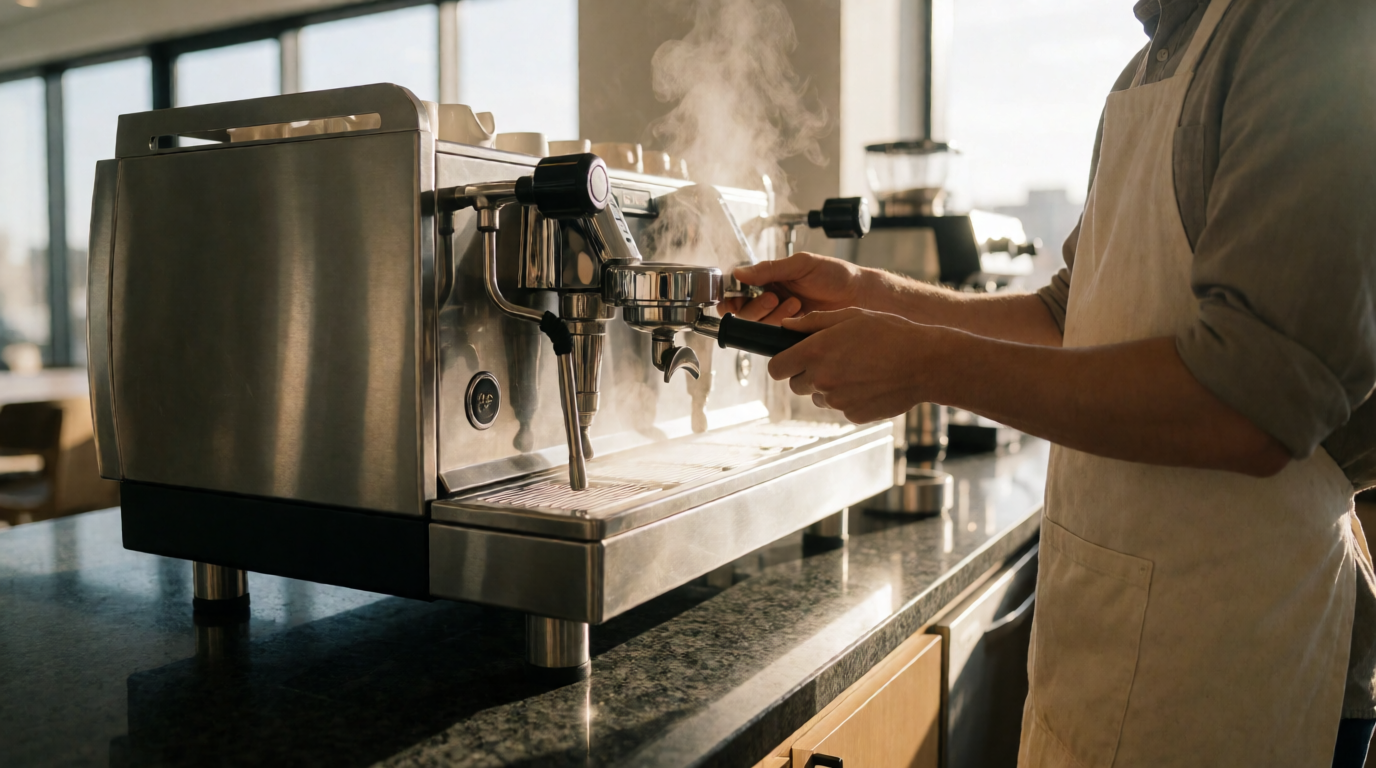
****: A coffee membership for office teams is a subscription service where a provider supplies commercial-grade espresso equipment, specialty coffee beans, maintenance, and support for a fixed monthly fee. Instead of buying expensive machines and managing supplies yourself, you get a turnkey solution with predictable costs, premium coffee, and zero hassle. Membership typically includes installation, training, ongoing service, and automatic bean replenishment.
| Feature | Traditional Coffee Setup | Coffee Membership Model |
|---|
| Upfront cost | $5,000–$15,000 for equipment | $0 (included in monthly fee) |
| Maintenance | You handle repairs or pay extra | Full coverage in monthly fee |
| Coffee supply | You purchase beans separately | Beans included, auto-shipped |
| Equipment upgrades | Only when you buy new | Provider upgrades as needed |
| Service response | Varies by vendor | Typically next-business-day |
Introduction
If you’ve ever managed office coffee, you know the drill: a machine breaks, beans run out, and suddenly your team is grumpy or heading to the nearest café. A coffee membership solves these headaches by bundling everything—equipment, beans, maintenance, and support—into one predictable monthly payment. For office teams, this means high‑quality espresso, cappuccino, and drip coffee without the capital expense or administrative burden. In this guide, I’ll walk you through exactly how coffee memberships work, what to look for, and how to get started based on what I’ve seen work best for businesses like yours.
What Is a Coffee Membership for Offices?
📚Definition
A coffee membership (or managed coffee service) is a subscription model where a provider delivers a fully equipped coffee solution—including a commercial espresso machine, grinder, beans, milk, syrups, and ongoing maintenance—for a fixed monthly fee. No long‑term equipment leases, no surprise repair bills, and no inventory management.
In practice, a coffee membership flips the traditional procurement model. Instead of your office owning the assets, the provider retains ownership and charges a fee that covers all operating costs. This is especially attractive for organizations that want premium coffee but don’t want to tie up capital or dedicate staff to equipment upkeep.
According to a 2023 report by the National Coffee Association, 79% of office workers say that access to high‑quality coffee positively influences their job satisfaction. Yet only a fraction of offices offer espresso‑based drinks. A coffee membership bridges that gap by making professional‑grade coffee accessible to teams of any size.
In my experience working with dozens of office managers and facility directors, the biggest unspoken cost of traditional coffee setups is the hidden time — the hours spent researching repairs, sourcing beans, and cleaning machines. A membership eliminates that friction. One office manager I worked with told me, “I used to spend four hours a month just managing coffee supplies. Now it’s zero.”
💡Key Takeaway
A coffee membership is not just about coffee—it’s about freeing your team from the operational overhead of managing a beverage program. The value proposition is convenience and predictability.
Why Coffee Membership Makes a Difference for Office Teams
Let’s put some numbers behind the concept. A typical mid‑sized office (50 employees) that offers self‑serve coffee spends roughly $3,000–$6,000 per year on beans, milk, cups, and basic drip machines. But that doesn’t include the cost of downtime when a machine breaks, or the morale cost when the only option is stale Folgers.
A coffee membership, by contrast, delivers consistently great coffee with minimal interruption. Here’s what changes:
1. Cost Predictability
Instead of lumpy capital expenditures and variable supply costs, you pay one flat fee. This makes budgeting easy. A Harvard Business School study on subscription models found that businesses that shift from CAPEX to OPEX procurement see a 15% improvement in operational cost predictability.
2. Higher Coffee Quality
Memberships typically include freshly roasted specialty‑grade beans. That’s a far cry from the pre‑ground canisters many offices settle for. Better coffee means fewer trips to Starbucks, which a study by CareerBuilder estimated costs companies $2.1 million annually in lost productivity from coffee runs.
3. Zero Maintenance Hassles
When a commercial espresso machine goes down, repair costs can run $300–$800 per visit. With a membership, that’s covered. The provider handles everything from descaling to part replacement.
4. Employee Satisfaction and Retention
Perks like premium coffee are proven retention tools. According to a Willis Towers Watson survey, 73% of employees say workplace perks are important to their decision to stay. A coffee membership delivers a daily perk that employees actually use.
5. Sustainability and Waste Reduction
Many providers offer compostable pods or bulk bean options, reducing single‑use waste. A coffee membership can simplify your office’s sustainability goals by including eco‑friendly products and recycling programs.
How to Implement a Coffee Membership in Your Office: A Step‑by‑Step Guide
Ready to make the switch? Here’s a practical 5‑step process I’ve refined after helping dozens of offices transition to a managed coffee service.
Step 1: Assess Your Team’s Coffee Needs
- How many employees drink coffee daily?
- What types of drinks are preferred (espresso, cappuccino, drip, cold brew)?
- How many coffee runs happen each week? (If it’s more than 20, a membership will quickly pay for itself.)
Step 2: Research Providers
Look for a provider that specializes in office coffee memberships, not just a coffee roaster. Key criteria:
- Equipment quality (look for super‑automatic machines like the Busy Bean SENSA line — they’re built for high volume and require minimal user skill)
- Response time for service (aim for next‑business‑day)
- Bean sourcing (freshly roasted, specialty grade)
- Transparent pricing (no hidden fees for installation, cleaning, or beans)
Step 3: Request a Consultation and Demo
A reputable provider will visit your office, assess the space, and recommend a machine and plan. They’ll also handle the
white glove installation, which includes countertop adjustments, plumbing if needed, and training for your team.
Step 4: Define the Membership Terms
Typical membership contracts run 12–36 months. Look for:
- Equipment included: machine, grinder, water filtration
- Maintenance: scheduled and emergency service
- Bean supply: frequency (monthly, bi‑weekly) and minimum order
- Upgrade options: can you swap machines as your needs grow?
Step 5: Launch and Monitor
After installation, run a soft launch to gather feedback. Most providers will adjust the bean profile or machine settings at no extra cost. Set a reminder to review usage after 90 days — many offices find they need to upsize or adjust schedules.
💡Key Takeaway
The implementation process is essentially turnkey. The provider does the heavy lifting. Your job is to choose the right partner and communicate your team’s preferences clearly.
Coffee Membership Options Compared
Not all coffee memberships are the same. Here’s a comparison table to help you decide:
| Option | Pros | Cons | Best For |
|---|
| Bean‑to‑Cup Super‑Automatic | Fresh‑ground espresso per cup; minimal waste; easy to operate | Higher monthly fee; requires periodic deep cleaning | Offices with 20–100 employees who want espresso variety |
| Single‑Serve Pod System | Low upfront; no cleaning; individual freshness | Pod waste; limited flavor; higher per‑cup cost | Small teams (under 10) or low‑volume break rooms |
| Traditional Drip with Premium Beans | Lowest monthly cost; familiar to all | No espresso; brewers need regular descaling | Large teams that drink black coffee exclusively |
| Managed Full‑Service (e.g., Busy Bean Coffee) | All‑inclusive: machine, beans, maintenance, training | Typically requires a 12‑month commitment | Any office that wants hassle‑free, high‑quality coffee from day one |
In my experience, the bean‑to‑cup super‑automatic option strikes the best balance for most offices. It delivers café‑quality drinks without requiring a barista. Providers like
Busy Bean Coffee offer the SENSA line, which is designed for high‑volume office environments. For more details on setup, see our
Quick Setup Guide for Office Espresso Machines.
Common Questions and Misconceptions
Over the years, I’ve heard the same concerns from office managers. Let’s clear them up.
Misconception 1: Coffee memberships are more expensive than buying equipment.
When you factor in the full cost of ownership—machine purchase, repairs, beans, filters, and the time spent managing it all—memberships are often cheaper. A total cost of ownership analysis by Foodservice Equipment Reports found that managed services reduce overall coffee expenses by 10–20% over three years.
Misconception 2: The coffee won’t be as good as what I get at a café.
Actually, the opposite is true. Commercial super‑automatic machines (like those used in memberships) are the same models used in many cafés. The difference? The beans are often fresher because they’re delivered directly from the roaster, not sitting on a grocery shelf.
Misconception 3: It’s hard to cancel or change plans.
Reputable providers make adjustments easy. Most allow you to change bean types, increase or decrease delivery frequency, or even swap machines as your team grows. The
All‑Inclusive Coffee Membership Models Explained article covers contract flexibility in depth.
Misconception 4: My office is too small for a membership.
Memberships scale down to as few as 5 employees. Many providers have specific plans for small teams, like the
Best Office Espresso Machines for Small Teams in 2026.
Frequently Asked Questions
How much does a coffee membership typically cost per month?
For an office of 20–50 people, expect to pay $300–$800 per month for a full‑service membership that includes a super‑automatic machine, beans, maintenance, and support. Larger offices may pay $1,000–$2,500. The exact price depends on consumption volume, machine type, and bean selection. Always ask for a total cost breakdown, including any installation or training fees.
What happens if the espresso machine breaks?
Service calls are included in most plans. Once you report an issue, the provider dispatches a technician—often within one business day. For mission‑critical situations, some providers offer priority or same‑day service. Always check the service level agreement (SLA) before signing.
Can I choose the type of coffee beans?
Absolutely. Most providers offer a selection of single‑origin and blend options. You can also request decaf, low‑acid, or organic beans. Some even let you customize your own blend. The beans are typically shipped directly from the roaster in airtight containers to preserve freshness.
Is training included for our team?
Yes. Installation usually includes a 30‑minute training session on machine operation, cleaning, and basic troubleshooting. Many providers also supply printed guides or video tutorials. For larger offices, advanced training for designated “coffee champions” is available through
Barista Equipment Training for Foodservice Teams.
How does billing work? Is there a long-term contract?
Billing is monthly, and contracts typically range from 12 to 36 months. Some providers offer month‑to‑month with a slightly higher fee. Be wary of contracts that lock you into a specific machine for the full term; reputable providers allow upgrades or downgrades as your needs change.
Summary + Next Steps
A coffee membership transforms office coffee from a constant headache into a set‑and‑forget benefit. You get premium equipment, fresh beans, and reliable support—all for one predictable monthly payment. For office teams, it’s a no‑brainer way to boost morale, save time, and eliminate hidden costs.
Ready to see how a coffee membership could work for your office?
Busy Bean Coffee offers a free consultation and on‑site assessment. We’ll help you choose the right equipment, plan the installation, and get your team brewing in no time. For more on the options, check out our guide to
Office Espresso Machines vs Traditional Drip Coffee and learn why so many offices are making the switch.
Recommended Readings
To deepen your understanding of these topics, we recommend reading the following articles:
About the Author
Travis Estes is the founder of Busy Bean Coffee, a provider of all‑inclusive managed coffee solutions for offices, hotels, and foodservice since 2014. He has helped hundreds of businesses streamline their coffee programs with zero‑hassle memberships. When he’s not tasting new roasts, he’s researching the latest in commercial espresso technology.
Free Coffee Pairing Guide & Specialty Roast Cheat Sheet
Unlock the secrets of perfect brewing ratios, water temperatures, and specialty roast profiles. Download the guide.