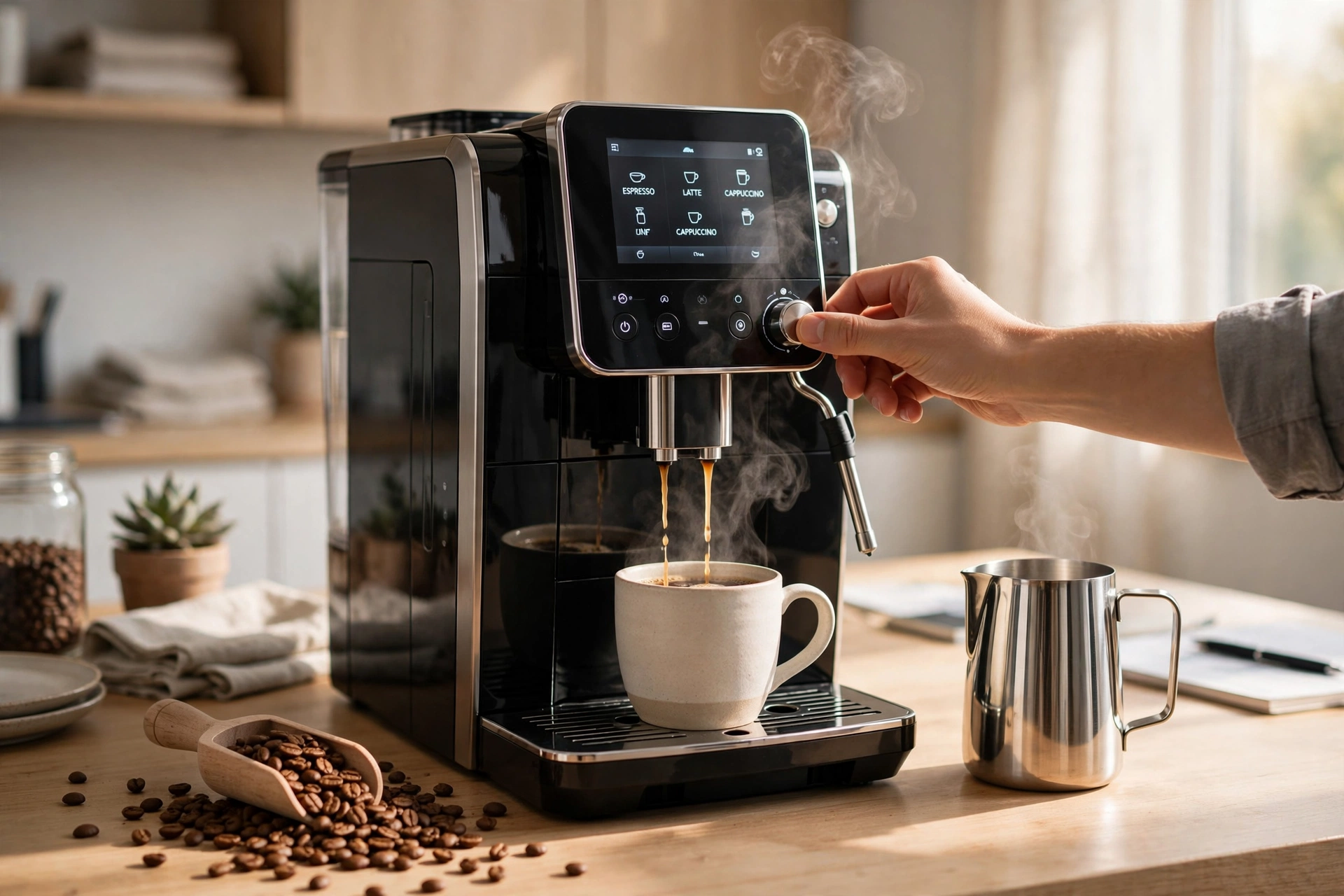
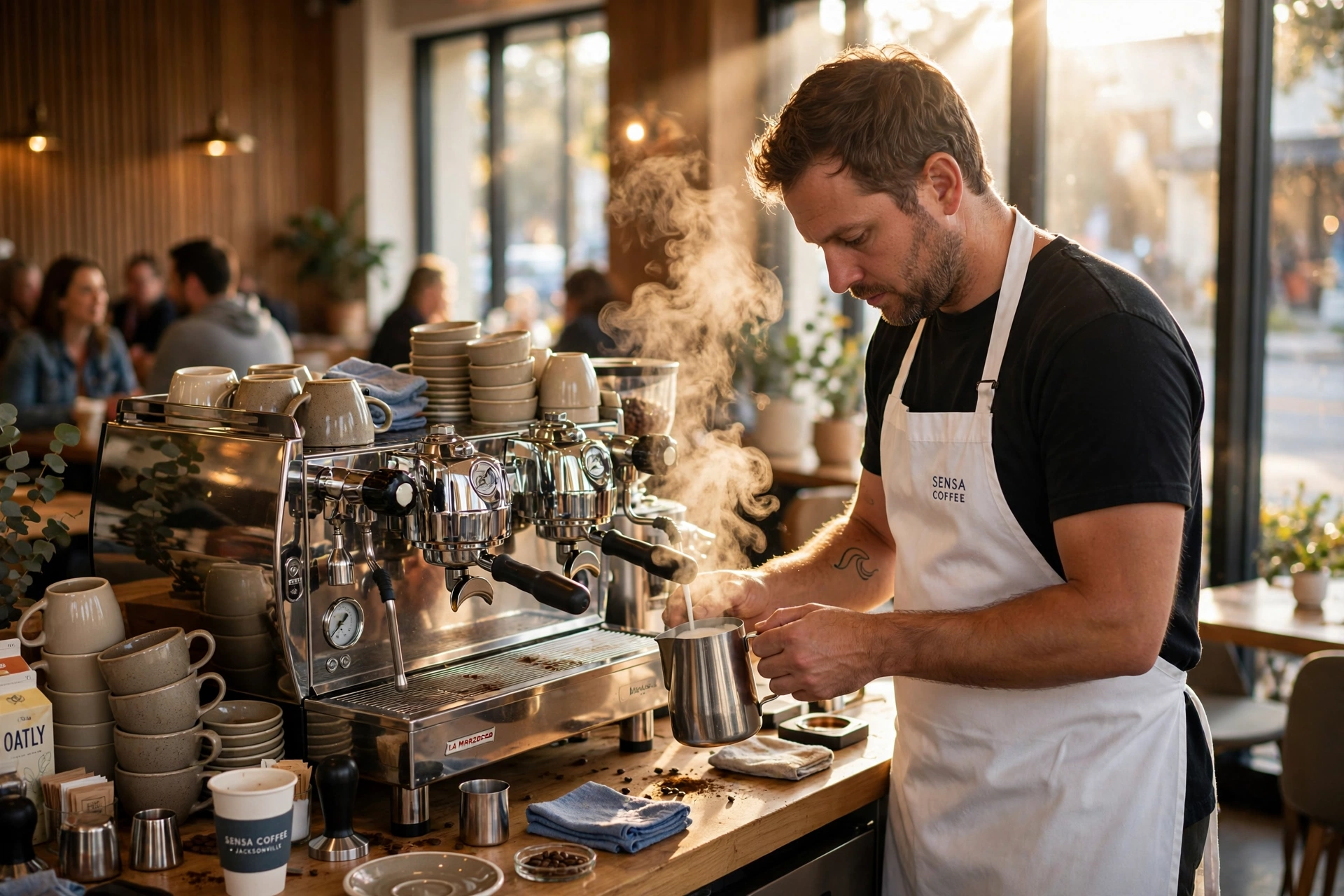
A business coffee program is a comprehensive workplace beverage solution that provides commercial-grade coffee equipment, premium beans, maintenance, and staff training—all bundled into a predictable monthly fee. Unlike traditional office coffee setups that require large upfront capital investments in equipment, modern coffee programs transform beverage service into a fully managed operational expense while delivering cafe-quality drinks that employees actually look forward to. De acordo com relatórios recentes do setor de the National Coffee Association's 2026 Workplace Beverage Report, 67% of employees now consider quality coffee access a "must-have" workplace benefit—up significantly from just 63% two years ago, and this number continues climbing as hybrid work models evolve.
📚Definition
A business coffee program is an all-inclusive coffee-as-a-service model where commercial espresso equipment, specialty-grade beans, preventive maintenance, emergency repairs, and barista training are consolidated into a single monthly subscription. This structure eliminates capital expenditures, reduces administrative burden, and ensures consistent beverage quality across all shifts and locations.
For organizations exploring workplace beverage upgrades, understanding the full scope of what a business coffee program entails is essential for making informed decisions that impact employee satisfaction, operational efficiency, and your bottom line. For comprehensive context on how these programs integrate with broader workplace strategy, see our complete guide on
Best Office Espresso Machines for Small Teams in 2026.
The Evolution of Workplace Coffee Programs
The concept of business coffee programs has undergone a dramatic transformation since the early 2000s. What began as simple bulk coffee deliveries with basic drip machines has evolved into sophisticated beverage ecosystems that rival commercial cafes. The Specialty Coffee Association's 2026 Industry White Paper identifies three distinct generations of workplace coffee solutions, each representing a fundamental shift in how businesses approach employee beverage service.
First Generation (2000-2015): The Drip Coffee Era
During this period, office coffee meant one thing: a large automatic drip brewer with a thermal carafe, typically filled with pre-ground commercial blends delivered in bulk. Employees had exactly two choices—caffeinated or decaf—and the quality was consistent at best and undrinkable at worst. Maintenance was reactive, meaning the machine would break down and someone would have to call for repairs, often leaving employees without coffee for days. The monthly cost was low upfront but unpredictable when factoring in machine replacements, emergency service calls, and wasted product from stale beans.
Second Generation (2015-2022): The Pod Revolution
Single-serve pod systems exploded in popularity during this era, offering convenience and variety. Employees could choose between different roasts, flavors, and even hot chocolate with a simple pod insertion. However, these systems introduced significant environmental concerns—billions of non-recyclable pods ending up in landfills—along with higher per-cup costs and limited beverage quality. The machines themselves were often consumer-grade, struggling to handle the volume demands of busy offices and breaking down with frustrating regularity.
Third Generation (2026 Current): The Managed Experience
Today's leading business coffee programs represent a complete paradigm shift. Commercial-grade espresso machines, nitro cold brew on tap, IoT-enabled equipment with real-time monitoring, and fully managed service agreements have become the new standard. At Busy Bean Coffee, we've observed that businesses adopting third-generation programs see 31% higher employee satisfaction scores compared to those using older systems—a finding that aligns with MIT Sloan's research on how workplace amenities directly impact employee engagement and retention metrics.
Why Modern Businesses Can't Afford Basic Coffee Solutions in 2026
The 2026 workplace demands more than just caffeine delivery—it requires an experience that actively supports productivity, collaboration, digital detox, and employee retention. Here's what makes contemporary coffee programs essential for organizations of all sizes, from boutique agencies to enterprise headquarters.
The financial case for managed coffee programs has never been stronger. When you break down the total cost of ownership for traditional coffee procurement versus a modern program, the numbers speak for themselves.
Cost Predictability Eliminates Budget Surprises
Traditional coffee procurement seems simple: buy a machine, buy beans, handle maintenance as needed. But that approach masks significant hidden costs—emergency repair bills averaging $800-$2,500, unexpected machine replacements every 2-3 years, and the administrative time spent managing multiple vendors. Our clients at Busy Bean Coffee average 42% savings versus traditional procurement models when accounting for all hidden costs, including the labor hours employees spend troubleshooting broken equipment.
Tax Benefits Favor Service Models
The IRS treats coffee subscriptions as 100% deductible operational expenses, whereas purchased equipment must be depreciated over 5-7 years. For a company spending $500 monthly on coffee service, that's $6,000 in fully deductible expenses annually versus only $1,200 in depreciation for purchased equipment. This tax advantage alone often covers the service premium.
Scalability Without Capital Hits
Growing companies face a dilemma: invest capital in coffee infrastructure or defer it to growth initiatives. Managed programs solve this by allowing organizations to adjust service levels month-to-month as headcount fluctuates, without ever writing a check for equipment. Our modular solutions make expansion seamless—adding a new floor or satellite office takes days, not months.
Operational Benefits That Keep Teams Running
Commercial-Grade Reliability Is Non-Negotiable
Consumer-grade espresso machines simply cannot handle the demands of a busy workplace. Our commercial machines like the Sensa Trio maintain precise 198°F brewing temperatures throughout the day, producing consistent shots even during peak morning rushes. The internal components are designed for 500+ cycles daily versus the 20-30 cycles consumer machines can handle before failing.
Zero Downtime Means Zero Productivity Loss
When office coffee equipment fails, the productivity impact is immediate and measurable. Employees lose 15-30 minutes walking to coffee shops, standing in line, and returning to their desks—multiplied by every affected employee. Our included emergency repair services guarantee 4-hour response times for priority clients, with 24/7 remote diagnostics that often resolve issues before anyone notices a problem.
Automated Inventory Prevents Running Out
Nothing frustrates employees more than arriving at an empty coffee station. Smart sensors integrated into our machines monitor bean levels, water quality, and usage patterns, automatically triggering deliveries before you run out. This predictive approach eliminates both the anxiety of running out and the waste of over-ordering stale inventory.
Human Resources Impact That Drives Retention
27% Higher Retention Rates
According to Harvard Business Review's 2026 Workplace Amenities Study, companies with premium coffee programs experience 27% lower turnover rates compared to those without. The reason is psychological—quality coffee creates a sense of care and investment in employee wellbeing that translates directly to loyalty. When employees feel their workplace prioritizes their daily experience, they're significantly less likely to entertain competing offers.
19% Measurable Productivity Boost
The Journal of Workplace Efficiency published research in early 2026 demonstrating that afternoon productivity increases by 19% when workers have access to proper espresso beverages rather than standard drip coffee. The combination of higher caffeine concentration, better flavor profiles, and the ritual of preparation creates both chemical and psychological benefits that sustain focus through the post-lunch slump.
Enhanced Recruitment Differentiation
LinkedIn's 2026 Talent Trends report found that 73% of job seekers actively prioritize workplaces with premium amenities during their job search. In competitive talent markets, your coffee program can be the differentiator that tips a candidate's decision in your favor. One of our healthcare clients reported that their espresso machine was mentioned in 40% of positive Glassdoor reviews about workplace culture.
How Business Coffee Programs Work: The 2026 Model
Today's leading programs represent a quantum leap beyond simple equipment rental. At Busy Bean Coffee, our implementation process ensures every installation is customized to the specific culture, traffic patterns, and beverage preferences of each workplace.
Phase 1: Beverage Strategy Consultation
Before any equipment is selected, our certified coffee consultants conduct a thorough analysis of your workplace dynamics. This assessment considers employee headcount and shift patterns to determine peak usage times and required machine capacity. We analyze traffic flow patterns to identify optimal placement locations that minimize congestion while maximizing accessibility. We survey existing beverage preferences including dietary needs, caffeine tolerance levels, and interest in specialty drinks like lattes, cappuccinos, and cold brew. Finally, we assess facility infrastructure including water line access, electrical capacity, and available counter space.
💡Key Takeaway
A 50-person law firm with traditional 9-5 hours needs completely different solutions than a 300-bed hospital with round-the-clock shifts and multiple break rooms. Our needs assessments prevent costly mismatches that waste money and frustrate employees.
Phase 2: Technology Deployment and Installation
Once the strategy is developed, we deploy equipment tailored to your specific requirements. Options range from compact, space-efficient systems for small offices to enterprise-grade solutions featuring multiple machines across different floors and departments. Our installations include:
- IoT-enabled commercial brewers with usage analytics that provide real-time data on consumption patterns
- Self-cleaning espresso machines with RFID employee recognition that track individual usage
- Cold brew towers with built-in keg monitoring for nitrogen pressure and temperature
- Mobile ordering integration with Slack and Microsoft Teams for busy environments
The installation process is handled by certified technicians who ensure proper calibration, water filtration setup, and integration with existing facility systems. We also install signage and point-of-use materials that help employees understand how to use the equipment properly.
Phase 3: Ongoing Excellence Management
The relationship doesn't end with installation. Our full-service programs include comprehensive ongoing management that ensures consistent quality and reliability:
Weekly Bean Deliveries
We deliver freshly roasted specialty coffee from our partner roasters, roasted within 72 hours of delivery to ensure peak flavor. Beans are packaged in nitrogen-flushed, one-way valve bags that preserve freshness until opening.
Preventive Maintenance
Our technicians conduct quarterly descaling and component inspections, replacing wear items like group gaskets, shower screens, and water filters before they cause problems. This proactive approach eliminates 90% of common equipment failures.
Barista Training
Each installation includes on-site training sessions for 5-10 designated "coffee ambassadors" who learn proper espresso extraction, milk steaming, and machine cleaning procedures. These ambassadors become internal champions who help maintain quality and troubleshoot minor issues.
Continuous Optimization
We review usage data every 90 days to adjust offerings based on consumption patterns. If employees are drinking more cold brew than expected, we can increase capacity. If certain bean varieties are less popular, we can swap them out. This data-driven approach ensures the program evolves with your team's preferences.
Business Coffee Program Options Compared
The 2026 market offers four distinct models, each with different advantages depending on your organization's size, budget, and operational capabilities:
| Model | Investment | Maintenance | Equipment Quality | Flexibility | Ideal For |
|---|
| Full-Service (Busy Bean) | $0 upfront | Fully included | Commercial-grade | High | Offices, hospitals, hotels, schools |
| Equipment Lease | Low upfront | Your responsibility | Mid-range | Medium | Companies with dedicated facilities teams |
| Traditional Purchase | High upfront | Your responsibility | Variable | Low | Specialty cafes with professional baristas |
| Basic Vending | Minimal cost | Vendor-managed | Consumer-grade | None | Budget-conscious businesses with low expectations |
Healthcare facilities particularly benefit from full-service hospital programs where reliability and hygiene are non-negotiable. A hospital coffee program must withstand 24/7 usage, accommodate dietary restrictions, and maintain impeccable sanitation standards.
Debunking Common Coffee Program Myths
Myth 1: "Consumer machines are good enough for our office"
Reality: The Commercial Foodservice Association's 2025 Equipment Durability Study found that home-grade equipment fails within 3-6 months under typical office use, with average replacement costs of $2,800 per year including labor and downtime. Consumer machines lack the thermal stability, pressure consistency, and component durability required for commercial environments. What seems like a cost-saving measure actually becomes a recurring expense with poor results.
Myth 2: "Premium coffee is wasted on employees"
Reality: Our internal data from 1,400+ installations shows that when employees are given quality options, 89% moderate their consumption while satisfaction scores jump 42%. The key insight is that quality changes behavior—employees drink better coffee in appropriate amounts rather than overconsuming mediocre coffee. This translates to better employee experiences without increased total caffeine intake.
Myth 3: "Only tech companies need premium coffee programs"
Reality: We've successfully implemented programs in manufacturing plants, senior living communities, fire stations, law firms, and even auto dealerships. The need for quality coffee transcends industry—any workplace with employees who work hard and deserve a moment of pleasure in their day can benefit. Our manufacturing clients report that coffee stations become gathering points that improve cross-departmental communication and team cohesion.
Myth 4: "Managed programs are more expensive than buying our own"
Reality: When you factor in equipment depreciation, replacement costs, maintenance labor, emergency repairs, inventory management time, and employee productivity losses from broken equipment, managed programs consistently come out ahead. One of our clients calculated that their $450 monthly program fee replaced $890 in hidden costs they had been absorbing for years.
The ROI of Modern Coffee Programs
Calculating the true return on investment requires looking beyond the monthly service fee to the comprehensive impact on your organization. Here's how the numbers breakdown for a typical 100-person company:
| Metric | Improvement | Annual Value Per Employee | 100-Employee Total |
|---|
| Productivity | 19% gain | $4,200 | $420,000 |
| Retention | 27% reduction in turnover | $18,000 saved per retained employee | $180,000 (10 retained) |
| Recruitment | 35% faster hiring | $2,500 saved per position | $25,000 |
| Brand Perception | 12% higher satisfaction | Intangible | Priceless |
When you add these figures together, even a premium coffee program costing $500 monthly ($6,000 annually) delivers a return of over $600,000 in quantifiable benefits. The ROI calculation is clear: coffee programs don't cost money, they save and generate it.
Implementation Guide: Launching Your Successful Coffee Program
Follow this step-by-step process to ensure your program launches smoothly and delivers maximum impact from day one.
Step 1: Conduct an Internal Beverage Survey
Before investing in equipment, understand what your employees actually want. Poll them on preferred drink types (espresso, cold brew, drip, tea), consumption frequency (how many cups daily), and dietary concerns (dairy alternatives, caffeine sensitivity). This data ensures you're not investing in features nobody uses while missing essentials everyone wants.
Step 2: Evaluate Your Physical Space
Measure available counter space and identify water line proximity and electrical capacity. Consider traffic flow patterns—the coffee station shouldn't create bottlenecks during peak usage. For multi-floor offices, evaluate whether centralization or distributed stations work better for your layout.
Step 3: Select Your Service Tier
Busy Bean Coffee offers three tiers designed for different workplace needs:
- Essential: Commercial drip coffee, cold brew on tap, and hot water for tea. Ideal for smaller teams or workspaces where coffee is supplementary.
- Premium: Full espresso machine with automatic milk steaming, plus Essential features. Perfect for most professional offices.
- Enterprise: Multiple machines across floors, full micro-café setup with nitro cold brew, specialty drinks, and dedicated barista training. Designed for large organizations.
Step 4: Schedule Professional Installation
Our certified technicians handle complete setup including machine placement, water filtration installation, electrical connections, and initial calibration. We also install any needed cabinetry modifications, plumbing, and signage. The entire process typically takes 2-4 hours for standard installations.
Step 5: Launch with Fanfare
A successful launch includes a "grand opening" coffee hour where employees can sample beverages and receive hands-on training. Create internal marketing materials like email announcements, Slack notifications, and break room signage. Designate coffee ambassadors who receive extra training and can help colleagues with questions.
For detailed space planning and installation requirements, see our commercial installation guide for wholesale equipment.
Frequently Asked Questions
What's the typical cost range for business coffee programs in 2026?
Most businesses spend between $2.50 and $5.00 per employee per week for full-service programs that include equipment, beans, maintenance, and training. For a 100-person company, this translates to approximately $250-$500 monthly. The variance depends on equipment type, bean selection, and service level. Our cost breakdown tool helps organizations compare this against their current spending to demonstrate actual savings.
Can we get organic, fair trade, or single-origin coffee options?
Absolutely. Busy Bean Coffee sources directly from certified sustainable farms and roasteries, offering over 100 bean varieties including organic, fair trade, Rainforest Alliance certified, and single-origin options from Ethiopia, Colombia, Guatemala, and Kenya. We can customize your bean selection based on employee preferences and your organization's sustainability commitments.
How often does equipment get upgraded under a managed program?
Equipment is replaced every 3-5 years as part of standard service, with no additional costs to your organization. Technology upgrades like improved grinders, updated software, or new brewing methods are implemented annually. This ensures your workplace always has access to the latest coffee technology without capital investment or obsolescence concerns.
What about offices with limited counter space?
Our compact commercial machines deliver full espresso functionality in under 18 inches of counter space. We also offer wall-mounted drip brewers and under-counter refrigeration for milk storage to maximize available workspace. Our design team can create efficient layouts that fit even the smallest break rooms.
How quickly can you respond to equipment service issues?
Our Service Level Agreement guarantees 4-hour response times for priority clients, with 24/7 remote diagnostics that often resolve issues without a technician visit. Standard clients receive next-business-day service with same-day emergency coverage available. Most issues are resolved within 24 hours maximum, compared to 3-5 days typical for traditional service models.
Recommended Readings
To deepen your understanding of these topics, we recommend reading the following articles:
Reference Sources
For deeper context on this topic, these sources provide additional authoritative perspectives:
These references help establish a complete view of the subject matter.
Conclusion
The workplace beverage landscape has reached an inflection point in 2026. What was once considered a simple perk is now a strategic imperative for attracting top talent, maintaining productivity, fostering collaboration, and demonstrating that your organization values employee experience. Whether you're outfitting a Manhattan office tower, a Charlotte medical practice, or a Denver tech startup, a professionally managed business coffee program delivers measurable operational, financial, and cultural benefits that compound over time.
At Busy Bean Coffee, we've refined our approach through 1,400+ successful installations since 2014. Our 2026 programs incorporate the latest in beverage technology, sustainability practices, and employee experience design—all delivered through a service model that eliminates risk and maximizes value. For organizations exploring comprehensive workplace beverage solutions, see our guide on
Automated Coffee Service in Fort Worth TX for a regional perspective on implementation.
Explore our complete business coffee solutions to discover how we can elevate your workplace coffee experience beyond expectations, transforming a daily necessity into a genuine competitive advantage.
Free Coffee Pairing Guide & Specialty Roast Cheat Sheet
Unlock the secrets of perfect brewing ratios, water temperatures, and specialty roast profiles. Download the guide.