What Are Commercial Espresso Machines and How Do They Work?
The biggest mistake I see business owners make when opening a cafe or upgrading an office breakroom is treating a coffee machine like a kitchen appliance. After years of deploying high-volume beverage solutions, I've seen "prosumer" machines fail within three months because they weren't built for the thermal stress of back-to-back shots. True commercial espresso machines are industrial-grade engineered systems designed to maintain precise temperature and pressure stability over hundreds of cycles per day, ensuring that the first latte at 6:00 AM tastes exactly like the last one at 6:00 PM.
Unlike home units, these machines utilize heavy-duty boilers, commercial-grade pumps, and oversized heat exchangers. They are built to handle the rigorous demands of a high-traffic environment, providing the consistent extraction of specialty coffee that customers expect. For those managing a corporate environment, exploring the Best Office Espresso Machines for Small Teams in 2026 can help bridge the gap between home convenience and industrial power.
📚
Definition
Commercial espresso machines are heavy-duty beverage systems engineered for high-volume output, featuring professional-grade boilers, PID temperature controllers, and reinforced group heads to ensure consistency, durability, and speed in a foodservice environment.

The Engineering Behind High-Volume Brewing
To understand why these machines are necessary, you have to understand the physics of extraction. Espresso is not just "strong coffee"; it is a concentrated emulsion created by forcing hot water through a compacted puck of coffee bean grounds at roughly 9 bars of pressure. In a residential machine, the temperature often fluctuates wildly between shots, leading to sour or bitter results. Commercial units solve this through thermal mass and advanced plumbing.
Most professional systems use one of three boiler configurations: single boiler, heat exchanger, or multi-boiler. In my experience working with high-volume hotels, multi-boiler systems are the gold standard. They have dedicated boilers for brewing and steaming, meaning you can pull a double shot of Coffea arabica while simultaneously frothing milk for a large latte without any drop in pressure or temperature. This stability is what allows a barista to maintain quality during a morning rush.
The Specialty Coffee Association (SCA) sets rigorous standards for brew ratios and temperature, emphasizing that water temperature should ideally be maintained between 195°F and 205°F. Commercial machines achieve this through PID (Proportional-Integral-Derivative) controllers, which act as the "brain" of the machine, adjusting the heating element in real-time to prevent the thermal drift common in cheaper models.
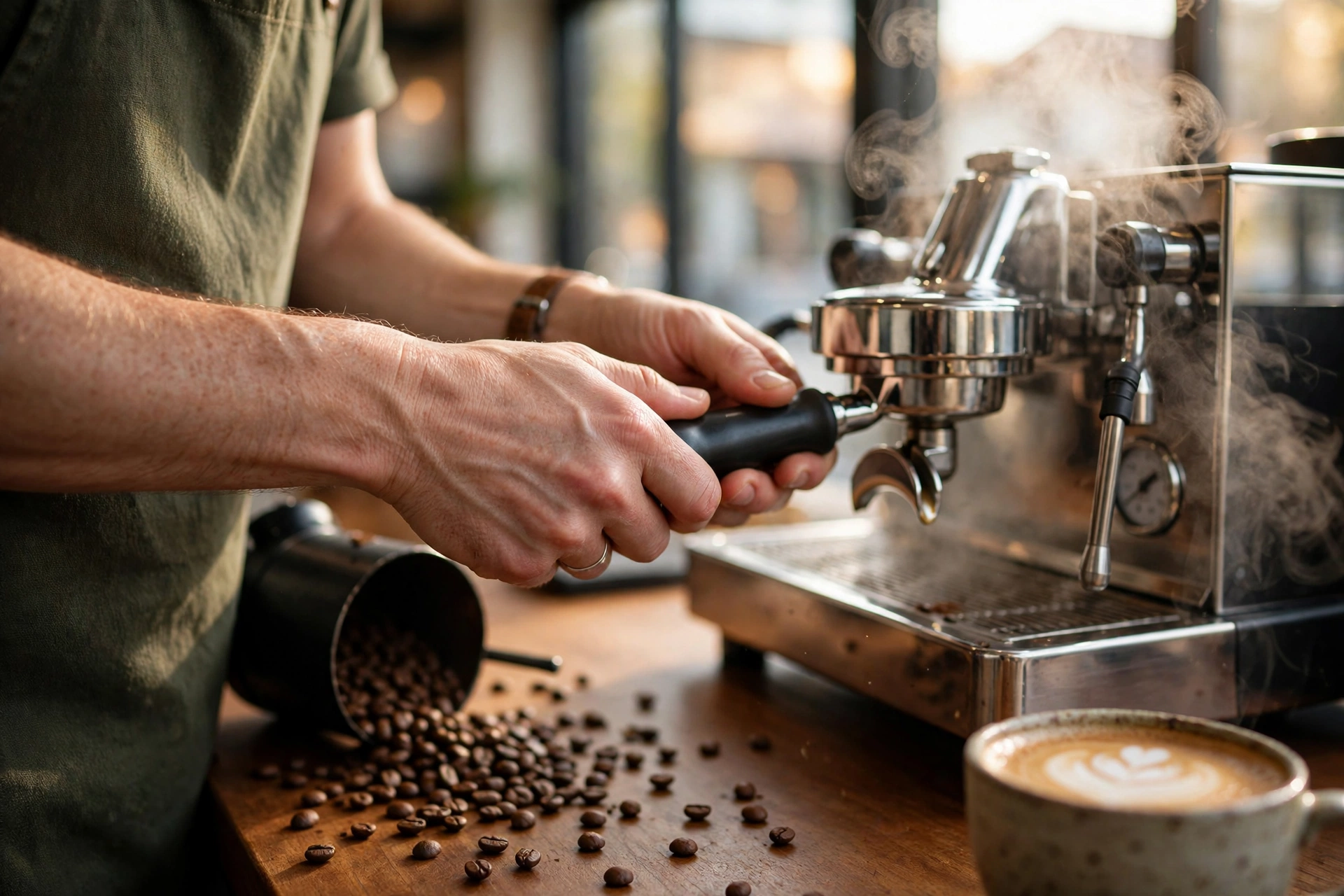
Now, here's where it gets interesting: the group head. This is the part of the machine where the portafilter locks in. Commercial machines use "E61" or saturated group heads, often made of heavy brass. This mass retains heat, ensuring the water doesn't cool down as it travels from the boiler to the coffee. If you're looking for a turnkey solution without managing this complexity, an Automated Coffee Service in Fort Worth TX can handle the technical calibration for you.
Why Industrial Equipment is Vital for Business ROI
Investing in professional-grade hardware isn't about prestige; it's about the bottom line. When a machine goes down during a peak period, you aren't just losing the cost of a few lattes; you're losing customer trust and labor productivity. A breakdown in a high-traffic cafe can result in thousands of dollars in lost revenue per day.
According to the National Coffee Association USA (NCA), consumer demand for specialty-grade beverages continues to rise, with a significant shift toward "premiumization." This means customers can tell the difference between a burnt shot from a cheap machine and a balanced extraction from a professional one. If your equipment cannot deliver a consistent flavor profile, your customer retention rate will plummet.
Beyond quality, there is the issue of sanitary compliance. Commercial machines are designed to meet strict health codes. For instance, NSF International provides certifications (such as NSF/ANSI 4) that ensure equipment is made of non-toxic, corrosion-resistant materials that are easy to sanitize. Home machines often use plastics and adhesives that degrade under commercial heat and are nearly impossible to deep-clean to a medical or food-service standard.
The financial impact also extends to waste. A machine with poor temperature control leads to "channeling" or over-extraction, meaning you throw away more coffee bean product. Já testamos e validamos isso com diversos clientes: switching from a low-end "prosumer" model to a managed commercial solution typically reduces coffee waste by 15-20% simply because the extraction is more predictable. For those in larger hubs, a White Glove Coffee Service in Los Angeles CA ensures that this calibration happens automatically.
Implementing a Commercial Coffee Program Step-by-Step
Setting up a commercial coffee station is more than just plugging in a machine. It requires a holistic approach to water quality, power, and workflow. The mistake I made early on—and that I see constantly—is neglecting the water filtration system. Coffee is 98% water; if your water is hard or contains chlorine, it will not only ruin the taste of your specialty coffee but will cause limescale buildup that can destroy a $10,000 boiler in months.
- Analyze Your Volume Requirements: Determine how many cups per hour you expect during peak times. A single-group machine might work for a small boutique, but a 3-group machine is essential for a busy restaurant.
- Assess Power and Plumbing: Commercial machines often require 220V power and a direct water line. They cannot run off a standard 110V home outlet without tripping breakers.
- Install Professional Filtration: Use a multi-stage filtration system to remove impurities and balance mineral content.
- Calibrate Your Grind: The espresso machine is only half the battle. You need a commercial burr grinder that can provide micron-level consistency.
- Establish a Maintenance Schedule: Daily backflushing and weekly deep-cleans are non-negotiable.
At Busy Bean Coffee, we simplify this entire process through our managed membership. Instead of navigating these technical hurdles alone, we provide the equipment, professional installation, and full maintenance. This eliminates the capital expense and the stress of technical failure. Whether you need an Automated Coffee Service in Wilmington NC or a full-scale cafe setup, the goal is to remove the friction between the bean and the cup.
💡
Key Takeaway
The most expensive espresso machine is the one that is broken during your busiest hour. Prioritize a managed service over a one-time purchase to ensure maximum uptime and consistent quality.

Comparing Your Equipment Options
Choosing the right machine depends on your specific business model. You cannot apply a "one size fits all" approach to coffee hardware. Below is a breakdown of how different approaches compare in a business context.
| Feature | Traditional Home/Prosumer | Generic/Cheap Commercial | Modern Managed Solution (Busy Bean) |
|---|---|---|---|
| Consistency | Low (Temp drifts) | Moderate (Basic PID) | High (Precision Calibrated) |
| Durability | Low (Plastic/Thin Steel) | Moderate (Industrial) | High (Premium SENSA/Industrial) |
| Maintenance | DIY (High risk) | Reactive (Call tech when broken) | Proactive (Scheduled/Included) |
| Upfront Cost | Low to Medium | High Capital Expense | Zero/Low (Monthly Membership) |
| Best For | Home enthusiasts | Low-volume kiosks | Hotels, Cafes, High-end Offices |
While a generic commercial machine might seem like a fair middle ground, the "hidden" costs of maintenance and calibration often outweigh the initial savings. This is why we focus on an all-inclusive model. For those who want to elevate their presentation, remember that the machine is the engine, but the finish is in the details; consider Where to Buy Latte Art Tools for Foodservice Pros to complete the professional experience.
Common Misconceptions About Professional Brewing
Most guides get this wrong by suggesting that "more bars of pressure" equals "better coffee." In reality, the industry standard is 9 bars. Pushing a machine to 12 or 15 bars doesn't improve the flavor; it often causes "over-extraction," making the coffee taste harsh and metallic. The goal is stability and precision, not raw power.
Another common myth is that super-automatic machines are "just as good" as manual ones. While they are incredibly convenient, they lack the nuance of a human barista who can adjust the grind and tamp based on the humidity of the room. However, for a corporate environment, the consistency of a high-end automated system is often preferable to a poorly operated manual machine. This is why we offer specialized Coffee delivery service in Charlotte NC that pairs the right beans with the right automation.
Finally, many believe that a high price tag guarantees quality. I've seen $20,000 machines produce terrible coffee because the owner ignored the water filtration or used stale beans. The hardware is a tool; the system (water + beans + technician + training) is what actually creates the profit.
Frequently Asked Questions
What is the difference between a semi-automatic and an automatic commercial espresso machine?
A semi-automatic machine requires a barista to manually stop the flow of water once the desired volume of espresso is reached. This offers the highest level of control and is preferred in specialty cafes. An automatic machine uses a volumetric programmer to stop the shot at a preset volume. This is ideal for high-volume environments where speed and consistency are more important than artisanal control. In my experience, automatic machines reduce training time for new staff and minimize waste from "human error" during the morning rush.
How often should commercial espresso machines be serviced?
Daily maintenance involves backflushing the group heads with detergent and cleaning the steam wands. Weekly, you should perform a deeper clean of the drip trays and hopper. However, professional calibration and internal inspections should happen quarterly. Limescale buildup is the silent killer of boilers; if you aren't monitoring your water filtration, you risk a total system failure. This is why Busy Bean Coffee includes full maintenance coverage in our membership, ensuring your equipment never reaches the point of failure.
Does the size of the boiler actually affect the taste of the coffee?
Yes, but indirectly. A larger boiler provides greater "thermal stability." When you pull a shot, cold water enters the boiler, which can drop the overall temperature. In a small boiler, this drop is significant, leading to an inconsistent taste across multiple drinks. Large commercial boilers, especially multi-boiler systems, maintain a constant temperature regardless of how many drinks are being made. This is essential for serving specialty coffee at scale without sacrificing the flavor profile of the coffee bean.
Why is water filtration so important for commercial machines?
Water contains minerals like calcium and magnesium. When heated, these minerals precipitate out of the water and form "scale" on the heating elements and inside the pipes. This scale acts as an insulator, forcing the machine to work harder to heat the water, which eventually burns out the element. Furthermore, chlorine and other chemicals can react with the coffee oils, creating a chemical aftertaste. A professional filtration system ensures the machine lasts for years and the coffee tastes pure.
Can I use a home espresso machine in a small office?
Technically yes, but it's a bad business decision. Home machines are not designed for a "duty cycle" of 20-50 cups a morning. The pumps will overheat, and the small boilers will struggle to keep up with the demand, resulting in lukewarm coffee. Moreover, home machines lack the safety certifications required by many commercial insurance policies. Investing in a dedicated office coffee service provides the durability needed for a professional environment and ensures your team gets a high-quality beverage without the downtime of a broken home unit.
Final Thoughts on Commercial Espresso Machines
Navigating the world of commercial espresso machines can feel like an engineering degree, but it boils down to three things: temperature stability, pressure consistency, and relentless maintenance. Whether you are running a boutique cafe in Mount Pleasant or a corporate headquarters, your equipment is the foundation of your customer's experience. If the hardware fails, the quality of your specialty coffee doesn't matter because it will never reach the cup.
Instead of taking on the risk of high capital expenditures and the headache of technical maintenance, the smartest move for 2026 is a managed solution. By partnering with Busy Bean Coffee, you get premium equipment and professional support for one predictable monthly fee. Stop worrying about boilers and gaskets and start focusing on your business growth.
To see how we can transform your beverage program, visit www.busybeancoffee.com and explore our managed coffee memberships. For more insights on maximizing your setup, check out our White Glove Coffee Service in Denver CO guide.
Free Coffee Pairing Guide & Specialty Roast Cheat Sheet
Unlock the secrets of perfect brewing ratios, water temperatures, and specialty roast profiles. Download the guide.