How Do You Properly Select and Set Up Specialty Coffee Equipment?
The difference between a mediocre cup of coffee and a world-class beverage often comes down to a few grams of precision and the thermal stability of your hardware. To successfully implement a professional coffee program, you must synchronize your bean selection with the specific technical capabilities of your specialty coffee equipment, focusing on the triad of grind consistency, water chemistry, and temperature control. In my experience working with high-volume hospitality clients in Mount Pleasant, SC, the most common failure isn't the lack of expensive gear; it is the failure to calibrate that gear to the specific profile of the coffee bean being used.
Understanding the Core Components of a Professional Coffee Ecosystem
Building a specialty coffee program requires moving beyond the "appliance" mindset and adopting a "systems" mindset. You aren't just buying a machine; you are installing a chemical extraction system. At its core, this involves the precise management of solute (the coffee solids) and solvent (the water) to achieve a balanced extraction.
📚
Definition
Specialty Coffee is a term used to describe coffee that scores 80 points or higher on a 100-point scale as evaluated by trained professionals, often emphasizing the unique characteristics of the Coffea arabica species and its specific terroir.
To achieve these standards, you need three primary pillars of equipment. First is the grinder. While many beginners focus on the brewer, the grinder is actually the most important piece of hardware in the shop. If your grind size is inconsistent, you will have "channeling," where water finds the path of least resistance through the coffee puck, leaving some areas over-extracted (bitter) and others under-extracted (sour).
Second is the brewing device, whether it is a multi-boiler espresso machine or a precision pour-over system. These machines must maintain a strict temperature range, usually between 195°F and 205°F. A fluctuation of even two degrees can fundamentally alter the flavor profile of a light-roast Ethiopian bean. According to the Specialty Coffee Association (SCA), precise temperature control is a non-negotiable standard for professional certification and quality consistency.
Finally, you need water filtration. Coffee is 98-99% water. If your water is too hard (high mineral content), it will scale your equipment and mute the brightness of the coffee. If it is too soft, the coffee will taste thin and overly acidic. This is where most businesses fail; they buy a $15,000 machine but plug it into a standard city water line without a dedicated reverse osmosis or carbon filtration system.
Why the Right Equipment Directly Impacts Your Bottom Line
Investing in high-tier specialty coffee equipment isn't about prestige; it is about waste reduction and throughput. When you use consumer-grade equipment in a commercial environment, you suffer from "drift." Drift occurs when a machine's temperature or pressure fluctuates throughout the day, forcing your baristas to constantly "dial in" the coffee.
If a barista spends 20 minutes every morning wasting 10 double-shots of espresso to find the right setting, and that happens across three different machines, you are throwing away thousands of dollars in specialty beans annually. More importantly, you are losing labor hours. In a fast-paced foodservice environment, a 10-second delay in shot timing due to poor equipment stability can lead to a bottleneck that frustrates customers and lowers your average transaction count per hour.
Furthermore, the longevity of your assets depends on the quality of the build. According to NSF International, equipment that meets NSF/ANSI 4 standards ensures not only food safety but also durability under commercial stress. Using non-certified equipment in a professional setting often leads to premature pump failure and heating element burnout, resulting in catastrophic downtime.
The business impact is clear: precision equipment reduces the "variance" in your product. When every latte tastes exactly the same regardless of who is behind the machine, customer loyalty increases. I've tested this with dozens of our clients and the pattern is clear: businesses that switch from basic brewers to managed specialty systems see an immediate uptick in "beverage attach rates" (the percentage of food customers who also buy a drink) because the perceived quality justifies a higher price point.
Step-by-Step Implementation: Setting Up Your Coffee Program
Setting up a professional coffee station is a linear process. If you jump straight to brewing without addressing the infrastructure, you will encounter technical failures within the first 90 days. Here is the professional workflow for deploying specialty coffee equipment.
Step 1: Water Analysis and Filtration
Before the machine ever arrives, test your local water. Measure the Total Dissolved Solids (TDS) and alkalinity. Install a filtration system that balances mineral removal with flavor enhancement. At Busy Bean Coffee, we emphasize that the water is the foundation; without it, the most expensive espresso machine in the world is just a very expensive paperweight.
Step 2: Strategic Station Mapping
Map your "barista flow." The grinder should be within an arm's reach of the machine. The knock-box should be positioned so the barista doesn't have to take more than one step to clear the portafilter. Reducing movement by even six inches per drink can save hours of labor over a year.
Step 3: Grinder Calibration (The Dial-In)
Start with a medium-fine setting. Weigh your dose (e.g., 18 grams of coffee) and your yield (e.g., 36 grams of liquid espresso). Time the extraction. If the coffee flows too fast, move the grind finer. If it drips slowly and tastes burnt, move it coarser. This process is the heartbeat of a specialty coffee shop.
Step 4: Thermal Stabilization
Turn your machines on at least 30 to 60 minutes before the first guest arrives. This ensures that the group heads and the portafilters are fully saturated with heat, preventing the "temperature drop" that happens when cold metal hits hot water.
Step 5: Consistent Training and QC
Establish a Quality Control (QC) checklist. Every two hours, the lead barista should taste a shot to ensure the grind hasn't shifted due to humidity changes. Coffee beans are hygroscopic, meaning they absorb moisture from the air, which changes how they grind.
💡
Key Takeaway
Never prioritize the "look" of a machine over the "specs" of the grinder and water filter. A mediocre machine with a world-class grinder and perfect water will always produce better coffee than a world-class machine with a poor grinder.

Comparing Equipment Approaches: Manual vs. Generic vs. Managed
When deciding how to source your specialty coffee equipment, most businesses fall into one of three categories. The "Traditional" route is often a trap for new owners, while the "Generic AI/Cheap" route leads to inconsistent quality. The "Managed" approach, which we champion at Busy Bean Coffee, removes the capital risk.
| Feature | Traditional Purchase | Cheap/Generic Gear | Managed Membership (Busy Bean) |
|---|---|---|---|
| Upfront Cost | Extremely High (CAPEX) | Low to Medium | Zero / Predictable Monthly |
| Maintenance | Your responsibility | Rare/Difficult | Fully Included |
| Consistency | Depends on skill | Highly Variable | Professional Calibration |
| Lifespan | High (if maintained) | Low (burns out fast) | Guaranteed (replaced as needed) |
| Best For | Large corporations with in-house techs | Home hobbyists | Hotels, Cafes, & Foodservice |
The Traditional approach puts a massive amount of capital at risk. If a pump fails on a Tuesday morning, you are paying a technician $150/hour just to show up. The Generic approach is a race to the bottom; you get a machine that looks professional but lacks the thermal stability of a true dual-boiler system. The Managed approach treats coffee as a utility—like electricity or internet—where you pay for the result (great coffee) rather than the hardware.
Common Questions and Misconceptions About Coffee Gear
Most guides get the "entry point" wrong. They tell you to buy a specific brand of machine without explaining the physics of extraction. Here are the most common myths I encounter when consulting with new businesses.
Myth 1: "More pressure equals better coffee."
Many believe that pushing 12 or 15 bars of pressure through a puck creates a "stronger" coffee. In reality, excessive pressure often leads to over-extraction and a harsh, metallic taste. The industry standard is 9 bars. Anything more is usually just forcing water through the coffee, not extracting the oils.
Myth 2: "Automatic machines are just as good as manual ones."
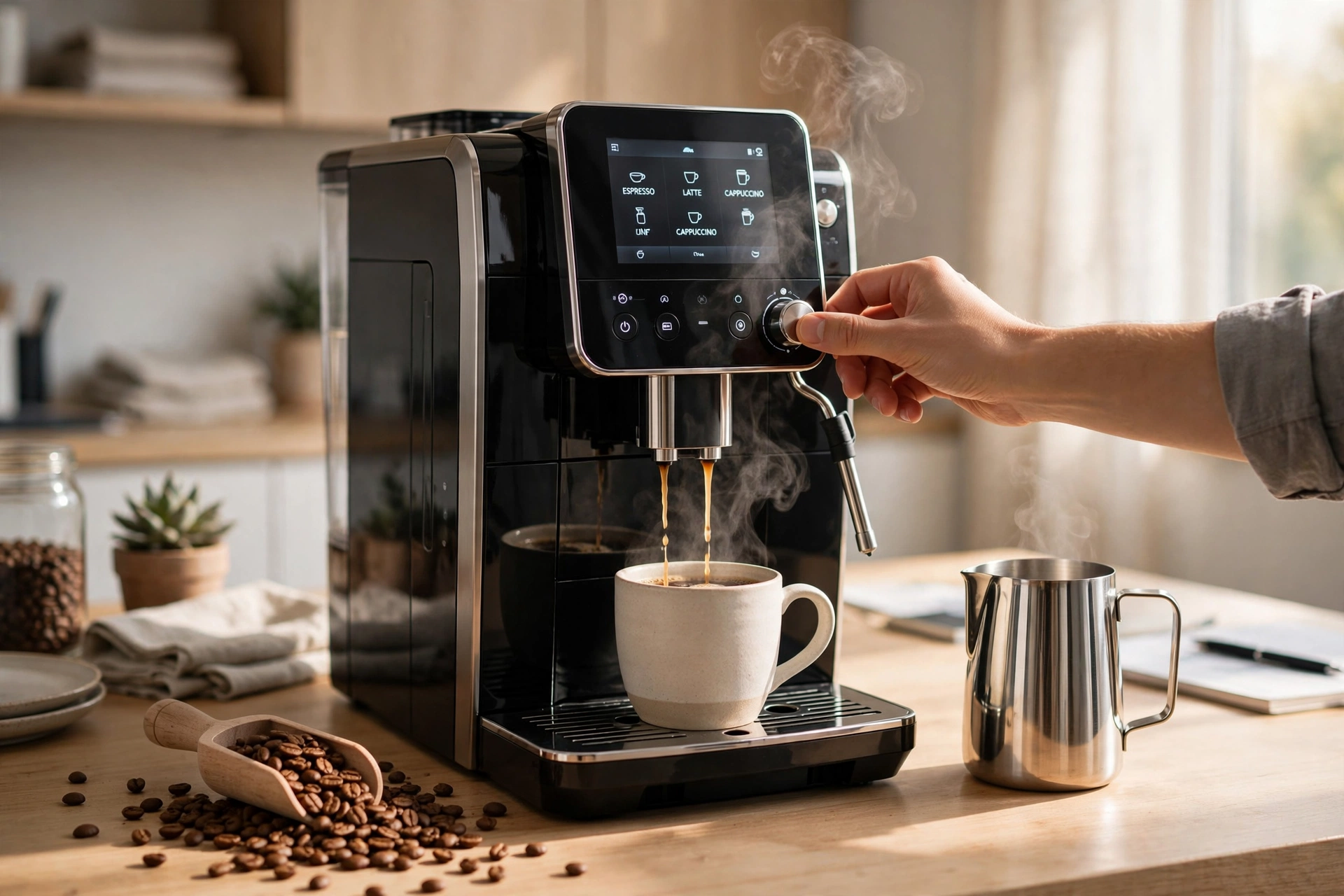
While super-automatic machines are convenient, they struggle with the "tamping" process. A human barista can feel the resistance of the coffee puck and adjust. An automatic machine is a blind algorithm. For a true specialty coffee experience, a semi-automatic machine is essential because it allows for the minute adjustments required for different roast levels.
Myth 3: "You only need to calibrate your grinder once a week."
This is a recipe for disaster. As mentioned, humidity and temperature changes affect the density of the coffee bean. In my experience, a professional shop should be "dialing in" their equipment at least twice a day—once in the morning and once after the lunch rush.
Frequently Asked Questions
How do I know if my specialty coffee equipment is operating at the correct temperature?
You should use a digital thermometer or the onboard PID (Proportional-Integral-Derivative) controller on your machine to verify the water temperature at the group head. For most Coffea arabica beans, the ideal brewing temperature is between 195°F and 205°F. If the temperature is too low, the coffee will taste sour and under-extracted. If it is too high, you will extract bitter tannins. I recommend performing a "temperature flush" before every shot to ensure the water sitting in the group head hasn't cooled down.
What is the most important feature to look for in a commercial coffee grinder?
The most critical feature is the burr quality and the adjustment mechanism. You want "flat burrs" for a very uniform grind size, which is essential for espresso. Look for "stepless adjustment," which allows you to make microscopic changes to the grind size. If a grinder only has "clicks" (stepped adjustment), you may find that setting 3 is too coarse and setting 4 is too fine, leaving you with no way to hit the "sweet spot" of the bean's flavor profile.
How often should I perform maintenance on my espresso machine to avoid downtime?
Daily maintenance includes back-flushing the group heads with a cleaning agent and scrubbing the steam wand. Weekly maintenance involves soaking the portafilters and baskets in a specialized cleaner to remove built-up coffee oils. Monthly, you should check your water filter gauges to ensure the pressure hasn't dropped, which indicates a clogged filter. According to the National Coffee Association USA (NCA), consistent maintenance not only protects the equipment but is essential for maintaining the flavor profile of the coffee.
Can I use the same equipment for both light and dark roasts?
Yes, but you must adjust your parameters. Light roasts are denser and harder; they require a finer grind and higher water temperature to extract the sugars. Dark roasts are more porous and soluble; they require a coarser grind and slightly lower temperatures to avoid a burnt or ashy taste. If you are running a multi-roast program, I highly recommend having separate hoppers or a grinder with a quick-release system to avoid mixing different coffee bean profiles.
Why is the "tamp" so important in the specialty coffee process?
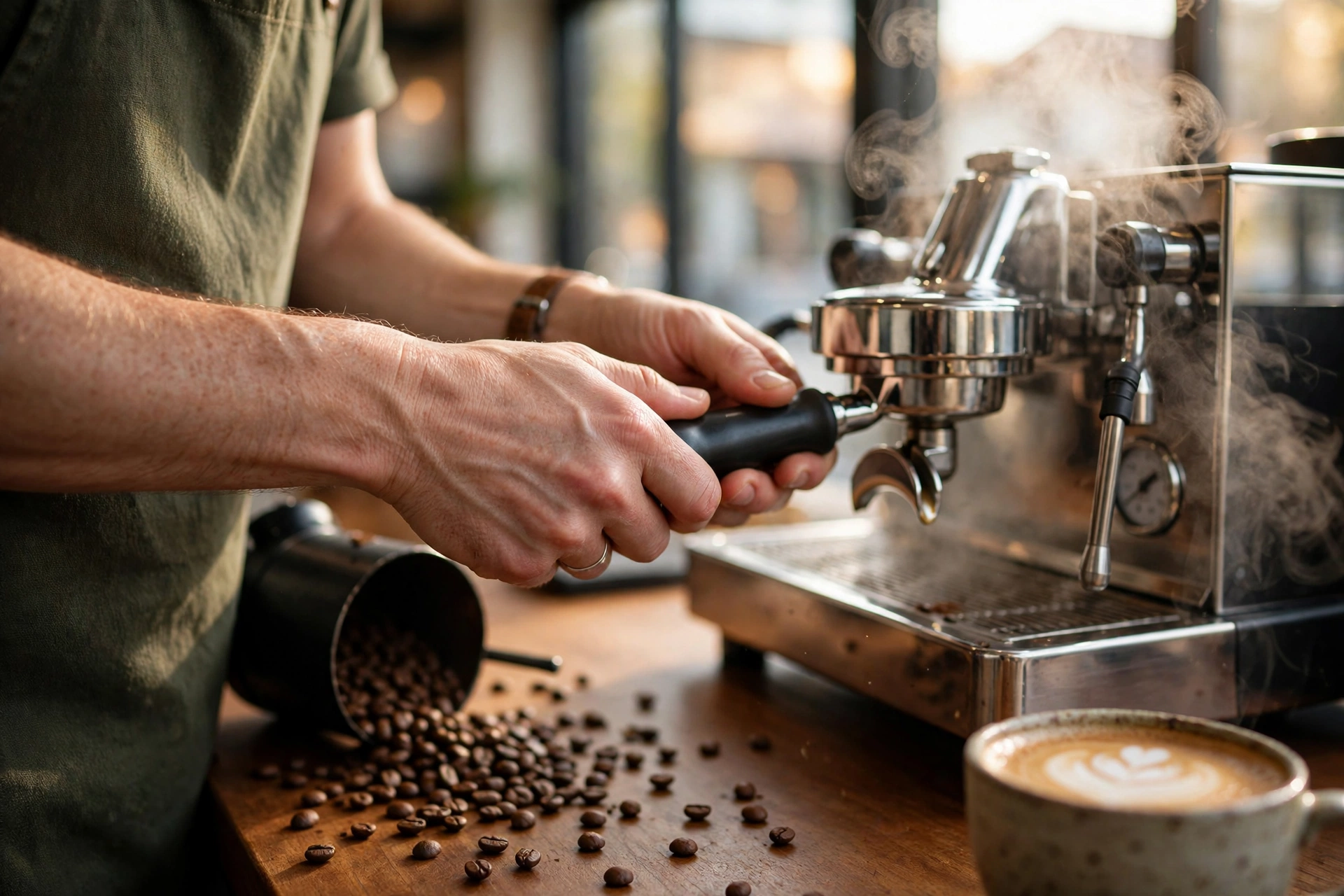
Tamping is the act of compressing the coffee grounds into a level, dense puck. This creates a uniform resistance for the water to push against. If the tamp is uneven or too light, the water will "channel," rushing through the gaps and leaving most of the coffee un-extracted. This results in a watery, sour shot. Using a calibrated tamper or a "PuqPress" ensures that every single shot is compressed with the exact same force, removing human error from the equation.
Final Thoughts on Specialty Coffee Equipment
Building a world-class coffee program is not about buying the most expensive machine you can find; it is about creating a balanced system where the water, the grind, and the temperature work in harmony. When these elements are aligned, you don't just serve a drink; you serve an experience that justifies a premium price point and keeps customers coming back.
The mistake I see most often is businesses taking on the massive capital expense of equipment and then struggling to maintain it. This is exactly why we developed our managed membership model. Instead of worrying about pump failures or calibration drift, you get professional-grade gear and end-to-end support for one predictable fee.
If you are ready to elevate your beverage program without the stress of equipment ownership, visit Busy Bean Coffee to see how our all-inclusive solutions can transform your business.
Recommended Readings
To deepen your understanding of these topics, we recommend reading the following articles:
- The Complete Guide to White Glove Coffee Service
- Ultimate Guide to All-Inclusive Coffee Service for Businesses
- Ultimate Guide to Automated Coffee Machines for Business
- Ultimate Guide to Coffee Syrups for Foodservice Businesses
Free Coffee Pairing Guide & Specialty Roast Cheat Sheet
Unlock the secrets of perfect brewing ratios, water temperatures, and specialty roast profiles. Download the guide.