What Exactly Is Specialty Coffee Equipment?
Many people assume that a standard drip machine is all they need to enjoy a morning brew, but the gap between a "cup of coffee" and a "specialty experience" lies in the precision of the tools used. To put it simply, specialty coffee equipment refers to a curated set of tools designed to maximize the extraction of flavor from high-grade coffee beans, specifically those scoring 80 points or above on the SCA scale. Unlike commercial-grade automatics that prioritize speed and convenience over taste, these tools allow the user to control variables like water temperature, grind size, and pressure.
In my experience working with countless cafe owners and home enthusiasts, the biggest hurdle isn't the budget; it's the misunderstanding of which tools actually impact the flavor. I've seen people spend thousands on a high-end espresso machine while using a cheap blade grinder that destroys the coffee bean, effectively neutralizing their investment. The goal of these tools is not to "make" coffee, but to facilitate a chemical reaction where the water extracts the complex acids, sugars, and oils from the Coffea arabica bean without introducing bitterness or sourness.

Understanding the Core Components of Specialty Brewing
When we talk about the "what" of specialty coffee equipment, we are really talking about the science of extraction. To understand this, we must first define the standard.
📚
Definition
Extraction is the process by which water dissolves the soluble compounds within the coffee bean. Under-extraction leads to a sour or salty taste, while over-extraction results in a bitter, astringent cup.
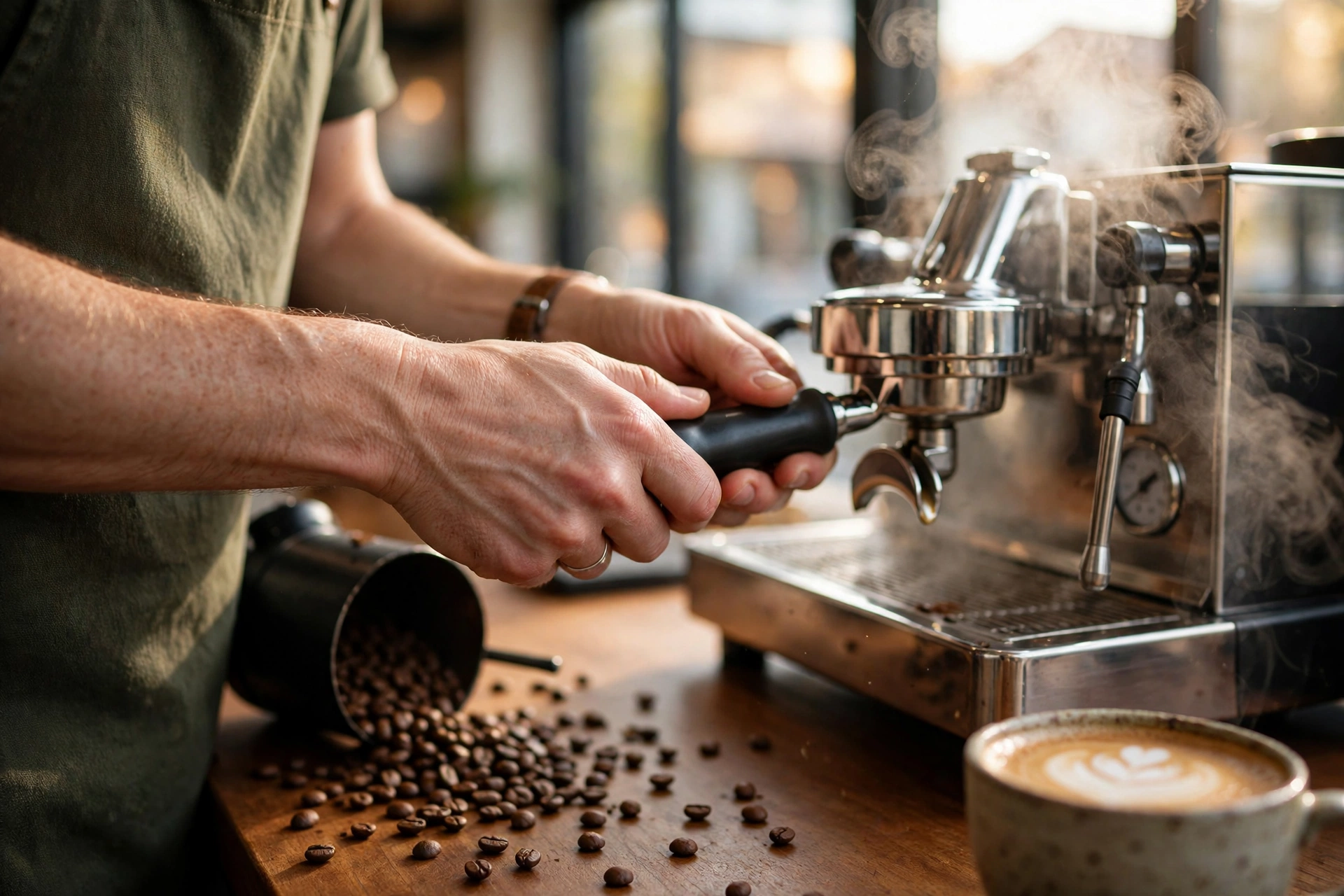
The primary objective of any piece of specialty gear is to control this process. For instance, the grinder is arguably the most important piece of equipment in any setup. A burr grinder, unlike a blade grinder, crushes the beans into uniform particles. This uniformity is essential because if you have some large chunks and some fine powder in the same brew, the powder over-extracts (bitter) and the chunks under-extract (sour), leaving you with a muddy, inconsistent flavor profile.
According to the Specialty Coffee Association (SCA), the precision of the grind and the stability of the water temperature are the two most influential factors in achieving a "specialty" grade cup. This is why you will see professional setups utilizing PID (Proportional-Integral-Derivative) controllers in their espresso machines to keep the water temperature within a fraction of a degree.
Now, here is where it gets interesting: the equipment is generally divided into three categories: brewing vessels (like Pour-overs or French Presses), processing tools (grinders and scales), and atmospheric controls (water filtration and temperature kettles). If you are just starting, the temptation is to buy the most expensive brewer. However, the data shows that the quality of the coffee bean and the precision of the grind provide a much higher return on flavor than the brewer itself.
Why Precise Equipment Matters for Flavor and Business
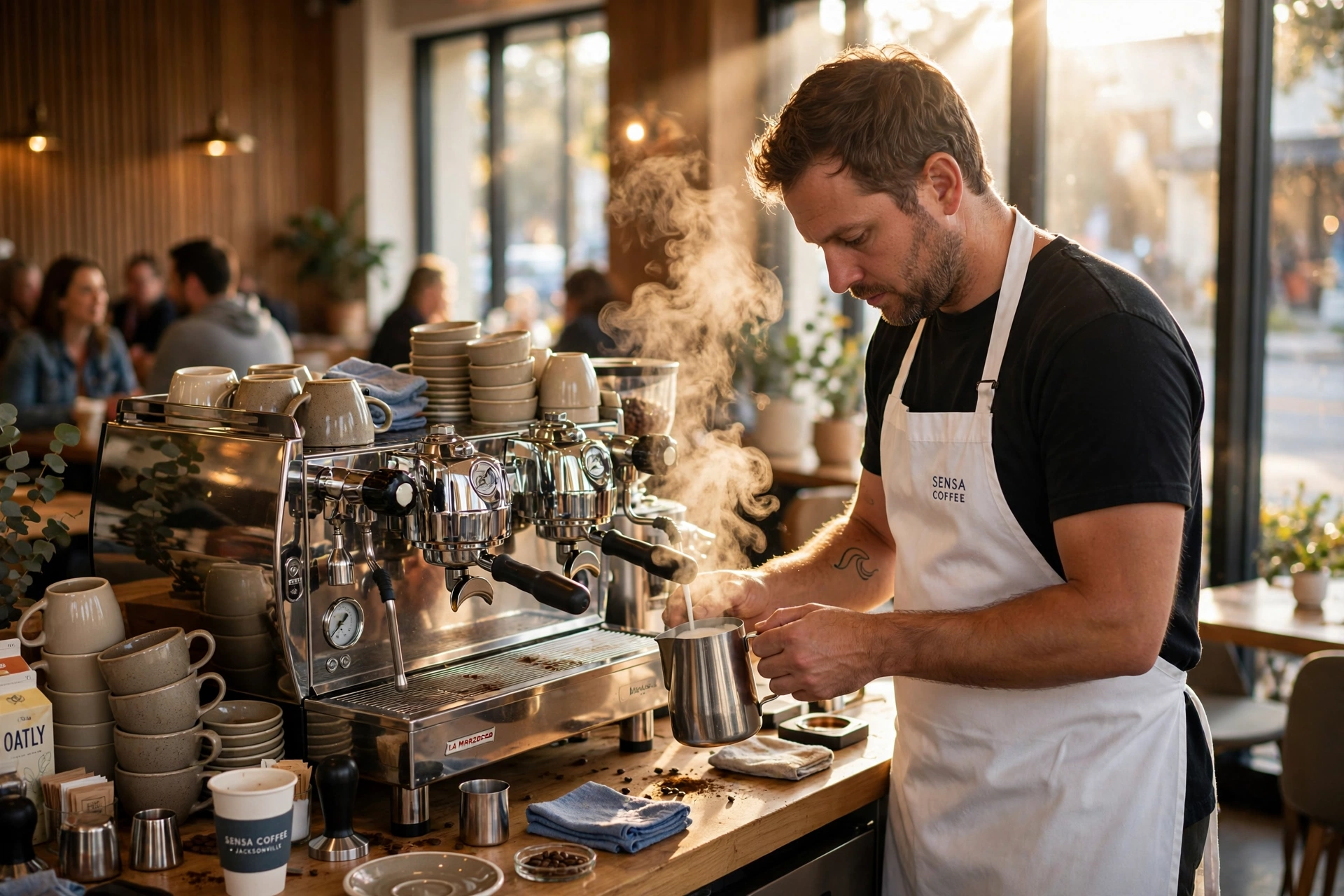
If you are operating a business, the difference between standard equipment and specialty gear isn't just about taste; it's about the bottom line. In a commercial environment, inconsistency is the enemy of profitability. If one barista pulls a shot that tastes like lemon and another pulls one that tastes like burnt rubber, you lose customer loyalty.
The business impact is quantifiable. High-quality equipment reduces waste. When you use a precise scale and a calibrated espresso machine, you eliminate the "dial-in" waste that occurs when a barista has to dump five or six double-shots just to get the timing right. Furthermore, the ability to serve specialty coffee allows a business to move from a commodity pricing model to a premium pricing model. You aren't selling caffeine; you are selling a sensory experience.
Research from the National Coffee Association USA (NCA) indicates that consumer demand for specialty and premium coffees has grown steadily, with a significant shift toward "at-home barista" culture. This means customers are now more educated about what a "good" cup tastes like. If your equipment cannot deliver a consistent 92-degree Celsius extraction, the modern customer will notice.
The risk of ignoring equipment standards is high. Low-grade machines often suffer from temperature swings, which can scorch the delicate oils of a light-roast Arabica coffee. Once those oils are scorched, the complex notes of jasmine or stone fruit are replaced by a generic, charred taste. For a business, this means your expensive, ethically sourced beans are being wasted by a machine that cannot handle them.
Practical Application: Building Your First Setup
If you are staring at a wall of options, the best way to approach this is through a tiered implementation strategy. You don't need a $20,000 setup on day one, but you do need the right foundations.
Step 1: The Grind. Stop using pre-ground coffee. Your first investment should be a burr grinder. Whether you are doing a pour-over or espresso, the ability to adjust the micron size of your grind is the only way to "tune" your coffee to your specific taste.
Step 2: Water Control. Coffee is 98% water. If your water tastes like chlorine, your coffee will too. Use a filtered water system. For brewing, a gooseneck kettle is essential for pour-overs because it allows you to control the flow rate, ensuring that all the coffee grounds are saturated evenly.
Step 3: Measurement. Stop using "scoops." Use a digital scale that measures to 0.1 grams. This ensures that your coffee-to-water ratio is identical every single time. A common specialty ratio is 1:16 (one part coffee to sixteen parts water).
Step 4: The Brewer. Now choose your method. If you prefer a clean, tea-like body, go with a V60 or Chemex. If you prefer a heavy, textured mouthfeel, choose a French Press or a high-end espresso machine.
When we help businesses at Busy Bean Coffee, we often emphasize that the "equipment" is only half the battle. The other half is the service. This is why we provide managed coffee solutions; we don't just drop off a machine and wish you luck. We ensure the installation is professional and the maintenance is proactive. The mistake I made early on—and that I see constantly—is assuming that a machine is "set and forget." In reality, a specialty espresso machine needs regular calibration and water softener replacements to keep the flavor profile stable.
💡
Key Takeaway
Prioritize the grinder and the scale over the actual brewer. Precision in measurement and particle size is what transforms a standard brew into a specialty experience.
Comparing Equipment Approaches
Not every user needs the same level of gear. Depending on whether you are a hobbyist, a small office, or a full-scale cafe, the "correct" equipment changes.
| Approach | Pros | Cons | Best For |
|---|---|---|---|
| Manual/Entry Level (V60, Aeropress, Hand Grinder) | Low cost, highly portable, teaches fundamentals | Time-consuming, requires high manual skill | Home beginners & travelers |
| Semi-Automatic (Prosumer Espresso Machines, Electric Burrs) | High control, cafe-quality results at home | Steeper learning curve, higher cost | Coffee enthusiasts & "Prosumers" |
| Managed Commercial (Busy Bean Coffee solutions, SENSA gear) | Zero capital risk, professional maintenance, consistent quality | Monthly subscription fee | Hotels, Restaurants, and Cafes |
As you can see, the "Manual" approach is great for learning, but it lacks the scalability and consistency required for a business. The "Semi-Automatic" route is a passion project for many, but it carries the risk of downtime if you don't know how to fix a leaking gasket. The "Managed" approach, which we specialize in at Busy Bean Coffee, removes the technical friction, allowing the business owner to focus on the customer rather than the boiler pressure.
Common Misconceptions About Coffee Gear
Most guides get this wrong by suggesting that "more expensive equals better." That is a fallacy. Here are a few common myths debunked by actual industry data.
Myth 1: "I need an expensive machine to make a great cup."
Incorrect. You can make a world-class cup of coffee using a $20 plastic dripper and a $50 hand grinder, provided the beans are fresh and the technique is correct. The machine only increases the consistency and speed of the result, not the theoretical maximum flavor.
Myth 2: "Automatic espresso machines are 'specialty' equipment."
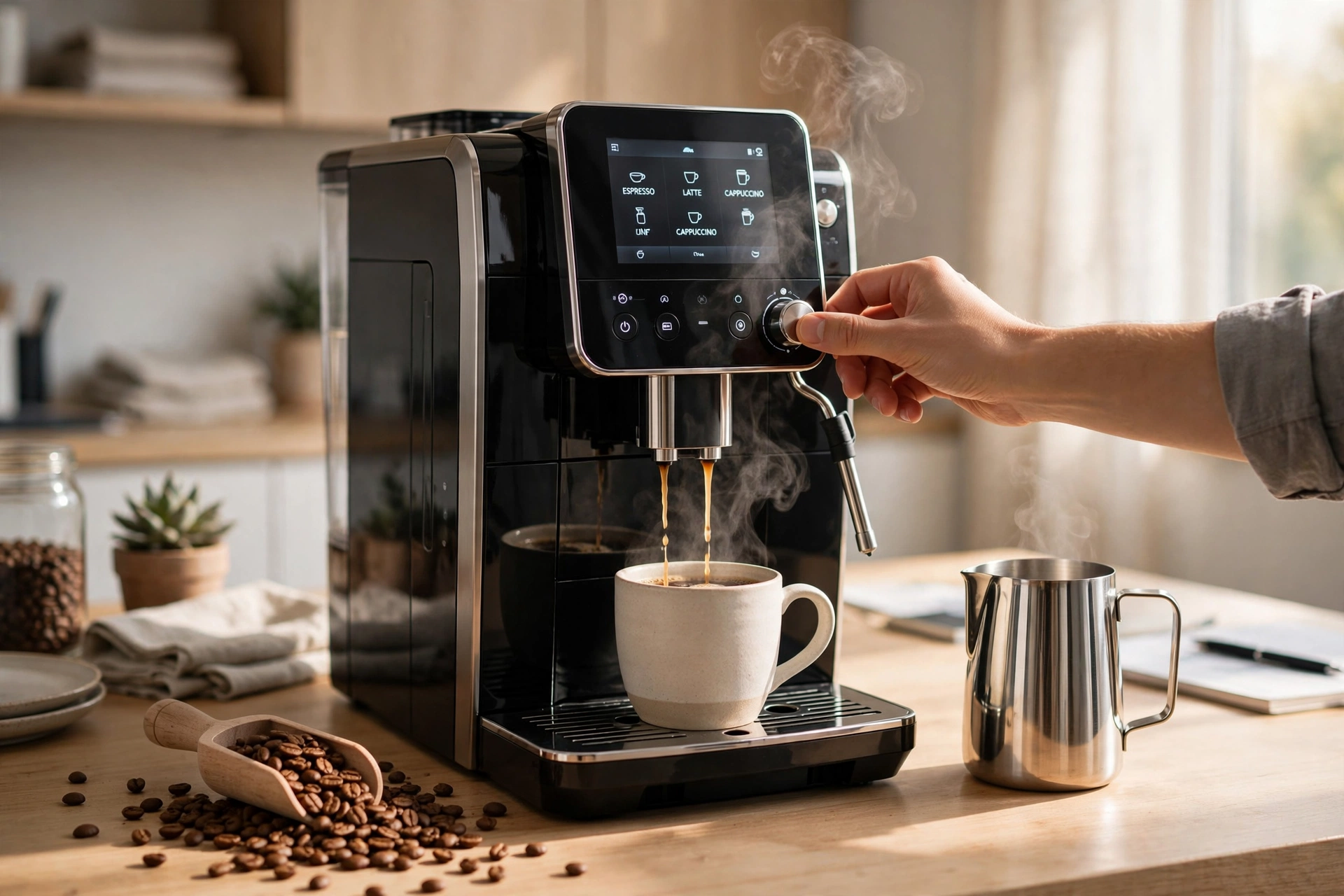
Actually, most "super-automatic" machines (the ones where you press one button and the coffee appears) are not considered specialty equipment. Why? Because they lack the precision and manual control needed to adjust for different roast levels. They often use a "one size fits all" pressure and temperature setting that flattens the flavor of high-end beans.
Myth 3: "The most expensive beans solve everything."
You can buy the most expensive Geisha beans in the world, but if you brew them with boiling water (100°C) in a dirty machine, they will taste terrible. The equipment is the bridge that allows the bean's potential to reach your palate.
Myth 4: "Paper filters ruin the taste."
Some argue that metal filters are better because they let oils through. However, professional baristas almost always prefer high-quality paper filters for specialty coffee because they remove sediment and "clarify" the flavor, allowing the delicate floral and fruity notes of Arabica coffee to shine without being masked by heavy oils.
Frequently Asked Questions
Do I really need a separate grinder for espresso and pour-over?
Yes, if you are serious about quality. The "grind profile" for espresso is extremely fine, almost like powdered sugar, while a pour-over requires a medium-coarse grind, similar to kosher salt. Most grinders are optimized for one or the other. An espresso grinder needs very small "steps" in adjustment to fine-tune the pressure, whereas a pour-over grinder needs a wider range. If you use a pour-over grinder for espresso, you will likely find it impossible to get the coffee to flow slowly enough to create that rich, syrupy crema.
Why is water temperature so important in specialty coffee?
Water temperature acts as the catalyst for extraction. According to NSF International, maintaining equipment hygiene and temperature stability is fundamental to food safety and quality. If the water is too hot (above 96°C), it can over-extract the beans, releasing bitter tannins. If it is too cold (below 90°C), it cannot effectively dissolve the sugars and acids, resulting in a flat, sour, and thin-bodied cup. This is why precision kettles and PID-controlled machines are so highly valued.
What is the difference between a burr grinder and a blade grinder?
A blade grinder works like a blender, chopping the beans into irregular pieces. This creates a mix of "boulders" (large chunks) and "fines" (dust). A burr grinder uses two abrasive surfaces (burrs) to crush the bean to a specific, uniform size. This uniformity ensures that every single particle of coffee extracts at the same rate. Without a burr grinder, you are essentially gambling with your flavor profile every time you brew.
How often should specialty coffee equipment be cleaned?
Daily. Coffee oils are highly volatile and oxidize quickly. If you leave old oils in your group head or grinder, they will turn rancid and contaminate the next brew. A "backflushing" routine for espresso machines should happen daily, while grinders should be cleaned weekly. In my experience, 90% of "bad tasting" coffee from expensive machines is actually just the result of old oil buildup. This is a core part of our managed service at Busy Bean Coffee—we ensure the gear stays pristine so the taste stays consistent.
Is a scale necessary for a beginner?
It is the most important tool for growth. When you use a spoon, you are measuring volume, but coffee beans vary in density. A light roast takes up more space than a dark roast. By weighing your coffee and water in grams, you create a repeatable formula. If you find a brew you love, the scale allows you to replicate it exactly tomorrow. Without a scale, you are just guessing, which makes it impossible to troubleshoot why a cup tastes "off."
Final Thoughts on Specialty Coffee Equipment
Investing in specialty coffee equipment is less about buying gadgets and more about gaining control over a chemical process. Whether you are starting a small home station or scaling a commercial operation in Mount Pleasant, SC, the goal remains the same: removing the variables that lead to bitterness and highlighting the natural sweetness of the bean.
The path from a beginner to a pro is paved with a few key tools: a consistent burr grinder, a precision scale, and a temperature-stable brewing method. If you find the technical side overwhelming, or if you are a business owner who wants the quality of specialty coffee without the headache of maintenance and capital expenditure, that is exactly why we built our managed membership.
Stop guessing with your brew and start controlling the variables. For a seamless transition to professional-grade coffee, visit Busy Bean Coffee and see how our all-inclusive solutions can elevate your beverage program.
Recommended Readings
To deepen your understanding of these topics, we recommend reading the following articles:
- The Complete Guide to White Glove Coffee Service
- Ultimate Guide to All-Inclusive Coffee Service for Businesses
- Ultimate Guide to Automated Coffee Machines for Business
- Ultimate Guide to Coffee Syrups for Foodservice Businesses
Free Coffee Pairing Guide & Specialty Roast Cheat Sheet
Unlock the secrets of perfect brewing ratios, water temperatures, and specialty roast profiles. Download the guide.