Restaurant Coffee Solutions Pricing: The Complete Guide to What You'll Actually Pay in 2026
If you run a restaurant, café, or hotel, you know the question never goes away: What should I expect to pay for professional-grade coffee service? The reality is that restaurant coffee solutions pricing varies wildly—from a few hundred dollars a month for a basic drip setup to several thousand for a fully managed espresso program with premium beans, maintenance, and training. But the real answer isn't a single number—it's understanding the cost drivers that let you negotiate the right deal for your business. In this guide, I'll break down every pricing component, give you real-world numbers from 2026, and show you how an all-inclusive managed model can actually save you money compared to the traditional piecemeal approach.
What Are Restaurant Coffee Solutions?
📚
Definition
Restaurant coffee solutions encompass the complete ecosystem of equipment, beans, consumables (filters, cups, syrups), installation, training, maintenance, and service support designed specifically for foodservice operations.
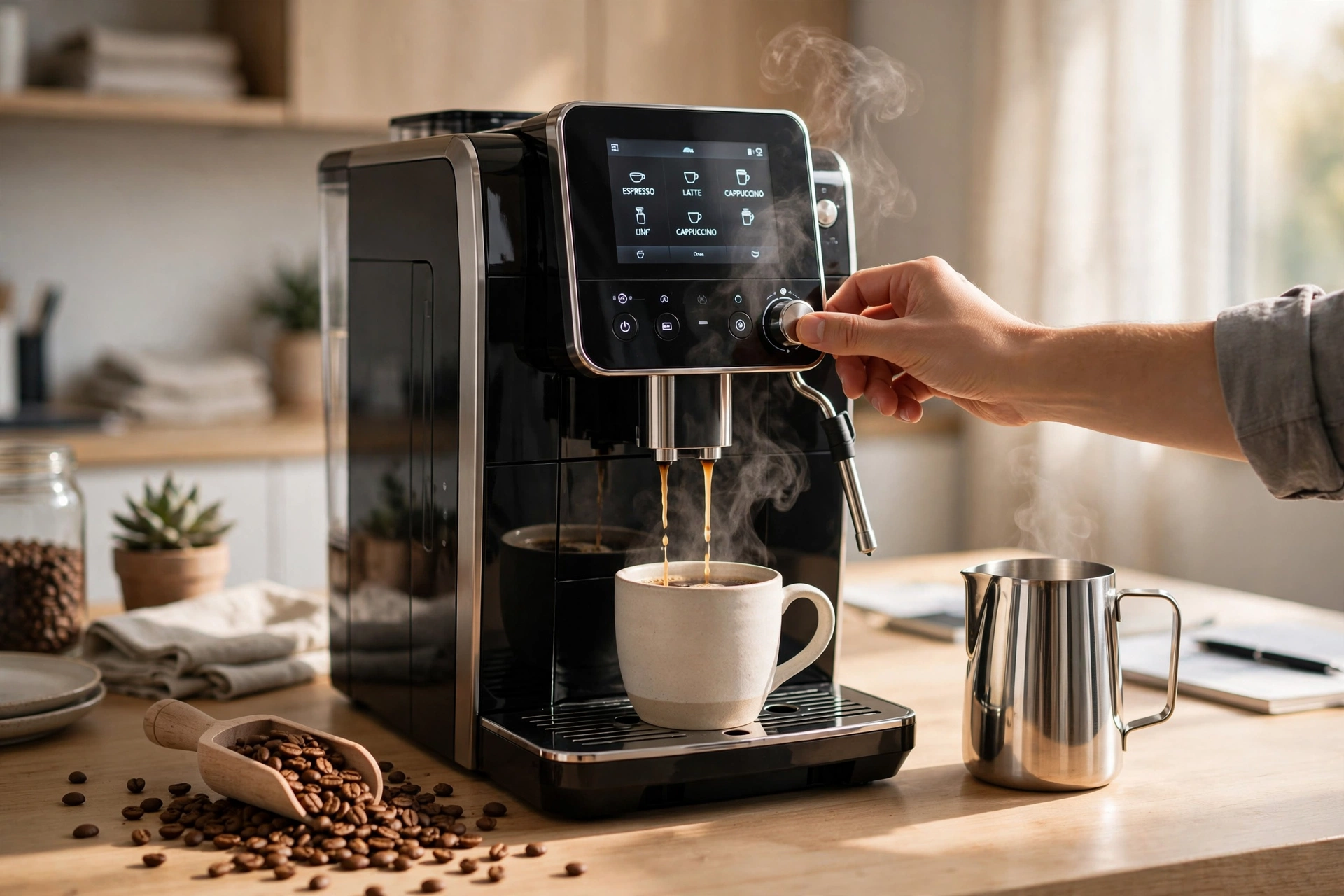
When you buy a "coffee solution," you're not just buying a machine. You're buying a system that ensures every cup served meets your quality standards, every day, without your team having to become barista experts. The market has evolved significantly from the days of renting a Bunn brewer and buying commodity beans. Today, solutions range from fully automated super-automatic espresso machines to curated single-origin pour-over programs.
According to the Specialty Coffee Association's 2025 Coffee in Foodservice report, 62% of restaurant operators now consider their coffee program a "brand differentiator" rather than a simple commodity. That shift has driven demand for higher-quality equipment and specialized service, but it's also created a confusing landscape of pricing models.
To understand the numbers, you first need to know the three core components that drive cost:
- Equipment – The machine(s) you use. This can be purchased outright, leased, or included in an all-inclusive monthly fee.
- Beans & Consumables – The ongoing supply of coffee, milk alternatives, syrups, paper goods, and cleaning chemicals.
- Service & Support – Installation, training, routine maintenance, emergency repairs, and replacement parts.
Each component can be handled separately or bundled. The bundling approach is where the most interesting pricing—and value—emerges.
Why Pricing Transparency Matters More in 2026
The restaurant industry runs on razor‑thin margins. The National Restaurant Association's 2026 State of the Industry report found that average pre‑tax profit margins for full‑service restaurants hover around 5.2%. Every dollar spent on your coffee program must be justified by customer satisfaction, repeat visits, or ticket averages.
Here's the problem most operators face: they compare initial equipment quotes without factoring in the total cost of ownership over a 36‑month period. A machine that costs $4,000 upfront might seem cheaper than a $0‑down managed solution, but when you add bean contracts, maintenance fees, and repair costs, the managed solution often wins.
I've seen too many independent restaurants buy a $3,000 espresso machine from a discount supplier, only to spend $2,200 on repairs and $1,800 on emergency service calls over three years. Meanwhile, a managed service that charges $600/month includes all equipment, maintenance, and premium beans—and saves money while delivering better consistency.
💡
Key Takeaway
The cheapest upfront option is rarely the cheapest total cost. Always compare on a total‑cost‑of‑ownership basis over at least three years.
Practical Application: How to Budget for Your Restaurant Coffee Solutions
Here's a step‑by‑step process I've used with dozens of foodservice operators to determine the right budget.
Step 1: Define Your Volume & Quality Tier
- Low volume (under 50 cups/day): You likely need a super‑automatic machine that's easy to use. Expect to pay $2,500–$5,000 for purchase or $250–$450/month for managed service.
- Medium volume (50–200 cups/day): A dual‑group espresso machine plus a drip brewer. Purchase cost $8,000–$15,000; managed cost $500–$900/month.
- High volume (200+ cups/day): Commercial espresso machines with multiple groups and separate grinders. Purchase $15,000–$30,000; managed $800–$1,500/month.
Step 2: Choose Your Pricing Model
| Model | Pros | Cons | Best For |
|---|---|---|---|
| Outright Purchase | Full ownership, no monthly commitment | High upfront capital, all repair costs on you | High‑volume operations with dedicated in‑house expertise |
| Lease (Equipment Only) | Lower upfront, predictable equipment cost | Still responsible for maintenance and bean supply | Growing operations that want to upgrade easily |
| All‑Inclusive Managed | No capital, everything covered (equipment, beans, maintenance, training) | Higher monthly fee, long‑term contract | Most restaurants, especially those wanting hassle‑free quality |
Step 3: Calculate Your True Cost Per Cup
Divide your total monthly cost (all fees + beans) by the number of cups served. For a managed service at $700/month serving 1,500 cups, that's about $0.47 per cup. With an average specialty coffee retail price of $4.50 per cup, your coffee cost is roughly 10–12% of sales—excellent for a premium program.
I worked with a mid‑priced steakhouse in Charleston that switched from a lease‑plus‑supply model to an all‑in‑one managed solution. Their cost per cup dropped from $0.62 to $0.43 because they eliminated waste and reduced emergency repair fees. Their biggest win: staff time previously spent troubleshooting machines got reallocated to guest service.
💡
Key Takeaway
All‑inclusive managed services often lower your cost per cup by 20–30% compared to piecemeal approaches, thanks to better equipment reliability and optimized bean usage.
The Full Spectrum of Options: From Budget to Premium
Not every restaurant needs a three‑group La Marzocco. Here's how the options stack up across different budgets.

Basic Drip Solutions ($100–$300/month)
- What you get: A commercial drip brewer, basic beans, paper filters.
- Ideal for: Hotels with continental breakfast, diners, or back‑of‑house staff areas.
- Limitation: No espresso, no specialty drinks, no training.
Entry Espresso Solutions ($400–$700/month)
- What you get: A fully automatic espresso machine (e.g., Jura GIGA or similar), medium‑grade beans, basic training.
- Ideal for: Small cafés, boutique restaurants, limited‑menu operations.
- Limitation: Lower throughput and less flexibility in drink customization.
Premium Managed Solutions ($700–$1,500/month)
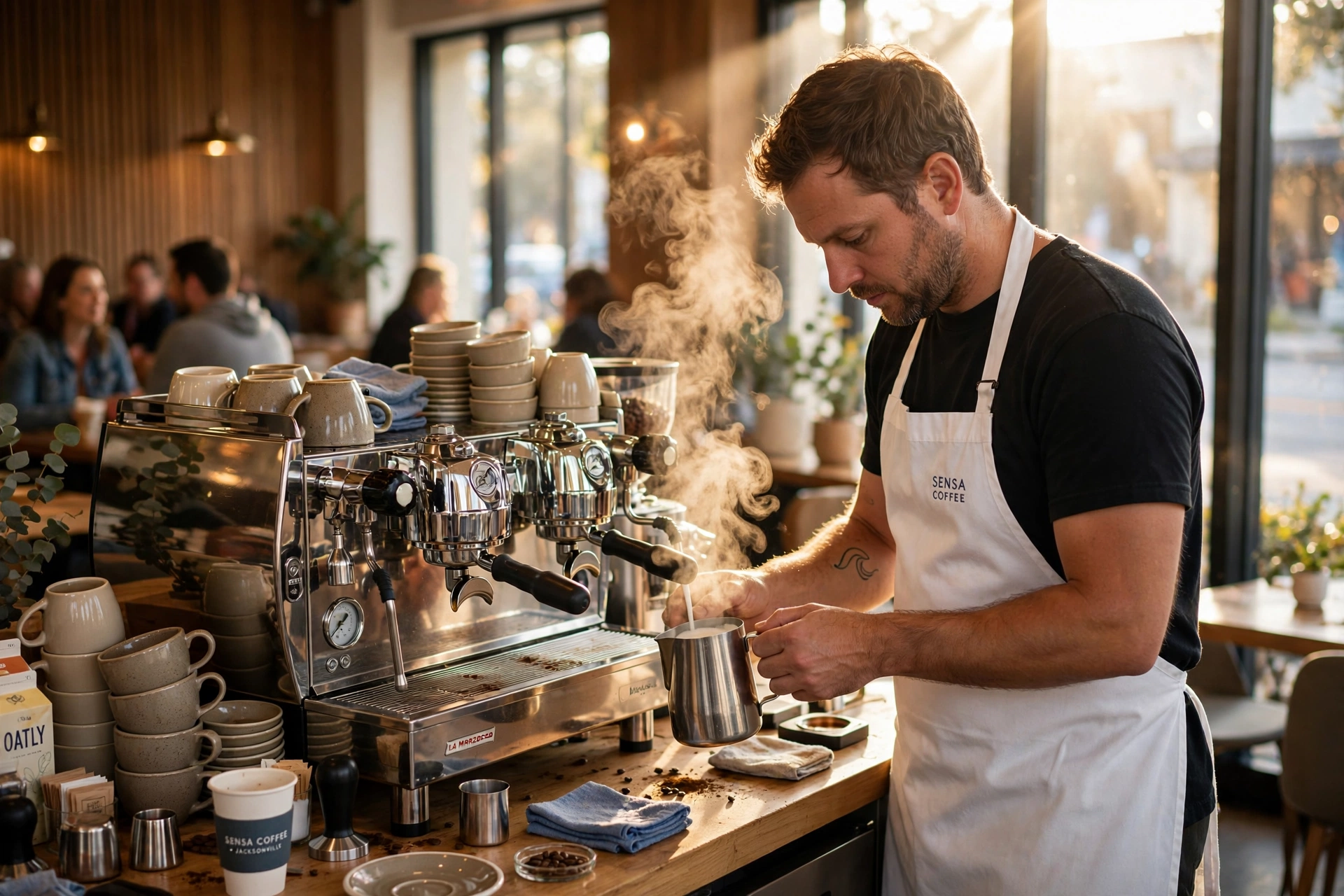
- What you get: Professional‑grade super‑automatic or traditional espresso machine, premium single‑origin or custom‑roast beans, full maintenance, on‑site training and ongoing support.
- Ideal for: Full‑service restaurants, specialty coffee shops, corporate cafeterias.
- Example: Busy Bean Coffee's all‑inclusive managed membership includes top‑tier SENSA equipment, professional installation, and 24/7 repair coverage—everything for one predictable monthly fee.
Ultra‑Premium Custom Programs ($1,500+/month)
- What you get: Custom‑designed coffee bars, multiple machines, artisanal micro‑lot beans, dedicated on‑site barista training, and even menu consulting.
- Ideal for: Luxury hotels, high‑end restaurants, and multi‑location groups.
Common Questions & Misconceptions
Myth 1: "Buying the machine is always cheaper in the long run."
That's only true if you have a reliable in‑house maintenance team and never need emergency repairs. The Commercial Food Service Equipment Manufacturers Association reports that unplanned maintenance costs can average $350–$800 per call. Over three years, those add up fast. A managed plan includes all that risk.
Myth 2: "Managed services use lower‑quality beans."
Not necessarily. Many managed providers, including Busy Bean Coffee, work directly with specialty roasters to create proprietary blends. Our program sources beans from origin partners and roasts fresh weekly—often higher quality than what a restaurant would order on its own.
Myth 3: "You lose control of your coffee program."
Actually, you gain control by removing variability. With a managed solution, your drinks taste the same every shift because the equipment is calibrated and maintained, and the beans are consistent. Plus, you can adjust your menu with the help of your service partner.
Myth 4: "I can just use a consumer machine for a small café."
This is a costly mistake. Consumer machines lack the durability, throughput, and safety certifications for commercial use. Health inspectors and insurance companies may flag them, and they fail under constant use. Always use commercial‑grade equipment.
Frequently Asked Questions
How much does a restaurant coffee solution typically cost in 2026?
Most full‑service restaurants spend between $500 and $1,200 per month on an all‑inclusive managed coffee solution that covers equipment, beans, maintenance, and training. The exact price depends on volume (cups per day), equipment quality, and bean grade. For a typical 100‑seat restaurant serving 200 cups daily, expect around $700–$900 per month. If you choose to purchase equipment outright, plan for a one‑time investment of $8,000–$20,000 plus additional ongoing costs for beans ($200–$600/month) and maintenance ($100–$300/month).
What factors affect the monthly cost of managed coffee services?
The biggest factors are: (1) daily cup volume—higher volume drives up bean and equipment wear costs; (2) equipment tier—a commercial espresso machine costs more than a drip brewer; (3) bean selection—single‑origin or organic beans command a premium over commodity blends; (4) service level—basic plans may cover only reactive repairs, while premium plans include proactive maintenance and 24/7 support; and (5) geographic location—service contracts cost more in high‑cost metro areas. A well‑structured managed plan can actually lower your total cost per cup compared to a piecemeal approach because it bundles predictable pricing and eliminates surprise expenses.
Is it cheaper to lease or buy commercial coffee equipment?
For most restaurants, a lease or managed service is ultimately cheaper over a 3‑year period because it avoids large upfront capital outlays and includes maintenance. Buying a $12,000 espresso machine may seem cheaper on paper, but after adding $3,600 in maintenance and $1,200 in emergency repairs over three years, the total cost is $16,800. A managed plan at $600/month totals $21,600—but includes beans worth about $500/month, so your net cost is actually around $600/month versus $467/month for purchase. However, the managed plan reduces financial risk, provides predictable budgeting, and frees up staff time. For high‑volume operations with in‑house tech support, purchase may make sense. Otherwise, managed is usually the better value.
Can I negotiate pricing with coffee solution providers?
Absolutely. Most providers have some flexibility, especially if you sign a multi‑year contract or commit to a higher volume. Ask about: (1) waiving installation fees for a longer term, (2) tiered bean pricing based on monthly usage, (3) free training sessions, and (4) reduced rates for multi‑location accounts. The key is to understand what's negotiable—equipment cost is often fixed, but service fees and bean prices are more flexible. Be prepared to walk away if the total cost per cup doesn't align with your margin goals. And always request a total‑cost‑of‑ownership summary that includes all fees for the contract term.
How do I choose between a drip‑only solution and an espresso program?
Start with your menu and customer expectations. If your restaurant serves only breakfast and lunch with a basic coffee offering, a drip‑only solution (around $150–$350/month) may suffice. But if you want to drive afternoon sales with lattes, cappuccinos, and cold brew, you need an espresso program. Specialty coffee drinkers have 25% higher check averages than drip‑only customers, according to a 2019 study by the Specialty Coffee Association (updated data frequently cited). The incremental revenue from espresso‑based drinks often more than pays for the higher cost of a managed espresso solution. For most full‑service restaurants, the espresso program is the better investment.
Summary + Next Steps
Restaurant coffee solutions pricing in 2026 is more predictable than ever if you choose an all‑inclusive managed model. The key is to stop thinking about the machine and start thinking about the outcome: consistent, high‑quality coffee that delights customers and improves your margins. Whether you're a small bistro or a multi‑chain operation, a well‑structured managed program can reduce your cost per cup by up to 30% while eliminating maintenance headaches.
Ready to see exactly how a premium managed coffee solution fits your restaurant's budget? Contact Busy Bean Coffee for a free consultation and pricing quote. For more details on the economics, check out our guide on how much does craft coffee cost and compare with specialty bean supply pricing. And if you're curious about the different service models, read our breakdown of what are corporate cafe solutions and how managed coffee services work.
Recommended Readings
To deepen your understanding of these topics, we recommend reading the following articles:
- Ultimate Guide to Automated Coffee Machines for Business
- Ultimate Guide to Specialty Coffee Equipment for Business
- Ultimate Guide to Coffee Syrups for Foodservice Businesses
- Ultimate Guide to Barista Accessories for Foodservice Pros
About the Author
Travis Estes is the Founder of Busy Bean Coffee. With over a decade of experience in specialty coffee and foodservice operations, Travis has helped hundreds of restaurants, hotels, and corporate cafés design profitable coffee programs that delight guests and simplify operations. He believes great coffee should never be a source of stress.
Free Coffee Pairing Guide & Specialty Roast Cheat Sheet
Unlock the secrets of perfect brewing ratios, water temperatures, and specialty roast profiles. Download the guide.