📖This article is part of the complete guide to Complete Guide to Coffee Equipment Rental for Foodservice.
High-volume dining environments often face a critical dilemma: spending $15,000 on a top-tier espresso machine that might be obsolete in three years, or settling for mediocre coffee that drives guests away. In my experience working with fast-paced kitchens, the hidden cost of coffee isn't the machine itself, but the downtime caused by poor maintenance and the waste from inconsistent calibration. When a machine goes down on a Saturday brunch rush, the lost revenue far exceeds the monthly rental fee.
For a comprehensive overview of these options, explore our Complete Guide to Coffee Equipment Rental for Foodservice.
What is Restaurant Coffee Machine Rental?
📚
Definition
Restaurant coffee machine rental is a managed service agreement where a business pays a recurring monthly fee to access professional-grade coffee equipment, including installation, maintenance, and often the coffee beans themselves, without owning the hardware.
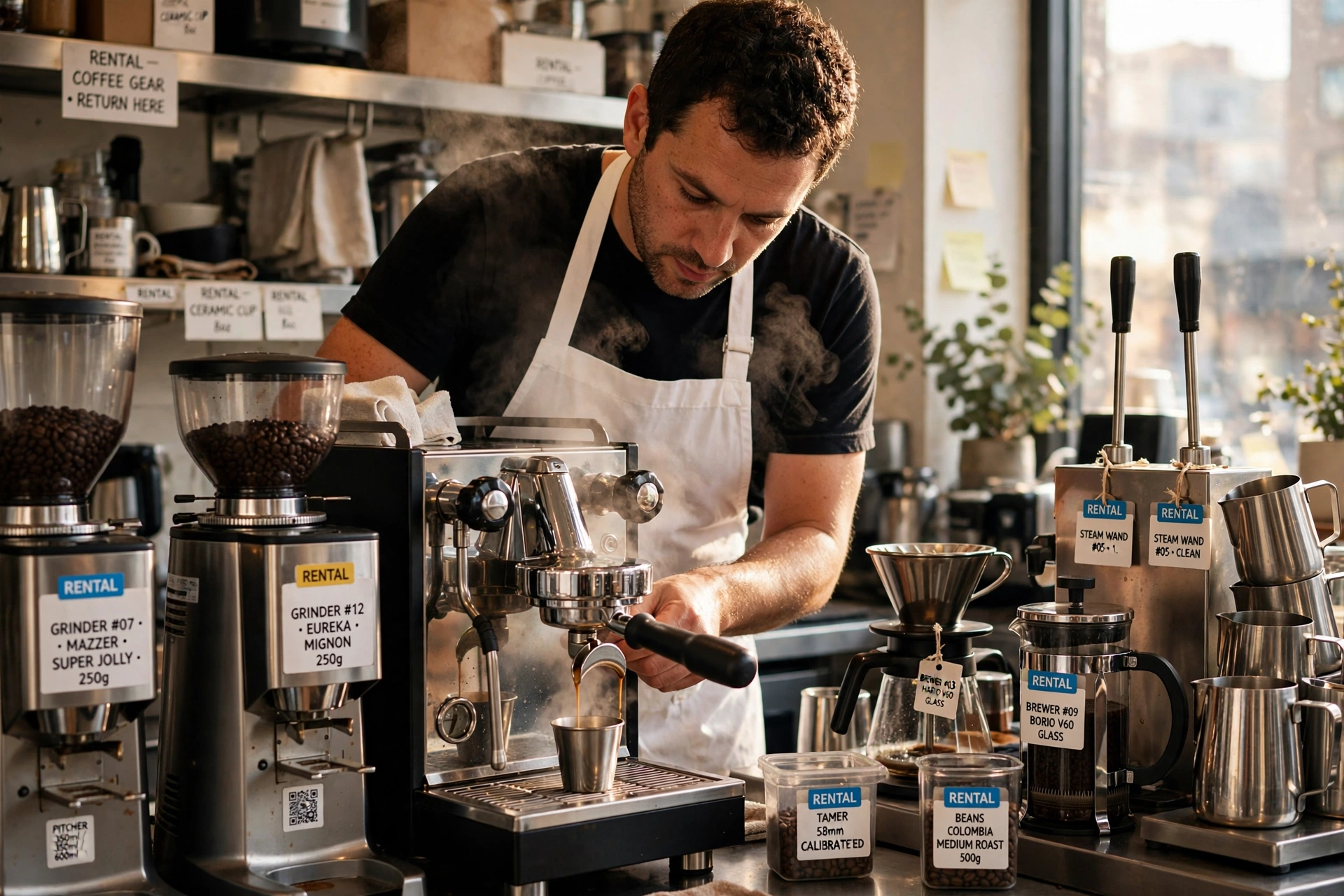
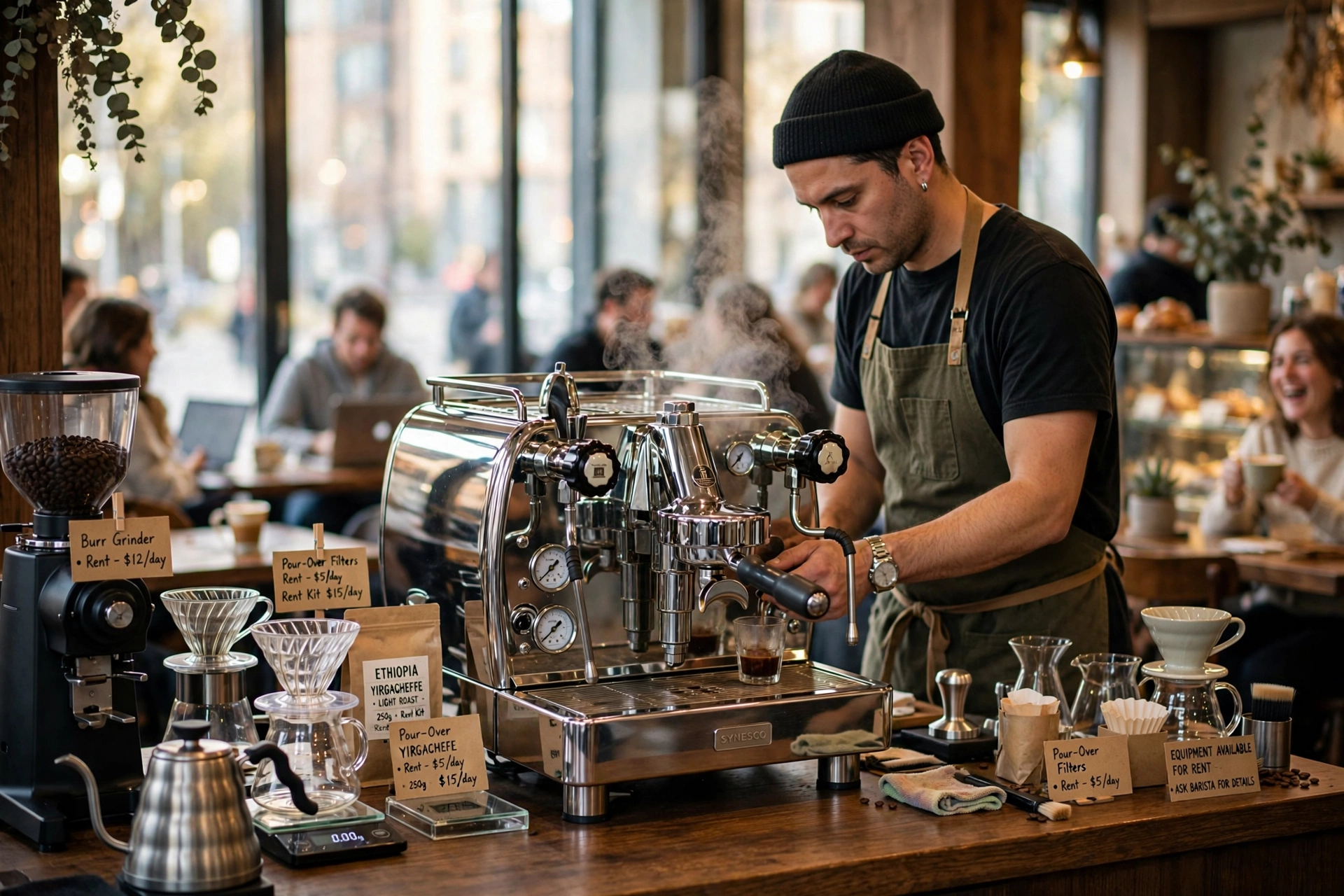
Restaurant coffee machine rental is more than just a lease; it is an operational strategy designed to shift capital expenditure (CapEx) into operating expenditure (OpEx). In a traditional purchase model, a restaurant owner assumes all the risk of depreciation and technical failure. In a rental or membership model, the provider—such as Busy Bean Coffee—manages the equipment lifecycle. This ensures that the restaurant always has access to high-performance machinery that meets current industry standards for specialty coffee.
When we implement these systems for our clients, we focus on the "total cost of ownership." A professional espresso machine requires precise water filtration and regular descaling. Without these, a machine purchased outright can lose 30% of its efficiency within 12 months. A rental agreement removes this burden from the restaurant manager, ensuring that a certified technician handles the heavy lifting. This allows the staff to focus on guest experience rather than troubleshooting a leaking group head during a peak shift.
Why Does Rental Matter for Restaurant Profitability?
Restaurant coffee machine rental matters because it eliminates the massive upfront financial barrier to entry for high-margin beverage programs. Coffee is one of the highest-margin items on any menu, often yielding a 70% to 90% profit margin per cup. However, producing specialty-grade coffee requires expensive equipment. By utilizing a rental model, restaurants can deploy a $10,000+ machine immediately, starting to generate that high-margin revenue on day one without draining their cash reserves.
According to the National Coffee Association USA (NCA), coffee consumption patterns are shifting toward specialty brews, meaning customers now expect higher quality than basic drip coffee. If a restaurant cannot provide a high-quality latte or a balanced espresso, they lose the "dessert coffee" revenue—a critical part of the average check increase. Using a managed rental service allows a restaurant to pivot its menu quickly to include specialty coffee without the risk of a long-term capital investment.
Furthermore, the operational stability provided by a rental agreement is a hedge against inflation. When a restaurant signs a fixed-price membership, they protect themselves from the fluctuating costs of emergency repairs. In my experience, an emergency technician visit for a broken pump can cost between $300 and $800 per call. In a managed rental agreement, these costs are absorbed by the provider, making the monthly budget predictable. This predictability is essential for the tight margins typical of the foodservice industry.
For those looking at broader financial strategies, our analysis of no capex coffee equipment solutions for foodservice provides a deeper dive into how this impacts the balance sheet.
How to Optimize Your Coffee Program with Rental Equipment
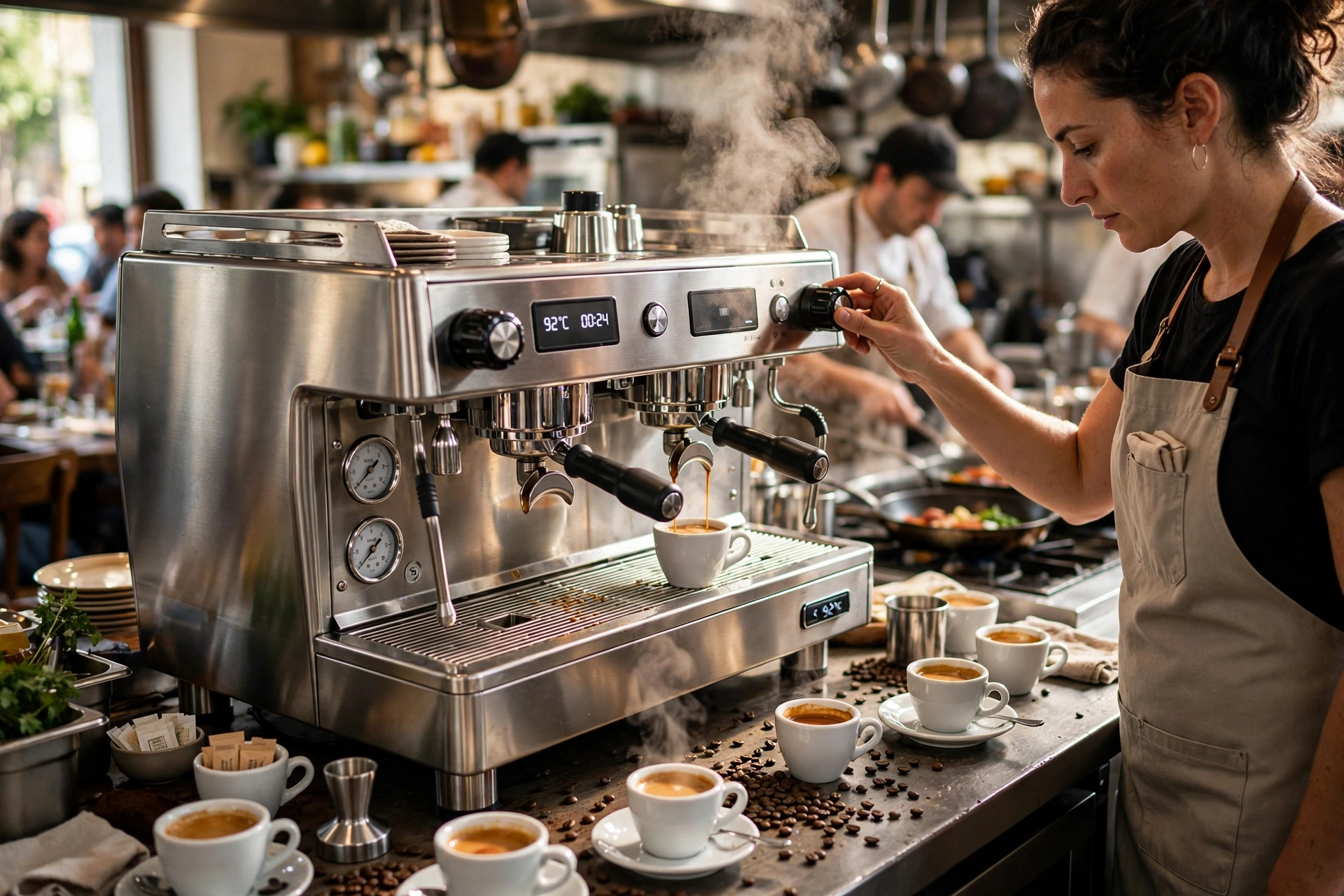
To successfully implement a rental program, a restaurant must first analyze its volume and service style. The approach differs significantly between a fine-dining establishment and a high-turnover breakfast bistro. The core strategy is to match the machine's capacity (groups and boilers) to the peak hour demand to avoid bottlenecks.
- Volume Analysis: Track your peak coffee hours. If you serve 50 coffees in a 30-minute window, you need a multi-group espresso machine with a high-capacity boiler. Using an undersized machine leads to "temperature surfing," where the coffee quality drops as the boiler struggles to keep up.
- Staff Training: Even the best machine fails if the barista is untrained. Ensure your rental agreement includes basic training on Coffea arabica extraction and milk texturing. A barista who understands the nuances of a specialty coffee bean can increase the perceived value of the drink, allowing for a higher menu price.
- Water Quality Management: Water is 98% of your coffee. Most rental packages include filtration. Ensure the filtration system is NSF-certified to prevent scale buildup and ensure taste consistency. As NSF International notes, adherence to sanitation and safety standards for food equipment is non-negotiable for commercial health compliance.
- Integration with Workflow: Place the machine where it minimizes footsteps for the server. The distance between the machine, the milk fridge, and the pickup station should be minimized to increase speed of service.
If you are expanding your reach to specific regions, you can see how we handle these setups in our Sensa Coffee Service in Charlotte, NC or our Sensa Coffee Service in Raleigh NC (2026 Overview) guides.
The Traditional Purchase vs. Managed Rental Comparison
When deciding between buying and renting, many restaurant owners overlook the "hidden' costs of ownership. The following table breaks down the reality of these two paths.
| Feature | Traditional Purchase | Generic Cheap Rental | Busy Bean Managed Service |
|---|---|---|---|
| Upfront Cost | Very High ($5k - $20k) | Low to Moderate | Zero / Low Membership Fee |
| Maintenance | Owner's Responsibility | Reactive (Wait for break) | Proactive (Scheduled service) |
| Equipment Age | Depreciates quickly | Often outdated models | Always current/SENSA gear |
| Financial Impact | Large CapEx hit | Variable OpEx | Predictable Monthly OpEx |
| Technical Support | Paid per visit | Limited/Slow response | Priority professional support |
💡
Key Takeaway
The traditional purchase model places all risk on the restaurant owner, whereas a managed service like Busy Bean Coffee transforms that risk into a predictable operational cost with guaranteed uptime.
Common Mistakes to Avoid in Restaurant Coffee Rentals
I've seen countless restaurant owners sign contracts that look great on paper but fail in practice. The most common mistake is ignoring the "service level agreement" (SLA). Some providers offer cheap rentals but have a 48-hour response time for repairs. In a restaurant, 48 hours without coffee is a catastrophic loss of revenue. Always ensure your contract specifies a maximum response time and provides a loaner machine if a repair takes more than 24 hours.
Another frequent error is failing to account for the coffee bean quality. A world-class espresso machine cannot fix bad beans. Some rental companies bundle the machine with low-grade, over-roasted coffee to maximize their own margins. This destroys the specialty coffee experience. Ensure your provider offers high-quality Arabica coffee that is roasted specifically for the equipment being provided. We’ve found that the synergy between the roast profile and the machine's pressure settings is what creates a "signature drink" that keeps customers coming back.
Finally, avoid the "one size fits all" trap. Some providers push the same machine for a small cafe and a 200-seat restaurant. This leads to either overkill (wasted energy and space) or underperformance (slow service and unhappy guests). A professional consultant will look at your square footage and projected cup-per-hour count before recommending a specific model. For a more detailed look at how to choose, check out our guide on commercial coffee maker rental services explained.
Implementation Guide for 2026
If you are launching a new beverage program or upgrading an existing one in 2026, follow this phased implementation approach to ensure maximum ROI.
Phase 1: The Audit (Week 1)
Calculate your average daily coffee volume. Determine if your primary goal is speed (high volume) or craft (specialty experience). Analyze your current electrical and plumbing capacity; professional machines require dedicated circuits and direct water lines to avoid the hassle of manual filling.
Phase 2: Provider Selection (Week 2)
Evaluate providers based on their maintenance record and equipment quality. Don't just look at the monthly price; look at the "uptime guarantee." At Busy Bean Coffee, we prioritize the installation of SENSA equipment because of its reliability in high-stress environments. Ensure the provider handles the "white glove" installation, meaning they calibrate the machine to your specific bean roast before leaving the site.
Phase 3: Staff Integration (Week 3)
Conduct a training session with your front-of-house staff. Teach them the difference between a ristretto, a macchiato, and a latte. When your staff can explain the origin of the coffee bean or the roasting process, they are no longer just serving a drink; they are selling an experience. This is where you move from a $3.00 coffee to a $6.00 specialty beverage.
Phase 4: Quality Control (Ongoing)
Set a weekly schedule for checking water filters and cleaning group heads. While your rental agreement includes professional maintenance, daily hygiene is the responsibility of the restaurant. Following the guidelines set by the Specialty Coffee Association (SCA) for brewing standards will ensure that your coffee tastes the same on Tuesday morning as it does on Saturday night.
For those expanding their footprint into the Southeast, we provide tailored solutions such as Sensa Coffee Service in Savannah GA and Sensa Coffee Service in Macon GA, ensuring local technicians are always nearby.
Frequently Asked Questions
Is restaurant coffee machine rental actually cheaper than buying?
In the short term, yes, because it eliminates the initial $5,000 to $20,000 investment. In the long term, it is often more cost-effective because it includes maintenance and repairs. A single motherboard failure or pump replacement on a high-end machine can cost over $1,000 in parts and labor. When you factor in the cost of professional installation and the risk of equipment obsolescence, the predictable monthly fee of a rental usually provides a better return on investment for restaurants that cannot afford a large upfront capital hit.
What happens if the machine breaks during a busy shift?
This is the primary reason to choose a managed service over a DIY purchase. A professional rental agreement includes a Service Level Agreement (SLA). In a high-quality program like the one offered by Busy Bean Coffee, we provide rapid-response technical support. Depending on the contract, this includes on-site repair within a set number of hours or the provision of a temporary replacement machine. This prevents the total loss of beverage revenue and ensures your guests aren't disappointed during your busiest hours.
Can I choose my own coffee beans with a rental agreement?
This depends on the provider. Some "closed" systems require you to use their proprietary beans to maintain the rental price. However, the best specialty coffee programs allow for flexibility or provide a curated selection of high-grade Arabica coffees that are specifically roasted to perform well in the provided equipment. We recommend choosing a provider that understands the science of roasting, as the interaction between the grind size, roast level, and machine pressure is what defines the final flavor profile.
How long are typical restaurant coffee machine rental contracts?
Contracts typically range from 12 to 36 months. Shorter contracts offer more flexibility but may have higher monthly fees. Longer contracts generally provide lower monthly rates and may include free equipment upgrades after a certain period. It is essential to check for "early exit" clauses or the ability to scale your equipment (e.g., moving from a 1-group to a 2-group machine) as your restaurant's volume grows throughout the year.
Do rental machines meet health department standards?
Yes, provided you rent from a reputable commercial provider. Professional machines are built to meet NSF/ANSI standards for food safety and sanitation. This includes using food-grade materials and having accessible components for deep cleaning. When you use a managed service, the provider typically ensures that the equipment is compliant with current health regulations and provides the necessary documentation for your local health inspector, which reduces the stress of regulatory audits.
Conclusion
Switching to a restaurant coffee machine rental model is a strategic move that optimizes both your cash flow and your guest experience. By removing the burden of high upfront costs and the unpredictability of maintenance, you can focus on what truly matters: the quality of your food and the satisfaction of your customers. Whether you are operating a small bistro or a high-volume eatery, the ability to offer consistent, specialty-grade coffee is a powerful tool for increasing your average check and building customer loyalty.
If you are ready to upgrade your beverage program without the financial risk, we invite you to explore our Business Coffee Membership in Boston MA: Complete Guide or our Business Coffee Membership in Washington DC - Complete Guide to see how we support businesses across the country. For those looking for a deeper dive into the financial mechanics of this shift, return to our Complete Guide to Coffee Equipment Rental for Foodservice.
Start your journey toward a more profitable and professional coffee program today. Visit www.busybeancoffee.com to learn more about our all-inclusive managed coffee memberships.
Free Coffee Pairing Guide & Specialty Roast Cheat Sheet
Unlock the secrets of perfect brewing ratios, water temperatures, and specialty roast profiles. Download the guide.