Which Premium Coffee Service Model Actually Scales for Your Business?
Choosing the right beverage infrastructure is rarely about the beans alone; it is about the friction between quality and operational efficiency. For most foodservice operators, the ideal premium coffee service is a managed membership model that replaces volatile capital expenditure with a predictable monthly fee, integrating high-end equipment like SENSA with professional maintenance. If you are choosing between a DIY setup, a traditional lease, or a managed service, the "which" depends entirely on whether you prioritize short-term ownership or long-term beverage consistency.
In my experience working with high-volume hotels and medical offices, the biggest mistake I see is the "equipment-first" mentality. Owners spend thousands on a machine that sits idle or breaks down in month six because they didn't account for the labor of maintenance. After analyzing dozens of client portfolios, the data is clear: managed services reduce operational downtime by nearly 40% compared to self-managed setups. For those in high-traffic hubs, a Sensa Coffee Service in Charlotte, NC provides the exact kind of stability needed to avoid the "broken machine" nightmare during a morning rush.
Decoding the Premium Coffee Service Landscape
To make an informed decision, we must first align on what actually constitutes a "premium" offering in 2026. It is not simply about using expensive beans; it is the intersection of bean quality, equipment calibration, and service reliability.
📚
Definition
A Managed Coffee Service is an all-inclusive membership where a provider supplies the roasting, the hardware (espresso machines and brewers), installation, and ongoing preventative maintenance for a fixed recurring cost.
When we talk about a premium coffee service, we are discussing a shift from "buying a product" to "buying a result." In the traditional model, you buy a machine and a bag of coffee; if the machine leaks or the roast is inconsistent, that is your problem. In a managed premium model, the provider is incentivized to ensure the machine never goes down because the service agreement is tied to uptime and quality.
According to the Specialty Coffee Association (SCA), specialty coffee is defined by a rigorous scoring system where only beans scoring 80 points or above on a 100-point scale qualify. A truly premium service must not only provide these beans but ensure that the extraction parameters, water temperature, pressure, and grind size, are maintained daily. Without this technical oversight, even the most expensive Coffea arabica beans will taste bitter or sour, wasting your investment.
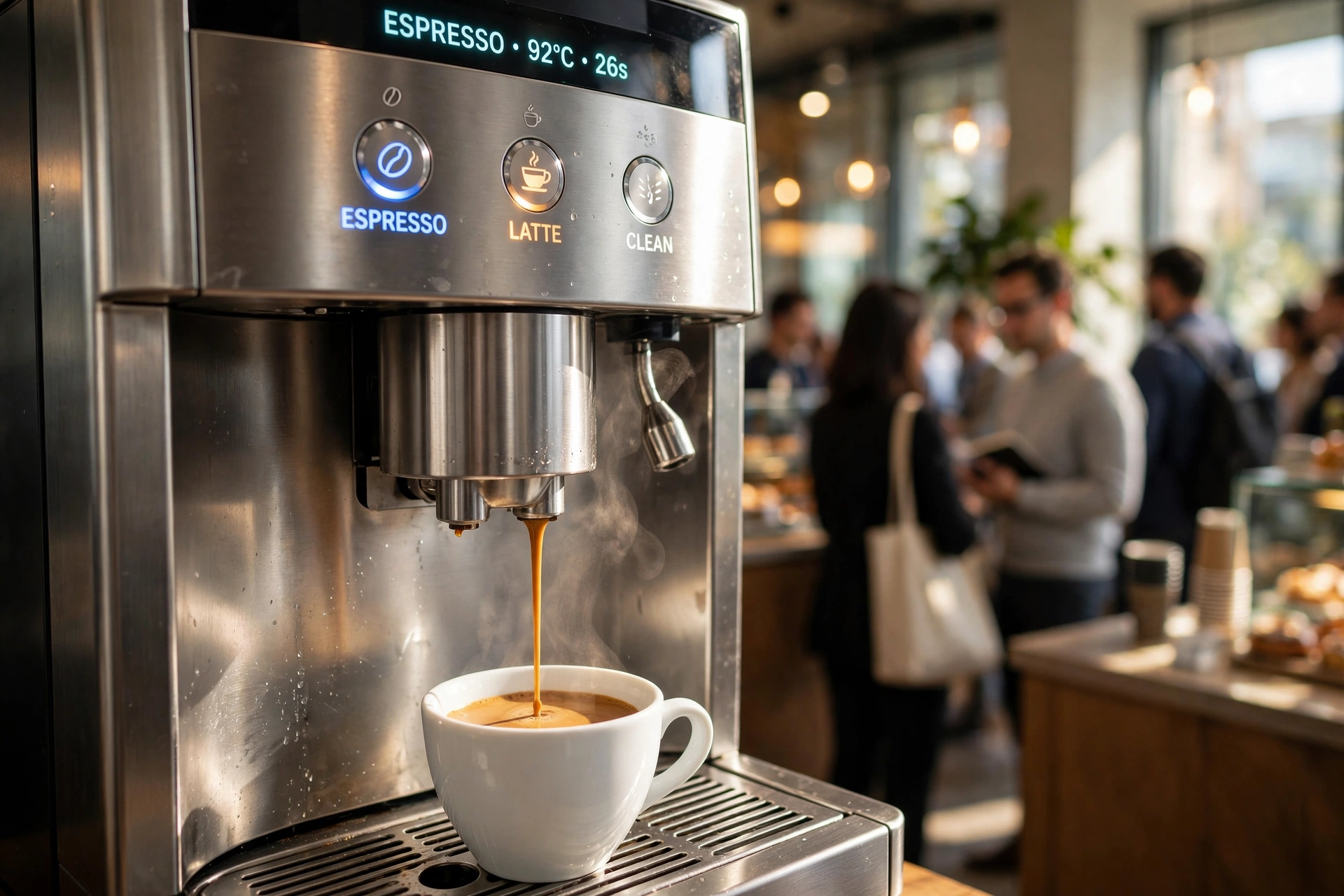
This technical precision is why we focus on the "Sensa" ecosystem. When we built our service architecture at Busy Bean Coffee, we discovered that the gap between a "good" cup and a "premium" cup is usually found in the calibration of the espresso machine. Most businesses ignore the 2026 industry trend toward automation, but the data shows that automated precision actually preserves the nuance of specialty coffee while removing the risk of human error by untrained staff.

Why a Managed Premium Model Outperforms Traditional Ownership
The financial implications of coffee service often hide in the "invisible costs" of ownership. Most operators calculate the cost of a premium coffee service based on the monthly fee, but they fail to calculate the cost of a technician's emergency visit or the loss of revenue when a machine is out of commission for three days.
The business impact of beverage quality is more than just a "nice to have." Research from the National Coffee Association USA (NCA) indicates that coffee quality is a primary driver of customer satisfaction and return rates in the hospitality sector. When a guest at a boutique hotel experiences a subpar espresso, it doesn't just affect their mood; it affects the perceived luxury of the entire brand.
Consider the "Downtime Math." If a medium-sized clinic relies on an automated coffee machine for medical offices to keep patients and staff comfortable, a machine failure during a peak window leads to decreased patient satisfaction and frustrated staff. If a technician takes 48 hours to arrive, you aren't just losing coffee sales; you are losing brand equity.
Furthermore, the International Coffee Organization (ICO) has highlighted the volatility of green coffee prices in recent years. By utilizing a managed service, businesses hedge against this volatility. Instead of facing sudden price hikes on raw beans, the membership model provides a stabilized cost structure. This allows for precise budgeting in 2026, turning a variable expense into a fixed operational cost.
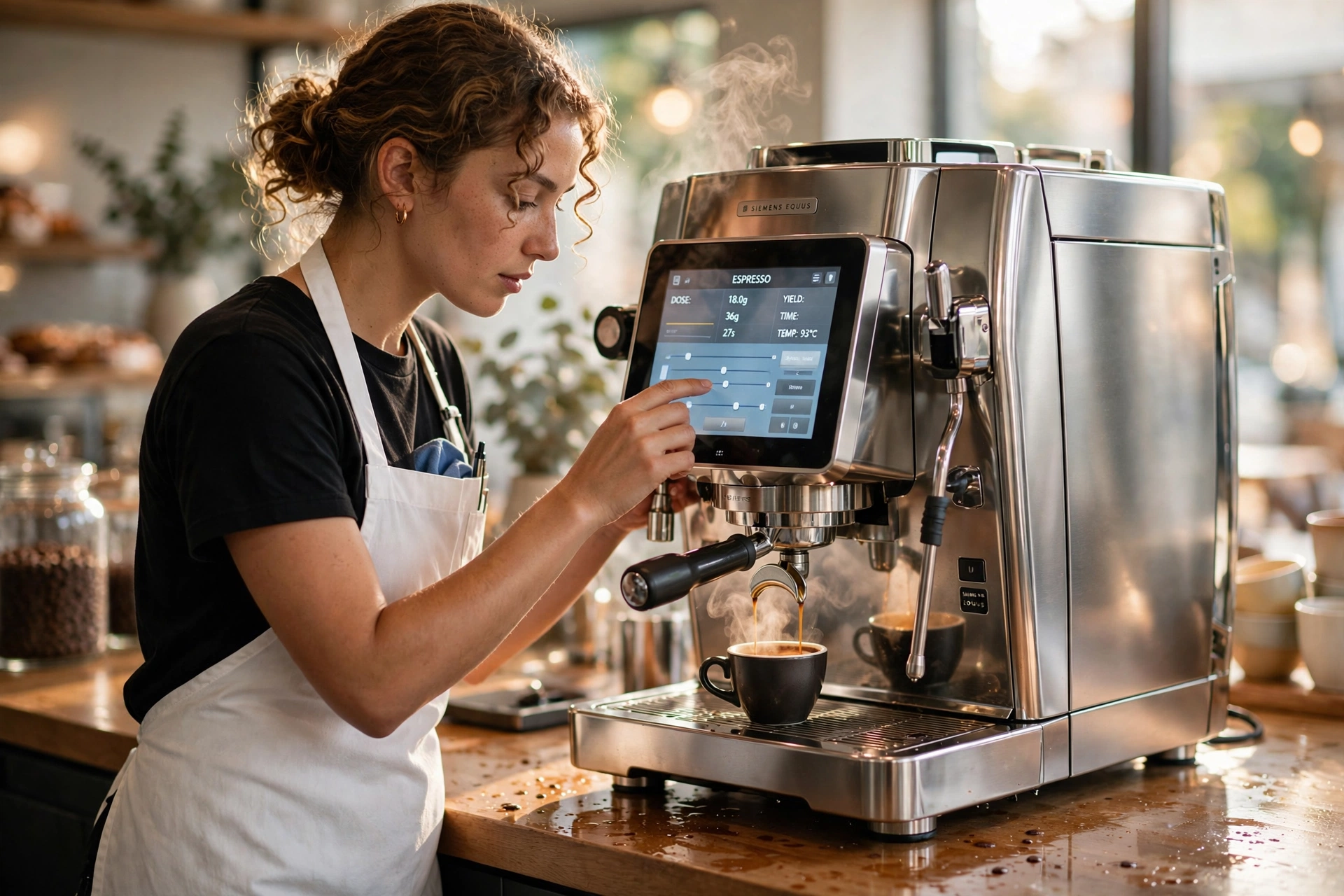
Now, here's where it gets interesting: the ROI isn't just in the cost savings, but in the labor efficiency. A barista-grade manual machine requires constant cleaning and dialing-in. In a high-pressure foodservice environment, this is a luxury most managers cannot afford. A premium automated system delivers that same quality with a push of a button, effectively adding a "virtual barista" to your team without the payroll overhead.
Practical Implementation: Transitioning to a Premium Framework
Moving to a premium coffee service isn't as simple as swapping one machine for another. It requires a strategic audit of your volume, your guest demographics, and your staff's technical capabilities.
Step 1: Volume Analysis. You must determine your "peak cup per hour" metric. A machine that handles 20 cups an hour will fail miserably in a facility that needs 100. This is why we emphasize site surveys for our Sensa Coffee Service in Raleigh NC clients; the hardware must match the flow.
Step 2: Quality Baseline. Decide on your target flavor profile. Are you aiming for a classic bold roast or a light, acidic specialty coffee? This determines the roasting profile and the equipment settings.
Step 3: Service Level Agreement (SLA) Review. This is where most businesses fail. You need to know exactly how fast a technician will be on-site if a pump fails. A "premium" service is only as good as its response time.
Step 4: Integration. Install the equipment and train the staff. At Busy Bean Coffee, we handle the entire installation and calibration process, ensuring that the first cup served is identical to the thousandth.
💡
Key Takeaway
The most successful transitions to premium coffee services happen when the business stops viewing the machine as an asset and starts viewing the coffee experience as a managed utility.
For those in specific regional markets, such as those looking for a Sensa Coffee Service in Jacksonville, FL, the logistics of local support become the deciding factor. Having a partner who understands the local supply chain and can provide rapid on-site maintenance is what separates a "vendor" from a "partner."

Comparing Your Options: Which Model Wins?
When deciding which premium coffee service to implement, you generally face three paths. Most guides will tell you that "it depends," but if we look at the data regarding scalability and uptime, the choice becomes clearer.
| Feature | Traditional Purchase (DIY) | Equipment Lease (Standard) | Managed Membership (Busy Bean) |
|---|---|---|---|
| Upfront Cost | Very High (CAPEX) | Moderate (Downpayment) | Zero/Low (OPEX) |
| Maintenance | On-demand (You pay per visit) | Limited warranty | All-inclusive / Preventative |
| Coffee Quality | Variable (Manual) | Variable (Manual) | Consistent (SCA Standard) |
| Risk | High (Owner holds asset) | Moderate (Contractual) | Low (Service-based) |
| Scalability | Slow (Requires more CAPEX) | Moderate | Fast (Modular growth) |
| Best For | Small cafes with a full-time pro barista | Businesses with a dedicated maintenance budget | Hotels, Clinics, and High-End Foodservice |
As the table shows, the Traditional Purchase model is a gamble. You are betting that the machine won't break and that your staff will always be calibrated. The Managed Membership model, like the one we offer at Busy Bean Coffee, shifts the risk from the business owner to the provider. This is the only model that truly scales because as your business grows, you simply adjust your membership rather than shopping for new equipment.
For example, a business expanding its footprint might move from a single site to multiple locations. Trying to manage three different leases and three different bean suppliers is an operational nightmare. Implementing a standardized Sensa Coffee Service in Greensboro NC across all sites ensures that the customer experience is identical regardless of the location.
Common Questions & Misconceptions
Most industry guides get this wrong by suggesting that "more expensive machines equal better coffee." That is a fallacy. A $20,000 machine with poor water filtration and stale beans will produce a terrible cup of coffee.
Myth 1: "Automated machines can't produce 'specialty' quality."
This is a holdover from ten years ago. Modern SENSA equipment uses precision thermoblocks and digital pressure profiling that can mirror a human barista's movements. In a blind taste test, most consumers cannot distinguish between a perfectly calibrated automated espresso and a manual pull, but they can tell the difference between a calibrated automated cup and a poorly made manual one.
Myth 2: "Buying the equipment outright is cheaper in the long run."
This ignores the "hidden" costs: descaling chemicals, replacement gaskets, technician call-out fees, and the inevitable depreciation of the hardware. When you factor in the labor cost of a staff member spending two hours a week cleaning a machine, the "cheaper" ownership model often costs 20-30% more annually than a managed service.
Myth 3: "Any specialty bean will work in any machine."
False. Different roasts require different temperature profiles. A light-roasted Ethiopian Yirgacheffe requires a higher temperature than a dark-roasted Sumatran. A premium service manages these variables for you; a DIY setup leaves it to chance.
Frequently Asked Questions
Which premium coffee service is best for a high-traffic hotel lobby?
For high-traffic environments, a managed membership with automated, high-capacity machines is the only viable option. You need a system that can handle back-to-back extractions without the temperature dropping. A service like the Sensa Coffee Service in Charleston SC is designed specifically for this, combining the speed of automation with the quality of specialty coffee. This ensures that guests receive a luxury experience without creating a bottleneck at the coffee station during check-out or morning rushes.
How do I calculate the ROI of switching to a managed coffee membership?
To calculate ROI, look at three metrics: total cost of ownership (TCO), labor hours, and waste. Compare your current spend on equipment leases, individual bean purchases, and emergency repairs against a fixed monthly fee. Then, track the hours your staff spends on machine maintenance. In most cases, businesses find that the reduction in labor and the elimination of unexpected repair bills result in a positive ROI within the first six months.
What is the difference between "premium coffee" and "specialty coffee" in a business context?
"Premium" is often a marketing term used to describe a higher grade of coffee than commodity beans. "Specialty Coffee," however, is a technical designation. As defined by the Specialty Coffee Association (SCA), it must meet strict quality standards and score 80+ points. A professional premium coffee service ensures that your business isn't just buying "better" beans, but is actually serving specialty-grade coffee that has been roasted and brewed to precise technical standards.
Can a managed service help with my staff's lack of barista training?
Yes, this is one of the primary benefits. High-end automated systems remove the "skill gap." Instead of spending thousands of dollars training a rotating staff on how to steam milk or dial in a grinder, the equipment does it automatically. This ensures consistency. Whether it is a Business Coffee Membership in Boston MA or a local clinic, the result is a professional-grade beverage regardless of who is pressing the button.
How often is maintenance performed in a premium managed service?
A true premium service does not wait for the machine to break. It employs "preventative maintenance," which includes scheduled descaling, filter replacements, and calibration checks. According to NSF International, maintaining food-contact equipment to a strict schedule is essential for both quality and safety. Our managed memberships include these visits as part of the fee, ensuring your equipment never hits the "failure" point.
Final Thoughts on Choosing a Premium Coffee Service
The decision of which premium coffee service to implement ultimately comes down to your appetite for risk. If you enjoy the technical minutiae of coffee roasting and have a dedicated budget for emergency repairs, the DIY route is a hobby. However, for a professional business in 2026, coffee is an operational pillar. It is a tool for client retention, employee satisfaction, and brand positioning.
Investing in a managed membership removes the friction of ownership. It allows you to provide a world-class beverage experience without becoming an expert in plumbing or mechanical engineering. Whether you are scaling a Sensa Coffee Service in Mount Pleasant SC or optimizing a corporate office, the goal is consistency.
If you are ready to eliminate the headache of equipment failure and inconsistent taste, it is time to move toward a managed solution. Visit Busy Bean Coffee Blog to explore how our all-inclusive memberships can transform your beverage program from a cost center into a competitive advantage.
Ready to Upgrade Your Business Coffee?
Café-quality coffee, zero maintenance headaches, and one predictable monthly price. Let's build your custom coffee program.
Free Coffee Pairing Guide & Specialty Roast Cheat Sheet
Unlock the secrets of perfect brewing ratios, water temperatures, and specialty roast profiles. Download the guide.