How Much Do Professional Office Coffee Solutions Cost in 2026?
Most businesses overpay for their coffee because they confuse the "sticker price" of a machine with the actual cost of a beverage program. In my experience working with hospitality and corporate clients, the real cost of office coffee solutions isn't the hardware; it's the hidden drain of downtime, wasted beans, and the "invisible" labor of cleaning a machine that wasn't designed for high volume. Depending on your headcount and quality requirements, a professional setup typically ranges from $150 to $800 per month for managed services, or an upfront capital expenditure of $2,000 to $15,000 for equipment.
The gap between these numbers depends entirely on whether you are buying a product or investing in a service. If you are managing a team of 20, a high-end bean-to-cup machine is a luxury; for a team of 200, it is a critical infrastructure component. The goal is to move from a "cost center" mindset to a "value" mindset, where the quality of the brew directly impacts employee retention and client impressions.

What Exactly Are Managed Office Coffee Solutions?
When we talk about office coffee solutions, we aren't just discussing a pot of coffee in the breakroom. We are referring to a strategic ecosystem that encompasses equipment, raw material supply, maintenance, and employee training. For most modern businesses, this takes the form of a managed service where the provider handles the heavy lifting in exchange for a monthly fee.
📚
Definition
Managed Coffee Services are all-inclusive subscriptions that provide commercial-grade brewing equipment, recurring specialty coffee bean deliveries, and proactive technical maintenance for a fixed monthly cost.
In the industry, we differentiate between "commodity" and "specialty" paths. A commodity approach focuses on volume and low cost-per-cup, often using automated drip systems or low-grade Robusta beans. A specialty approach focuses on the sensory experience, utilizing Coffea arabica and precise calibration to ensure every cup meets a specific quality standard.
According to the Specialty Coffee Association (SCA), the definition of specialty coffee requires a score of 80 or above on a 100-point scale. When a company implements a high-tier solution, they aren't just buying "better" coffee; they are implementing a set of standards regarding roast profiles and water chemistry that prevent the bitter, burnt taste common in corporate settings.
After analyzing dozens of office setups, the pattern is clear: businesses that try to "DIY" their coffee by buying a consumer-grade machine from a big-box store usually hit a wall within six months. These machines are not built for the duty cycle of 50 people drinking three cups a day. They overheat, the pumps fail, and the cost of repair quickly exceeds the original purchase price. Professional solutions use commercial-grade boilers and heavy-duty grinders designed for thousands of cycles.
Why Does the Quality of Your Coffee Program Impact Your Bottom Line?
It is easy to dismiss coffee as a "perk," but from a managerial perspective, it is a productivity tool. The physics of the "coffee break" are real; it is one of the few times in a workday where cross-departmental collaboration happens organically. If the coffee is mediocre, people leave the building to go to a nearby cafe, turning a five-minute break into a twenty-minute excursion.
From a data perspective, the impact is measurable. According to the National Coffee Association USA (NCA), coffee consumption remains a primary driver of morning alertness and cognitive function for the vast majority of the US workforce. When a company provides high-quality specialty coffee, they are effectively subsidizing the cognitive performance of their staff.
The cost of "bad" coffee is also found in the waste. In a standard office, roughly 15% to 20% of brewed coffee is poured down the drain because it sits too long on a heating element and becomes acrid. Professional office coffee solutions solve this by using "brew-on-demand" technology or high-end super-automatics that only grind and brew when a cup is present.
Furthermore, the health and safety implications of poorly maintained equipment are significant. Commercial machines must adhere to strict sanitary standards. NSF International provides the gold standard for food equipment safety (NSF/ANSI 4), ensuring that machines are designed to be easily cleaned and are resistant to bacteria growth in the internal tubing. A managed service ensures that these standards are met through scheduled descaling and sanitization, removing the risk of mold or calcium buildup that can lead to equipment failure or health issues.
How to Implement a Professional Coffee Program Step-by-Step
Implementing a high-end coffee program is not as simple as plugging in a machine. It requires a calculation of "cup demand" and a layout that minimizes traffic congestion in the breakroom. If you place a slow-pour machine in a narrow hallway, you create a bottleneck that frustrates employees.
Step 1: Calculate Your Daily Cup Volume
Determine your peak usage hours. Most offices experience "spikes" between 8:30 AM and 10:00 AM. If you have 50 employees and each drinks 2 cups, you need a system capable of producing 100 cups daily, with a burst capacity of 30 cups per hour.
Step 2: Select Your Equipment Tier
Decide between a super-automatic machine (one-touch espresso and lattes), a high-volume batch brewer, or a hybrid system. For those seeking the highest quality without the need for a full-time barista, a super-automatic is the standard.
Step 3: Establish a Bean Supply Chain
Don't buy bags from the grocery store. Establish a relationship with a roaster that can provide fresh, roasted-on-demand beans. This is where Busy Bean Coffee excels; we integrate the roasting process with the equipment delivery so the beans arrive at their peak aromatic window.
Step 4: Set Up Maintenance Intervals
Decide who is responsible for the daily "deep clean." Even the best machines require a daily rinse of the milk frothers and a weekly deep descale. In a managed membership, this is handled by the provider.
Step 5: Train Your Users
A $10,000 machine can still produce bad coffee if the user doesn't know how to adjust the grind size or the water temperature. Provide a simple 1-page guide next to the machine.
💡
Key Takeaway
The most successful office coffee programs prioritize "uptime" over "features." A machine with 50 options that is broken 20% of the time is less valuable than a simple, reliable machine that always delivers a perfect cup.
Comparing Your Coffee Solution Options
When deciding how to spend your budget, you generally have three paths. The mistake I see constantly is companies choosing the "Cheap AI/Automated" path, thinking they are saving money, only to realize they are paying for a machine that produces "brown water" rather than actual coffee.
| Feature | Traditional DIY (Consumer) | Generic/Cheap Automation | Managed Professional Solution |
|---|---|---|---|
| Upfront Cost | Low ($200 - $800) | Medium ($1,000 - $3,000) | Zero to Low (Membership) |
| Coffee Quality | Variable/Poor | Mediocre/Consistent | Premium/Specialty |
| Maintenance | User-led (Often ignored) | Reactive (Call when broken) | Proactive (Scheduled) |
| Waste Level | High (Pot brewing) | Medium (Pods/Capsules) | Low (Brew-on-demand) |
| Scalability | Poor | Moderate | High |
| Best For | 5-10 person startups | Small offices with low taste req. | Growing businesses & corporate HQ |
As the table demonstrates, the "Modern Approach" provided by Busy Bean Coffee removes the capital expenditure (CapEx) and turns it into an operating expense (OpEx). Instead of spending $10,000 on a machine that depreciates the moment it's installed, you pay a predictable monthly fee that includes the equipment, the beans, and the peace of mind that a technician will be there before the machine even fails.
Common Misconceptions About Office Coffee Costs
Most guides get this wrong by focusing purely on the price of the coffee bean per pound. That is a narrow way to look at the ledger. Here is the reality of where the money actually goes.
Myth 1: Pod-based systems are the cheapest option.
On the surface, a pod machine is cheap to buy. However, the cost-per-cup for a high-quality pod is astronomically higher than that of whole-bean coffee. Furthermore, the environmental cost of thousands of plastic pods is a PR nightmare for companies trying to maintain "green" certifications. Whole-bean solutions are significantly cheaper per cup and far more sustainable.
Myth 2: You need a full-time barista to get "cafe quality" coffee.
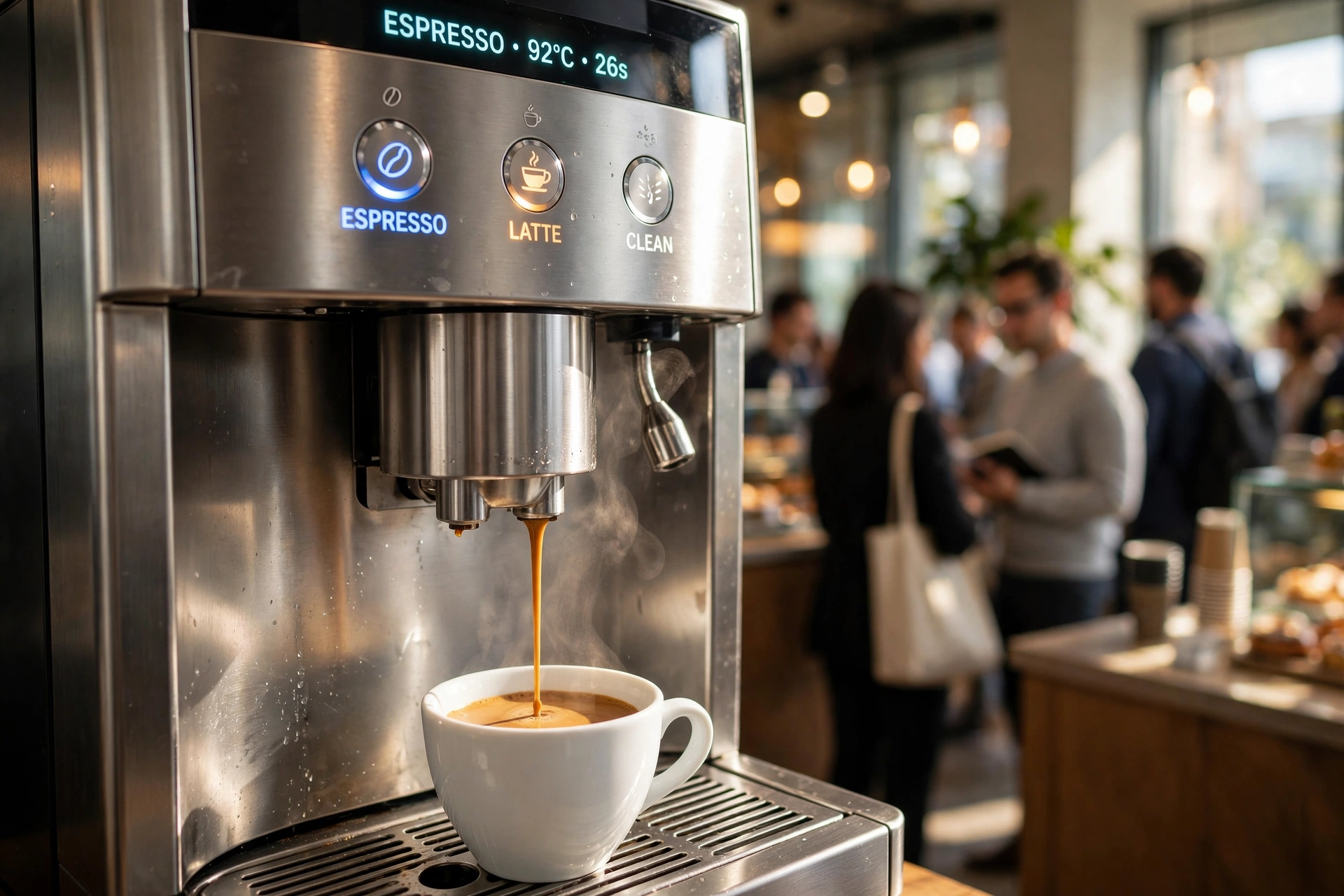
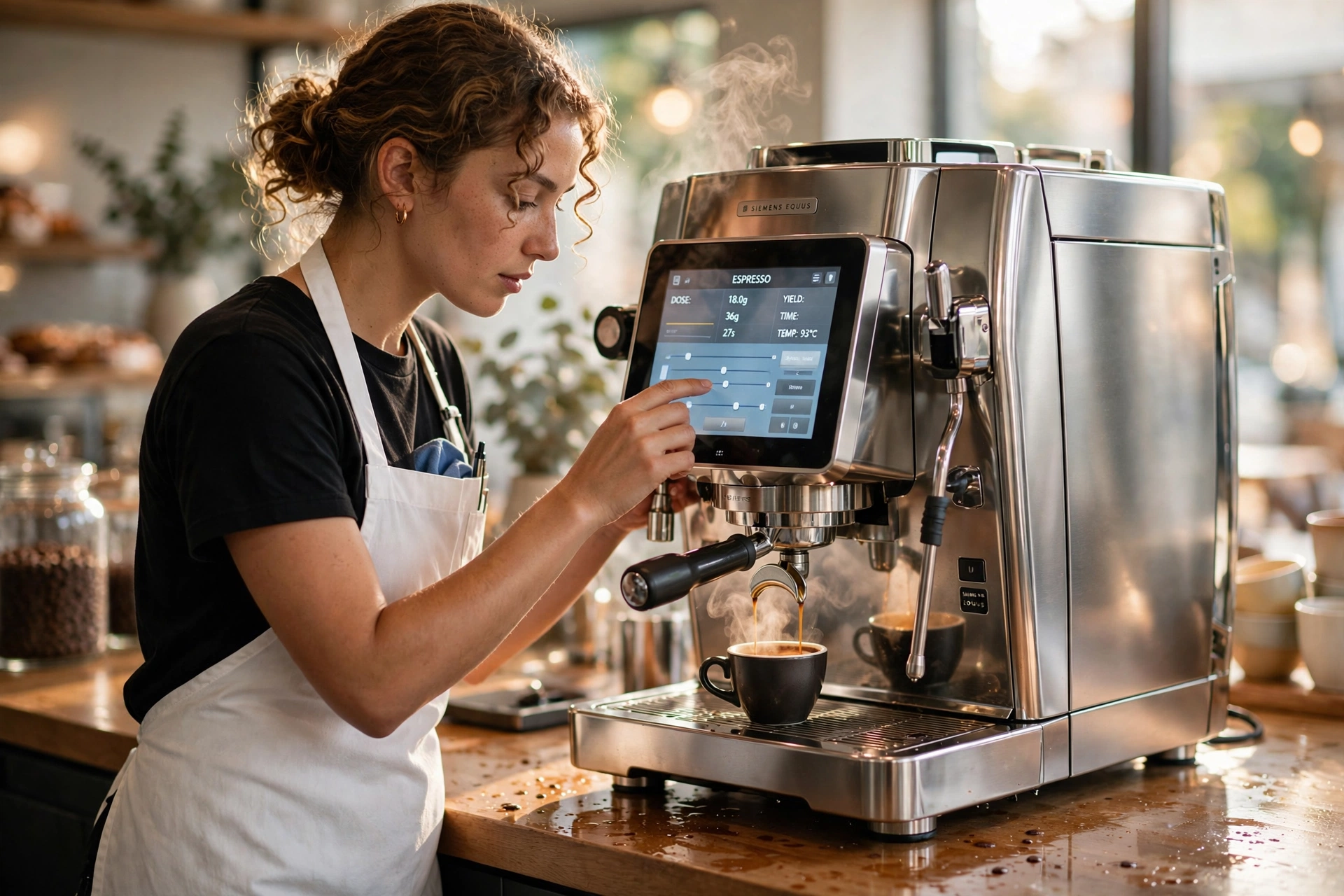
With the evolution of super-automatic espresso machines, the gap between a professional barista and a machine has shrunk. Modern sensors can now handle milk texturing and pressure profiling automatically. You can achieve a specialty-grade latte with a single touch, provided the beans are fresh and the machine is calibrated.
Myth 3: "Commercial" just means "Bigger."
Commercial equipment isn't just larger; it's built with different materials. Consumer machines use plastic tubing and thin aluminum boilers. Commercial machines use stainless steel, brass, and high-grade gaskets. If you put a consumer machine in a 50-person office, you are essentially using a sedan to tow a trailer; it might work for a while, but the engine will burn out prematurely.
Frequently Asked Questions
How much does a typical monthly coffee subscription cost for a medium-sized office?
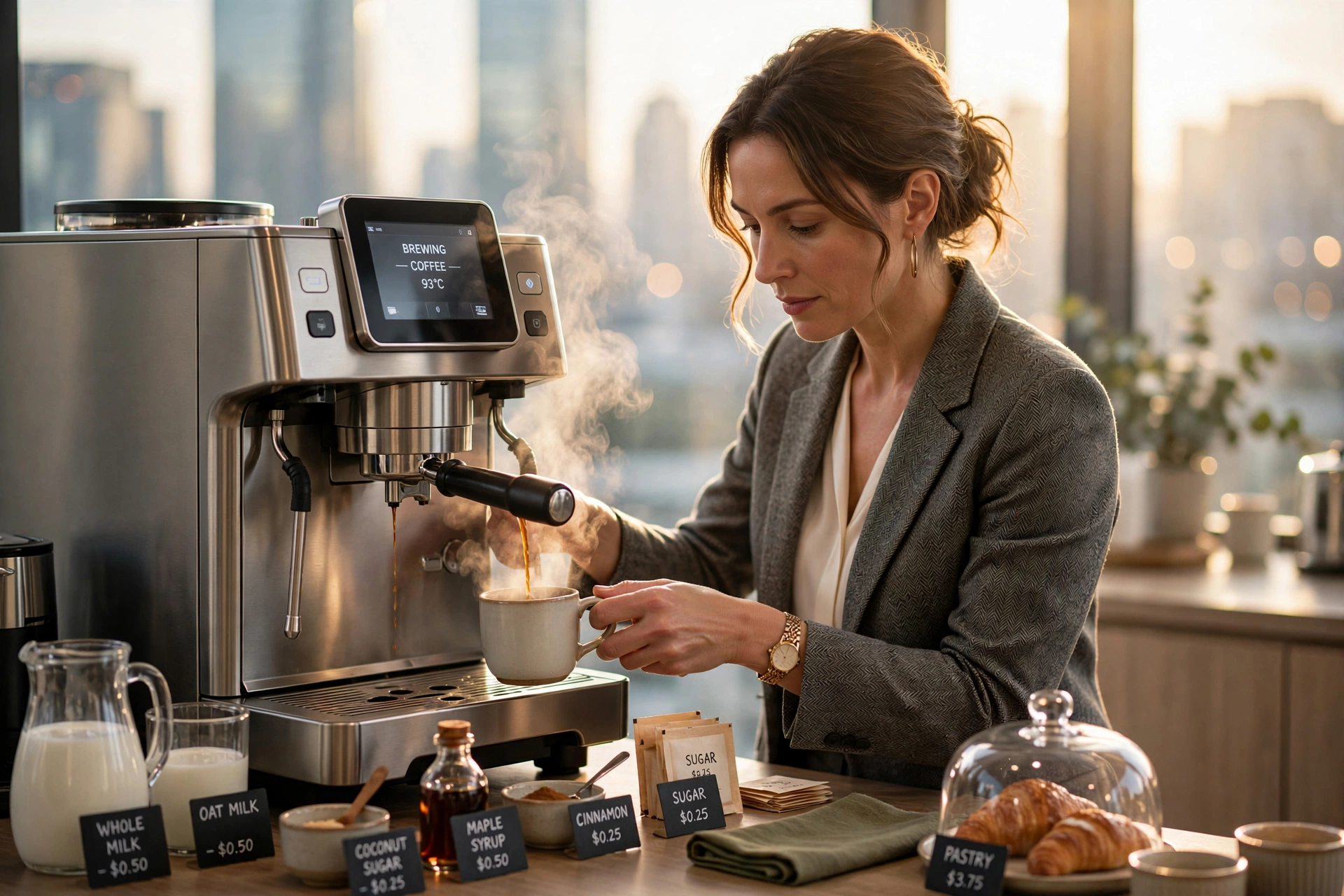
For an office of 30 to 75 people, a professional managed solution typically ranges from $250 to $600 per month. This price usually includes the lease of a high-end super-automatic machine, a monthly allocation of specialty coffee beans, and a service agreement that covers all repairs and preventative maintenance. The exact cost depends on the volume of coffee consumed and whether you require premium additives like syrups or specialized milk alternatives. Investing in a managed plan prevents the "sticker shock" of a $2,000 repair bill when a boiler fails.
Is it more cost-effective to buy the machine or lease it through a service?
Leasing or using a managed service is almost always more cost-effective for businesses. When you buy a machine, you assume 100% of the depreciation and maintenance risk. If a critical part fails after the warranty, you are responsible for the cost and the downtime. With a service like Busy Bean Coffee, the equipment is maintained proactively. This shifts the risk to the provider and ensures your office always has a functioning machine. For most companies, the tax benefits of an operating expense (OpEx) are also preferable to a one-time capital expenditure (CapEx).
What is the difference between "commercial grade" and "consumer grade" machines?
Commercial grade machines are designed for high "duty cycles," meaning they can brew dozens of cups in rapid succession without the temperature dropping. They feature larger boilers, more powerful pumps, and heavy-duty grinders that can handle 20kg of coffee per year without losing their edge. Consumer machines are designed for 2 to 4 cups a day; using them in a professional setting leads to overheating and premature component failure. Furthermore, commercial machines are often NSF certified, ensuring they meet rigorous health and safety standards for food service.
How do I calculate the "cost per cup" for my office?
To calculate the true cost per cup, you must add the cost of the coffee beans, the electricity, the water, and the proportional cost of the machine's depreciation or monthly lease. For example, if you spend $300 a month on a managed service and produce 1,000 cups, your base cost is $0.30 per cup. Compare this to a pod-based system where a single high-quality pod can cost $0.60 to $1.10. Over a year, a whole-bean professional solution can save a medium-sized office thousands of dollars while significantly increasing the quality of the beverage.
How often should office coffee machines be serviced to avoid breakdowns?
Professional equipment should undergo a "deep clean" and calibration check every 30 to 90 days, depending on volume. This includes descaling the internal boilers to remove calcium buildup and replacing gaskets that wear down over time. Most businesses wait until the machine stops working to call a technician, which leads to "emergency" fees and days of productivity loss. A proactive managed service schedules these visits in advance, ensuring the machine is optimized for taste and performance without interrupting the workday.
Final Thoughts on Office Coffee Solutions
Investing in professional office coffee solutions is less about the caffeine and more about the culture of your workplace. When you provide a high-quality, reliable coffee experience, you are telling your employees and clients that you value quality and attention to detail. The "cost" of coffee is a fraction of your overhead, but the ROI is seen in the small moments: the spontaneous brainstorm at the coffee station, the impressed client during a meeting, and the increased morale of a team that feels cared for.
Whether you are looking to upgrade from a basic pot to a super-automatic espresso system or you want to move to a fully managed membership to eliminate the hassle of maintenance, the key is to prioritize reliability and bean quality. Stop treating your coffee program as an afterthought and start treating it as a tool for business growth.
For a seamless, all-inclusive experience that removes the stress of equipment ownership, explore the managed solutions at Busy Bean Coffee Blog. We handle the roasting, the installation, and the maintenance so you can focus on running your business.
Recommended Readings
To deepen your understanding of these topics, we recommend reading the following articles:
- The Complete Guide to White Glove Coffee Service
- Ultimate Guide to All-Inclusive Coffee Service for Businesses
- Ultimate Guide to Automated Coffee Machines for Business
- Ultimate Guide to Specialty Coffee Equipment for Business
Ready to Upgrade Your Business Coffee?
Café-quality coffee, zero maintenance headaches, and one predictable monthly price. Let's build your custom coffee program.
Free Coffee Pairing Guide & Specialty Roast Cheat Sheet
Unlock the secrets of perfect brewing ratios, water temperatures, and specialty roast profiles. Download the guide.