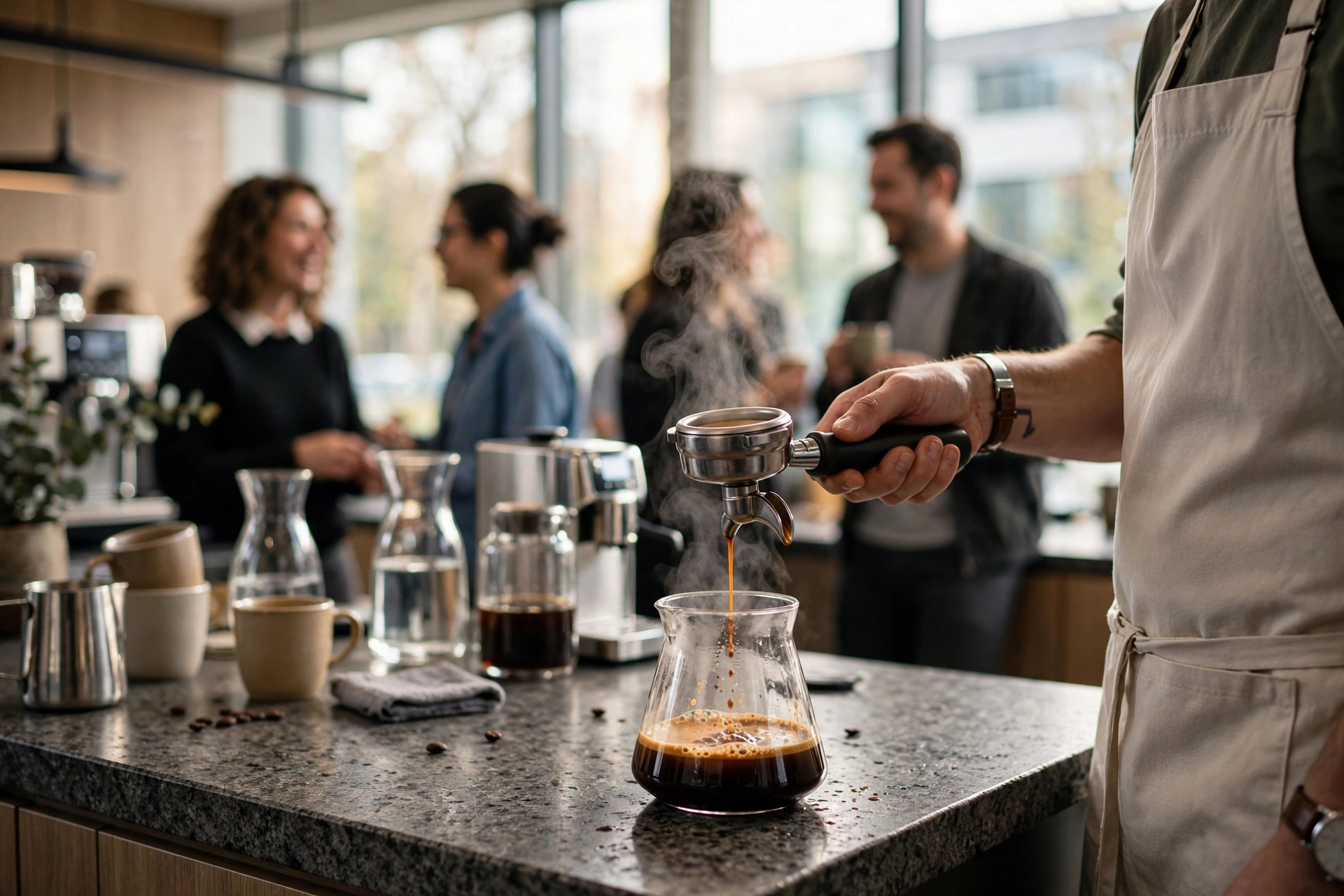
How Do You Implement Effective Office Coffee Solutions?
Setting up a professional coffee station is less about the machine and more about calculating the daily throughput of your employees to avoid the dreaded "morning bottleneck." To implement high-performance office coffee solutions, you must first audit your peak-hour volume, select equipment based on beverage variety (espresso vs. drip), and establish a maintenance schedule that prevents mid-week downtime. In my experience working with corporate offices in Mount Pleasant, SC, the biggest mistake is buying a residential-grade machine for a 50-person office; it will burn out in six months, leaving you with a costly piece of scrap metal and a frustrated workforce.
The secret to a sustainable setup is moving away from fragmented purchasing, where you buy beans from one place and a machine from another, and moving toward a managed ecosystem. By integrating high-quality specialty coffee, professional-grade hardware, and a dedicated service agreement, you transform a simple breakroom amenity into a strategic tool for employee retention and productivity.
What Exactly Are Managed Office Coffee Solutions?
When we talk about professional office coffee solutions, we aren't talking about a standard pot of coffee in a plastic carafe. We are referring to a comprehensive infrastructure designed to provide cafe-quality beverages with minimal operational friction. This involves the synchronization of the coffee bean quality, the precision of the espresso machine, and the logistics of supply chain management.
📚
Definition
Managed Office Coffee Solutions are all-inclusive service agreements where a provider supplies the hardware, the coffee product, and the technical maintenance for a predictable monthly fee, removing the capital expenditure (CapEx) burden from the business.
To understand the scale of this, consider the technical requirements of Coffea arabica. High-altitude Arabica beans require precise temperature control and grind consistency to avoid bitterness. According to the Specialty Coffee Association (SCA), the "Golden Cup" standard for brewing requires a specific ratio of coffee to water and a temperature range between 195°F and 205°F. Most standard office machines fail this test, resulting in a beverage that employees find barely tolerable.
In my experience, the transition from "basic coffee" to a "managed solution" happens when a company realizes that the hidden cost of poor coffee, lost productivity, employees leaving the building for 20 minutes to visit a local cafe, and general dissatisfaction, far outweighs the monthly subscription fee of a professional service. When you implement a system that mirrors the experience of a professional barista, you create a "third space" within the office that fosters spontaneous collaboration.

Why Does the Quality of Your Office Coffee Actually Matter?
The impact of coffee on workplace culture is often dismissed as a "perk," but the data suggests it is a fundamental driver of operational efficiency. When employees have access to high-quality specialty coffee on-site, the "coffee run" phenomenon, where groups of three or more employees leave the office for 30 minutes, is significantly reduced. If four employees leave for 30 minutes daily, that is 10 hours of lost productivity per week.
Beyond the clock, there is a psychological element known as "benefit signaling." Providing a premium beverage experience tells your staff that the company values quality and attention to detail. This is particularly critical for talent retention in 2026, where the physical office environment must compete with the flexibility of remote work.
From a health and safety perspective, the equipment used must meet rigorous standards. According to NSF International, commercial food and beverage equipment must adhere to specific sanitary designs to prevent biofilm buildup and bacterial growth. A cheap consumer machine lacks the internal plumbing and accessibility for deep cleaning, which can lead to health code violations or, more commonly, a foul-tasting brew that ruins the experience for everyone.
Furthermore, the National Coffee Association USA (NCA) has consistently highlighted the growth of "premiumization" in the US market. Employees are no longer satisfied with generic blends; they are educated consumers who understand the difference between a dark roast and a light roast. If your office provides subpar coffee, you aren't just failing to provide a perk; you are signaling a lack of alignment with modern quality standards.
How to Implement a Professional Coffee Program Step-by-Step
Implementing a high-tier coffee program requires a shift in mindset from "buying a product" to "managing a service." Whether you are scaling a small startup or managing a multi-floor corporate headquarters, the following framework ensures you don't overspend on the wrong equipment.
Step 1: Calculate Your Peak Load
Do not base your equipment choice on total employee count; base it on peak-hour demand. In most offices, 60% of all coffee is consumed between 8:00 AM and 10:00 AM. If you have 100 employees, you need a machine capable of producing 60 drinks in 120 minutes without a significant drop in temperature or pressure.
Step 2: Define Your Beverage Profile
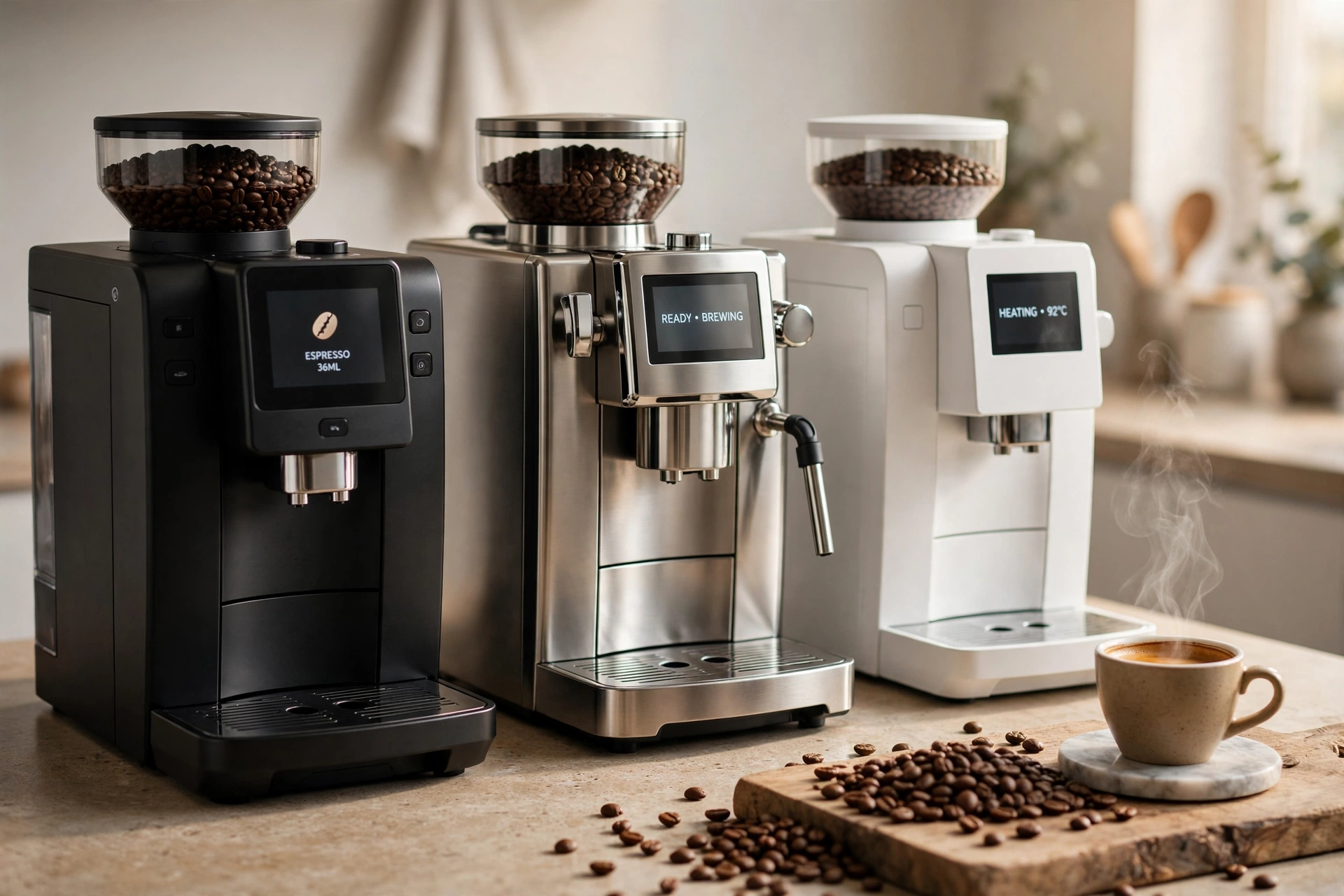
Determine if your team prefers "fuel" (black drip coffee) or "experience" (lattes, cappuccinos, and macchiatos). If the demand is for espresso-based drinks, you need a machine with a professional steam wand or an automatic milk frother. For high-volume black coffee, a precision thermal brewer is the superior choice.
Step 3: Establish a Water Filtration Strategy
This is where most offices fail. Coffee is 98% water. If you have hard water in your region, minerals like calcium and magnesium will build up in your machine (scaling), leading to equipment failure and a flat, metallic taste. Professional solutions include inline reverse osmosis or carbon filtration systems.
Step 4: Source High-Quality Beans
The hardware is only as good as the input. Using a professional coffee roasting partner ensures that the beans are fresh. Coffee begins to lose its aromatic complexity within two weeks of roasting. A managed service ensures a "just-in-time" delivery model so you are never using stale beans.
Step 5: Set a Maintenance Cadence
A professional espresso machine requires daily cleaning and weekly deep-descaling. In my experience, companies that try to handle this "whenever someone remembers" end up with broken pumps and burnt gaskets. The most efficient approach is to outsource this to a provider like Busy Bean Coffee, where maintenance is proactive rather than reactive.
💡
Key Takeaway
The most expensive coffee machine is the one that stays broken for two weeks because you didn't have a service contract. Prioritize "uptime" over "features" when selecting a provider.

Comparing Coffee Service Models
Choosing the right model depends on your budget and your appetite for management. Many offices start with the "Traditional" approach and quickly realize it is the most expensive option in terms of time and frustration.
| Feature | Traditional (Retail Buy) | Generic Subscription | Managed Solution (Busy Bean) |
|---|---|---|---|
| Upfront Cost | High (Buy machine) | Low to Medium | Zero (Monthly Fee) |
| Maintenance | DIY / Reactive | Limited / Slow | Proactive / Included |
| Bean Quality | Variable (Grocery) | Standard | Premium Specialty |
| Consistency | Low (Human Error) | Medium | High (Calibrated) |
| Water Care | Often Ignored | Basic Filter | Professional Filtration |
| Best For | 1-5 Person Offices | Budget-focused firms | Professional Corps |
Now, here's where it gets interesting: the "Generic Subscription" often seems like a win until the machine breaks. You find out that the warranty doesn't cover "commercial use" because you're using a home machine in an office, and you're left with a voided warranty and a dead machine. A truly professional approach integrates the equipment into a membership model, ensuring that the hardware is always appropriate for the volume.
Common Misconceptions About Office Coffee
Most guides get this wrong by suggesting that "more features equal better coffee." In reality, the most complex machines are often the most prone to failure.
Myth 1: Pod Machines are the Most Efficient Solution
Many believe that pods (K-Cups, Nespresso) are the gold standard for efficiency. While they are fast, they are an operational nightmare for the environment and the budget. The cost per cup is exponentially higher than whole-bean coffee, and the plastic waste is staggering. Furthermore, pod coffee is rarely "specialty grade" because the roasting process is optimized for shelf-life, not flavor.
Myth 2: A High Price Tag Guarantees Better Taste
I've seen offices spend $15,000 on a machine only to use stale, commodity-grade beans. The result is "expensive bad coffee." Taste is a result of the chain: Fresh Bean $\rightarrow$ Precise Grind $\rightarrow$ Correct Temperature $\rightarrow$ Pure Water. If any link in that chain is broken, the price of the machine is irrelevant.
Myth 3: Anyone Can Be a Barista with an Automatic Machine
While "super-automatic" machines reduce the skill gap, they require more maintenance. The internal milk lines in these machines are breeding grounds for bacteria if not cleaned daily according to FDA guidelines. The misconception is that "automatic" means "zero effort." In truth, the more the machine does for you, the more it needs professional servicing to keep doing it.
Frequently Asked Questions
How many coffee machines do I actually need for my office size?
The general rule of thumb is one high-capacity professional station for every 30 to 50 employees, provided the station is centrally located. However, if your office is spread across multiple floors, you should implement a "Hub and Spoke" model. One primary high-end espresso machine in the main breakroom (the hub) and smaller, high-quality drip stations on each floor (the spokes). This prevents the "crowding effect" and ensures that employees don't spend 10 minutes of their break just waiting in line.
What is the difference between "commercial" and "consumer" coffee equipment?
The difference lies in the "duty cycle." A consumer machine is designed to make 2 to 4 drinks a morning. A commercial machine, like those provided by Busy Bean Coffee, is built with heavy-duty boilers, industrial pumps, and heat-exchange systems that can run for 8 hours straight without losing temperature. Consumer machines use thin heating elements that fluctuate, which is why your fifth cup of the morning often tastes colder and more bitter than the first.
How do I handle the "waste" associated with a professional coffee program?
To minimize waste, move away from single-use plastics and pods. Implementing a whole-bean system significantly reduces the landfill footprint. For the coffee grounds themselves, many modern offices in Mount Pleasant, SC, are now composting their spent grounds or donating them to local community gardens. By using an all-inclusive managed service, you can also optimize your bean delivery frequency to ensure you are never throwing away stale coffee that passed its peak freshness.
Is it better to have a bean-to-cup machine or a semi-automatic?
This depends entirely on your staff's "coffee culture." A bean-to-cup machine is ideal for high-efficiency environments where speed is the priority. However, if your team has a few "coffee enthusiasts" who enjoy the process, a semi-automatic machine provides a better quality result and a more social experience. The key is the coffee service agreement; regardless of the machine, you need a partner who can calibrate the grind settings weekly to account for changes in humidity and bean roast date.
How does water filtration impact the cost of ownership?
Water filtration is the single most important factor in reducing the Total Cost of Ownership (TCO). Without proper filtration, calcium buildup (scale) acts as an insulator on the heating elements, forcing the machine to work harder and consume more electricity. More importantly, scale causes valves to stick and pumps to fail. A professional filtration system can extend the life of an espresso machine by 3 to 5 years and prevent costly emergency repairs that can exceed $1,000 per visit.
Final Thoughts on Implementing Office Coffee Solutions
Transforming your office coffee from a mediocre amenity into a professional asset requires a shift from procurement to partnership. When you stop focusing on the "cost of the machine" and start focusing on the "cost of the experience," the path becomes clear. High-quality office coffee solutions are not about luxury; they are about creating an environment where employees feel valued and productivity is supported by a reliable, cafe-quality infrastructure.
Whether you are looking to reduce the "coffee run" downtime or simply want to provide the best possible experience for your team in Mount Pleasant or beyond, the most effective route is a managed membership. This removes the risk of equipment failure and the headache of inventory management, leaving you with the only thing that actually matters: a perfect cup of coffee.
Ready to upgrade your breakroom from basic to brilliant? Explore the all-inclusive managed coffee solutions at Busy Bean Coffee Blog and stop settling for subpar brews.
Ready to Upgrade Your Business Coffee?
Café-quality coffee, zero maintenance headaches, and one predictable monthly price. Let's build your custom coffee program.
Free Coffee Pairing Guide & Specialty Roast Cheat Sheet
Unlock the secrets of perfect brewing ratios, water temperatures, and specialty roast profiles. Download the guide.