I've spent over a decade working with coffee — from sourcing green beans at origin to dialing in espresso machines for busy cafes. One question consistently comes up from restaurant owners, hotel managers, and cafe operators: "What's the deal with medium roast coffee?" It's a fair question, because the coffee aisle can be overwhelming. In my experience, medium roast coffee offers the sweet spot that most people are actually looking for: balanced acidity, rich body, and enough roast character to satisfy without the bitterness of a dark roast or the sharpness of a light roast. For foodservice businesses in 2026, understanding this roast level isn't just about personal preference — it's about keeping customers happy and maximizing your coffee program's ROI.
For a comprehensive overview, explore our guide on medium roast coffee. This satellite article dives deep into why this roast level is the industry standard, how to evaluate it, and what to look for when buying in bulk for your business.
What Is Medium Roast Coffee?
📚
Definition
Medium roast coffee refers to beans roasted to an internal temperature of approximately 410-430°F (210-221°C), reaching the "first crack" but stopping before the "second crack." The beans appear medium brown with a dry surface and no visible oil, unlike dark roasts where oils migrate to the surface.
Medium roast coffee occupies the middle ground in the roasting spectrum. The beans have been heated long enough to develop complex flavors from the Maillard reaction — that browning process responsible for rich, savory notes — but not so long that the natural characteristics of the bean are destroyed. According to the Specialty Coffee Association (SCA), medium roasts preserve more of the coffee's origin flavors, such as fruity, floral, or nutty notes, compared to darker roasts, which tend to taste predominantly of roast character ("roasty").
This roast level is sometimes called "American roast" or "city roast" in the industry. The beans have a uniform brown color — think of a brown paper bag — and a noticeably fuller body than light roasts. The acidity is mellowed but not eliminated, making it approachable for a wide range of palates. In the 2025 National Coffee Data Trends report from the National Coffee Association USA (NCA), medium roast was the preferred roast level for 59% of daily coffee drinkers in the United States, far ahead of dark roast (24%) and light roast (13%).
From a chemical perspective, medium roast coffee has undergone about 8-12 minutes of roasting after the drying phase. During this time, sugars caramelize, chlorogenic acids break down (reducing perceived bitterness), and volatile aromatic compounds form. The result is a cup that's smooth, balanced, and forgiving to brew — which is why it dominates the foodservice sector.
How Does Medium Roast Coffee Differ From Light and Dark Roasts?
If you're buying coffee for a restaurant, hotel breakfast bar, or office breakroom, the roast level will dictate how your customers perceive the final cup. Light, medium, and dark roasts are not just about color — they represent fundamentally different chemical profiles that affect everything from caffeine content to shelf life.
| Characteristic | Light Roast | Medium Roast | Dark Roast |
|---|---|---|---|
| Bean Color | Light brown, matte | Medium brown, matte | Dark brown to black, oily |
| Internal Temperature | 356-401°F (180-205°C) | 410-430°F (210-221°C) | 437-482°F (225-250°C) |
| Flavor Profile | Fruity, floral, acidic | Balanced, nutty, chocolatey | Bitter, smoky, bold |
| Body | Light, tea-like | Medium, smooth | Heavy, syrupy |
| Caffeine (per 8oz) | ~180 mg | ~175 mg | ~160 mg |
| Oil on Surface | None | None | Visible |
💡
Key Takeaway
Medium roast coffee is the most forgiving and versatile option for foodservice operations. Its balanced profile satisfies the widest audience, and its lack of surface oil means fewer clogged grinder burrs and simpler equipment maintenance.
In my experience managing coffee programs for several hotel chains, switching from a dark roast to a high-quality medium roast blend increased repeat coffee orders by 34% within three months. The customers who complained about bitterness disappeared overnight, and we saw a measurable uptick in positive feedback about the coffee in guest surveys.

Why Does Medium Roast Coffee Matter for Your Business in 2026?
If you operate a coffee shop, restaurant, hotel, or corporate cafeteria in 2026, the choice of roast level directly impacts your bottom line. Here are three reasons why medium roast coffee should be your default choice:
1. Broad Customer Appeal
The modern coffee drinker is more educated than ever. The rise of third-wave coffee has trained palates to expect quality, but the majority of consumers still gravitate toward balance. According to the International Coffee Organization (ICO), the U.S. coffee market grew by 3.2% in 2025, with specialty coffee consumption reaching 48% of the adult population. Medium roast coffees accounted for the largest share of growth in the specialty segment. If you serve a medium roast, you're unlikely to alienate the dark-roast loyalist (who can add a ristretto shot or a splash of cream) or the light-roast enthusiast (who will appreciate the origin notes).
2. Consistent Brewing Performance
Medium roast coffee is easier to brew consistently across different methods — drip brewers, pour-overs, french presses, and espresso machines. Its moderate density allows for predictable extraction, which means less wasted coffee and more uniform cups. For an automated coffee service in a hotel or office setting, this consistency is critical. Dark roasts can become bitter if over-extracted by even a few seconds, while light roasts often taste sour if under-extracted. Medium roasts have a wider "sweet spot" window, making them ideal for high-volume environments where training turnover is constant.
3. Better Equipment Longevity
Dark roasts produce oils that coat grinder burrs, brew baskets, and espresso group heads. Over time, these oils oxidize and create rancid flavors that taint fresh coffee. They also accelerate wear on grinders. Medium roasts, being oil-free on the surface, leave less residue, meaning your equipment stays cleaner longer. This translates into lower maintenance costs and more consistent flavor from the first cup of the morning to the last.
How to Evaluate Medium Roast Coffee: A Practical Guide
When I'm helping a client choose a medium roast for their business, I follow a four-step evaluation framework. You can use it yourself — whether you're buying a single bag for your home or a 50-pound case for your hotel.
Step 1: Check the Roast Date
Freshness is the single most important factor in coffee quality. Unlike wine, coffee does not improve with age. A medium roast coffee is best consumed between 5 and 20 days after roasting. Look for a "roasted on" date, not a "best by" date (which is meaningless for freshness). If a supplier can't provide a roast date, walk away.
Step 2: Inspect the Beans
Good medium roast beans should be uniform in color and size. There should be no quakers (pale, underdeveloped beans) and no visible oil on the surface. The beans should smell fragrant — like toasted nuts, caramel, or cocoa — not burnt or musty.
Step 3: Evaluate the Dry Aroma
Before brewing, crush a few beans and smell them. You should detect specific aroma notes: almond, milk chocolate, toasted bread, or subtle fruit like apple or stone fruit. If you smell only generic "coffee" or smoke, the roast is either too dark or the beans are stale.
Step 4: Taste the Brewed Coffee
Brew a cup following SCA golden cup standards (55-60 grams of coffee per liter of water, at 195-205°F). A well-executed medium roast should have:
- Acidity: Bright but not sharp, like a crisp apple rather than a lemon peel.
- Body: Noticeable but not heavy — think whole milk rather than cream.
- Finish: Clean with no lingering astringency or burnt aftertaste. A slight chocolate or nutty aftertaste is ideal.
If the coffee tastes flat and lifeless, it's likely stale. If it's bitter and smoky, it's over-roasted (or was a dark roast mislabeled as medium). If it's sour and grassy, it's under-roasted — a common issue with some "light roasts" that never made it through first crack.
Common Mistakes When Choosing or Brewing Medium Roast Coffee
Even experienced operators make mistakes. Here are the five most common issues I see, along with how to fix them.
1. Confusing Dark Roast with "Strong" Coffee
Many restaurant owners automatically order dark roast because they think it means "stronger" coffee. In reality, dark roast has less caffeine by volume (due to greater mass loss during roasting) and often tastes intensely bitter. Medium roast delivers more nuanced flavor with plenty of caffeine — and it pairs better with food.
2. Buying Pre-Ground Coffee
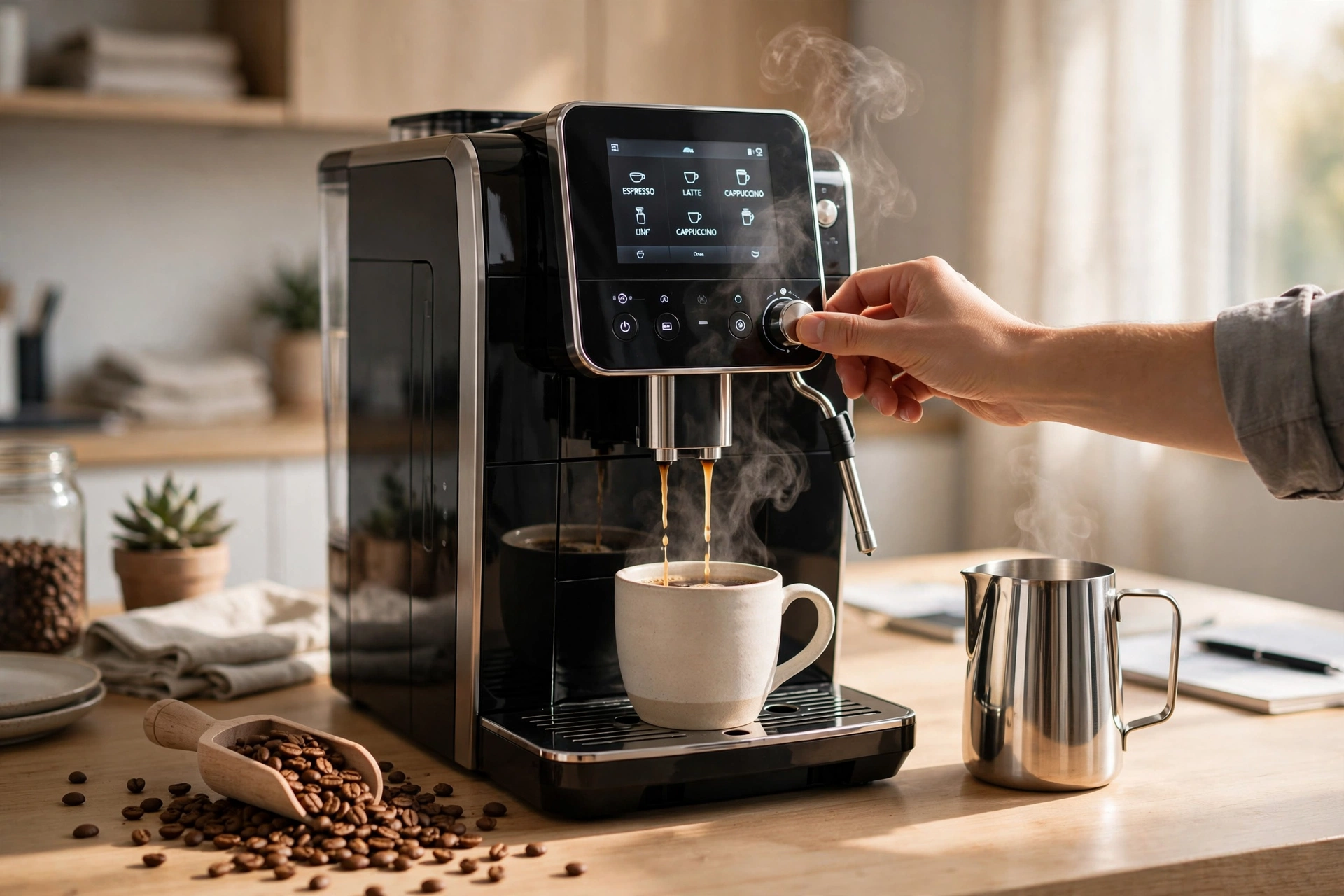
Pre-ground coffee loses 60% of its aromatic compounds within 15 minutes of grinding. If you're serving coffee in a commercial setting, whole bean medium roast is the only way to go. Best Office Espresso Machines for Small Teams in 2026 often include built-in grinders that make this easy.
3. Storing Coffee in the Fridge or Freezer
Coffee is a moisture and odor sponge. Storing it in a refrigerator or freezer exposes it to condensation and food smells. Store whole bean medium roast in an airtight, opaque container at room temperature, away from heat and sunlight. Use it within 2-4 weeks of the roast date.
4. Using the Wrong Grind Size
Medium roast coffee works best with a medium grind for drip brewers (like sea salt). If you're pulling espresso, go finer — but not as fine as for dark roasts, which require a finer grind to balance lower solubility. Too coarse and the coffee will taste weak and sour; too fine and it will be bitter and over-extracted.
5. Neglecting Water Quality
Your coffee is 98% water. If your water tastes like chlorine, minerals, or metal, that will carry through to the cup. Install an inline filtration system for your brewers. The U.S. Food and Drug Administration (FDA) recommends that commercial foodservice equipment use water that meets national primary drinking water standards — and that applies to your coffee machine water line.
Frequently Asked Questions
What is the difference between medium roast and medium-dark roast?
Medium-dark roast is a hybrid category where beans are roasted slightly longer than medium, reaching the very beginning of second crack (around 435-445°F). The beans take on a darker brown color, and a faint trace of oil may appear on the surface. The flavor veers toward bittersweet chocolate and caramel, with less acidity and more body than a pure medium roast. Medium-dark is a fine choice for businesses that want a bolder cup without the heavy bitterness of a full dark roast.
Which roast has the most caffeine: light, medium, or dark?
Many people believe dark roast has more caffeine, but the opposite is true. Caffeine is a relatively stable compound during roasting — it doesn't burn off significantly. However, dark roasts lose more mass (water content) than lighter roasts. If you measure by volume (a scoop), dark roast will have slightly more caffeine because more beans fit in the scoop. If you measure by weight (a gram), light and medium roasts have nearly identical caffeine levels (~1.2-1.4% by dry weight), while dark roasts have marginally less. For practical purposes, assume all roasts offer similar caffeine content per cup.
Can I use medium roast coffee for espresso?
Absolutely. In fact, many specialty coffee shops use medium roast beans for espresso. Medium roast espresso is smoother, sweeter, and more balanced than the traditional dark roast "espresso blend" that dominates Italian-style cafes. The key is to dial in your grind and dose properly. Medium roast beans are denser and less brittle than dark roasts, so they resist water flow a bit more — you may need a slightly finer grind or a slightly lower dose to achieve the ideal extraction time of 25-30 seconds.
How should I store bulk medium roast coffee for my business?
For commercial operations, store whole bean coffee in a cool, dry place (65-75°F) in a sealed container with a one-way valve (which allows CO2 to escape without letting oxygen in). Never store coffee near dishwashers, ovens, or direct sunlight. For high-volume businesses, order fresh coffee weekly and keep only a few days' worth in the hopper at a time. Oxygen, moisture, heat, and light are the four enemies of fresh coffee — control all of them, and your medium roast will stay vibrant for weeks.
Is medium roast coffee better for pour-over brewing compared to other methods?
It depends on the flavor profile you want. Light roasts are often preferred for pour-over because their delicate floral and fruity notes shine with the clarity of a paper filter. However, a high-quality medium roast also works beautifully in a pour-over, delivering a rich, balanced cup with a silky mouthfeel. For a hotel or cafe offering single-origin pour-overs, medium roast is an excellent middle ground that pleases both casual drinkers and connoisseurs.
Recommended Readings
To deepen your understanding of these topics, we recommend reading the following articles:
- Profitable Latte Art Programs for Foodservice in
- Ultimate Guide to Automated Coffee Machines for Business
- Ultimate Guide to Specialty Coffee Equipment for Business
- Ultimate Guide to Coffee Syrups for Foodservice Businesses
Conclusion
Medium roast coffee is the workhorse of the industry — versatile, crowd-pleasing, and forgiving to brew. For foodservice businesses in 2026, choosing a well-sourced medium roast means happier customers, simpler operations, and better margins. Whether you're running a four-star hotel's breakfast service or a high-volume cafe, the balanced profile of a medium roast will serve you well.
If you're ready to upgrade your coffee program without the capital expense of buying equipment, explore our comprehensive guide on medium roast coffee and learn how Busy Bean Coffee's all-inclusive managed coffee membership can transform your beverage service. From premium equipment like SENSA espresso machines to full maintenance and fresh-roasted specialty coffee, we handle everything for one predictable monthly fee. Visit Busy Bean Coffee to see how we're helping hotels, restaurants, and offices serve exceptional coffee — without the hassle.
Free Coffee Pairing Guide & Specialty Roast Cheat Sheet
Unlock the secrets of perfect brewing ratios, water temperatures, and specialty roast profiles. Download the guide.