How to Implement a Premium Coffee Service for Maximum Business Impact
The difference between a mediocre breakroom and a high-performance hospitality environment often comes down to the quality of the caffeine. For most business owners, achieving a professional result doesn't require hiring a full-time barista; it requires a structured approach to sourcing, equipment, and maintenance. To successfully use a premium coffee service, you must align your equipment capacity with your peak traffic hours, implement a rigorous cleaning schedule, and source beans that meet specialty standards. When these three pillars are synchronized, you move from simply "providing coffee" to enhancing the guest experience and increasing employee productivity.
In my experience working with hospitality groups and corporate offices, the most common failure point isn't the coffee bean itself, but the "maintenance gap." I've seen $20,000 espresso machines become glorified paperweights because the staff wasn't trained on daily backflushing. A true premium coffee service removes this friction by integrating managed maintenance and professional installation, ensuring the quality of the brew remains consistent from the first cup of the morning to the last.
What Exactly Defines a Professional Coffee Solution?
Before diving into the implementation, we need to establish what actually constitutes a professional-grade setup. Many businesses mistake "expensive" for "premium," but in the industry, premium is defined by consistency and the ability to extract the full flavor profile of the bean.
📚
Definition
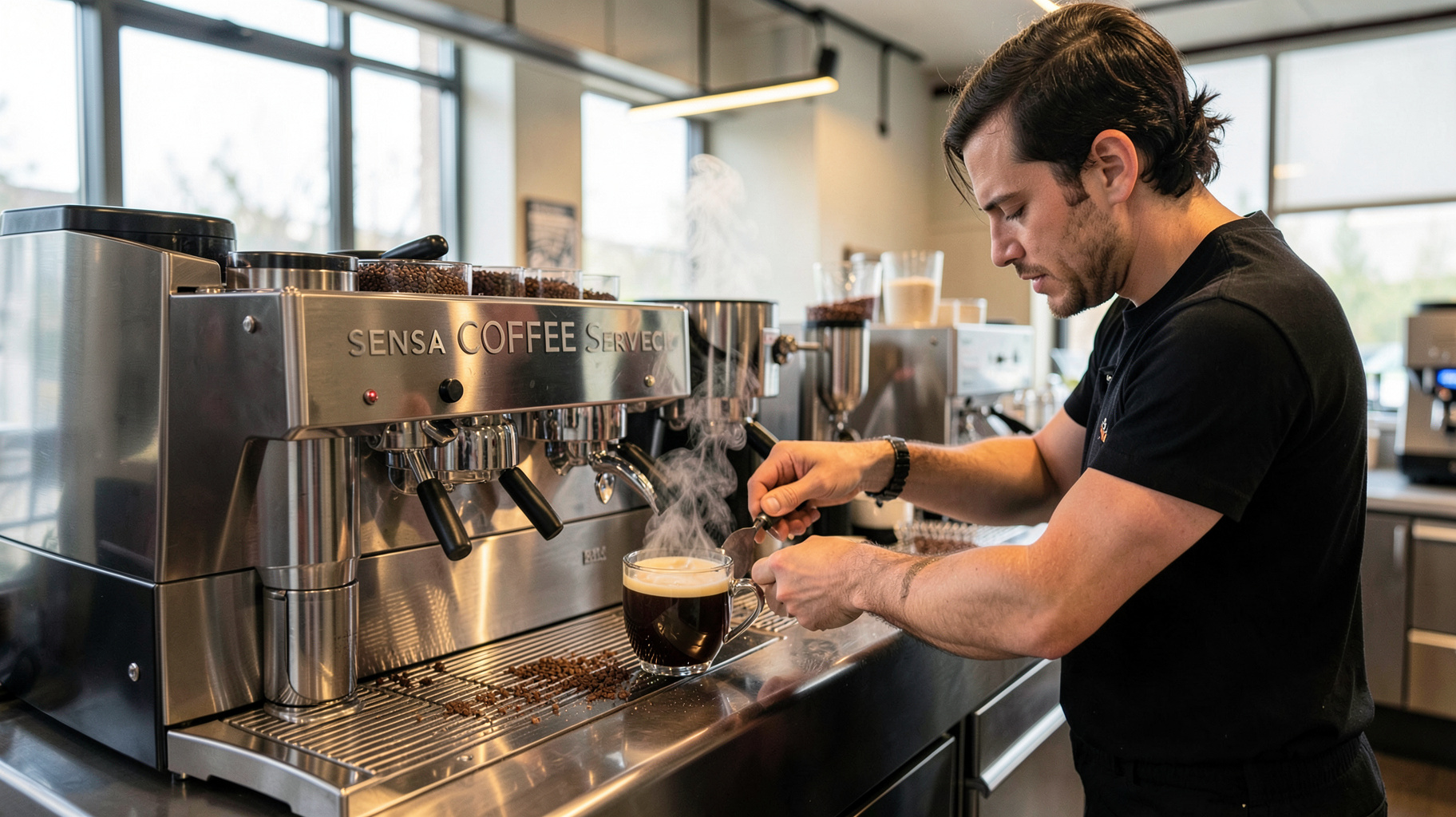
Premium Coffee Service is a comprehensive beverage management system that combines high-grade specialty coffee beans, professional-tier brewing equipment (such as SENSA machines), and a managed service agreement that covers installation, calibration, and ongoing maintenance.
The core of this system is the transition from a "product-purchase" mindset to a "service-membership" mindset. When you buy a machine and a bag of beans, you are responsible for the technical failure and the quality decay. When you utilize a managed service, you are paying for an outcome: a perfect cup of coffee, every single time, without the operational headache.
According to the Specialty Coffee Association (SCA), specialty coffee must score 80 points or above on a 100-point scale by certified Q-Graders. A premium service ensures that the beans provided meet these rigorous standards, meaning you are serving Coffea arabica of the highest grade, rather than commercial-grade blends filled with defects.
Now, here's where it gets interesting: the equipment must be matched to the bean. Using a high-end roast in a low-quality machine is like putting racing fuel in a sedan; you will never reach the potential of the product. A professional service ensures the brew temperature is stable (usually between 195°F and 205°F) and the pressure is optimized for the specific roast profile of the bean.

Why Does Your Business Need a Managed Coffee Strategy?
Many managers view coffee as a "perk," but the data suggests it is a critical driver of operational efficiency and client perception. In a corporate setting, the coffee area is often the primary site for "serendipitous collaboration", the unplanned meetings that lead to innovative breakthroughs.
From a financial perspective, the cost of downtime is the hidden killer. If a self-managed machine breaks, you face the cost of the repair, the cost of the technician's visit, and the lost productivity of employees who are now leaving the building to find coffee. According to the National Coffee Association USA (NCA), coffee consumption is deeply tied to workplace satisfaction and morning alertness, meaning a failure in your coffee service is a failure in your employee experience.
Consider the impact on guest perception in a hotel or restaurant. A guest's memory of a stay is often anchored to "peak" and "end" moments. A poor-quality coffee experience during breakfast is a "negative peak" that can drag down an otherwise five-star review. Conversely, providing a specialty coffee experience signals a commitment to quality that guests subconsciously apply to other areas of your business, such as cleanliness and service.
Beyond the psychological impact, there is the regulatory side. Commercial beverage equipment must meet strict health and safety standards. Equipment certified by NSF International ensures that the machinery is designed to prevent bacterial growth and is easy to sanitize, reducing the risk of health code violations that could lead to costly fines or shutdowns.
How to Successfully Deploy a Premium Coffee Service
Implementing a high-end coffee program requires more than just plugging in a machine. It requires a strategic rollout to ensure the equipment is used correctly and the beans are kept fresh.
Step 1: Conduct a Volume Audit
Before selecting your equipment, track your peak usage. Do you have a "rush hour" between 8:00 AM and 9:00 AM where 50 people need coffee simultaneously? If so, a single-group espresso machine will create a bottleneck. You need a high-capacity system capable of rapid recovery times. At Busy Bean Coffee, we help clients analyze these patterns to ensure they aren't overpaying for capacity they don't need, or suffering from equipment that can't keep up with demand.
Step 2: Optimize Your Water Quality
This is the mistake I see most often: businesses spend thousands on beans and machines but ignore the water. Coffee is 98% water. If your water is too hard (high mineral content), it will leave scale deposits in your boiler, killing the machine's efficiency and making the coffee taste bitter. If it's too soft, the coffee will taste flat. A professional service includes a filtration system tailored to your local water chemistry.
Step 3: Train the "Human Element"
Even the best machine in the world will produce bad coffee if the user doesn't know how to dose the coffee bean or steam the milk. Professional implementation includes "Barista Basics" training for your staff. This covers the "golden ratio" of coffee to water and the importance of purging the steam wand after every use to prevent milk buildup.
Step 4: Establish a Preventative Maintenance Schedule
Don't wait for the machine to stop working to call a technician. A managed service utilizes a proactive approach. This includes quarterly deep-cleans, seal replacements, and calibration checks. When you use the all-inclusive managed coffee membership at Busy Bean Coffee, this is handled automatically, removing the mental load from your management team.
💡
Key Takeaway
The secret to a consistent premium coffee experience is not the bean, but the synergy between water filtration, equipment calibration, and staff training.

Choosing the Right Model: Traditional vs. Managed Service
When deciding how to approach your coffee needs, you generally have three paths. Most businesses default to the first two and then regret it when the operational costs spiral.
| Feature | Traditional Purchase | Cheap AI/Auto-Pod Systems | Busy Bean Managed Service |
|---|---|---|---|
| Upfront Cost | Very High (Capex) | Low to Medium | Zero to Low |
| Coffee Quality | Variable (Depends on Staff) | Average/Processed | Specialty Grade (SCA) |
| Maintenance | Reactive (Break-Fix) | Replace Entire Unit | Proactive & All-Inclusive |
| Consistency | Low (Human Error) | High (but mediocre taste) | High (Professional Grade) |
| Waste | High (Incorrect Dosing) | Extremely High (Pods) | Low (Optimized Roasting) |
| Best For | Hobbyists | Small offices (< 5 people) | Foodservice & Growth Biz |
That said, the "Cheap AI/Auto-Pod" approach is a trap. While the convenience is high, the cost per cup is astronomical, and the environmental impact of plastic pods is a liability for brands trying to project sustainability. A professional managed service provides the same "push-button" convenience but with the quality of a boutique café.
Common Misconceptions About High-End Coffee Services
Most guides will tell you that more expensive beans always mean better coffee. In reality, this is a myth. The roast date is far more important than the price point. Coffee begins to lose its volatile aromatics shortly after roasting. A "premium" bean that has been sitting in a warehouse for six months will taste worse than a moderately priced bean roasted last week. This is why we emphasize a tight supply chain and frequent deliveries.
Another common misconception is that "automatic" machines can't produce "real" espresso. This was true ten years ago. However, modern SENSA equipment uses precision grinders and programmable pressure profiles that can mimic a human barista's technique with 99% accuracy. The "artisan" feel is now available through automation, provided the machine is calibrated by a professional.
Finally, many believe that a managed service is "too expensive" for a mid-sized business. This is a failure of accounting. When you factor in the cost of a dedicated technician, the cost of machine depreciation, and the time spent managing multiple vendors for beans and equipment, the all-inclusive monthly fee is almost always lower than the "DIY" approach.
Frequently Asked Questions
How do I know if my coffee service is actually "premium"?
A truly premium service is defined by transparency and standards. Look for certifications from the Specialty Coffee Association (SCA). If the provider cannot tell you the origin of the beans, the roast date, or the SCA score, they are selling commercial coffee with a "premium" label. Furthermore, a professional service should offer a managed equipment plan rather than just selling you a machine. If they disappear the moment the warranty expires, they aren't providing a service; they are making a sale.
Will a managed coffee service actually save my business money?
Yes, primarily through the elimination of Capital Expenditure (Capex) and the reduction of "hidden" operational costs. When you buy equipment outright, you take a massive hit to your cash flow and assume the risk of obsolescence. A managed membership converts this into a predictable Operating Expense (Opex). Moreover, professional calibration reduces bean waste. In my experience, businesses often waste 15-20% of their coffee due to incorrect dosing; a calibrated system eliminates this waste, directly improving your bottom line.
How often should commercial coffee equipment be serviced?
While daily cleaning is the responsibility of the staff, professional calibration and deep-cleaning should happen at least quarterly. Scale buildup from minerals in the water can restrict flow and cause heating elements to burn out. According to NSF International, maintaining sanitary conditions in food-contact equipment is not just about taste but about regulatory compliance. A managed service ensures these intervals are met without you having to track them on a calendar.
Can I use a premium coffee service if I don't have a dedicated barista?
Absolutely. In fact, that is exactly why managed services exist. The goal of a professional setup is to "democratize" quality. By using high-end automatic equipment and providing a managed membership, you get the result of a professional barista without the payroll cost. The equipment handles the complex variables, temperature, pressure, and grind size, leaving your staff to simply press a button and serve a world-class beverage to your guests.
What is the best way to handle coffee bean storage in a high-traffic environment?
The three enemies of coffee are oxygen, light, and moisture. Beans should always be stored in airtight, opaque containers in a cool, dry place. Never store beans in the refrigerator or freezer, as this introduces moisture and can compromise the oils in the bean. A premium service will provide you with the correct storage solutions and a delivery schedule that ensures you are never holding more inventory than you can use within two to three weeks of roasting.
Final Thoughts on Elevating Your Beverage Program
Using a premium coffee service is not about luxury; it is about operational excellence. When you remove the friction of equipment failure, inconsistent taste, and erratic supply chains, you free up your team to focus on what actually matters: your customers. Whether you are running a boutique hotel in Mount Pleasant, SC, or a corporate headquarters in a major city, the quality of your coffee is a silent ambassador for your brand.
If you are tired of managing broken machines and mediocre brews, it is time to move toward a managed solution. By combining specialty-grade beans with professional SENSA equipment and a dedicated maintenance team, you ensure that every cup reinforces your commitment to quality.
Stop guessing and start scaling. Explore how an all-inclusive managed membership can transform your business at Busy Bean Coffee.
Free Coffee Pairing Guide & Specialty Roast Cheat Sheet
Unlock the secrets of perfect brewing ratios, water temperatures, and specialty roast profiles. Download the guide.