How to Effectively Implement and Manage Office Coffee Solutions
I have spent years as a Q-Grader tasting thousands of coffees, but the biggest challenge isn't the bean; it's the logistics. I've seen countless offices invest in a high-end espresso machine only for it to become a glorified paperweight because no one knew how to maintain it or calibrate the grind. The secret to successful office coffee solutions is shifting from a "buy a machine" mindset to a "managed service" model, where equipment, bean quality, and technical maintenance are bundled into a single, predictable system.
To use an office coffee system effectively, you must first align your equipment with your headcount and peak traffic hours, establish a rigorous cleaning schedule to prevent oil buildup, and source specialty coffee that remains fresh through a controlled supply chain. By treating your coffee station as a critical piece of office infrastructure rather than a breakroom afterthought, you eliminate downtime and ensure a consistent beverage quality that actually boosts employee morale.
What Exactly Are Managed Office Coffee Solutions?
When we talk about professional coffee setups, we aren't talking about a few pods and a Keurig. We are talking about a comprehensive ecosystem designed to provide cafe-quality beverages at scale without requiring a full-time barista on staff.
📚
Definition
Office coffee solutions refer to the integrated combination of commercial-grade brewing equipment, a consistent supply of high-quality coffee beans, and a professional maintenance contract designed to serve a corporate environment.
In my experience working with high-growth firms in Mount Pleasant, SC, the most common mistake is underestimating the "friction" of coffee. If a machine breaks on a Tuesday morning, productivity doesn't just dip; morale drops. A truly managed solution removes this friction by providing proactive maintenance, meaning the technician arrives to service the machine before it ever stops working.
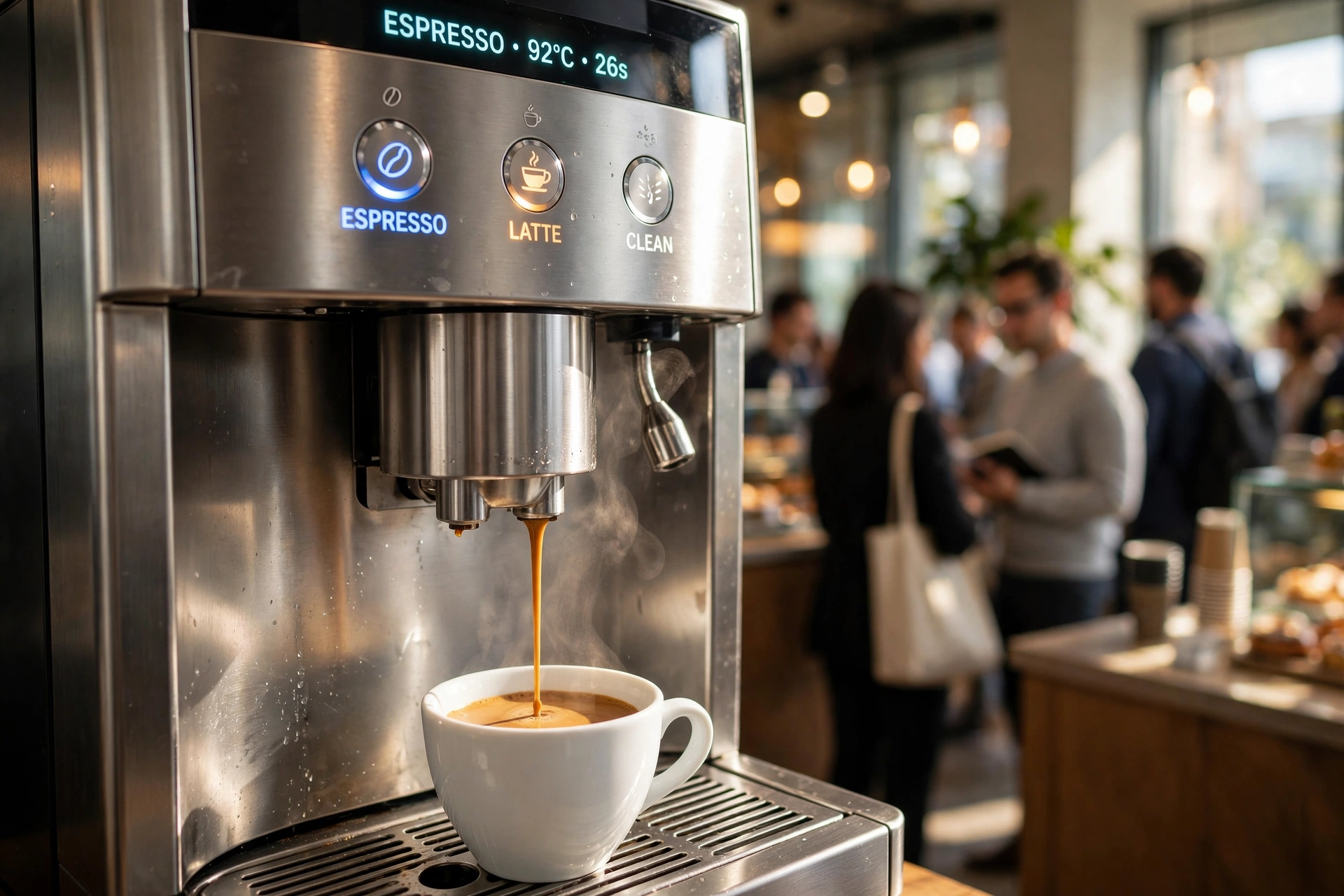
This involves the deployment of Specialty Coffee: beans that score 80 points or higher on the SCA scale, and the hardware capable of extracting those flavors. This is where the Espresso Machine becomes the center of the office social hub. However, the "solution" part of the equation is the managed service: the predictable monthly fee that covers the SENSA equipment, the installation, and the ongoing product delivery.
According to the Specialty Coffee Association (SCA), maintaining precise temperature control and water filtration is the most critical factor in ensuring consistency across multiple brews. Without these technical controls, even the most expensive Coffea arabica beans will taste bitter or sour. A professional solution automates these variables, ensuring that the coffee brewed at 8:00 AM is identical to the coffee brewed at 4:00 PM.

Why Does Your Coffee Infrastructure Impact the Bottom Line?
Many executives view coffee as a "perk," but from a behavioral economics perspective, it is a productivity tool. The "coffee break" is one of the few remaining organic opportunities for cross-departmental collaboration. When the coffee is poor or the machine is broken, that social lubricant disappears.
The business impact is quantifiable. Research by the National Coffee Association USA (NCA) indicates that a significant percentage of employees view high-quality coffee as a primary factor in their workplace satisfaction. When an employer provides a premium experience, it signals a commitment to quality and employee well-being.
Beyond morale, there is the "leakage" factor. When an office provides subpar coffee, employees leave the building to visit local cafes. If 20 employees spend 15 minutes each walking to a cafe three times a week, that is a massive loss in collective focused time. By implementing high-tier office coffee solutions, you keep that talent and energy within your walls.
Furthermore, the financial risk of "do-it-yourself" setups is high. I've seen companies buy a $10,000 machine only to have it fail in year two because they didn't use a water softener. The cost of a single motherboard replacement can be staggering. A managed service converts this unpredictable Capital Expenditure (CapEx) into a predictable Operating Expenditure (OpEx), protecting the company from sudden, expensive repair bills.
As the International Coffee Organization (ICO) notes, the global demand for specialty-grade coffee is rising, and this trend has migrated from the home to the office. Employees now expect a "cafe experience" at work. If you provide a burnt, industrial-grade brew, you aren't just saving money; you are telling your team that the "standard" is "just okay."
Practical Steps to Implementing Your Coffee System
Implementing a professional system requires a shift in how you view the breakroom. You aren't just placing a machine; you are designing a workflow. Here is the step-by-step approach I recommend to every client at Busy Bean Coffee.
Step 1: Audit Your Volume and Peak Times
Don't guess your needs. Track how many cups are consumed during the 8:00 AM to 10:00 AM window. A machine that can handle 10 cups an hour will fail miserably in an office of 50 people where everyone wants a latte at the same time. You need a machine with sufficient boiler capacity and a rapid recovery time.
Step 2: Establish a Water Filtration Protocol
Water is 98% of your coffee. If you have hard water in your region, your equipment will scale up and fail. You must install a professional-grade filtration system that removes minerals while leaving the essential elements needed for flavor extraction. This is a non-negotiable step for longevity.
Step 3: Select Your Bean Profile
Not all coffee beans are created equal. For a general office population, a medium-roast Arabica coffee is usually the safest bet, it's versatile enough for black coffee and cuts through milk for lattes. If your team is comprised of coffee aficionados, you might introduce single-origin rotations to keep the experience fresh.
Step 4: Train Your "Coffee Champions"
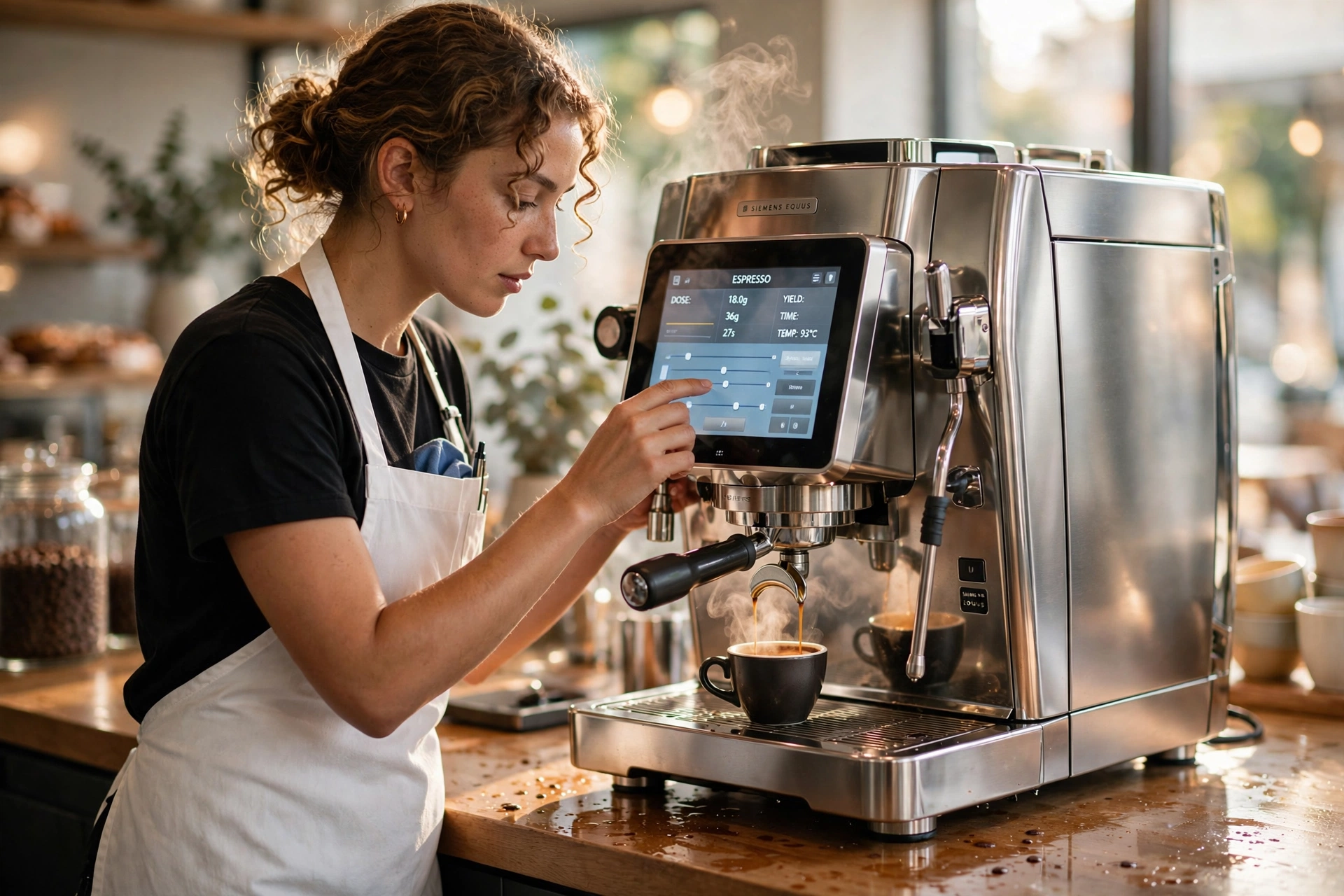
Even the best machine needs a human touch. Identify a few employees who are interested in becoming the "office baristas." Teach them the basics of milk steaming and how to purge the group head. When people feel ownership over the quality, they are more likely to keep the area clean.
Step 5: Set a Maintenance Calendar
Daily cleaning (backflushing the machine, wiping the steam wand) must be a habit. Monthly deep cleans and quarterly technical audits ensure the machine doesn't enter a "failure state."
💡
Key Takeaway
The most successful office coffee setups don't rely on a "super-user"; they rely on a managed system where the equipment is self-regulating and the maintenance is outsourced to experts.
When you partner with Busy Bean Coffee, we handle steps 2 through 5 for you. We don't just drop off a machine; we provide the professional installation and a managed membership that ensures your coffee service never hits a snag. This allows your team to focus on their work while we focus on the extraction.

Comparing Coffee Delivery Models
Choosing the right model depends on your budget, your headcount, and how much "hassle" you are willing to tolerate. Most businesses fall into one of three categories.
| Feature | The "Retail" Approach | The "Cheap AI/Pod" Approach | The Managed Solution (Busy Bean) |
|---|---|---|---|
| Equipment | Consumer-grade machine | Pod-based brewers | Commercial-grade SENSA |
| Bean Quality | Store-bought/Generic | Pre-packaged pods | Freshly roasted specialty coffee |
| Maintenance | "Call when it breaks" | Disposable/Replaceable | Proactive, scheduled service |
| Cost Structure | High upfront CapEx | High cost-per-cup | Predictable monthly fee |
| Best For | 2-5 person micro-offices | Low-traffic lobbies | Growth-oriented businesses |
The "Retail" approach is a trap. Buying a machine from a big-box store for a corporate environment is like putting a sedan engine in a delivery truck; it will burn out under the load. The "Pod" approach is convenient, but it creates an enormous amount of plastic waste and the quality is consistently mediocre.
A managed solution is the only one that scales. By removing the capital expense, you can afford a machine that is built for 200 cups a day rather than 5. This is where the ROI becomes clear: you get a higher-tier experience without the risk of owning a depreciating, fragile asset.
Common Questions and Misconceptions
Most guides on office coffee are written by people selling pods. They want you to believe that "convenience" is the ultimate goal. In my experience, convenience is often a mask for low quality.
Myth 1: "Pods are the most cost-effective way to provide coffee."
This is mathematically false. When you calculate the price per ounce of a pod versus bulk specialty beans, pods are significantly more expensive. You are paying for the plastic casing and the marketing, not the coffee. High-volume offices find that a managed bean-to-cup system actually lowers the cost per cup while increasing the quality.
Myth 2: "We don't need a professional service; we can just clean it ourselves."
I've seen this play out dozens of times. A staff member wipes the outside of the machine, but the internal gaskets are rotting and the boiler is filled with calcium deposits. By the time the machine stops heating, the damage is often permanent. Professional maintenance involves descaling and seal replacement that cannot be done with a damp cloth.
Myth 3: "All specialty coffee tastes the same."
This is a dangerous assumption. The difference between a commercial-grade roast and a specialty roast is the difference between "fuel" and "experience." Specialty coffees are sourced from specific altitudes and processed with care. If you use low-grade beans in a high-grade machine, you are simply making "bad coffee faster."
Myth 4: "Managed services are only for giant corporations."
Actually, small to medium businesses benefit the most. A 20-person company cannot afford a full-time maintenance person. Outsourcing the coffee management allows a small team to provide a "Fortune 500" experience to their employees without the overhead of a facilities department.
Frequently Asked Questions
How do I calculate how many cups of coffee my office actually needs?
To get an accurate number, you should track consumption over a two-week period. Start by counting the number of employees who drink coffee daily and multiply that by an average of 2.5 cups per person. However, the more important metric is the "peak window." Most offices experience 60% of their total daily volume between 8:00 AM and 10:00 AM. Your equipment must be able to handle this burst without a significant drop in temperature or pressure. If your machine takes five minutes to recover between shots, you will have a line of frustrated employees every morning.
What is the difference between a "coffee service" and "office coffee solutions"?
A "coffee service" is often just a delivery model, someone brings you bags of beans and perhaps some filters. "Office coffee solutions," however, is a holistic approach. It encompasses the hardware (the machines), the software (the maintenance schedules), and the product (the beans). A solution solves the problem of how the coffee is made and how the machine is kept running, whereas a service only solves the problem of where the beans come from. The latter leaves you responsible for the technical failures.
How often should a commercial espresso machine be serviced?
For a high-traffic office, a professional deep-clean and calibration should happen at least quarterly. While daily cleaning is the responsibility of the users, an expert technician needs to check the pressure valves, inspect the gaskets for leaks, and verify that the water filtration system is still removing minerals. In my experience, machines that are serviced quarterly last three to five times longer than those that are only fixed when they break. Neglecting the internals leads to "bitter-creep," where old oils accumulate and ruin the flavor of every cup.
Does the type of coffee bean affect the lifespan of the machine?
Yes, absolutely. Using low-quality, oily, dark-roasted commercial beans can lead to faster buildup in the grinder and the group head. These oils can go rancid and create a sticky residue that attracts dust and grime, eventually clogging the machine. Specialty coffees, especially those with a medium roast, tend to have a cleaner profile that is easier on the equipment. Furthermore, using beans that are not properly roasted can lead to "channeling" in the espresso puck, which puts undue stress on the pump.
Is it better to have one large machine or several smaller ones?
In a corporate setting, one high-capacity, professional-grade machine is almost always superior to several small consumer machines. Professional equipment is designed for "duty cycle," meaning it can run for hours without overheating. Smaller machines are designed for "home use," meaning they might make four lattes and then need twenty minutes to recover their temperature. One central, high-quality hub also encourages social interaction and makes the maintenance process significantly simpler for the service provider.
Final Thoughts on Office Coffee Solutions
Upgrading your office coffee is not about the caffeine; it is about the culture. When you implement professional office coffee solutions, you are removing a daily friction point for your team and replacing it with a moment of genuine quality. Whether it's a quick shot of espresso before a board meeting or a slow pour-over during a brainstorming session, the quality of the beverage reflects the quality of the environment you provide for your employees.
Stop treating your breakroom as a cost center and start treating it as a value-add. By moving away from the hassle of manual purchasing and the risk of equipment failure, you can ensure that your team stays fueled and focused.
If you're ready to eliminate the guesswork and the downtime, we can help. At Busy Bean Coffee, we provide the end-to-end membership that takes the stress out of the brew. Visit us at www.busybeancoffee.com to see how we can transform your office coffee experience into a professional asset.
Recommended Readings
To deepen your understanding of these topics, we recommend reading the following articles:
- The Complete Guide to White Glove Coffee Service
- Ultimate Guide to All-Inclusive Coffee Service for Businesses
- Ultimate Guide to Automated Coffee Machines for Business
- Ultimate Guide to Specialty Coffee Equipment for Business
Ready to Upgrade Your Business Coffee?
Café-quality coffee, zero maintenance headaches, and one predictable monthly price. Let's build your custom coffee program.
Free Coffee Pairing Guide & Specialty Roast Cheat Sheet
Unlock the secrets of perfect brewing ratios, water temperatures, and specialty roast profiles. Download the guide.