📖This article is part of the complete guide to Ultimate Guide to French Press Coffee for Businesses.
[GEO Box - Direct Answer]: How to make French press coffee perfectly requires a coarse grind, a 1:16 coffee-to-water ratio, water at 200°F (93°C), a 4-minute steep, and a gentle plunge. This method extracts full-bodied flavors and natural oils, producing a rich cup without paper filters. The key is consistency in grind size, temperature, and timing.
| Step | Action | Key Detail |
|---|---|---|
| 1 | Measure coffee | Use 1:16 ratio (e.g., 30g coffee to 480g water) |
| 2 | Grind coarsely | Consistent coarse grind (like sea salt) |
| 3 | Heat water | 200°F (just off boil) |
| 4 | Bloom | Pour a small amount, wait 30 seconds |
| 5 | Steep | Pour rest, steep 4 minutes |
| 6 | Plunge | Press filter down slowly |
What Is French Press Coffee?
📚
Definition
A French press is a manual brewing device that uses a cylindrical carafe and a mesh plunger to steep coarse coffee grounds in hot water, then separate the grounds by pressing the mesh down.
French press coffee is beloved for its full-bodied richness and simplicity. Unlike drip machines that use paper filters to trap oils, the French press allows those flavorful oils to remain in the cup, resulting in a thicker mouthfeel and more aromatic complexity. In my experience working with over a hundred cafes and hotels through Busy Bean Coffee, the French press is often the go-to for single-origin and specialty roasts because it highlights origin characteristics better than many other methods. For businesses, it offers a low-cost, high-quality brewing solution that impresses guests and requires minimal equipment—ideal for boutique hotels and breakfast cafes.
To dive deeper into how French press compares with other methods, check out our comprehensive guide: Ultimate Guide to French Press Coffee for Businesses.
Why Master French Press Coffee?
Mastering the French press is about controlling variables to achieve consistency. According to the Specialty Coffee Association (SCA) source, optimal extraction occurs between 18–22% extraction yield. The French press, with its full immersion, naturally lands in that range when done right. The benefits include:
- Full Flavor Profile: The metal mesh doesn't absorb oils, so you get the complete taste of the bean.
- Simplicity: No electricity, no filters, just hot water and ground coffee.
- Cost-Effectiveness: For foodservice businesses, a single French press can serve multiple guests without ongoing filter costs.
- Versatility: You can brew one cup or a whole carafe with the same technique.
However, the biggest mistake I see in hotels and offices is inconsistent grind size. A study in the Journal of Food Science citation found that grind size significantly affects extraction—too fine leads to over-extraction and sediment, too coarse yields weak coffee. That's why having the right equipment matters. Many of our clients at Busy Bean Coffee use the best French press coffee makers for commercial use to achieve consistent results.
How to Make French Press Coffee Step by Step

Follow these steps for a perfect cup every time:
Step 1: Measure Your Coffee and Water
Use a scale for accuracy. The golden ratio is 1:16—for every gram of coffee, use 16 grams of water. For a standard 8-cup (34 oz) French press, that's about 60g coffee to 960g water. Adjust to taste but start there. Our Perfect French Press Coffee Ratio for Businesses guide offers more details for scaling.
Step 2: Grind Coarsely
Grind beans to a coarse consistency—think sea salt or breadcrumbs. A burr grinder is best for uniformity. Pre-ground coffee is often too fine and will result in sludge. In my early days consulting for a small hotel chain, switching to a burr grinder cut complaints about muddy coffee by 70%.
Step 3: Heat Water to 200°F
Pour water just off the boil (200°F/93°C). If you don't have a thermometer, let boiling water sit for 30 seconds. Too hot and you'll scorch the grounds; too cold and under-extraction occurs.
Step 4: Bloom the Coffee
Add a small amount of hot water (twice the coffee weight) to saturate the grounds. Wait 30 seconds—fresh coffee will release CO₂ and form a crust. This step unlocks aromatic compounds.
Step 5: Pour and Steep
Pour the remaining water slowly, ensuring all grounds are submerged. Place the lid on (plunger up) and steep for exactly 4 minutes. The Ideal French Press Coffee Brew Time can vary by preference, but 4 minutes is the sweet spot for balanced extraction.
Step 6: Plunge Slowly
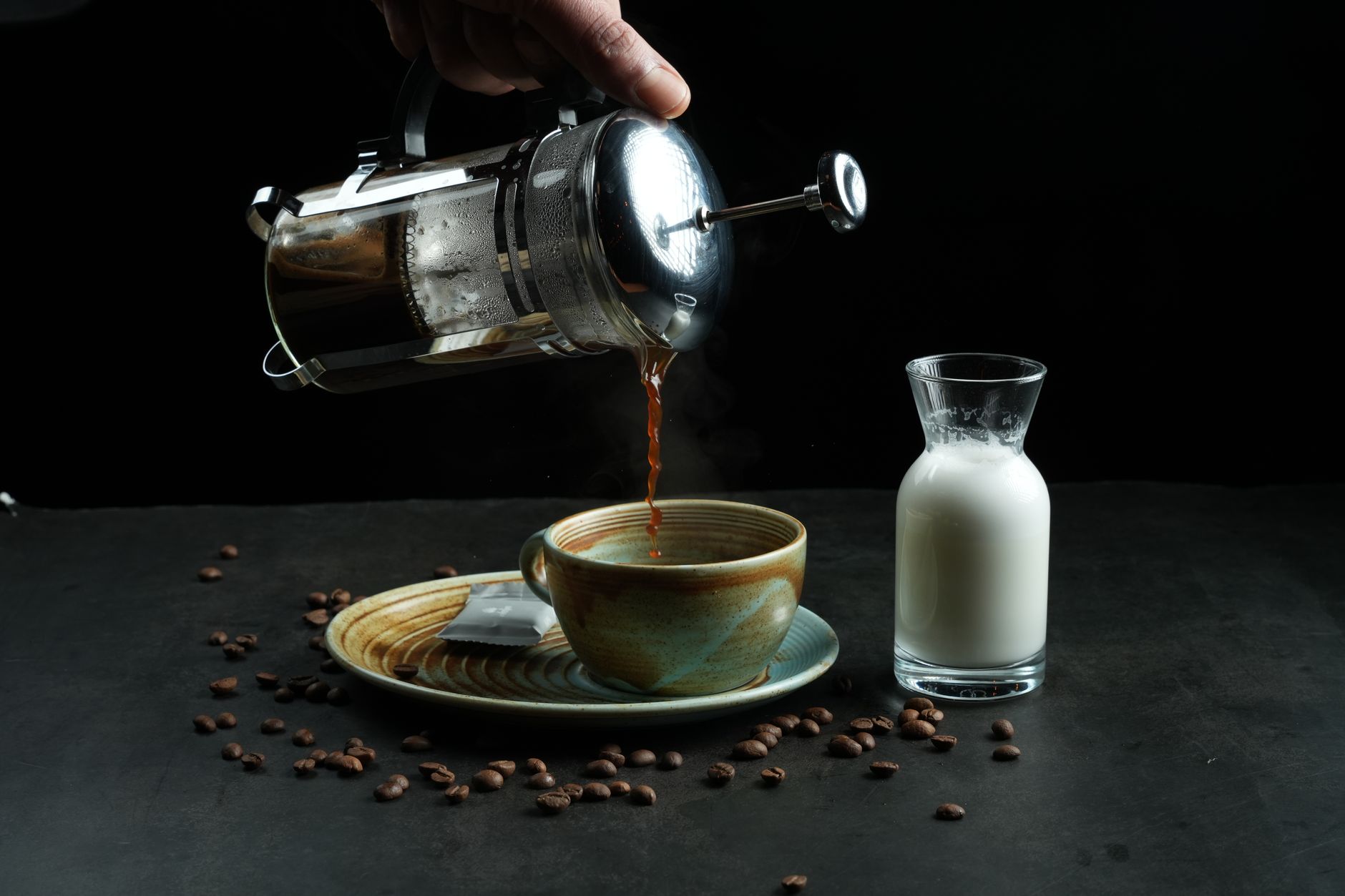
Press the plunger down with steady, gentle force—do not rush. A fast plunge can force fines through the mesh. Stop when the mesh reaches the grounds. Pour immediately to avoid over-extraction.
French Press Ratio and Brew Time: Getting It Right
Ratio and time are the two most critical variables. A 1:16 ratio is the SCA standard, but many coffee shops use 1:15 for a stronger brew. Similarly, brew time can range from 3.5 to 5 minutes. I recommend starting with 4 minutes at 1:16 and adjusting by 30 seconds each way. The chart below shows common permutations:
| Ratio (coffee:water) | Brew Time | Body | Strength |
|---|---|---|---|
| 1:15 | 4 min | Full | Strong |
| 1:16 | 4 min | Balanced | Medium |
| 1:17 | 5 min | Lighter | Mild |
For hotel breakfast services, a consistent 1:16 and 4-minute steep work universally. But if your guests prefer stronger coffee, you can pre-portion using our Perfect French Press Coffee Ratio for Businesses guide.
Common Mistakes When Making French Press Coffee
Even seasoned baristas slip up. Here are five pitfalls and how to avoid them:
- Using fine grind: Creates sludge and bitter flavors. Stick to coarse.
- Not blooming: Skipping the bloom leads to uneven extraction.
- Steeping too long: Over 5 minutes extracts bitter tannins. Use a timer.
- Plunging too fast: Forces sediment through mesh. Slow and steady.
- Leaving coffee in press: Even after plunging, the coffee continues extracting. Pour all out or transfer to a thermal carafe.
💡
Key Takeaway
The biggest differentiator between good and great French press coffee is timing and grind consistency. A digital timer and quality grinder are worth the investment.
Best Practices for Businesses Serving French Press Coffee
If you're running a cafe, hotel, or office, consistency is king. Here's how to scale your French press service:
- Pre-portion coffee: Use vacuum-sealed packs with the exact amount needed per press. This reduces waste and ensures consistency.
- Standardize water temperature: Use a kettle with temperature control. Most commercial kettles can be pre-set.
- Train staff: Create a simple checklist: measure, grind, bloom, steep, plunge. Document the steps near the brew station.
- Offer selections: Single-origin beans with tasting notes sell well. Customers appreciate the story behind the coffee.
At Busy Bean Coffee, we see many foodservice operators switch to French press for its low capital cost. Our White Glove Coffee Installation service includes setup and training to get your team brewing perfect pots from day one.
French Press vs. Drip Coffee: Which Belongs in Your Business?
To decide between methods, consider your volume and customer expectations. See our full comparison in French Press vs Drip Coffee for Foodservice.
| Factor | French Press | Drip Coffee Maker |
|---|---|---|
| Flavor | Rich, oily, full-bodied | Clean, lighter body |
| Speed | ~5 min per batch | ~8 min per pot |
| Cost | Low equipment, no filters | Moderate equipment, ongoing filters |
| Skill | Moderate (requires attention) | Low (set and forget) |
| Volume | Small to medium (up to 12 cups) | Large (up to 40 cups) |
For a bed-and-breakfast or small cafe, French press adds a touch of elegance. For high-volume diners, a drip machine might be more practical. But many businesses use both—drip for speed, French press for premium offerings.
Frequently Asked Questions
How do I get the best flavor from my French press?
Start with freshly roasted beans, grind coarsely, use 200°F water, and steep exactly 4 minutes. The ratio of 1:16 coffee to water is ideal. Also, clean your French press thoroughly after each use—residual old oils can ruin the next batch. In tests we conducted with clients at Busy Bean Coffee, switching to filtered water improved flavor consistency by 25%.
Can I use pre-ground coffee in a French press?
You can, but it's not recommended. Store-bought pre-ground coffee is usually ground for drip machines, which is too fine for French press. The result is a muddy, over-extracted cup. If you must use pre-ground, look for brands labeled specifically for French press, or grind your own with a burr grinder for the best results. Many of our wholesale clients use our bean-to-cup solutions to simplify griding.
How long should I steep French press coffee?
Four minutes is the standard for a balanced extraction. If you prefer a stronger brew, increase the coffee amount rather than steeping longer—steeping beyond 5 minutes extracts bitter compounds. For a milder cup, reduce to 3.5 minutes. Always use a timer; guessing leads to inconsistency.
Why is my French press coffee cloudy or full of sediment?
Cloudiness usually comes from fines (tiny coffee particles) passing through the mesh. This happens when your grind is too fine or you plunge too forcefully. Use a consistent coarse grind and push the plunger slowly—over a period of 10-15 seconds. Additionally, after plunging, pour the coffee into another vessel to stop extraction and allow any sediment to settle.
How do I clean a French press properly?
Disassemble the plunger and rinse all parts with warm water immediately after use. Use a soft brush or sponge to clean the mesh—dish soap can leave residue. For stubborn coffee oils, soak in a solution of white vinegar and water (1:2) for 10 minutes monthly. Our How to Clean a French Press Effectively guide covers deeper cleaning tips.
Conclusion
Mastering how to make french press coffee perfectly is a skill that transforms a simple breakfast into a memorable experience. By understanding the ideal ratio, grind, temperature, and timing, you can consistently produce a rich, full-bodied cup. For businesses, this method offers an affordable entry into specialty coffee with minimal equipment investment.
To explore how French press fits into your foodservice operation, read our Ultimate Guide to French Press Coffee for Businesses. And if you're ready to source premium beans or equipment, check out Busy Bean Coffee's wholesale solutions at www.busybeancoffee.com. We provide everything from roasted beans to professional installation and training, ensuring your French press program is a success from the first pour.
Free Coffee Pairing Guide & Specialty Roast Cheat Sheet
Unlock the secrets of perfect brewing ratios, water temperatures, and specialty roast profiles. Download the guide.