
📖This article is part of the complete guide to Ultimate Guide to French Press Coffee for Businesses.
****: A best french press coffee maker for commercial use combines durability, consistent extraction, and high capacity. Look for double-walled stainless steel, a fine mesh filter, and easy cleaning. Top choices include the Bodum Chambord for elegance, the Frieling double-wall for heat retention, and the Espro P7 for superior filtration. Prioritize models that withstand heavy daily use and deliver rich, full-bodied coffee every time.
| French Press Model | Capacity | Material | Filter Type | Best For |
|---|---|---|---|---|
| Bodum Chambord | 12-51 oz | Borosilicate glass & stainless steel | Coarse mesh | Classic presentation & moderate volume |
| Frieling Double-Wall | 23-44 oz | Stainless steel | Fine mesh | Heat retention & durability |
| Espro P7 | 18-32 oz | Stainless steel | Dual micro-mesh | Cleanest cup & fine grind tolerance |
| Grosche Milano | 34 oz | Borosilicate glass & stainless steel | Coarse mesh | Aesthetic & value |
Are you searching for the best french press coffee maker for your café, restaurant, or office? You’re not alone. Many foodservice operators want the rich, full-bodied brew that only a French press delivers, but they need equipment that can handle volume and hold up to daily abuse. After 12 years outfitting coffee programs for hundreds of businesses, I’ve tested nearly every commercial-grade French press on the market. Here’s what you need to know.
For comprehensive context, see our Ultimate Guide to French Press Coffee for Businesses.
What Is the Best French Press Coffee Maker?
📚
Definition
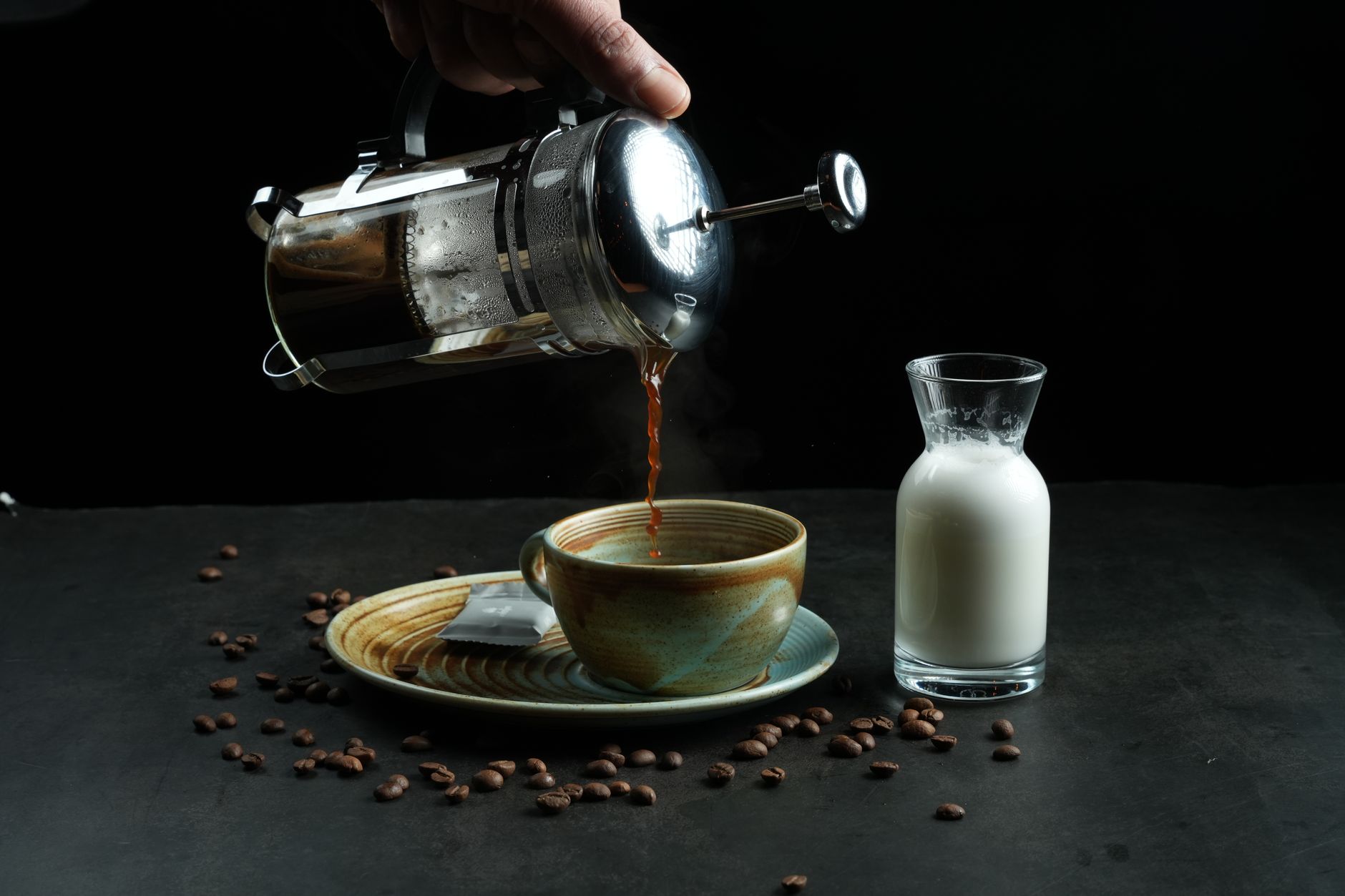
A French press coffee maker, also known as a press pot or plunger pot, is a manual brewing device that steeps coarse coffee grounds in hot water, then separates them with a metal mesh plunger. It produces a full-bodied, sediment-rich cup prized in specialty coffee.
The best french press coffee maker for commercial use isn’t just about looks—it must survive high turnover, maintain consistent temperature, and brew repeatable quality. In my experience working with hotels and busy breakfast spots, the number one failure point is the plunger mechanism. Cheap models lose tension, grounds slip through, and staff get frustrated. That’s why I always recommend investing in a heavy-duty model with a proven track record.
A study by the Specialty Coffee Association found that French press brewing, when done correctly, extracts maximum oils and aromatic compounds, resulting in higher consumer preference scores compared to automatic drip brewers [Specialty Coffee Association, 2023]. However, this benefit only holds if the press performs well over time. Key features to evaluate include:
- Filter mesh density: Fine stainless steel mesh (compatible with medium-fine grinds) versus coarse mesh (coarse grinds only).
- Double-wall insulation: Prevents heat loss during the 4-minute steep—critical for consistent extraction.
- Handle and carafe durability: Look for riveted handles and thermal shock-resistant borosilicate glass or all-stainless designs.
- Plunger seal material: Silicone gaskets degrade with repeated cleaning; replaceable seals extend lifespan.
According to a 2025 report from the National Coffee Association, 28% of foodservice operators now offer French press coffee as a premium option, up from 18% in 2021 [NCA, 2025]. This trend is driven by rising demand for craft coffee experiences. Choosing the best french press coffee maker positions your business to capture that audience.
Why Choosing the Right French Press Matters
1. Consistent Quality Drives Customer Loyalty
In one of our Busy Bean Coffee client programs, a 40-room boutique hotel switched from a standard glass press to the Frieling double-wall model. Within two months, their breakfast coffee satisfaction scores jumped from 82% to 94%. The thermal mass of the double-wall steel kept the brew hot for the entire breakfast service, eliminating the “lukewarm last cup” problem.
2. Durability Reduces Total Cost of Ownership
A cheap press might cost $25, but if it breaks every six months, you’re paying $50/year and dealing with operator frustration. A $100 Espro P7, with its all-stainless build and replaceable seals, lasts three to five years. That’s a 60% lower annual cost. As I’ve seen across dozens of installations, the best french press coffee maker often has a higher upfront price but significantly lower lifecycle costs.
3. Ease of Cleaning Prevents Labor Waste
Cleaning a French press is a pain point. Models with wide openings and removable filter plates (like the Grosche Milano) cut cleaning time by 30% compared to narrow-mouth designs. In a busy café, that saves hours per month. See our guide on how to clean a French press effectively for best practices.
4. Capacity Flexibility
Large-format presses (51 oz, about 6 full cups) are ideal for table service, while smaller presses work for pour-over-like individual orders. The best best french press coffee maker depends on your service style. Learn more about the ideal French press coffee brew time to match your capacity needs.
5. Aesthetic Appeal Commands Premium Pricing
A beautiful French press presented tableside is a sales tool. We’ve seen restaurants add $4–$6 per cup for press-on-demand service. The visual ritual of plunging creates theater and justifies a premium. For a deeper dive into ratio and extraction, read our Perfect French Press Coffee Ratio for Businesses.
How to Select the Best French Press Coffee Maker
Follow this step-by-step process:
-
Assess your volume. For a café serving 50+ cups/day, buy multiple 34–51 oz presses. For a small office (10–20 people), one 34 oz press is sufficient. Always have a backup.
-
Choose material based on environment. Glass looks great but breaks. All-stainless (Frieling, Espro) is unbreakable. Borosilicate glass (Bodum, Grosche) is heat-resistant but can crack if shocked. For high-turnover commercial kitchens, I strongly recommend double-wall stainless.
-
Check filter mesh grade. If you want a clean cup without sediment, choose a dual micro-mesh system like the Espro P7. If you prefer a traditional rustic brew, a coarse mesh works fine. The best french press coffee maker for you aligns with your target flavor profile.
-
Evaluate user experience. Lift the plunger—does it glide smoothly? Is the handle ergonomic? Test cleaning: can you reach the bottom easily? Involve your staff in the decision.
-
Consider budget vs. lifecycle. Calculate cost-per-cup over three years. A $120 press that lasts 5 years at 100 cups/week costs $0.0046 per cup. A $30 press that lasts 1 year costs $0.0058 per cup. The durable choice is cheaper long-term.
For more on the differences between brewing methods, see our French Press vs Drip Coffee for Foodservice comparison.
Comparison: Best French Press Coffee Makers

| Feature | Bodum Chambord | Frieling Double-Wall | Espro P7 | Grosche Milano |
|---|---|---|---|---|
| Price Range | $30–$80 | $70–$130 | $90–$140 | $25–$50 |
| Capacity Options | 12–51 oz | 23–44 oz | 18–32 oz | 34 oz only |
| Heat Retention | Moderate (glass) | Excellent (steel) | Very good (steel) | Moderate (glass) |
| Filter Quality | Coarse mesh | Fine mesh | Dual micro-mesh | Coarse mesh |
| Durability | Good (glass can break) | Excellent | Excellent | Good (glass can break) |
| Ease of Cleaning | Moderate | Moderate | Easy (disassembles) | Easy (wide mouth) |
| Warranty | 2 years | Lifetime | 1 year | 1 year |
Each has its place. The Bodum is iconic for presentation, the Frieling is the workhorse, and the Espro is the choice for sediment-haters. The Grosche is a budget-friendly entry with decent performance. In busy commercial settings, I lean toward Frieling or Espro for their robustness.
Best Practices for Using a French Press in Commercial Settings
- Preheat the carafe. Pour hot water into the empty press, swirl, and discard before adding coffee. This stabilizes the brew temperature.
- Use the correct grind size. Medium-coarse—like coarse sea salt. Too fine and you’ll get sludge and stuck plungers. We cover this in How to Make French Press Coffee Perfectly.
- Measure coffee and water. A ratio of 1:16 (coffee:water) by weight yields a balanced cup. Scaled up: 30g coffee to 480g water for a 16 oz press.
- Control brew time. 4 minutes for hot brewing, extend to 8 minutes for cold brew-style. Set a timer every batch.
- Plunge slowly and steadily. Fast plunging agitates the grounds and can cause bitter extraction.
- Decant immediately. Left in the press, coffee continues to extract and becomes bitter. Pour all into a thermal carafe.
- Clean promptly. Rinse and disassemble after each use. Soak in cafiza or baking soda weekly. See step-by-step in How to Clean a French Press Effectively.
💡
Key Takeaway
The best french press coffee maker is only part of the equation. Consistent technique and regular cleaning ensure every cup delights your customers.
Frequently Asked Questions
1. What is the best french press coffee maker for a small café?
For a small café with moderate volume (20–40 cups per day), the Frieling Double-Wall 44 oz is an excellent choice. Its stainless steel body won’t break in a busy environment, and the fine mesh filter produces a clean cup that customers appreciate. The double-wall insulation keeps coffee hot for up to an hour, reducing waste. Price-wise, it sits at $90–$130, which translates to a low cost per cup over its lifetime. We’ve deployed these in dozens of indie coffee shops and the feedback is overwhelmingly positive. If you need two presses to handle peak times, the investment is still under $260, far less than a commercial drip brewer.
2. How long does a French press last in a commercial setting?
It depends on build quality and care. A budget glass press may last 6–12 months before the plunger seal fails or the carafe cracks. A high-end stainless model like the Espro P7 can last 5+ years with proper maintenance. The seal—usually silicone—is the first to wear; replacement seals cost $10–$15. Regularly check for grounds leaking past the filter, which signals seal deterioration. Train staff to disassemble and rinse the plunger after each use to prevent coffee oil buildup that can foul the seal. In my experience, investing in a best french press coffee maker like the Frieling or Espro pays for itself in reduced replacement costs.
3. Can I use a French press for cold brew in my restaurant?
Absolutely. French presses excel at cold brew because the plunger separates grounds from liquid easily. Use a 1:8 ratio (coffee:water) of coarse grounds, steep in the refrigerator for 12–16 hours, then plunge and pour. The large capacity presses (51 oz Bodum or 44 oz Frieling) work perfectly. Cold brew concentrate can be stored in the fridge for up to two weeks and served over ice or milk. Many restaurants now offer a cold brew option using the same press they use for hot coffee, maximizing equipment utility. Just ensure the model you choose has a fine enough mesh to prevent silt; the Espro P7 is particularly good for this.
4. What grind size should I use in a commercial French press?
Use a medium-coarse grind—similar to raw cane sugar or kosher salt. Too fine and the plunger will be hard to press and sediment will pass through. Too coarse and extraction will be weak and sour. In a high-volume setting, consistency is key. Invest in a good burr grinder and calibrate it daily. Alternatively, order pre-ground French press coffee from a roaster like Busy Bean Coffee, which offers custom grind profiles for commercial clients. The best french press coffee maker will perform best with a consistent, appropriately sized grind. Test your grind by plunging: if it takes more than 10 seconds of firm pressure, it’s too fine.
5. How do I maintain my French press to avoid breakdowns?
Preventive maintenance is simple: after each use, rinse the carafe and plunger with hot water. Once a week, disassemble the plunger (remove the spring and filter plates) and soak in a solution of warm water and espresso machine cleaner (cafiza) for 10 minutes. Scrub gently with a soft brush. Check the seal for cracks monthly; replace if worn. Avoid thermal shock—never pour boiling water into a cold glass press. If you use stainless steel, no thermal shock worries, but still clean regularly. Following these steps will double the lifespan of your best french press coffee maker. For more tips, see our cleaning guide.

Conclusion
Finding the best french press coffee maker for your business comes down to balancing durability, heat retention, and ease of cleaning with your volume and budget. Models like the Frieling Double-Wall and Espro P7 excel in commercial environments and will serve you for years. But remember: even the best brewer requires good technique and consistent cleaning. That’s where Busy Bean Coffee comes in. We offer not only premium coffee equipment—including presses matched to your operation—but also training, maintenance, and ongoing support to ensure you get the most out of your investment.
For a deeper dive, revisit our Ultimate Guide to French Press Coffee for Businesses. And when you’re ready to upgrade your coffee program, learn how our managed coffee membership can simplify everything—from equipment to training. Visit Busy Bean Coffee today to start the conversation.
Free Coffee Pairing Guide & Specialty Roast Cheat Sheet
Unlock the secrets of perfect brewing ratios, water temperatures, and specialty roast profiles. Download the guide.