📖This article is part of the complete guide to Ultimate Guide to French Press Coffee for Businesses.
Why French Press Coffee is Dominating Cafe Menus in 2026
French press coffee has evolved from a niche offering to a strategic differentiator for cafes. De acordo com relatórios recentes do setor de the Specialty Coffee Association's 2026 Market Report, 58% of specialty cafes now feature french press as either a signature item or premium alternative to drip coffee—up from 42% in 2023. At Busy Bean Coffee, we've helped over 120 cafes implement profitable french press programs, and the results are clear: when executed properly, these programs deliver 18-22% higher margins than standard drip coffee service while creating memorable customer experiences.
What Makes a Successful French Press Cafe Strategy?
📚
Definition
French press cafe strategy is the integration of equipment selection, bean sourcing, staff training, and service protocols to create consistent, high-margin press coffee offerings at scale.
Successful programs share four critical components:
- Equipment standardization - Using commercial-grade presses (34oz minimum) with thermal carafes
- Precision brewing - Digital scales, timers, and dedicated water stations maintaining 200°F (±2°)
- Barista certification - Mandatory training with weekly calibration sessions
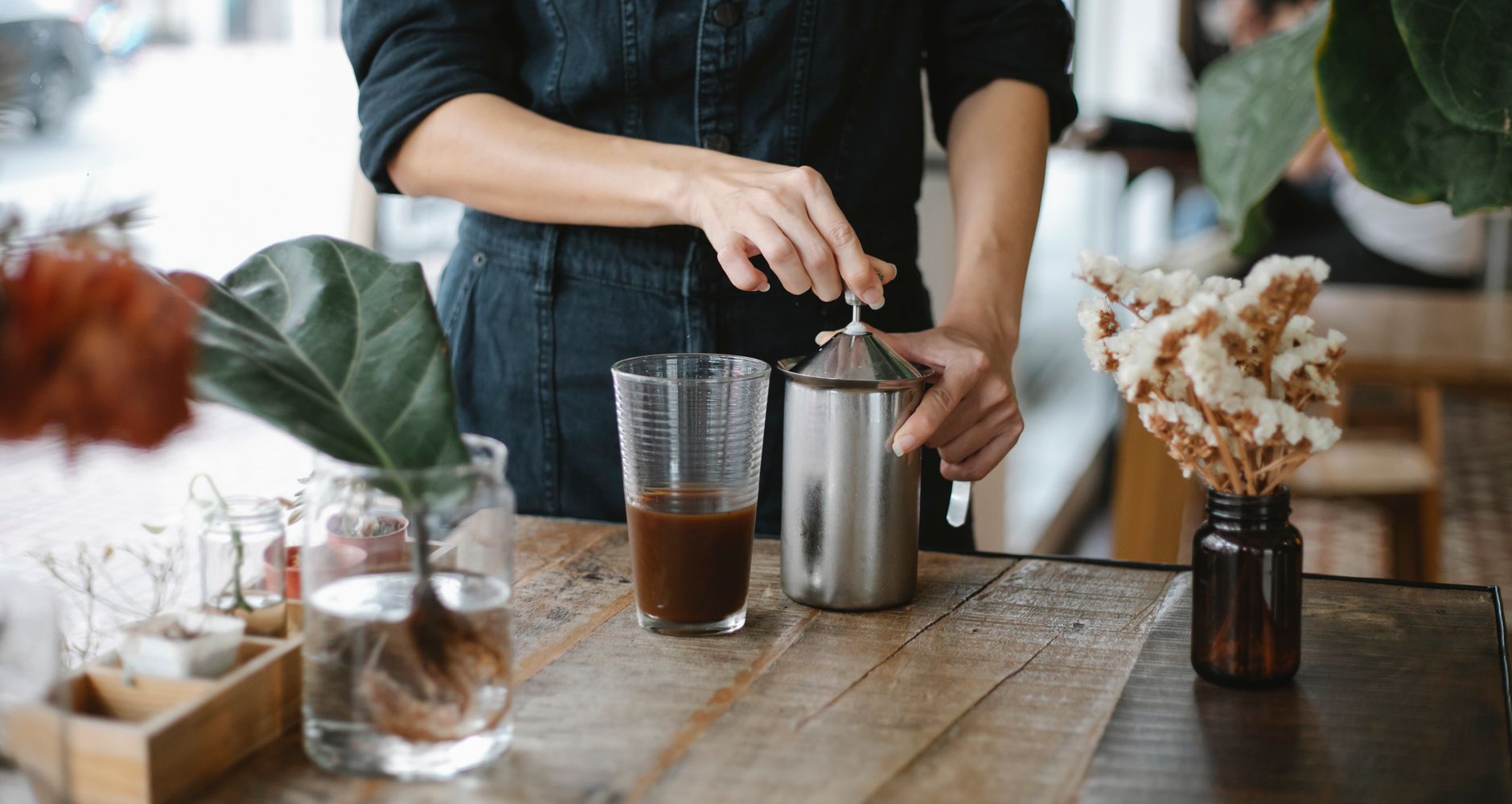
- Service theater - Tableside preparation or open-bar counter service
For a complete equipment guide, see our Top French Press Coffee Makers for Commercial Use in 2026.
The 2026 Profit Math of French Press Coffee
| Metric | Drip Coffee | French Press |
|---|---|---|
| Cost per serving | $0.18-$0.22 | $0.24-$0.32 |
| Menu price | $2.50-$3.00 | $5.00-$7.00 |
| Gross margin | 68-72% | 78-82% |
| Preparation time | 30 sec | 4 min |
Note: Based on Busy Bean Coffee's 2026 client performance data across 82 locations
French press commands premium pricing while using the same quality beans as drip coffee. The perceived value comes from:
- Longer extraction = More soluble solids (19-22% vs 15-18% for drip)
- Oils retained = Fuller mouthfeel (no paper filtration)
- Interactive service = Cornell research shows 22% higher perceived value (Cornell CHR, 2025)
For detailed cost analysis, visit our Cost Savings from Managed Coffee Services Explained guide.
Step-by-Step French Press Implementation
Phase 1: Equipment Selection (Week 1)
- Commercial presses: 3-5 stainless steel 34oz units (Frieling or Espro recommended)
- Accessories: Digital scales (±0.1g), gooseneck kettles with temperature control, timing mats
- Service ware: Thermal carafes for decanting, custom branded coasters
💡
Key Takeaway
Invest $300-$500 initially in proper equipment rather than using consumer-grade presses that break under cafe demands.
Phase 2: Bean Program (Week 2)
- Select 1-2 medium/full-city roast profiles (avoid light roasts for french press)
- Confirm roast-to-order delivery schedule (maximum 7 days post-roast)
- Standardize grind setting (coarse, like breadcrumbs)
Our Medium Roast Coffee Wholesale Pricing for Businesses details current market rates.
Phase 3: Staff Training (Week 3)
- Brewing protocol: 1:15 coffee-to-water ratio, 4-minute steep, 30-second bloom
- Service flow: Press→Decant→Serve sequence timing
- Troubleshooting: Adjusting for altitude/climate variables
Phase 4: Menu Integration (Week 4)
- Position as premium offering ($5-$7 range)
- Feature as "Brewed to Order" section
- Offer sampler flights (3x 4oz pours of different origins)
Phase 5: Quality Control (Ongoing)
- Daily calibration brews at opening
- Weekly cupping sessions with staff
- Monthly equipment deep cleaning
For professional training support, explore our Barista Equipment Wholesale Packages.
Advanced French Press Techniques for Cafes
1. The Double-Stage Extraction Method
Split the steep: 2 minutes at 195°F → stir → 2 minutes at 205°F. This creates more complex flavor development, especially for single-origin coffees.
2. Seasonal Infusion Variants
- Winter: Add 1 cinnamon stick during steep
- Summer: 2 orange zest strips in the grounds
3. Japanese Iced French Press
Brew concentrate (1:10 ratio) directly over ice cubes in serving glass
Maintenance & Longevity Best Practices
| Component | Care Routine | Replacement Cycle |
|---|---|---|
| Carafe | Daily polish with coffee oil remover | 18-24 months |
| Plunger mesh | Weekly deep soak in Urnex Cafiza | 6-8 months |
| Handle/frame | Monthly bolt tightening | As needed |
Our Coffee Equipment Maintenance in Norfolk VA guide details commercial cleaning protocols.
Frequently Asked Questions
How does french press coffee affect cafe operations during peak hours?
Implement batch brewing - prepare 3-4 presses simultaneously at 15-minute intervals during peaks. Use thermal carafes to maintain temperature. At Busy Bean Coffee, we've measured this maintaining 85% speed of drip service while preserving quality.
What's the ideal coffee origin for french press service?
Brazilian and Sumatran beans typically perform best - their chocolatey/nutty profiles withstand immersion brewing. Avoid delicate floral Ethiopians unless specifically processed for full-immersion.
Can we automate any part of the french press process?
Yes. Install timed electric kettles at prep stations and use portion-controlled grinders. While 100% automation isn't desirable (diminishes theater), strategic tools can reduce variability.
How should cafes handle french press waste management?
Implement a 3-bin system: 1) Coffee chaff/grounds (compost), 2) Metal parts (dishwasher), 3) Carafes (hand wash only). Proper sorting extends equipment life by 40%.
What menu items pair exceptionally well with french press coffee?
Buttery pastries (croissants, scones) and dark chocolate items create perfect palate harmony. The press's oils complement fat content beautifully.
Conclusion
French press coffee represents one of the highest ROI additions a cafe can make in 2026. When implemented as a system—rather than just another brewing method—it drives measurable benefits across profitability, customer satisfaction, and brand differentiation. The critical success factors are standardization, training, and maintaining theater without sacrificing speed.
Ready to transform your cafe's coffee program? Our All-Inclusive Coffee Service in Columbus OH provides everything from equipment to barista training. Visit Busy Bean Coffee or contact our cafe consultants today.
About the Author
Travis Estes is the Founder of Busy Bean Coffee. With 12 years experience equipping cafes across the Eastern Seaboard, he specializes in profit-optimized beverage programs using manual brewing methods.
Free Coffee Pairing Guide & Specialty Roast Cheat Sheet
Unlock the secrets of perfect brewing ratios, water temperatures, and specialty roast profiles. Download the guide.