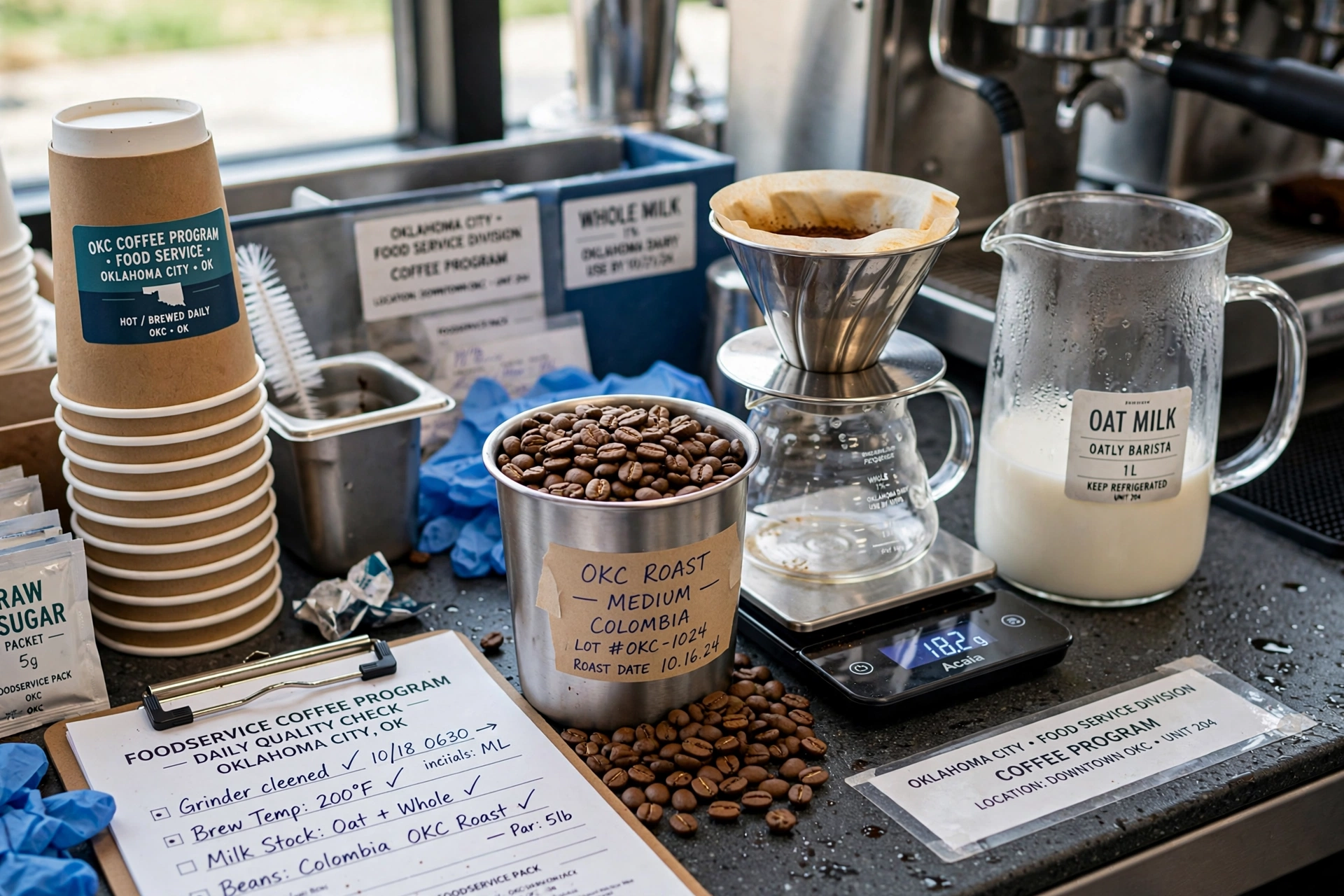
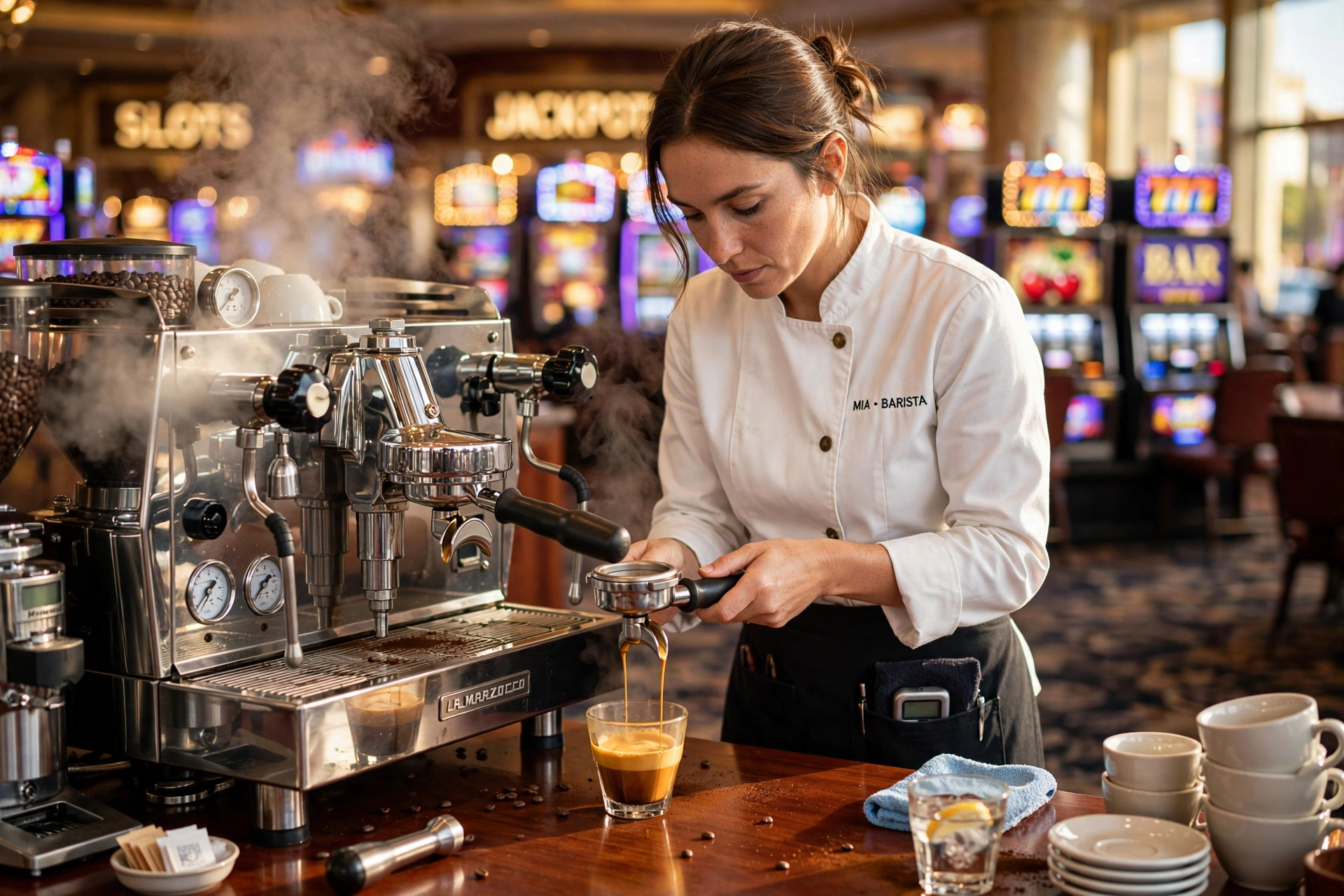
For a hotel or restaurant in the Upstate, coffee isn't just a menu item; it's a high-margin revenue driver and a critical part of the guest experience. A professional foodservice coffee program in Spartanburg SC provides the infrastructure—premium espresso machines, consistent roasting, and managed maintenance—to ensure every cup meets specialty standards while minimizing operational waste. Whether you are running a boutique hotel near downtown or a high-volume diner along I-85, the goal is to remove the technical friction of brewing so your staff can focus on service.
In my experience working with Southeast hospitality businesses, the biggest bottleneck isn't the coffee bean quality—it's the equipment uptime. I've seen countless managers struggle with machines that go down on a busy Sunday morning because they relied on a generic vendor rather than a managed service. At Busy Bean Coffee, we've shifted the model to focus on "all-inclusive" memberships, ensuring that technical failures don't lead to lost revenue. For those scaling their internal operations, exploring Best Office Espresso Machines for Small Teams in 2026 can provide a baseline for the quality expected in a professional setting.

Why Spartanburg Businesses Are Adopting Managed Foodservice Coffee Programs
The Upstate of South Carolina is currently experiencing a surge in both tourism and corporate relocation, putting immense pressure on local hospitality standards. Spartanburg is no longer just a transit point; it's a destination. This shift means guests now expect a "café quality" experience regardless of whether they are in a hotel lobby or a full-service restaurant. When consumers encounter a mediocre pot of burnt coffee, it colors their entire perception of the establishment's quality.
According to the National Coffee Association USA (NCA), specialty coffee consumption continues to rise across the US, with a growing preference for espresso-based beverages over traditional drip. In a market like Spartanburg, where the competitive landscape for breakfast and brunch is tightening, providing a sophisticated coffee program is a strategic differentiator. If you are managing a multi-site operation, you might also look into our Coffee delivery service in Charlotte NC - Complete Guide | Busy Bean Coffee to see how we scale regional logistics.
Furthermore, the labor market in the Southeast has made finding and retaining skilled baristas difficult. Managed programs solve this by implementing automated or semi-automated systems that maintain consistency even when the staff is inexperienced. By reducing the "skill gap" required to pull a perfect shot, businesses can maintain high quality without the volatility of staff turnover. I've noticed that when we implement a managed system, the average time to train a new employee on the beverage station drops by nearly 60% because the equipment is calibrated for consistency.
Key Benefits of a Professional Coffee Program for Spartanburg Operators
Implementing a structured coffee program transforms coffee from a cost center into a profit center. Most restaurants treat coffee as an afterthought, but when you optimize the roast and the extraction, the perceived value increases, allowing for higher menu pricing.
Increased Average Check Size
When you move from "bottomless drip" to a curated menu of lattes, macchiatos, and specialty brews, the price per cup jumps significantly. A standard coffee might sell for $2.50, while a specialty latte can easily command $5.50 to $7.00. The margin on the milk and beans remains low, meaning the majority of that increase is pure profit. For those looking to elevate the visual appeal of these drinks, knowing Where to Buy Latte Art Tools for Foodservice Pros | Busy Bean Coffee is the first step toward justifying those premium prices.
Operational Consistency and Reliability
Consistency is the bedrock of hospitality. A guest who visits your Spartanburg establishment on Tuesday should have the exact same experience on Saturday. This requires precision in temperature and pressure. According to NSF International, utilizing NSF-certified equipment ensures that not only is the coffee consistent, but the sanitation and safety standards are met, reducing the risk of health code violations.
📚
Definition
Extraction is the process of dissolving soluble compounds from the coffee bean into the water. Under-extraction leads to sour coffee, while over-extraction leads to bitterness.
Reduced Capital Expenditure (CapEx)
One of the most significant hurdles for Spartanburg businesses is the initial cost of commercial gear. A high-end espresso machine can cost thousands of dollars upfront. Managed programs, like those offered by Busy Bean Coffee, move this cost from a capital expense to an operational expense (OpEx). This preserves cash flow for other renovations or marketing efforts while still providing the best technology available.
| Feature | Traditional Purchase | Generic Low-Cost Vendor | Busy Bean Managed Program |
|---|---|---|---|
| Upfront Cost | Very High | Low to Medium | Zero to Minimal |
| Maintenance | Pay-per-visit (Expensive) | Slow Response/Limited | Fully Covered/Proactive |
| Coffee Quality | Variable (User-dependent) | Commercial Grade (Generic) | Specialty Grade (SCA Standards) |
| Training | One-time (often forgotten) | Minimal | Ongoing & Comprehensive |
💡
Key Takeaway
The shift from owning equipment to a managed membership model eliminates the risk of sudden, expensive repairs and ensures your coffee quality never dips due to machine neglect.
Real-World Examples: Transforming Coffee in the Upstate
I've worked with a variety of clients in the South Carolina region, and the patterns of success are almost always tied to the transition from "generic" to "specialty."
Case Study 1: The Boutique Hotel Turnaround
A 40-room boutique hotel in Spartanburg was using a standard industrial drip machine. Their coffee was a complimentary service, but guests frequently complained about the "burnt" taste. By implementing a specialty coffee program with high-end brewers and a rotating selection of Coffea arabica beans, the hotel didn't just stop the complaints—they started charging for a "Premium Breakfast Coffee' add-on. Within six months, they saw a 12% increase in morning food and beverage revenue. The key was the shift to specialty coffee, which the guests could actually taste and value.
Case Study 2: The High-Volume Brunch Spot
This establishment was struggling with consistency. They had a high-end espresso machine, but the staff lacked training, leading to massive waste (roughly 15% of their beans were thrown away due to bad pulls). We stepped in with a managed service that included regular calibration and barista training. By optimizing the grind and dosing, they reduced waste to under 4% and increased their latte output by 20% during peak hours. The result was a direct increase in net profit without increasing the number of customers.

How to Get Started with a Foodservice Coffee Program in Spartanburg SC
Starting a professional program isn't as simple as buying a machine and a bag of beans. It requires a strategic approach to ensure the workflow matches the volume of your business.
Step 1: Volume Analysis
Before selecting equipment, analyze your peak hours. If you serve 200 lattes between 8 AM and 10 AM, a single-group machine will create a bottleneck that frustrates customers. You need a machine capable of simultaneous steaming and brewing. If your needs are more corporate, you might consider an Automated Coffee Service in Wilmington NC - Complete Guide as a model for how automation can handle high volume with low labor.
Step 2: Selecting the Bean Profile
Not all coffee works for all menus. A bright, acidic roast might be great as a black coffee but clash with the cream and sugar used in most American-style lattes. You want a roast that maintains the characteristics of the coffee bean while cutting through the milk. We recommend a medium-dark roast for foodservice to ensure a bold, consistent flavor profile across all drinks.
Step 3: Workflow Integration
Place your equipment where it minimizes movement. A barista should be able to reach the grinder, the machine, and the milk fridge in a tight triangle. This "cockpit' design reduces fatigue and speeds up service. When we install equipment for Busy Bean Coffee clients, we spend hours analyzing the floor plan to ensure the flow is optimized for speed.
Step 4: Establishing a Maintenance Schedule
Coffee machines are high-pressure systems. Scale buildup from water is the number one killer of espresso machines. A professional program must include water filtration and regular descaling. If you are operating in a different major city, you might look at the White Glove Coffee Service in Los Angeles CA - Complete Guide | Busy Bean Coffee to see how high-touch maintenance prevents downtime.
Common Objections to Managed Coffee Programs
Many operators are hesitant to move away from the traditional ownership model. Here is why those objections are usually based on outdated data.
Objection 1: "I don't want to be tied to a monthly fee."
Most people assume a monthly fee is an added cost. In reality, it's a budget stabilizer. When you own a machine, you have "zero cost" months followed by a $1,200 repair bill that wipes out your monthly profit. A managed program turns that volatility into a predictable line item. The data shows that OpEx models allow for better cash flow management and more aggressive growth strategies.
Objection 2: "My staff can just figure out the machine."
This is a dangerous assumption. According to the Specialty Coffee Association (SCA), the difference between a "good" and "great" espresso is a matter of a few seconds of extraction and a few grams of dose. Without professional training, your staff will likely under-extract the coffee, leaving it sour and disappointing. In my experience, "figuring it out" usually results in a 20% loss in potential revenue due to poor quality and waste.
Objection 3: "We aren't a 'coffee shop,' so we don't need specialty gear."
This is the most common mistake I see. Even if coffee is a secondary offering, it is often the last thing a guest tastes. A bad cup of coffee can ruin a $50 steak dinner. By investing in a professional foodservice coffee program in Spartanburg SC, you are protecting the integrity of your entire brand, not just your beverage menu.
Frequently Asked Questions
How does a managed coffee program actually save me money?
Managed programs save money by eliminating the "hidden costs" of ownership. When you buy a machine, you are responsible for the initial CapEx, the electricity, the water filtration, and—most importantly—the repairs. Commercial espresso machines are complex; a single blown gasket or a scaled-up boiler can put your machine out of commission for days. With Busy Bean Coffee, maintenance is proactive. We identify issues before they cause downtime, ensuring you never lose a morning of sales. Additionally, the consistent training provided reduces bean waste, which can save a high-volume shop hundreds of dollars per month in raw materials.
What is the difference between specialty coffee and commercial coffee?
Specialty coffee refers to beans that have scored 80 points or higher on a 100-point scale as rated by the SCA. Commercial coffee is generally produced in bulk with less regard for the specific terroir or processing method, often resulting in a more generic, sometimes bitter taste. In a professional foodservice program, using specialty coffee allows you to market your beverage as a premium product. When you use Arabica coffee sourced from sustainable farms, you aren't just selling caffeine; you're selling an experience. This distinction allows you to increase your price point and attract a more discerning clientele in the Spartanburg area.
Do I need a full-time barista to run a professional program?
No, you do not. One of the primary goals of a modern foodservice coffee program is to bridge the gap between professional quality and operational simplicity. By using semi-automatic machines with programmable volumetric dosing, your existing staff can produce a consistent latte without needing a decade of experience. The key is the initial setup and the ongoing calibration provided by your service partner. We focus on creating a system where the machine does the heavy lifting, and the staff simply manages the workflow. This removes the dependency on a single "star employee" and makes your business more resilient to labor shortages.
How often should my coffee equipment be serviced in a high-volume environment?
In a high-volume Spartanburg foodservice environment, basic maintenance should be daily (backflushing and cleaning steam wands), but professional servicing should occur quarterly. This includes checking the pump pressure, replacing water filters, and calibrating the grinder's burrs. According to FDA guidelines on food safety, maintaining clean and functioning equipment is essential to prevent microbial growth in milk lines and water reservoirs. A managed service ensures these checks happen automatically, so you don't have to remember to schedule them amidst the chaos of running a restaurant.
Can I integrate a coffee program into a small hotel lobby without a full kitchen?
Absolutely. Many of our most successful installations are in limited-space environments. The key is selecting the right equipment—such as compact super-automatic machines or high-efficiency pods if the volume is low. However, for a professional feel, we recommend a compact semi-automatic setup with a dedicated water line. This allows you to offer a true espresso experience without needing a full commercial kitchen. If you're operating a smaller scale, you can learn more about our White Glove Coffee Service in Denver CO - Complete Guide to see how we handle high-end, boutique installations in diverse urban settings.
Final Thoughts on Foodservice Coffee Program in Spartanburg SC
Building a successful foodservice coffee program in Spartanburg SC isn't about buying the most expensive machine you can find; it's about creating a sustainable system where quality, reliability, and profitability intersect. Whether you are looking to increase your average check size or simply want to stop apologizing for the coffee in your lobby, the shift to a managed specialty service is the most effective path forward.
By removing the burden of maintenance and the risk of equipment failure, you free your team to focus on what they do best: taking care of the guest. Don't let a bad cup of coffee be the reason a customer decides not to return to your business. Invest in a system that scales with your growth and protects your brand's reputation.
Ready to elevate your beverage game? Visit Busy Bean Coffee today to explore our all-inclusive managed memberships and start serving coffee that your guests will actually remember.
Free Coffee Pairing Guide & Specialty Roast Cheat Sheet
Unlock the secrets of perfect brewing ratios, water temperatures, and specialty roast profiles. Download the guide.