What Are Automated Coffee Machines and How Do They Work?
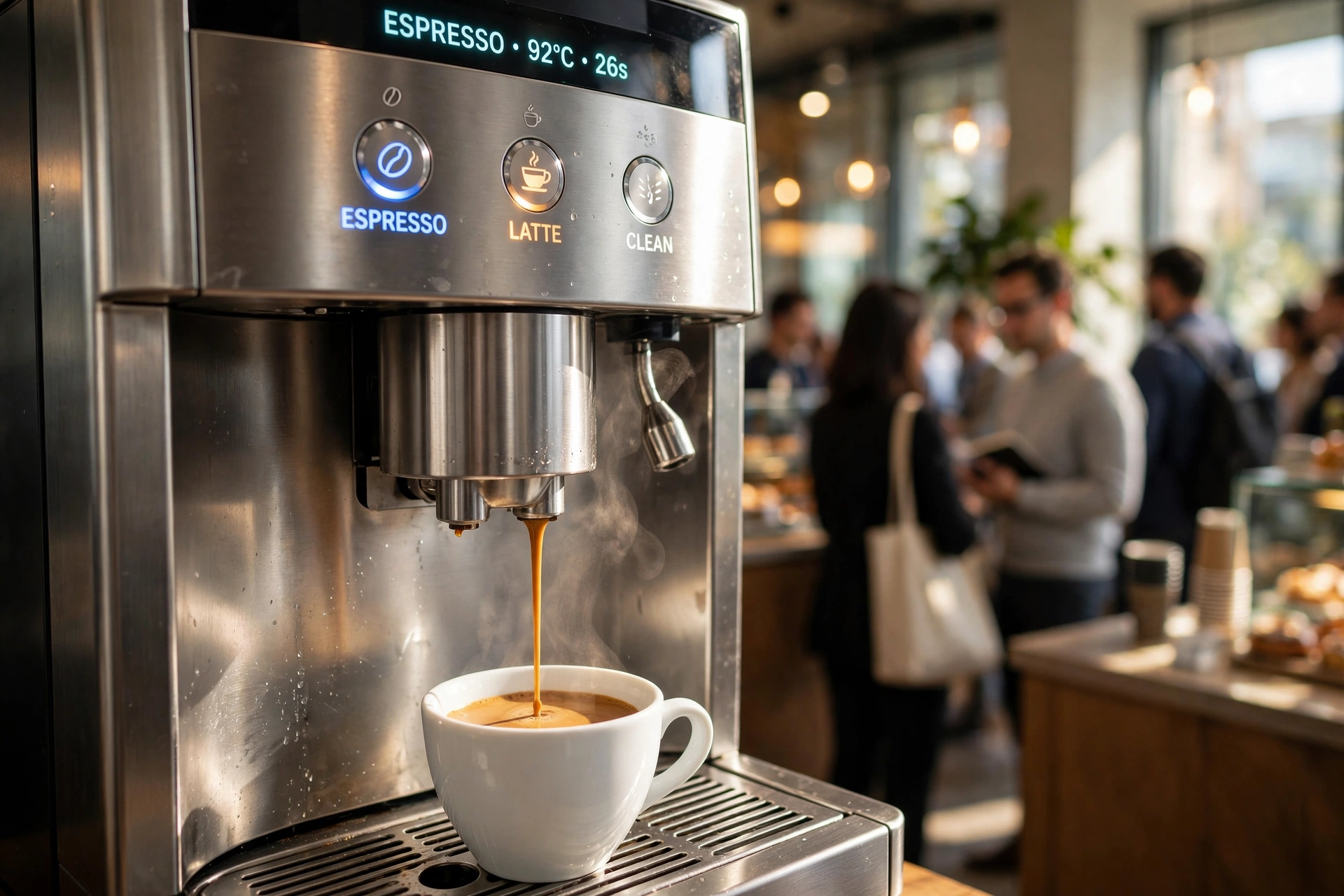
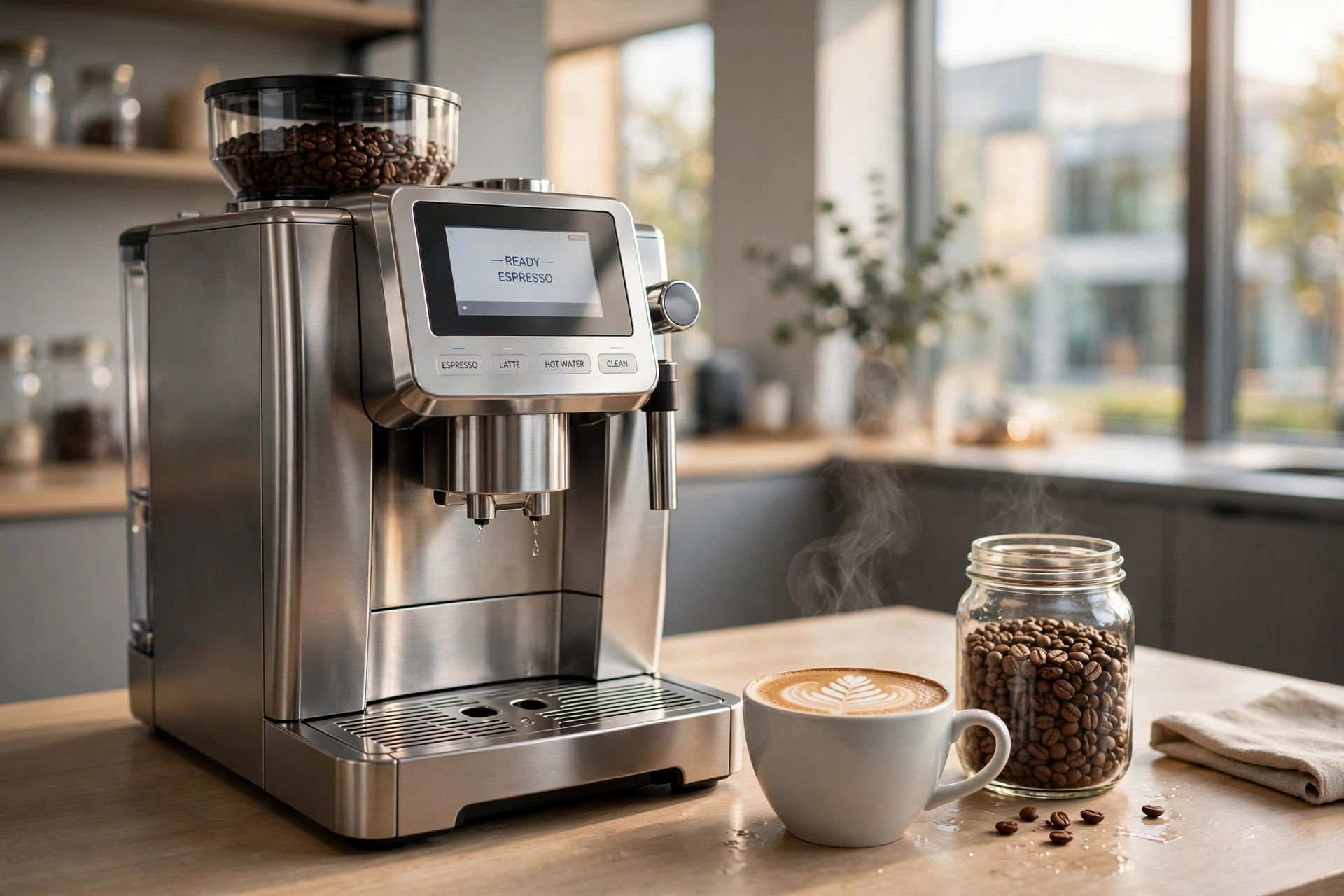
A high-volume hotel lobby or a bustling corporate headquarters cannot rely on the slow, manual pace of a traditional portafilter machine without sacrificing either quality or speed. Automated coffee machines solve this by integrating the grinding, tamping, brewing, and milk steaming processes into a single, programmable sequence. These systems allow a user to select a beverage, from a double espresso to a flat white, and receive a consistent, barista-quality cup in seconds without requiring professional training.
For businesses scaling their hospitality offerings, understanding the nuance of these systems is essential. If you are managing a high-traffic environment, you might find that automatic coffee machines for hotels and hospitality in 2026 are the only way to maintain a luxury guest experience without inflating labor costs.
📚
Definition
Automated coffee machines (often referred to as "super-automatic" machines) are integrated beverage systems that perform every step of the coffee preparation process, grinding the coffee bean, dosing, tamping, extracting the liquid, and frothing milk, automatically via a digital interface.
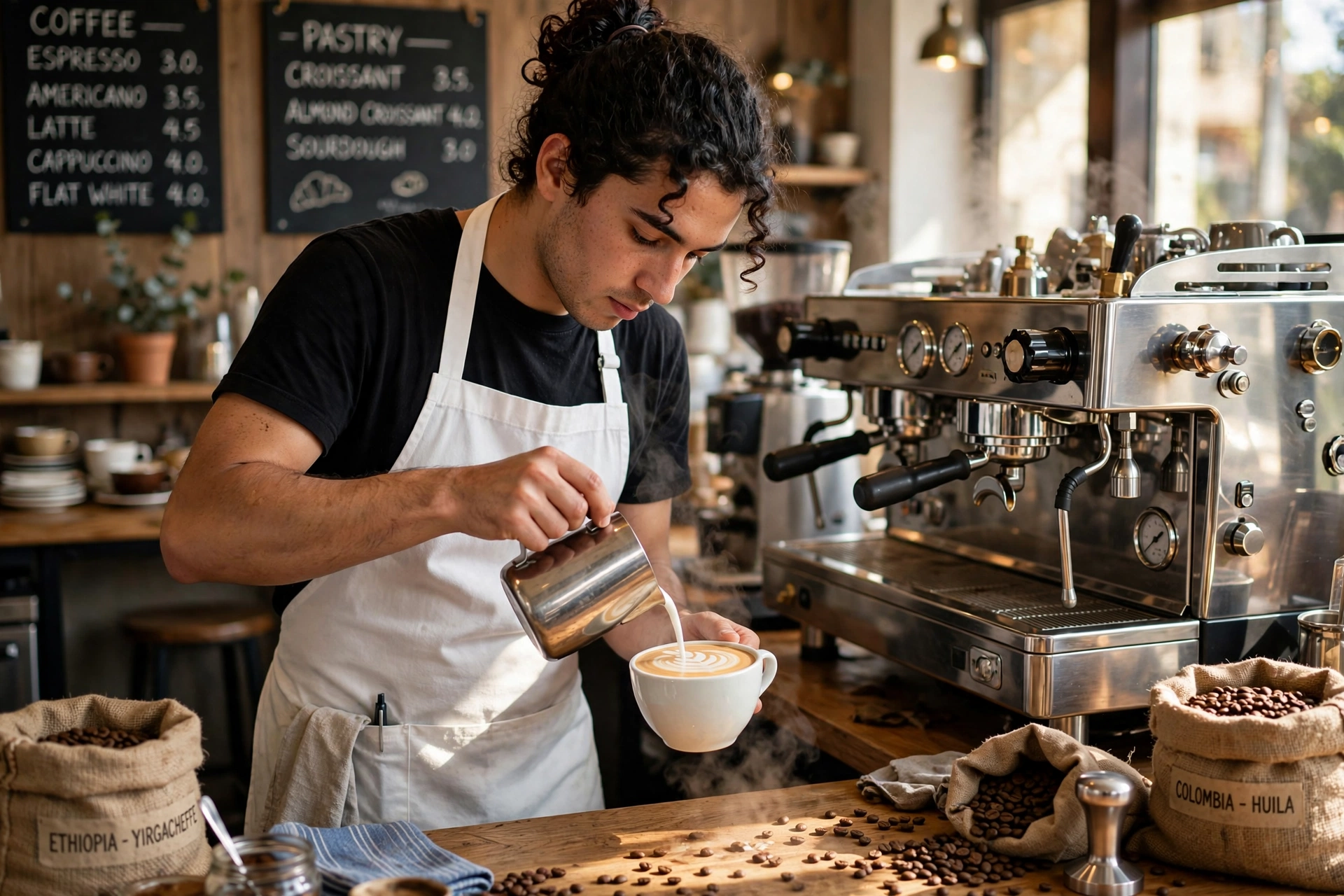
In my experience working with luxury resorts and medical clinics, the most common friction point isn't the taste of the coffee, but the consistency of the output. When a staff member who isn't a trained barista handles a manual machine, the results vary wildly. Automated systems remove this human error. By locking in the precise water temperature, pressure, and grind size, these machines ensure that the 100th cup of the day tastes exactly like the first.
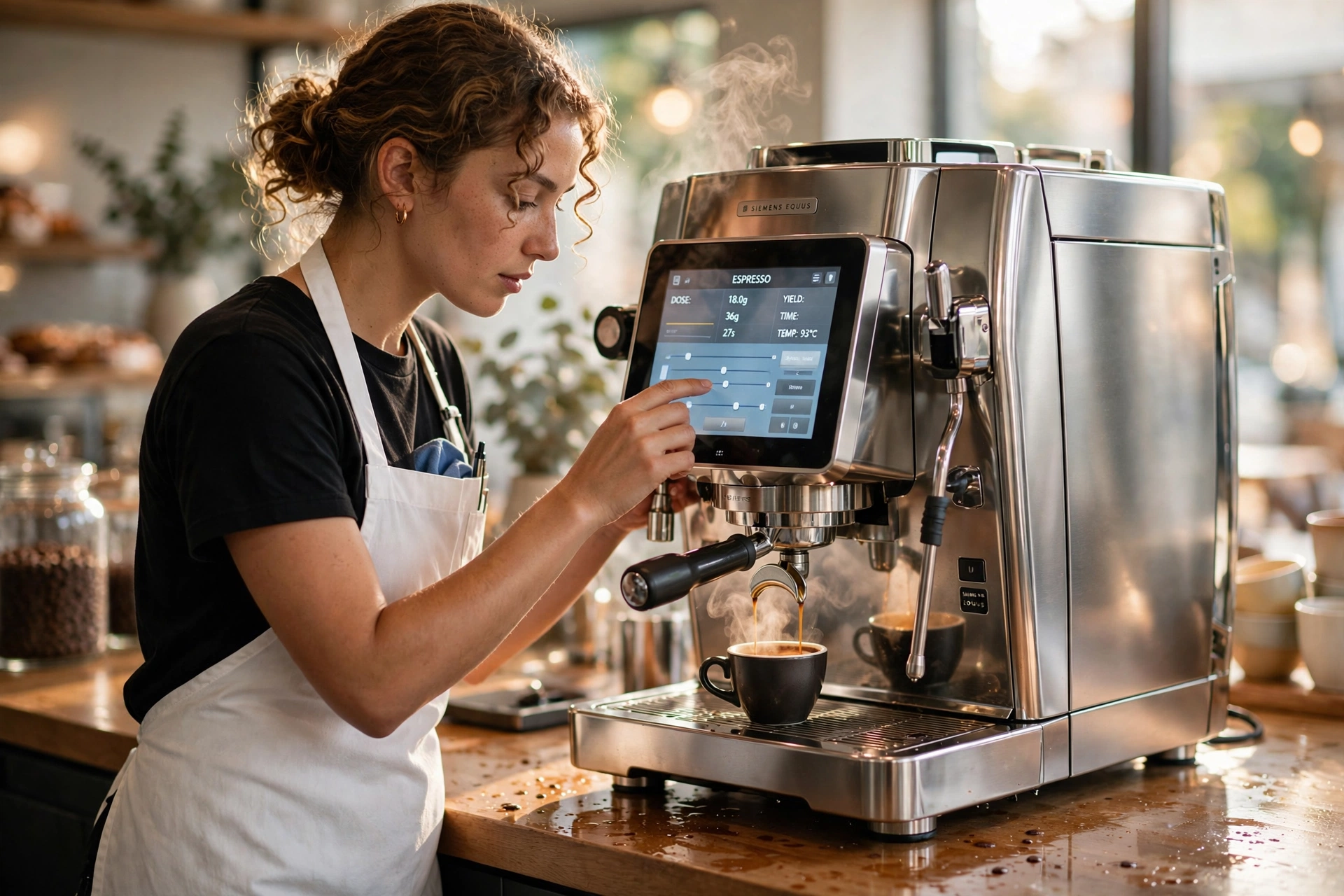
The technical architecture of these machines relies on a precision brew unit. Unlike traditional brewers where the coffee puck is discarded manually, automated systems use internal mechanisms to compress the coffee bean grounds and eject the spent puck into a waste container. According to the Specialty Coffee Association (SCA), maintaining a precise water temperature between 195°F and 205°F is critical for extracting the complex flavors of specialty coffee without inducing bitterness. Modern automated machines use PID (Proportional-Integral-Derivative) controllers to maintain this temperature within a fraction of a degree, ensuring that the volatile aromatics of Coffea arabica are preserved.

Why Does Automation Matter for Modern Business Operations?
The shift toward automation in the beverage industry is driven by a critical shortage of skilled labor and an increasing demand for "instant gratification" in the customer experience. When a business implements automated coffee machines, they aren't just buying a piece of equipment; they are optimizing their operational overhead.
From a financial perspective, the impact is measurable. Labor costs for a dedicated barista can be significant, especially when factoring in training and turnover. By deploying a managed system, businesses can redirect their staff toward guest relations rather than beverage production. Research from the National Coffee Association USA (NCA) indicates that coffee consumption patterns are shifting toward "premiumization," where consumers expect high-quality specialty drinks even in non-traditional settings like clinics or offices.
If a medical facility provides a subpar coffee experience, it affects the overall perception of care. This is why we see a surge in the adoption of automated coffee machines for clinics and medical offices, where speed and hygiene are just as important as the flavor profile. The risk of "down-time" in a manual setup, where a machine might be misused and break, is replaced by the predictability of an automated system.
Now, here's where it gets interesting: the data on waste reduction. In a manual setting, "dialing in" a grinder can result in several pounds of wasted coffee bean product every morning. Automated machines utilize volumetric dosing, meaning they dispense the exact amount of water and coffee required for the recipe. This precision reduces raw material waste by an estimated 15% to 20% in high-volume environments.
Furthermore, sanitary compliance is a major driver. The NSF International provides rigorous standards (such as NSF/ANSI 4) for commercial food equipment to prevent contamination. Automated machines often feature self-cleaning cycles for the milk lines and brew groups, which reduces the risk of bacterial growth, a common failure point in manual steaming wands that are not purged correctly between uses.
How Do You Implement a Managed Coffee Solution Step by Step?
Implementing a high-end coffee program is not as simple as plugging in a machine. The mistake I made early on, and that I see constantly with new business owners, is treating the machine as a standalone appliance rather than part of a service ecosystem. If you buy a machine but have no plan for maintenance or bean sourcing, the equipment becomes a liability within six months.
The professional approach to implementation follows a specific sequence:
- Volume and Profile Analysis: First, determine your peak hours. A machine that handles 20 cups an hour is fundamentally different from one that handles 200. You must also define your beverage menu; if your clients want lattes and cappuccinos, your milk automation needs to be top-tier.
- Infrastructure Audit: Ensure your site has the correct electrical load and water filtration. In cities like Charlotte or Raleigh, water hardness varies, and using unfiltered water will kill an automated machine through limescale buildup in weeks. For those in North Carolina, a Sensa Coffee Service in Charlotte, NC typically includes a customized filtration audit.
- Calibration and Recipe Mapping: This is where the Q-Grader's expertise comes in. We map the grind size and temperature to the specific roast of the bean. For example, a light-roast Ethiopian bean requires a different temperature than a dark-roast Sumatran to avoid over-extraction.
- Staff Integration: Even "automatic" machines require a human to fill the beans and empty the drip tray. We train staff on "First-Level Maintenance," ensuring the machine remains operational between professional service visits.
- Managed Subscription Setup: Instead of a massive capital expenditure, we move businesses toward a membership model. This ensures a predictable monthly cost that covers equipment, maintenance, and premium beans.
💡
Key Takeaway
Successful coffee automation is 20% about the hardware and 80% about the support system, filtration, calibration, and consistent maintenance are what prevent a "premium" machine from becoming a costly paperweight.
For those operating in the Southeast, we've found that a localized approach works best. Whether it's a Sensa Coffee Service in Raleigh NC (2026 Overview) or a setup in Georgia, the key is having a technician who can be on-site quickly. Busy Bean Coffee specializes in this end-to-end management, removing the "hassle factor" for the business owner.
How Do Automated Machines Compare to Traditional Methods?
When deciding between automation and manual brewing, the choice usually comes down to the "Cost of Quality." A manual espresso machine can produce a slightly superior cup in the hands of a world-class barista, but it fails miserably in a corporate or hotel environment where consistency is the primary KPI.
The following table breaks down the operational differences:
| Feature | Traditional Manual Approach | Cheap/Generic AI Approach | Busy Bean Coffee Managed Approach |
|---|---|---|---|
| Consistency | Highly Variable (User-dependent) | Medium (Often tastes "burnt") | High (Q-Grader calibrated) |
| Labor Cost | High (Requires trained staff) | Low (Self-serve) | Low (Managed & Simplified) |
| Waste Level | High (Tamping/Dialing errors) | Low (Fixed dosing) | Ultra-Low (Precision mapped) |
| Maintenance | Manual/Reactive | Basic/Manufacturer warranty | All-inclusive/Proactive |
| Taste Profile | Artisan / Specialty | Generic / Commercial | Specialty Grade / High-End |
Most guides get this wrong by suggesting that "automation means lower quality." That is a myth from ten years ago. In 2026, the precision of digital thermoblocks and ceramic grinders means that an automated machine can actually outperform a human who is tired or rushed.
If you are in a region like South Carolina, you might be comparing local options. We often see businesses in the Upstate choosing between a basic rental and a full service. A Sensa Coffee Service in Spartanburg SC: Complete Guide would highlight that the real value isn't the machine, but the "all-inclusive" nature of the membership, which eliminates the fear of a $2,000 repair bill.

Common Misconceptions About Automated Coffee Systems
There are several persistent myths that lead business owners to avoid automation. Let's dismantle these with actual industry data.
Myth 1: "Automated coffee doesn't taste like real coffee."
This is the most common fallacy. Taste is a result of chemistry: water temperature, pressure, and grind uniformity. Because automated machines use precise PID controllers and high-grade burr grinders, they often produce a more "correct" extraction than a human. According to the International Coffee Organization (ICO), the global rise in specialty coffee consumption is being fueled by the accessibility provided by high-end automation.
Myth 2: "They are too hard to clean."
Actually, the opposite is true. Manual machines require "backflushing" and manual scrubbing of group heads. Modern automated systems feature internal cleaning cycles that use detergents to purge the internal plumbing. The mistake most people make is ignoring the "Clean" light on the dashboard. When maintained, these machines are more hygienic than manual ones.
Myth 3: "The initial cost is too high for a small business."
This is why the "Membership" model has replaced the "Purchase" model. Instead of spending $10,000 on a machine, businesses now opt for a monthly fee that covers everything. For instance, a Sensa Coffee Service in Greensboro NC: Complete Guide | Busy Bean Coffee shows how shifting from CapEx to OpEx allows a business to maintain cash flow while still providing a luxury beverage experience.
Frequently Asked Questions
Do automated coffee machines actually use real espresso beans?
Yes, they do. High-quality automated machines are designed specifically for whole coffee bean usage. They feature integrated grinders that crush the beans immediately before brewing to ensure maximum freshness. The key to quality is ensuring you use specialty coffee: beans that have been graded 80 points or higher by the SCA. If you use low-grade commercial beans, the machine will still produce a "correct" cup, but the flavor will be flat. In our experience, the synergy between a high-end automated machine and a fresh, light-to-medium roast is what creates the "wow" factor for customers.
How often do these machines need professional servicing?
While they have self-cleaning cycles, automated machines require a professional "deep dive" every 3 to 6 months, depending on volume. This includes replacing water filters, checking the gaskets in the brew unit, and recalibrating the grinder. Neglecting this leads to "channeling," where water finds a path of least resistance through the coffee, resulting in watery, sour espresso. This is why we bundle maintenance into our memberships; it prevents the catastrophic failure of the pump or heating element, which can happen if mineral buildup from hard water is ignored.
Can I customize the drinks for different guest preferences?
Absolutely. Most professional automated systems allow you to program "User Profiles." You can adjust the volume of water, the amount of coffee used (dosage), and the temperature. For example, if you are running a Sensa Coffee Service in Savannah GA: Complete Guide | Busy Bean Coffee, you might program a "Strong" setting for morning commuters and a "Mild" setting for afternoon visitors. This level of customization ensures that the machine caters to a diverse palate without requiring a barista to manually adjust the settings for every cup.
Are these machines loud enough to disturb a quiet office environment?
Grinding is inherently noisy, but modern engineering has significantly reduced the decibel levels. Most professional automated machines use dampened grinders and insulated brew units. While you will hear the "whir" of the beans being ground, it is far less disruptive than the clatter of a portafilter being slammed into a knock-box in a traditional setup. If noise is a primary concern, we recommend placing the unit in a designated "beverage zone" with acoustic tiling or a stone countertop to absorb vibration.
What happens if the machine breaks down during a peak period?
This is the "nightmare scenario" for any business. In a traditional purchase model, you are at the mercy of the manufacturer's shipping times for parts. However, in a managed service model, such as those we provide for a Sensa Coffee Service in Richmond VA: Complete Guide | Busy Bean Coffee, we prioritize rapid response. We often maintain a fleet of "loaner" machines or have technicians on call to ensure that your coffee production doesn't stop. The goal is zero downtime, as a broken coffee machine in a hotel lobby is a direct hit to guest satisfaction.
Final Thoughts on Automated Coffee Machines
The transition to automated coffee machines is no longer about choosing "convenience over quality"; it is about choosing "precision over variability." For any business in the hospitality or corporate sector, the ability to deliver a consistent, specialty-grade beverage without the overhead of a full-scale café is a massive competitive advantage.
Whether you are looking for a Sensa Coffee Service in Norfolk VA: Complete Guide | Busy Bean Coffee or expanding your footprint in the South, the path to success is simple: stop buying equipment and start investing in a coffee program. By focusing on the "managed" aspect, the beans, the maintenance, and the machinery, you ensure that your focus remains on your customers, not on the plumbing of your espresso machine.
If you are ready to elevate your beverage game without the stress of management, visit Busy Bean Coffee Blog to explore our all-inclusive memberships.
Ready to Upgrade Your Business Coffee?
Café-quality coffee, zero maintenance headaches, and one predictable monthly price. Let's build your custom coffee program.
Free Coffee Pairing Guide & Specialty Roast Cheat Sheet
Unlock the secrets of perfect brewing ratios, water temperatures, and specialty roast profiles. Download the guide.